
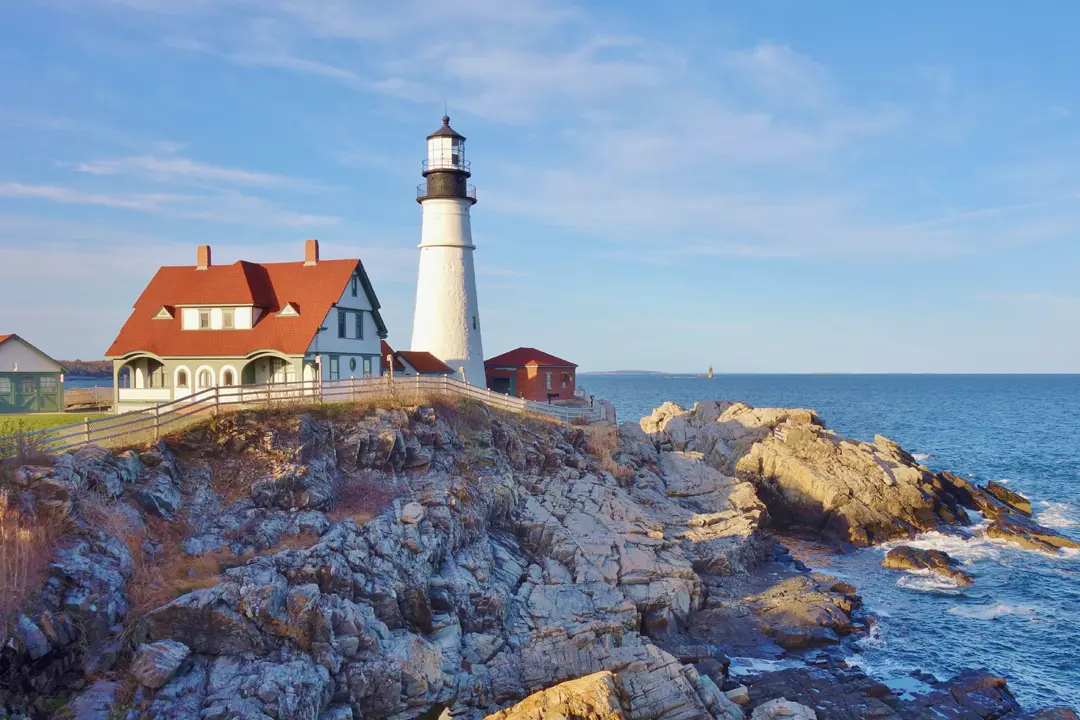
Maine 101: Lobster, Lighthouses, and Living in New England's Hidden Gem
Michael Reynolds • 14 Jan 2026 • 127 views • 3 min read.You think Maine is lobster vacation destination Stephen King horror novels—irrelevant rural state forests/coastline, tourist summer Bar Harbor Acadia National Park. Reality? Maine is working waterfront where lobster industry $730 million annually (130 million pounds landed 2023—90% U.S. lobster catch, 4,400 licensed lobstermen, generational families territories respected, climate change warming waters shifting north Canadian competition threat), independent spirit where split electoral votes 2020 Biden won statewide +9% but Trump won rural 2nd District (Nebraska/Maine only states split—Aroostook County Trump +20%, Portland liberal island), and geographic extremes where Portland metro 550,000 (40% state population—food scene James Beard awards, Old Port cobblestones, craft breweries 20+ per capita most U.S., gentrification $450,000 median home) versus rest Maine rural poverty (Aroostook County potato farming decline 14% poverty, Washington County "Downeast" poorest New England 17% poverty, paper mills closed Millinocket Great Northern 2008 devastated). You experience Acadia National Park (4 million visitors annually—Cadillac Mountain first sunrise U.S., Jordan Pond House popovers tradition, 158 miles carriage roads Rockefeller gifted), lighthouses 65 iconic (Portland Head 1791 oldest commissioned George Washington, Bass Harbor Head Instagram famous, West Quoddy Head easternmost U.S.), Stephen King Bangor (horror author born Portland—"Derry" fictional Bangor, 80+ novels, tourism pilgrimage house Victorian)—but brutal truth: Maine demands accepting brutal winters (Portland 60 inches snow, Aroostook 100+ inches, heating oil $3,500-5,000 annually 75% homes oil heat most U.S., eight-month winter November-May), economic challenges (median income $63,000 lowest New England, tourism seasonal $8 billion concentrated three months, workforce shortage severe aging 20% over 65 oldest state), opioid crisis (26 overdose deaths per 100,000 eighth-worst nationally—fentanyl rural despair, treatment scarce), and recognition Portland prosperity masks Maine struggling working-class priced out gentrification Massachusetts/NYC refugees fleeing COVID $600,000-1 million homes unaffordable natives. The truth: Maine offers coastal beauty, lobster culture, independence—but demands accepting isolation, poverty, brutal winters, and understanding Portland gentrification destroys affordability working-class Mainers.
Geography and Climate: Vast, Remote, Rocky Coast
Understanding Maine:
Size and landscape:
- 39th largest state:
- 35,385 square miles (largest New England—bigger than other five combined)
- Population: 1.4 million (42nd—5th-least dense 43 per sq mile)
- Coastline: 3,478 miles (tidal—fourth-longest U.S. after Alaska/Florida/Louisiana, rocky peninsulas/islands)
- Geography:
- Southern Coast: Portland/Kennebunkport/Ogunquit (touristy—beaches, galleries, Bush family compound Walker's Point)
- Midcoast: Bath/Rockland/Camden (Bath Iron Works Navy ships 6,900 jobs, windjammers, lobster boats, picturesque harbors)
- Downeast: Bar Harbor/Acadia (Mount Desert Island—Acadia National Park, wealthy summer colony, "rusticators" 1880s)
- Aroostook County: "The County" (northern—potato farming, Canada border, French-Canadian, isolated, poorest)
- Western Mountains: Rangeley/Sugarloaf/Sunday River (ski resorts, Appalachian Trail northern terminus Mount Katahdin Baxter State Park 5,267 feet highest)
- Forests: 90% (most forested state—17.7 million acres, paper industry legacy declining, logging roads remote)
- Islands: 4,600+ (inhabited 15—Peaks, Vinalhaven, Islesboro, Monhegan artists colony, ferries lifeline)
Regional divide (extreme):
Greater Portland (prosperity island):
- Population: 550,000 (40% state—Portland proper 68,000, South Portland, Westbrook, Scarborough, Biddeford)
- Economy: Healthcare (Maine Medical Center 7,000 employees—largest employer, research), tourism ($3 billion southern coast—Old Port restaurants, L.L.Bean Freeport outlet 3.5 million visitors), finance (WEX fleet cards $2.5 billion revenue), craft economy (Allagash Brewing, Shipyard, 130+ breweries statewide)
- Culture: Progressive (Portland 66% Biden—arts, LGBTQ+ friendly, food scene James Beard semi-finalists Eventide Oyster/Fore Street, gentrification artists 1990s now priced out)
- Cost: Median home $450,000 Portland (up from $220,000 2010—COVID refugees NYC/Boston, natives priced out)
Midcoast (working waterfront):
- Population: 120,000 (9%—Knox/Lincoln/Sagadahoc counties)
- Economy: Bath Iron Works (General Dynamics—destroyers/DDG-51, 6,900 jobs, union wages $70,000-90,000), lobster (Rockland/Stonington), tourism (Camden/Boothbay Harbor seasonal)
- Culture: Traditional Maine (boat builders, fishermen—fifth-generation, territories respected)
- Cost: Median $380,000 (Camden wealthy $600,000—summer people, working harbors Rockland $320,000)
Downeast (Bar Harbor/Acadia):
- Population: 80,000 (6%—Hancock/Washington counties)
- Economy: Tourism (Acadia 4 million visitors—seasonal June-October, Bar Harbor 5,000 residents swells 20,000 summer), lobster (Stonington, Jonesport), blueberries (wild—Washington County 90% U.S. wild)
- Poverty: Washington County 17% (poorest New England—seasonal tourism, blueberries mechanized, opioid crisis)
- Cost: Median $320,000 (Bar Harbor $650,000 waterfront—workers priced out, Washington County $180,000 poverty)
Aroostook County (forgotten):
- Population: 67,000 (5%—northern "The County")
- Economy: Potato farming (decline—1,000 farms 1950s to 250 now, corporate consolidation, McCain Foods Canadian dominant), Air Force base Loring closed 1994 devastated
- Culture: French-Canadian (30% speak French home—Madawaska/Fort Kent, Catholic, isolated, closer Montreal than Portland)
- Poverty: 14% (young flee, aging crisis severe, paper mills gone)
- Cost: Median $140,000 (cheapest—but no jobs, winter brutal)
Climate (brutal winters):
Portland:
- Summer: 75-80°F (perfect July/August—short season)
- Winter: 20-35°F (snow 60 inches—nor'easters, heating oil $3,500-5,000 annually)
Aroostook County:
- Summer: 75-80°F
- Winter: 5-20°F (snow 100+ inches—coldest populated area East, -30°F not uncommon, eight-month winter)
Severe weather:
- Nor'easters: Paralyzing (1998 ice storm—three weeks no power, $1+ billion damage)
- Blizzards: Annual (2015 Juno 30 inches Portland)
Lobster Industry: Identity, Economy, Threatened
Understanding Maine lobster:
Scale (dominance):
130 million pounds: 2023 landed (90% U.S. lobster—value $730 million, Massachusetts distant second)
4,400 licensed lobstermen: Commercial (territories unwritten rules—respected generations, poachers punished, apprentice system, family business, "sternman" works boat learns)
Traps: 3 million (color-coded buoys—identify owner, check daily, bycatch minimized)
Economics:
Boat cost: $80,000-150,000 (trap boat—diesel, hauler, plus traps $100 each, investment massive)
Income: $50,000-150,000 annually (fluctuates—good year $100,000+, lobster price $5-15 per pound seasonal, boats 200-800 traps per license)
Tourism: Lobster shacks (Red's Eats Wiscasset lines 2+ hours $30 roll, McLoon's Thomaston locals, Five Islands Georgetown authentic)
Threats (existential):
Climate change: Warming waters (Gulf of Maine warming faster than 99% oceans—lobster shifting north, Canadian waters, territorial disputes, future uncertain)
Regulations: Right whale protection (vertical lines entanglement—14 North Atlantic right whales remain, federal regulations reduce traps/ropes, lobstermen furious costs)
Imports: Canadian competition (New Brunswick/Nova Scotia—cheaper labor, processing, market share threat)
Culture:
Identity: Generational (father/grandfather fished—territories inherited, apprenticeships, knowledge oral tradition)
Politics: Conservative working-class (Trump stronghold rural—resent regulations, "government taking livelihood")
Portland Gentrification: Priced Out Natives
Understanding Portland transformation:
History:
Industrial: 1800s-1900s (shipping, railroads, fish processing—working-class Irish/Italian immigrants)
Decline: 1950s-1980s (suburbanization—malls killed downtown, crime, decay, Portland "sketchy")
Revival: 1990s-present (artists cheap rents—galleries, restaurants, Old Port cobblestones renovated, brewery boom)
Current boom:
Food scene: James Beard (Eventide Oyster raw bar brown butter lobster roll $28, Fore Street wood-fired chef Sam Hayward pioneer, Hugo's innovative, Duckfat poutine fries)
Craft breweries: 20+ Portland (Allagash Belgian-inspired—whites/tripels, Rising Tide IPA, Bissell Brothers hazy, Austin Street, Foundation—per capita most U.S.)
Real estate: Exploded (median $450,000 up from $220,000 2010—COVID refugees NYC/Boston, remote workers, Airbnb short-term rentals, East Bayside gentrified artists now priced out)
Displacement:
Working-class: Priced out (service workers $40,000-50,000—can't afford $2,200 rent, Westbrook/Biddeford/Sanford commute)
Artists: Irony (1990s artists gentrified—now fled Lewiston cheaper, cycle repeats)
Natives: Resentment ("people from away"—Massachusetts/NYC "Massholes" blamed, bumper stickers "Welcome to Maine, Now Go Home")
Politics:
Progressive island: Portland 66% Biden (liberal—but rest Maine 52% Biden narrowly, 2nd District Trump +7%, cultural divide)
Acadia National Park: Bar Harbor Tourism
Understanding Acadia:
Statistics:
Size: 49,000 acres (Mount Desert Island—Schoodic Peninsula, Isle au Haut, 158 miles carriage roads John D. Rockefeller Jr. gifted 1919)
Visitors: 4 million annually (10th-most visited national park—summer overwhelms, reservation system 2021 Cadillac Mountain sunrise)
Highlights:
Cadillac Mountain: 1,530 feet (highest Atlantic coast—first sunrise U.S. October-March, summit road, viewing platform)
Jordan Pond House: Tradition (popovers tea—1893 tradition, lawn Bubbles mountains backdrop Instagram, $20 tea reservation essential summer)
Carriage roads: 45 miles (gravel—biking, horse-drawn, granite bridges 17 "Rockefeller's roads," no cars)
Economic impact:
Bar Harbor: 5,000 year-round (swells 20,000 summer—hotels, restaurants, gift shops, cruise ships 100+ daily peak overwhelm)
Seasonal economy: June-October (winter ghost town—businesses close, unemployment spikes, workers laid off)
Housing crisis: Airbnb (short-term rentals—workers priced out, J-1 visa foreign students fill gaps, tent cities workers)
Overcrowding:
Parking: Impossible peak (July/August—arrive 6am or use Island Explorer free shuttle, reservation system Cadillac sunrise)
Traffic: Route 3 bottleneck (two-lane—cruise ships, tour buses, RVs, locals avoid summer)
Cost of Living: Affordable Rural, Expensive Coast
Maine expenses:
Housing:
Portland:
- Median: $450,000 (East Bayside $500,000+, West End $400,000-550,000, peaks $350,000-480,000)
- Rent: $2,200+ 1-bedroom (Old Port $2,500+—service workers can't afford)
Midcoast:
- Median: $380,000 (Camden $600,000 wealthy—Rockland $320,000 working)
Bar Harbor:
- Median: $650,000 (seasonal—workers priced out, tent cities)
Aroostook County:
- Median: $140,000 (cheapest—but no jobs, isolation)
Taxes (moderate):
- Income tax: 5.8%-7.15% (progressive)
- Sales tax: 5.5% (groceries/prescription exempt—prepared food 8%)
- Property tax: 1.09% ($450,000 home = $4,905/year—moderate)
Daily costs:
- Groceries: 8-10% above national (Hannaford monopoly—limited competition rural)
- Heating oil: $3,500-5,000 annually (75% homes oil heat—most U.S., winter brutal)
- Gas: $3.30-3.80/gallon
- Dining: Portland $16-22 lunch, $40-70 dinner (Old Port tourist prices), Red's Eats $30 lobster roll (worth it debate)
Overall verdict:
- Portland: 15-20% above national (gentrified—COVID influx)
- Rural: Below national (but heating oil, poverty, no jobs)
Living in Maine: Who Fits?
Who thrives:
Remote workers:
- COVID refugees: NYC/Boston ($120,000+ salaries—Maine costs affordable, Starlink rural, pandemic permanent)
Retirees:
- Natural beauty: Affordable rural ($200,000-300,000—lakes, coast, quiet, Social Security taxed but manageable)
Lobstermen:
- Generational: Families ($50,000-150,000—territories inherited, lifestyle not job, threatened climate)
Outdoor enthusiasts:
- Acadia: Hiking/kayaking (Appalachian Trail, skiing Sugarloaf/Sunday River, coast)
Artists/writers:
- Inspiration: Beauty (but priced out Portland—Lewiston new frontier)
Who struggles:
Working-class natives:
- Priced out: Portland gentrification ($450,000 median—service workers $40,000-50,000 impossible)
Seasonal workers:
- Tourism: June-October (unemployment winter—Bar Harbor tent cities, no housing)
Rural Maine:
- Poverty: 14-17% (Aroostook/Washington counties—opioid crisis 26 deaths per 100,000, mills closed, young flee)
Winter-haters:
- Eight months: November-May (60-100 inches snow—heating oil $5,000, brutal, seasonal depression)
Those needing jobs:
- Limited: Outside Portland/Bath (tourism seasonal, lobster hard entry, paper mills gone)
Maine offers coastal beauty for specific populations—remote workers (COVID refugees NYC/Boston $120,000+ salaries affordable rural, Starlink, pandemic permanent), lobstermen (4,400 licensed generational territories $50,000-150,000, 130 million pounds 90% U.S. catch $730 million), outdoor enthusiasts (Acadia 4 million visitors Cadillac Mountain sunrise, Appalachian Trail, skiing), retirees (natural beauty affordable rural $200,000-300,000), and food lovers (Portland James Beard Eventide/Fore Street, 130+ breweries). Lighthouses 65 iconic, Stephen King Bangor horror tourism, independent split electoral votes appeal to those accepting brutal winters (Portland 60 inches snow, Aroostook 100+ inches, heating oil $3,500-5,000 annually 75% homes most U.S., eight months), economic challenges (median income $63,000 lowest New England, tourism seasonal three months $8 billion, workforce shortage aging 20% over 65 oldest state), opioid crisis (26 deaths per 100,000 eighth-worst fentanyl rural), and recognition Portland gentrification ($450,000 median up from $220,000 2010 Massachusetts/NYC refugees, natives priced out service workers impossible $2,200 rent). Rural poverty 14-17% Aroostook/Washington counties (paper mills closed, young flee). Climate change threatens lobster (warming waters shifting Canadian). For the right person, Maine independence, beauty justify isolation winters. For working-class natives, gentrification destroys affordability.
Maine works for remote workers/retirees accepting winters understanding Portland prosperity masks rural poverty struggling working-class priced out lobster industry threatened climate change existential.