
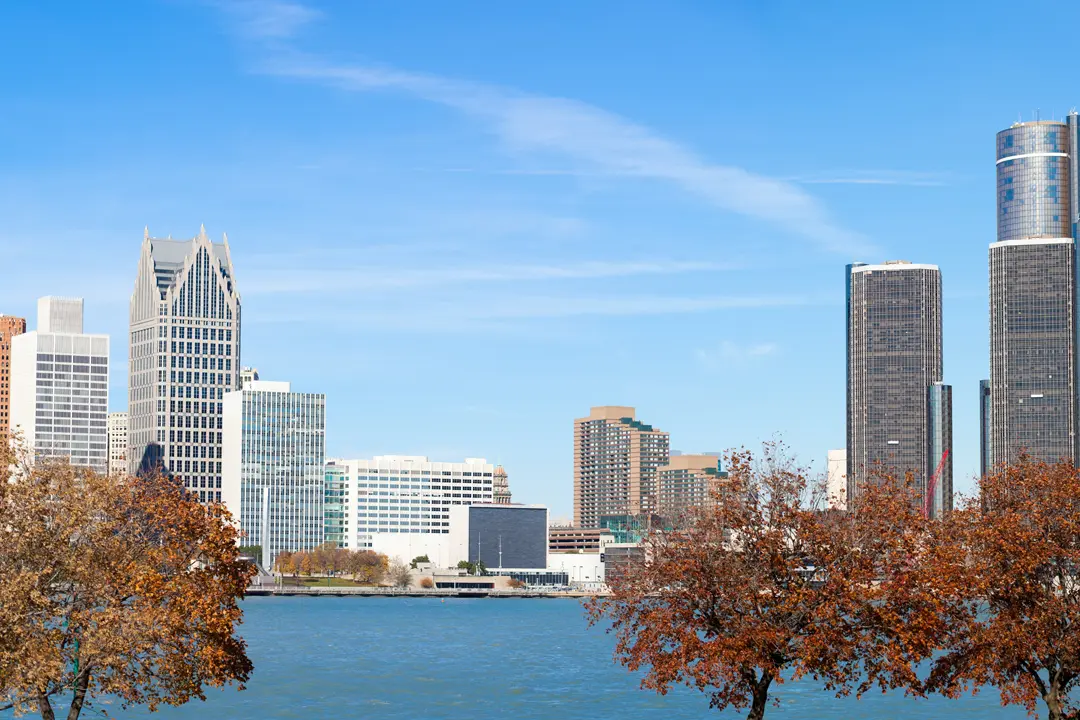
Michigan 101: Motor City Comeback, Great Lakes, and Four Distinct Seasons
Michael Reynolds • 13 Jan 2026 • 191 views • 3 min read.You think Michigan is dying Rust Belt state where Detroit collapsed, factories closed, population fled. Reality? Michigan is comeback story where Detroit bankruptcy (2013—$18 billion debt, largest municipal bankruptcy U.S. history) transformed into revitalization (downtown occupancy 98%, tech startups booming, Gilbert/Ilitch billions invested), automotive industry evolved (Ford electric F-150, GM Ultium battery platform—$7+ billion Michigan EV investment), and Great Lakes coastline (3,200 miles—more than any state except Alaska) creates freshwater paradise with sand dunes, beaches, islands rivaling ocean destinations. You dismiss "Pure Michigan" tourism campaign until discovering Sleeping Bear Dunes (voted most beautiful place America), Mackinac Island (car-free Victorian charm, $15 fudge), and Traverse City (wine country, cherry capital—140,000 acres orchards). But harsh truth: Michigan demands accepting brutal winters (lake-effect snow 200+ inches Upper Peninsula, Detroit -10°F wind chills), economic inequality (Detroit median income $35,000 versus Oakland County suburbs $85,000—stark contrast), infrastructure decay (Flint water crisis lingering symbol—systemic neglect), and population decline (10 million peak 2000, now 10 million stagnant—young people leave). The truth: Michigan offers authentic reinvention—affordable housing ($200,000 Detroit renovated homes), natural beauty (Great Lakes shoreline), automotive heritage evolving electric future—but demands accepting winter severity, economic challenges, urban decay reality, and recognition that comeback concentrated Detroit/Ann Arbor while rural Michigan struggles.
Geography and Climate: Two Peninsulas, Five Great Lakes
Understanding Michigan:
Size and landscape:
- 11th largest state:
- 97,000 square miles (including water—56,000 land)
- Population: 10 million (10th)
- Two separate peninsulas (Lower "mitten," Upper "UP"—unique U.S. geography)
- Great Lakes borders:
- Lake Michigan: West coast (entire length—beaches, dunes, ports)
- Lake Huron: East coast (Bay City, Port Huron—shipping)
- Lake Superior: Upper Peninsula north (coldest, deepest—maritime climate)
- Lake Erie: Southeast corner (Toledo border—shallow, warmer)
- Lake Ontario: Only Great Lake Michigan doesn't touch (Niagara Falls separates)
- Water access: More coastline than any state except Alaska (no point in Michigan more than 85 miles from Great Lake—water defines identity)
Three distinct regions:
Southeast Michigan (automotive heartland):
- Cities: Detroit (680,000 city, 4.3 million metro), Ann Arbor (123,000—University of Michigan), Dearborn (110,000—Ford HQ, Arab-American majority)
- Economy: Automotive manufacturing (Ford, GM, Stellantis—Big Three), tech startups (Detroit revival—Dan Gilbert Quicken Loans ecosystem), healthcare (Henry Ford, Beaumont)
- Culture: Working-class grit, comeback story (bankruptcy recovery, downtown renaissance—cautious optimism)
- Geography: Flat, urban sprawl (Metro Detroit spreads 100 miles—car-dependent)
West Michigan (conservative, religious):
- Cities: Grand Rapids (203,000—furniture heritage, Amway HQ), Holland (34,000—Dutch Reformed), Muskegon (38,000—lumber port)
- Economy: Office furniture (Steelcase, Herman Miller), manufacturing, agriculture (blueberries, apples—fruit belt)
- Culture: Conservative evangelical (Reformed Church strong—social conservatism dominant)
- Geography: Lake Michigan shore (beaches, dunes, resort towns—tourism)
Upper Peninsula "UP" (isolated, unique):
- Cities: Marquette (21,000—college town, scenic), Sault Ste. Marie (13,000—locks, Canadian border), Escanaba (12,000)
- Economy: Mining legacy (iron ore historic, copper—declining), tourism (wilderness, Pictured Rocks—pristine), forestry
- Culture: "Yoopers" (distinct identity, Finnish/French heritage—separate from Lower Michigan, consider secession jokes serious)
- Geography: Wilderness, forests, Lake Superior (harsh climate, sparsely populated—frontier feel)
Climate (lake-effect amplifies extremes):
Detroit (Lower Peninsula):
- Summer: 75-85°F (humid, pleasant—lake moderation minimal)
- Winter: 15-30°F (snow 45 inches/year, wind chill -10°F)
- Lake-effect: Less severe than west coast (downwind Lake Erie adds snow)
Grand Rapids/Muskegon (west coast):
- Summer: 70-80°F (lake breeze cooler)
- Winter: 20-30°F (snow 75-100 inches/year—lake-effect bands brutal)
- Cloud cover: Gray November-March (lake moisture—depressing darkness)
Upper Peninsula (extreme):
- Summer: 65-75°F (brief, cool—Superior never warms)
- Winter: 0-20°F (snow 200-300 inches annually—buried October-May)
- Isolation: Roads closed, towns cut off (snowmobiles = transportation—survival lifestyle)
Severe weather:
- Lake-effect snow: Paralyzes west coast (I-196 closed, whiteout conditions—annual certainty)
- Ice storms: Freezing rain (power outages, tree damage—2013 ice storm catastrophic)
- Tornados: 15-20 yearly (southern Michigan—Dexter 2012 EF3 major)
- Flooding: Detroit/Flint (aging sewer systems overwhelmed—climate change amplifying)
- Polar vortex: -20°F temps (vehicles won't start, frostbite minutes—life-threatening)
Detroit Renaissance: Bankruptcy to Revival
Understanding Detroit transformation:
Bankruptcy crisis (2013):
- Debt: $18 billion (pensions unfunded, bonds defaulted—largest municipal bankruptcy)
- Causes: Population collapse (1.8 million 1950 to 680,000 2013—62% decline), tax base evaporated, auto industry decline (outsourcing, automation—job losses), corruption (Mayor Kwame Kilpatrick imprisoned—decades mismanagement)
- Emergency manager: Kevyn Orr appointed (state takeover—controversial but necessary)
- Creditors: Pensioners, bondholders (haircuts taken—painful but recovery enabled)
- Exit: 2014 (restructured debt, pension cuts, state/foundation support—fresh start)
Downtown revival (2014-present):
Dan Gilbert investment:
- Real estate: Quicken Loans moved downtown (17,000 employees—anchor tenant)
- Buildings: 100+ properties purchased ($5+ billion invested—Detroit's biggest landlord)
- Startups: Rock Ventures ecosystem (venture capital, tech incubator—Silicon Valley Midwest)
- Sports: Relocated Cavaliers (Cleveland—Michigan ties maintained)
Ilitch family (Little Caesars):
- District Detroit: $1.4 billion (Little Caesars Arena—Red Wings, Pistons, entertainment)
- Development: Housing, retail, restaurants (mixed-use urban—60 blocks)
- Legacy: Mike Ilitch deceased 2017 (family continuing vision—transformative)
Ford revival:
- Michigan Central Station: $950 million renovation (abandoned 1988, decaying icon—now mobility innovation hub)
- Corktown: Historic neighborhood rebirth (Ford anchor, restaurants/shops—gentrification complicated)
- Autonomous vehicles: Testing ground (Michigan streets, weather—real-world conditions)
Current downtown reality:
Occupancy: 98% office/residential (from 50% bankruptcy—remarkable recovery)
New residents: Young professionals (tech, startups, automotive—reversing exodus)
Amenities: Restaurants, bars, sports (Comerica Park Tigers, Ford Field Lions—entertainment draws)
Limitations and challenges:
Geographic inequality:
- Downtown thriving: Investment concentrated (1-2 mile radius—prosperity bubble)
- Neighborhoods: Still struggling (blight, vacancy, crime—majority city unchanged)
- Two Detroits: Wealthy white downtown, poor Black neighborhoods (racial/economic division stark)
Population: Still declining slowly (680,000 to 632,000 2023—revival hasn't reversed exodus)
Infrastructure: Aging (water, roads, streetlights—decades deferred maintenance)
Education: Public schools struggling (charters proliferating—traditional district gutted)
Affordability paradox: Downtown rents rising ($1,400+ 1-bedroom—gentrification displacing longtime residents)
Suburban context:
Oakland County: Wealthiest county Michigan ($85,000 median income—Birmingham, Bloomfield Hills mansions)
Macomb County: Working-class (Warren, Sterling Heights—Trump Democrats, auto workers)
Wayne County suburbs: Mixed (Dearborn Arab-American, Livonia middle-class—diverse)
Regional inequality: Metro Detroit tale of two cities (suburban wealth, urban poverty—structural)
Automotive Heritage and EV Future
Understanding Michigan automotive:
Big Three dominance:
Ford:
- Headquarters: Dearborn (Glass House—company town vibes)
- Employees: 173,000 globally (65,000 Michigan—largest private employer)
- Legacy: Henry Ford Model T (assembly line invented—revolutionized manufacturing)
- Current: F-150 Lightning electric (Dearborn Truck Plant—$700 million investment), Mustang Mach-E
General Motors:
- Headquarters: Detroit Renaissance Center (downtown riverfront—GM moved back)
- Employees: 167,000 globally (50,000 Michigan)
- Legacy: Dominated 1950s-70s (peak 50%+ market share—decline followed)
- Current: Ultium platform (electric Silverado, Hummer EV—$7 billion Michigan battery plants)
Stellantis (Chrysler):
- Headquarters: Auburn Hills (FCA merged Peugeot—now Stellantis)
- Employees: 283,000 globally (40,000 Michigan)
- Legacy: Lee Iacocca bailout (1980s minivan saved company)
- Current: Electric Jeep, Ram trucks (STLA large platform—electrification)
EV transformation:
Investment: $25+ billion announced Michigan (battery plants, assembly retooling—largest manufacturing investment state history)
Jobs: 15,000+ new (battery workers, engineers—though fewer than traditional engines)
Challenges:
- Union concerns: UAW strike 2023 (EV jobs fewer, wages lower—transition complicated)
- Supply chain: Batteries require lithium, cobalt (China dominance—national security concern)
- Infrastructure: Charging stations sparse rural Michigan (range anxiety—adoption barrier)
Supplier ecosystem:
Tier 1: Bosch, Magna, ZF (major systems—steering, brakes, electronics)
Tier 2-3: Thousands small suppliers (Michigan corridor—tooling, machining, parts)
Risk: EV transition threatens (fewer moving parts, electric powertrains simpler—job losses)
Automotive culture:
Woodward Dream Cruise: Largest one-day auto event world (1.5 million attendees—August classic cars)
UAW: Strong union presence (though declining membership—right-to-work 2012 weakened)
Identity: Cars = Michigan (owning domestic vehicle expected—driving foreign judged)
Great Lakes and Natural Beauty
Understanding Michigan outdoors:
Coastline access:
Lake Michigan (west coast):
- Beaches: Silver Lake dunes (off-road vehicles—unique), Holland State Park (lighthouse, swimming)
- Towns: Saugatuck (art galleries, gay-friendly), South Haven (pier, beach town), Petoskey (Hemingway ties, stones)
- Sleeping Bear Dunes: 450-foot sand bluffs (voted most beautiful place America—bucket list)
Lake Huron (east coast):
- Quieter: Less tourism (more locals, pristine—undiscovered)
- Thumb: Port Austin, Caseville (sailing, fishing—peaceful)
- Lighthouses: 129 Michigan total (Great Lakes maritime history—photography gold)
Lake Superior (UP):
- Pictured Rocks: Cliffs, waterfalls, kayaking (national lakeshore—stunning)
- Marquette: College town (Northern Michigan University—outdoor recreation hub)
- Copper Harbor: Remote tip (hiking, mountain biking—wilderness end-of-road)
Mackinac Island:
- Access: Ferry only (car-free since 1898—horse carriages, bikes, walking)
- Fudge: Famous (Murdick's, Ryba's—tourist tradition buying pounds)
- Grand Hotel: Iconic (longest porch world—667 feet, jacket required dinner)
- Cost: Expensive ($300+ hotel rooms—but unique experience)
Traverse City:
- Wine country: Leelanau/Old Mission Peninsula (45 wineries—Riesling especially)
- Cherries: 40,000 acres orchards (National Cherry Festival July—tourism peak)
- Recreation: Skiing, beaches, trails (outdoor lifestyle—quality of life high)
- Growth: Population booming (remote workers, retirees—housing crisis developing)
Four seasons:
- Summer: Peak tourism (80°F, beaches packed—three-month window)
- Fall: Color tours (October spectacular—northern hardwoods)
- Winter: Skiing (Boyne, Crystal Mountain—snowmobiling UP)
- Spring: Brief (mud season—locals call it "fifth season," depressing gray-brown)
Cost of Living: Urban Affordable, Rural Struggling
Michigan expenses:
Housing (stark divide):
Detroit proper:
- Median: $80,000 (cheapest major U.S. city—but dangerous neighborhoods)
- Downtown: $200,000-400,000 renovated lofts (gentrification pricing—young professionals)
- Neighborhoods: $50,000-150,000 (condition varies wildly—due diligence critical)
- Challenges: Property taxes high (despite low values—cash-strapped city), crime concerns, blight surrounds
Detroit suburbs:
- Oakland County: $350,000-600,000 (Birmingham, Royal Oak—wealthy)
- Macomb County: $200,000-280,000 (Warren, Sterling Heights—working-class)
- Wayne County: $180,000-250,000 (Livonia, Westland—middle-class)
Ann Arbor:
- Median: $420,000 (university premium—most expensive Michigan)
- Rent: $1,400-2,000 1-bedroom (student demand inflates)
- Highly educated: 73% bachelor's degree+ (brain gain—attracts talent)
Grand Rapids:
- Median: $240,000 (affordable mid-size city)
- Growth: Population increasing (manufacturing stable, cost of living—attracting families)
Taxes (moderate):
- Income tax: 4.25% flat (simple, low)
- Sales tax: 6% (no local add-ons—consistent statewide)
- Property tax: 1.4% average (Detroit 3-4%—fiscal crisis legacy, suburbs 1.2%)
Daily costs:
- Groceries: National average (Meijer Michigan chain—superstore dominance)
- Gas: $3.20-3.60/gallon (moderate)
- Utilities: $120-200/month electric+gas (winter heating expensive—brutal cold)
Overall verdict:
- Detroit: Cheapest housing major city (but crime, blight trade-offs)
- Suburbs: Affordable quality of life ($250,000-350,000 good neighborhoods)
- Ann Arbor/Traverse City: Expensive Michigan standards (education, recreation premiums)
Living in Michigan: Who Fits?
Who thrives:
Automotive industry workers:
- Salaries: $60,000-100,000+ (union wages, engineers—stable careers)
- Legacy: Generational employment (grandparents/parents GM/Ford—family tradition)
- Future: EV transition (skills transferable, investment flowing—cautiously optimistic)
Outdoor enthusiasts (seasonal):
- Summer: Paradise (beaches, sailing, hiking—freshwater coast ideal)
- Fall: Color tours (spectacular—brief but worth it)
- Winter: Embrace activities (skiing, snowmobiling, ice fishing—survive by adapting)
Families seeking affordability:
- Suburbs: $250,000-350,000 buys house with yard (versus $600,000+ coasts)
- Schools: Good suburban districts (Birmingham, Novi, Northville—excellent)
- Safety: Low crime suburbs (Livonia, Rochester—family-friendly)
University communities:
- Ann Arbor: Progressive, educated, culture (U-M 47,000 students—intellectual vibrancy)
- East Lansing: MSU (50,000 students—Big Ten sports, college town feel)
- Kalamazoo: Western Michigan (pharmaceutical research—Pfizer legacy)
Who struggles:
Those hating cold/gray:
- Winter: Six months brutal (November-April ice/snow, gray skies—oppressive)
- Lake-effect: West coast buried (200+ inches annually—claustrophobic)
- Seasonal depression: Common (darkness, isolation—Vitamin D deficiency)
Career climbers outside automotive:
- Limited industries: Manufacturing dominates (tech growing but modest—coastal exodus)
- Salaries: 15-20% below coasts (offset by cost but ceiling lower)
- Brain drain: Talented leave (Chicago, coasts—Michigan State/U-M graduates don't return)
Urban pioneers unrealistic expectations:
- Detroit: Downtown revival real but limited (1-2 mile radius—beyond dangerous)
- Gentrification: Complicated (displacing Black residents—moral considerations)
- Infrastructure: Still broken (water, roads—decades fixing required)
Rural residents:
- Population decline: Young people fleeing (aging, services closing—dying towns)
- Economic: Manufacturing gone, farming consolidating (limited opportunities—poverty)
- Opioid crisis: Severe rural Michigan (unemployment, hopelessness—epidemic)
Michigan offers authentic reinvention for specific populations—automotive workers in EV transition ($25+ billion investment, 15,000 jobs), outdoor enthusiasts accessing 3,200 miles Great Lakes coastline (Sleeping Bear Dunes, Mackinac Island—freshwater paradise), families seeking affordability ($240,000 Grand Rapids homes, $250,000-350,000 Detroit suburbs versus coastal $600,000+), and comeback believers in Detroit renaissance (downtown 98% occupied, Dan Gilbert $5+ billion invested). Four distinct seasons, automotive heritage evolving electric, and genuine Midwest grit appeal to those accepting brutal winters (lake-effect snow 200+ inches UP, -10°F wind chills), economic inequality (Detroit $35,000 median income versus Oakland County $85,000—stark divide), infrastructure decay (Flint water crisis legacy—systemic neglect), and population stagnation (10 million peak 2000, flat since—brain drain). Downtown Detroit revival real but geographically limited (neighborhoods still struggling—majority city unchanged). For the right person, Michigan's comeback story, natural beauty, and affordability justify challenges. For others, winter severity and economic uncertainty outweigh benefits.
Michigan works for those believing in reinvention and accepting seasonal brutality.