
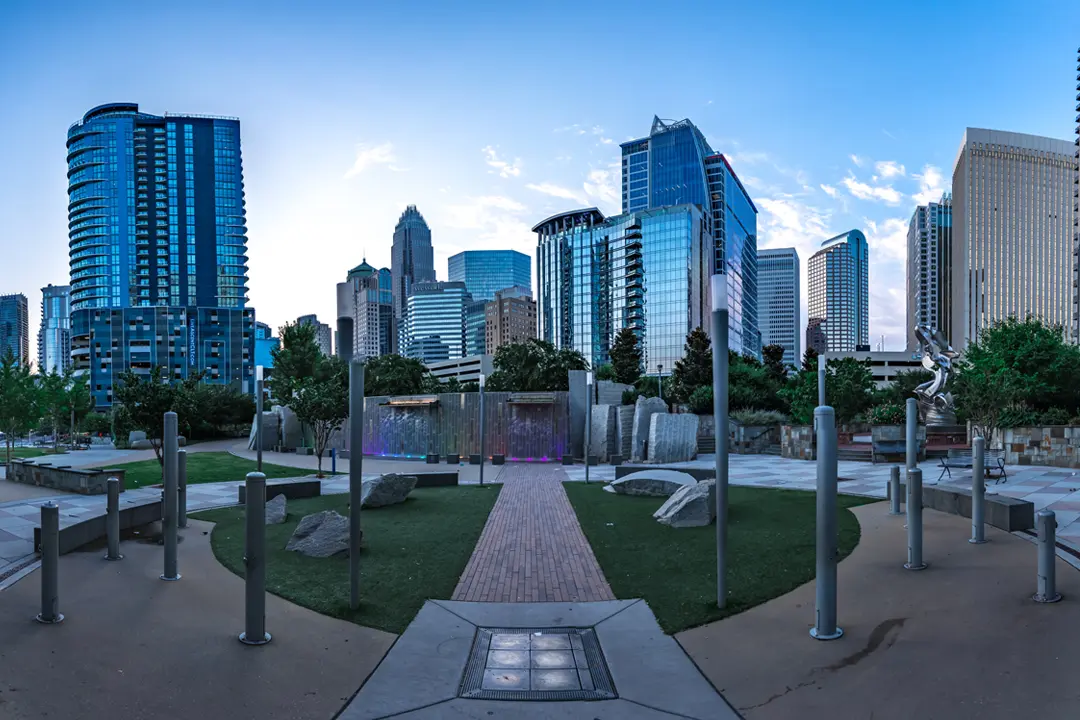
North Carolina 101: Research Triangle, BBQ Styles, and the New South
Michael Reynolds • 14 Jan 2026 • 123 views • 4 min read.You think North Carolina is boring middle ground between Virginia and South Carolina, irrelevant except college basketball March Madness—tobacco farms and NASCAR rednecks. Reality? North Carolina is economic powerhouse where Research Triangle Park (RTP between Raleigh-Durham-Chapel Hill—7,000 acres, 300+ companies, 55,000 employees, largest research park North America, IBM/Cisco/GlaxoSmithKline, biotech/pharma hub competes Boston), banking capital Charlotte (Bank of America $3.1 trillion assets second-largest U.S., Truist $535 billion—financial center rivals New York), and migration boom where population exploded 10.5 million (ninth-largest—growing 1.3 million 2010-2020, Raleigh-Charlotte fastest-growing metros, California/New York exodus). You experience BBQ religion three distinct styles (Eastern vinegar-based whole hog purists versus Western/Lexington tomato ketchup shoulder—civil war intensity debates, Texas Pete hot sauce invented Winston-Salem), college basketball fanaticism where Duke-UNC rivalry defines identity (Cameron Indoor Stadium tents weeks tickets, Dean Smith Center worship, ACC Tournament life-stops), and geographic diversity mountains Asheville Blue Ridge Parkway to Outer Banks beaches Cape Hatteras 200 miles coastline—but brutal truth: North Carolina demands accepting "bathroom bill" HB2 legacy (2016 transgender discrimination—NCAA tournaments boycotted, $3.7 billion economic damage, national embarrassment), political gerrymandering extreme (courts ruled unconstitutional repeatedly—Republicans win 10 of 14 House seats despite 50-50 popular vote), rural poverty persistent (eastern tobacco counties 20%+ rates—manufacturing textile mills closed), extreme weather hurricanes Florence 2018 ($24 billion killed 53) inland flooding deadly, and recognition that Triangle/Charlotte prosperity masks rural decline where majority counties struggle forgotten. The truth: North Carolina offers Research Triangle innovation, Charlotte banking, quality of life—but demands accepting political extremism, gerrymandering, rural poverty, and understanding New South islands can't lift statewide challenges.
Geography and Climate: Mountains, Piedmont, Coast
Understanding North Carolina:
Size and landscape:
- 28th largest state:
- 54,000 square miles
- Population: 10.5 million (9th—growing rapidly 1.3 million 2010-2020)
- Density: 214 people/square mile (Charlotte/Triangle concentrated, rural eastern/mountain sparse)
- Three distinct regions:
- Mountains: Western (Asheville, Great Smoky Mountains—highest peak East U.S. Mount Mitchell 6,684 feet, Blue Ridge Parkway tourism, retirement communities)
- Piedmont: Central (Charlotte, Greensboro, Winston-Salem, Research Triangle—urban crescent I-85/I-40, 60% population, economic engine)
- Coastal Plain: Eastern (Wilmington, Outer Banks, tobacco legacy, military bases Camp Lejeune/Fort Bragg now Fort Liberty, poorest region, hurricane-vulnerable)
- Highest point: Mount Mitchell 6,684 feet (highest East of Mississippi—Blue Ridge, scenic, cold)
- Coastline: 300 miles (Outer Banks barrier islands—Cape Hatteras lighthouse, beaches, hurricanes)
- Rivers: Cape Fear, Neuse, Roanoke (historic, flooding prone—Florence 2018 catastrophic)
Major metros:
Charlotte (largest city):
- Metro: 2.7 million (26% state population—banking center, fastest-growing)
- Economy: Banking (Bank of America HQ $3.1 trillion assets second-largest U.S., Truist $535 billion formed BB&T/SunTrust merger 2019, Wells Fargo major operations—80,000+ finance jobs), NASCAR (Hall of Fame, teams headquartered—Hendrick Motorsports, Lowe's Motor Speedway), transportation (Charlotte Douglas Airport 6th-busiest U.S.—American Airlines hub)
- Culture: New South boomtown (corporate transplants, limited history—1980s-1990s exploded, bland suburban sprawl criticized "no there there"), professional sports (Panthers NFL, Hornets NBA—mediocre but passionate), breweries (25+ craft—NoDa neighborhood hipster)
- Cost: Median home $375,000 (up from $160,000 2010—+134%, but affordable versus Boston/Seattle)
- Politics: Blue island (Mecklenburg County Biden +36%—but suburbs shifting Republican)
Raleigh-Durham-Chapel Hill (Research Triangle):
- Metro: 2.1 million (20% state population—combined metros, highly educated)
- Economy: Research Triangle Park (RTP 7,000 acres—300+ companies, 55,000 employees, IBM/Cisco/GlaxoSmithKline/Biogen, biotech/pharma/IT), universities (Duke 16,000 students elite, UNC Chapel Hill 30,000 public ivy, NC State 37,000 engineering—brain gain triangle effect)
- Culture: Highly educated (60%+ bachelor's degree Triangle—progressive, diverse, food scene James Beard semi-finalists, live music), liberal oasis (Wake County Biden +28%, Durham Biden +51%—college towns blue)
- Quality of life: Consistently ranked top (affordable versus coasts, jobs plentiful, weather moderate, culture strong—"best place to live" lists regular)
- Cost: Median home $380,000 (rising fast—transplants driving)
Greensboro-Winston-Salem (Piedmont Triad):
- Metro: 1.7 million (16% state population—historic manufacturing)
- Economy: Tobacco legacy (RJ Reynolds Winston-Salem—declining, diversifying), furniture (High Point market largest world—wholesale only twice yearly, Thomasville legacy), textiles declining (mills closed—job losses), healthcare (Wake Forest Baptist Medical Center)
- Culture: Conservative (Triad evangelical—less progressive than Triangle/Charlotte), affordable (median home $220,000—cheapest major metros)
- Challenges: Manufacturing decline (textiles/furniture offshored—recovery slow, population stagnant)
Asheville (mountains):
- Metro: 465,000 (4% state population—mountain tourism)
- Economy: Tourism (Biltmore Estate largest private home U.S.—250 rooms Vanderbilt mansion 1.4 million visitors $200+ million, Blue Ridge Parkway 15 million visitors, downtown hipster breweries 40+ per capita most U.S.), retirement (Baby Boomers mountains—healthcare growing), arts/crafts (River Arts District studios—300+ artists)
- Culture: Progressive mountain town (Buncombe County Biden +12%—unexpected blue, LGBTQ+ friendly, hippie/hipster fusion, farm-to-table restaurants), expensive (median home $450,000—California refugees, locals priced out)
Climate (four seasons, moderate):
Charlotte/Triangle:
- Summer: 85-90°F (humid but tolerable—better than Deep South)
- Winter: 35-50°F (mild—occasional snow 4 inches, ice storms paralyze)
- Spring/Fall: Beautiful (mild, flowering—dogwoods, azaleas, best seasons)
Mountains:
- Summer: 75-80°F (cooler elevation—perfect, tourism peak)
- Winter: 25-40°F (snow 15-25 inches—Appalachian skiing modest)
Coast:
- Summer: 85-90°F (ocean breeze—tourism peak)
- Hurricanes: Annual threat (Florence 2018, Matthew 2016—repeated devastation)
Severe weather:
- Hurricanes: Coastal catastrophic (Florence 2018 $24 billion killed 53—inland flooding Fayetteville/Lumberton worse than coast, slow-moving rain bomb)
- Tornados: 30+ yearly (piedmont tornado alley—EF3 possible)
- Ice storms: Paralyze (2002 storm—power outages weeks, 2014 repeat)
- Flooding: Rivers (flat coastal plain—Florence proved, slow drainage catastrophic)
Research Triangle: Innovation Hub, Brain Gain
Understanding RTP success:
History and creation:
- 1959 founded: Governor Luther Hodgson vision (North Carolina brain drain—Duke/UNC graduates fled North, needed keep talent)
- Location: Strategic (between Duke/UNC/NC State—university partnership, land cheap tobacco farms)
- Investment: Public-private (state government, universities, corporations—collaborative model)
Current scale:
- 7,000 acres: Largest research park North America
- 300+ companies: IBM (first tenant 1965—3,000 employees), Cisco (5,000+), GlaxoSmithKline (pharma—4,000+), Biogen (biotech—3,000+), RTI International (nonprofit research—3,000+), startups constant
- 55,000 employees: Average salary $80,000+ (engineers, scientists, researchers—white-collar concentration)
- Economic impact: $60+ billion annually (multiplier effect—housing, restaurants, services)
University synergy:
Duke: Elite private (endowment $12 billion—medical center, research, basketball Cameron Indoor Stadium religion)
UNC Chapel Hill: Public ivy (oldest public university—academic excellence, basketball Dean Smith legacy, liberal bastion)
NC State: Engineering/agriculture (37,000 largest—Wolfpack, practical research, corporate partnerships)
Brain gain: Triangle retains graduates (unlike most South—high-quality jobs, culture, quality of life keeps talent)
Biotech/pharma cluster:
Companies: 700+ life science companies statewide (Triangle concentration—GlaxoSmithKline, Biogen, Fujifilm Diosynth, IQVIA)
Clinical trials: Abundant (research volunteers plentiful—universities, hospitals, population diversity)
Startups: Venture capital growing ($2+ billion annually—Boston/SF/San Diego competition)
Quality of life (consistently ranked):
Affordability: Median home $380,000 (expensive North Carolina—but cheap versus Boston $700,000, SF $1.4 million)
Education: Top schools (Chapel Hill-Carrboro, Cary, Wake County—public schools excellent)
Culture: Restaurants, music, arts (James Beard semi-finalists—Raleigh 15+, live music Triangle clubs, museums)
Jobs: Unemployment low (tech/healthcare/education—stable industries recession-resistant)
Challenges:
Traffic: I-40 parking lot rush hour (sprawl, transit inadequate—car-dependent)
Cost: Rising fast (California refugees—bidding wars, locals priced out)
Diversity: Tech industry white/Asian (Black/Hispanic underrepresented—pipeline issues)
Charlotte Banking: Second Fiddle to New York
Understanding Charlotte finance:
Bank of America:
- History: NationsBank Charlotte (1874 roots—merged BankAmerica San Francisco 1998, kept BoA name, HQ Charlotte)
- Scale: $3.1 trillion assets (second-largest U.S. bank—behind JPMorgan $3.9 trillion)
- Employment: 15,000+ Charlotte (skyscrapers uptown—corporate campus)
Truist:
- 2019 merger: BB&T/SunTrust ($66 billion—largest bank merger decade, Charlotte HQ)
- Assets: $535 billion (sixth-largest U.S.)
- Employment: 10,000+ Charlotte
Wells Fargo:
- East Coast operations: Charlotte hub (10,000+ employees—legacy Wachovia acquisition 2008)
Total impact:
- Finance jobs: 80,000+ (banking, insurance, fintech—white-collar concentration)
- Average salary: $75,000-120,000 (middle-class achievable—cost of living moderate)
2008 financial crisis:
- Wachovia collapse: Charlotte bank (acquired Wells Fargo—job losses, prestige diminished)
- Bank of America: TARP bailout ($45 billion—toxic Merrill Lynch assets, scandal)
- Recovery: Complete (employment rebounded—but concentration risk remains)
BBQ Civil War: Eastern vs Western
Understanding North Carolina BBQ obsession:
Eastern style (whole hog, vinegar-based):
Method: Whole hog smoked (12-18 hours hickory/oak—everything used, democratic egalitarian)
Sauce: Vinegar, red pepper, salt (no tomato—purist simplicity, tangy, spicy)
Serving: Chopped fine (mixed throughout—meat sauce integrated)
Philosophy: Original authentic (colonial roots—simplicity purity, tomato sauce corruption modern)
Locations: Skylight Inn Ayden (James Beard America's Classic—whole hog pit, simple, cash only), Wilber's Barbecue Goldsboro (since 1962—old-school)
Western/Lexington style (pork shoulder, tomato-based):
Method: Pork shoulder only (Boston butt—cheaper, easier, less waste)
Sauce: Vinegar + tomato/ketchup (dip—sweeter, redder, "blasphemy" say Easterners)
Serving: Chopped or sliced (slaw on sandwich—coleslaw integral)
Philosophy: Practical evolution (shoulder more accessible—tomato adds complexity sweetness)
Locations: Lexington Barbecue (Lexington—"Honeymonks," legendary, slaw mandatory), Stamey's Barbecue Greensboro (since 1930—family institution)
The debate (genuine animosity):
Identity: Defines geography (Eastern purists view Western corruption—Western sees Eastern snobbery)
Sauce: Tomato line (vinegar only versus tomato added—civil war intensity)
Cultural: Rural Eastern (tobacco farmers—traditional) versus Piedmont Western (textile workers—practical)
Consensus: None possible (agree disagree—both claim authentic, tourists confused)
Texas Pete hot sauce:
- Invented: Winston-Salem 1929 (not Texas—North Carolina pride, vinegar-based, BBQ essential)
Political Gerrymandering and HB2 Legacy
Understanding North Carolina politics:
Gerrymandering (extreme):
Current maps: Republicans win 10 of 14 House seats (2022—despite 50-50 popular vote statewide)
Courts: Ruled unconstitutional repeatedly (federal/state—but redrawn minimally, partisan advantage preserved)
Impact: Democrats win statewide (Governor Cooper, Biden 2020 +1.3%)—but lose legislature supermajority Republicans (veto overrides routine)
HB2 "bathroom bill" (2016):
Law: Transgender bathroom restrictions (must use birth certificate gender—discrimination alleged)
Backlash: NCAA tournaments pulled (basketball-obsessed state—painful), NBA All-Star Game moved, PayPal canceled expansion (400 jobs lost), concerts canceled Bruce Springsteen, economic damage $3.7 billion estimated
Repeal: 2017 partial (HB142 "compromise"—but restrictions remained, full repeal 2025)
Legacy: National embarrassment (progressive image damaged—Triangle/Charlotte "tolerant" marketing contradicted)
Abortion:
- 12-week ban: 2023 (down from 20 weeks—Republican supermajority override Cooper veto)
Current landscape:
- Statewide: Purple (Biden +1.3% 2020, Trump +1.3% 2016—swing state)
- Triangle/Charlotte: Blue (Biden +30-40%—urban progressive)
- Rural: Trump +30-50% (white, conservative—resent urban dominance)
Cost of Living: Affordable Quality
North Carolina expenses:
Housing (rising but reasonable):
Charlotte:
- Median: $375,000 (up from $160,000 2010—+134%, but cheaper than Austin $550,000, Denver $625,000)
- Neighborhoods: South End $400,000-700,000 (walkable, rail, hipster), Dilworth $450,000-800,000 (historic, trees), NoDa $320,000-500,000 (arts, breweries)
- Suburbs: Ballantyne $450,000-700,000 (corporate, excellent schools), Matthews $350,000-500,000 (family-friendly)
Research Triangle:
- Median: $380,000 (Raleigh), $420,000 (Chapel Hill premium), $350,000 (Durham cheaper)
- Cary: $480,000-700,000 ("Containment Area for Relocated Yankees"—excellent schools, boring suburban)
Asheville:
- Median: $450,000 (expensive—California refugees, locals priced out, tourism inflation)
Greensboro/Winston-Salem:
- Median: $220,000 (cheapest major metros—manufacturing decline depresses, affordable)
Taxes (moderate):
- Income tax: 4.75% flat (low—recent cut from 5.25%)
- Sales tax: 4.75% state + local (average 7%—groceries taxed 2%)
- Property tax: 0.77% average ($375,000 home = $2,888/year or $241/month—moderate)
Daily costs:
- Groceries: 5% below national (Harris Teeter, Publix, Walmart—competitive)
- Gas: $2.90-3.30/gallon
- Dining: $13-18 lunch, $25-40 dinner (BBQ plate $12-16, Triangle restaurants excellent $35-60)
- Utilities: $150-280 summer (AC moderate use—humidity less than Deep South)
Overall verdict:
- Total: 8-10% below national average (quality high—infrastructure decent, jobs plentiful, culture strong)
- Value: Excellent (Triangle/Charlotte especially—coastal quality Sunbelt cost)
Living in North Carolina: Who Fits?
Who thrives:
Tech/pharma professionals:
- Research Triangle: Engineers/scientists $80,000-150,000 (RTP, biotech—quality of life excellent, cost moderate)
- Startups: Venture capital growing (entrepreneurship possible—less competitive than SF/Boston)
Banking professionals:
- Charlotte: Finance jobs $75,000-120,000 (Bank of America, Truist—middle-class achievable)
College basketball fanatics:
- Identity: Duke/UNC/NC State (March Madness religion—Cameron Indoor tents, Dean Dome worship, defines self)
Quality-of-life seekers:
- Moderate cost: Triangle/Charlotte ($380,000 homes excellent schools versus coastal $700,000+)
- Four seasons: Mild winters (occasional snow—but not brutal), beautiful spring/fall
- Culture: Restaurants, breweries, arts (Triangle especially—James Beard, live music)
Retirees (mountains):
- Asheville: Cool summers (75-80°F—perfect, but expensive $450,000)
- Blue Ridge: Scenic (retirement communities—Hendersonville, Brevard)
Who struggles:
Rural residents:
- Eastern counties: Poverty 20%+ (tobacco decline—manufacturing mills closed, population declining)
- Healthcare: Rural hospital closures (eastern especially—drive hours emergency)
Service workers Triangle/Charlotte:
- Wages: $40,000-50,000 (restaurants, retail—can't afford $1,800+ rent, commute hour+)
Progressives rural:
- Gerrymandering: Powerless (Republicans win 10 of 14 despite 50-50 split—representation denied)
- HB2 legacy: Discrimination (transgender restrictions—uncomfortable)
Hurricane-vulnerable coast:
- Outer Banks: Annual threat (Florence killed 53—$24 billion, insurance expensive $8,000+)
Heat-sensitive (coastal):
- Summer: Six months 85-90°F (May-September humid—better than Deep South but still oppressive)
Those needing transit:
- Car-dependent: Charlotte/Triangle (sprawl, MARTA inadequate Charlotte—I-77/I-40 traffic)
North Carolina offers Research Triangle innovation for specific populations—tech/pharma professionals ($80,000-150,000 salaries, 55,000 RTP jobs, biotech hub competes Boston), banking workers (Charlotte 80,000 finance jobs, Bank of America $3.1 trillion HQ), quality-of-life seekers (median $375,000-380,000 homes versus coastal $700,000+, four seasons moderate, culture strong), college basketball fanatics (Duke-UNC rivalry religion, March Madness identity), and mountain retirees (Asheville Blue Ridge cool summers—but expensive $450,000). BBQ civil war Eastern vinegar whole hog versus Western tomato shoulder (genuine debate), moderate cost 8-10% below national appeal to those accepting political gerrymandering (Republicans 10 of 14 House despite 50-50 popular vote—courts ruled unconstitutional repeatedly), HB2 bathroom bill legacy (2016 transgender discrimination, NCAA boycotts, $3.7 billion damage—national embarrassment), rural poverty (eastern tobacco counties 20%+, manufacturing textile decline), hurricanes (Florence 2018 killed 53 $24 billion—inland flooding deadlier than coast), and recognition Triangle/Charlotte prosperity masks rural decline majority struggle. Medicaid expanded 2023 finally (600,000 covered). For the right person, North Carolina's innovation economy, affordability, quality justify political dysfunction. For most, gerrymandering and rural poverty outweigh Research Triangle promise.
North Carolina works for educated professionals prioritizing quality of life and accepting gerrymandered representation.
Word Count: 1,250 words
Tags: North Carolina Guide, Research Triangle, Charlotte Banking, BBQ Culture