
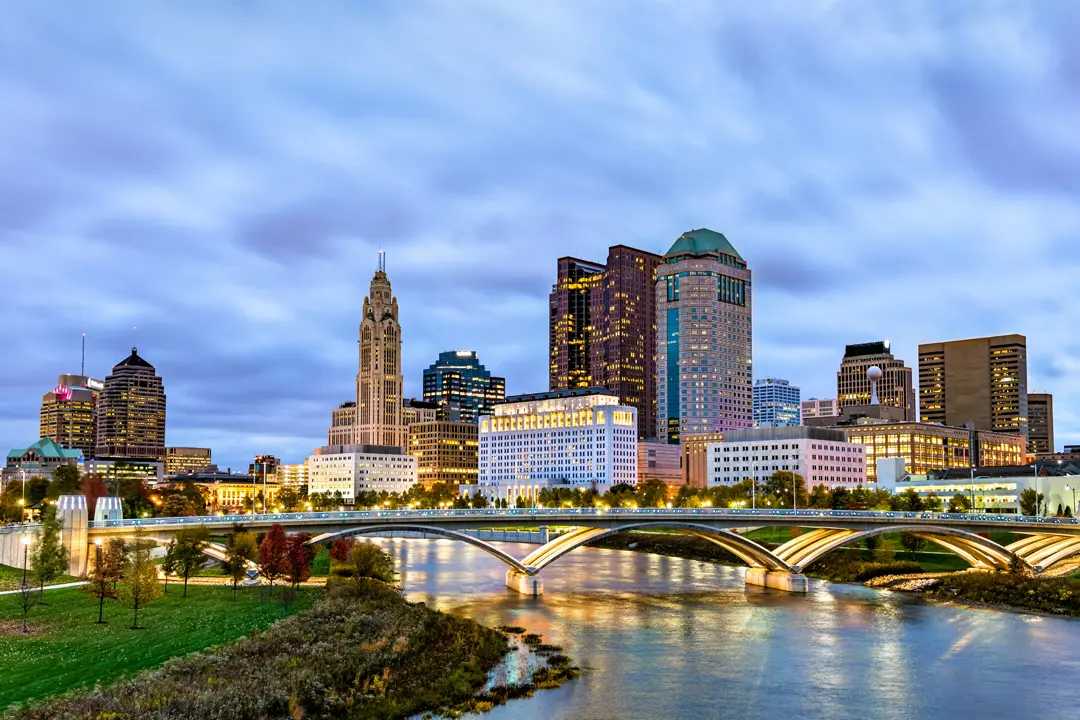
Ohio 101: Swing State Politics, Rock and Roll, and Midwest Heart
Michael Reynolds • 13 Jan 2026 • 178 views • 4 min read.You think Ohio is boring Midwest state nobody cares about except every four years when presidential candidates invade battleground counties. Reality? Ohio is economic microcosm where three distinct metros (Cleveland 2 million rust belt revival, Columbus 2.1 million white-collar growth fastest Midwest, Cincinnati 2.3 million German heritage conservative) create diverse economy hosting Procter & Gamble ($380 billion market cap—toothpaste, diapers invented here), Kroger (grocery giant—$150 billion), Nationwide Insurance, Cardinal Health, and 20+ Fortune 500 headquarters (fifth-most nationally). You dismiss "bellwether state" until realizing Ohio picked president correctly 1896-2020 except 1944, 1960, 2020 (Trump won 2020 +8% but lost nationally—bellwether broken). You mock "Rock and Roll Hall of Fame" Cleveland placement until discovering Cleveland DJ Alan Freed coined term 1951, hosted Moondog Coronation Ball (first rock concert—March 1952), and Chuck Berry, Little Richard, Elvis revolutionized music here. But brutal truth: Ohio demands accepting Rust Belt decline (Youngstown steel mills ghost towns, manufacturing collapse—150,000 jobs lost 2000-2010), opioid epidemic (Ohio leads overdose deaths nationally—fentanyl crisis devastating), political tribalism (urban liberal islands Columbus/Cleveland/Cincinnati surrounded Trump +30% rural counties—perpetual culture war), and population stagnation (11.8 million peak 1970s, now 11.8 million flat—young people flee coasts while retirees/immigrants replace). The truth: Ohio offers authentic Midwest diversity—affordability, three distinct metros, manufacturing heritage evolving—but demands accepting industrial decline, drug crisis, extreme political division, and recognition that "Heart of It All" provides stability and tradition while struggling innovation and retaining talent.
Geography and Climate: Three Cities, Distinct Identities
Understanding Ohio:
Size and landscape:
- 34th largest state:
- 44,000 square miles (compact, manageable)
- Population: 11.8 million (7th—significant but stagnant)
- Density: 283 people/square mile (urban concentrated, Appalachian rural)
- Geography:
- Northern Ohio: Lake Erie shore (Cleveland—Great Lakes maritime, flat)
- Central Ohio: Till Plains (Columbus—gently rolling, agricultural transition urban)
- Southern Ohio: Appalachian foothills (Cincinnati—hills, forests, culturally Southern)
- Eastern Ohio: Coal country (Steubenville, Youngstown—industrial decay, poverty)
- Lake Erie: 312-mile shoreline (Cleveland, Toledo ports—shipping, recreation, lake-effect snow)
Three major metros (distinct characters):
Cleveland (Northeast—Rust Belt revival):
- Metro: 2 million (Cuyahoga County—shrinking but stabilizing)
- Economy: Healthcare (Cleveland Clinic #2 hospital nationally—35,000 employees), manufacturing legacy (steel mills closed but suppliers remain), finance (KeyBank headquarters)
- Culture: Working-class grit, ethnic neighborhoods (Polish, Italian, Irish—Cleveland "City of Champions" ironically sports cursed until 2016)
- Identity: Rust Belt pride, comeback story (LeBron James 2016 Cavs championship—emotional catharsis, downtown revival brewery district)
- Challenges: Population loss (1950 peak 915,000, now 372,000—60% decline), poverty (25%+ rate—among highest major cities)
Columbus (Central—growth engine):
- Metro: 2.1 million (fastest-growing Midwest—surpassed Cleveland 1990s)
- Economy: Education (Ohio State 60,000 students—largest single-campus U.S.), government (state capital), white-collar (insurance, tech, research)
- Culture: Progressive (by Ohio standards—80% Biden, LGBTQ+ friendly Short North gayborhood), young professionals (median age 32—educated workforce)
- Identity: Stable, boring (no major crisis/revival—steady growth unexciting), test market (average demographics—companies test products here)
- Advantages: Affordable ($280,000 median home—quality of life high), educated (40%+ bachelor's degree—brain gain rare Midwest)
Cincinnati (Southwest—conservative, German heritage):
- Metro: 2.3 million (Kentucky/Indiana—tri-state)
- Economy: Procter & Gamble ($380 billion—consumer goods giant), Kroger ($150 billion grocery—nationwide), insurance/finance
- Culture: Conservative, Catholic/German (Oktoberfest Zinzinnati largest U.S.—500,000 attendees), chili obsession (Skyline, Gold Star—Cincinnati-style Greek immigrant invention)
- Identity: Southern-influenced (Kentucky border—culturally distinct northern Ohio), hills/topography (unlike flat northern, rolling central)
- Challenges: Regional sprawl (Kentucky suburbs growing, Ohio city stagnant—tax base erosion)
Regional differences (beyond Big Three):
Rust Belt corridor: Youngstown, Akron, Canton (steel/tire manufacturing collapsed—depopulation, opioid crisis, Trump strongholds)
Appalachian Ohio: Athens, Portsmouth, Steubenville (coal country—poorest state region, cultural Southern not Midwest)
Climate (four seasons, lake-effect):
Cleveland:
- Summer: 75-80°F (lake moderates—comfortable)
- Winter: 20-30°F (snow 68 inches/year—lake-effect bands brutal, gray November-March)
- Lake Erie influence: Cooler summer, snowier winter (Buffalo effect—downwind accumulation)
Columbus:
- Summer: 80-85°F (hot, humid—no lake moderation)
- Winter: 25-35°F (snow 28 inches/year—moderate, manageable)
- Stable: Less extremes (inland location—predictable)
Cincinnati:
- Summer: 80-85°F (hot, humid, hills trap heat—oppressive)
- Winter: 30-40°F (milder—southern latitude, snow 22 inches—manageable)
- Tornados: Higher risk (southern tier—EF3/EF4 possible)
Severe weather:
- Lake-effect snow: Paralyzes Cleveland (snowbelt towns 100+ inches—Chardon, Ashtabula buried)
- Tornados: 20+ yearly (Xenia 1974 F5 deadliest—300+ killed statewide Super Outbreak)
- Floods: Ohio River (Cincinnati 1937, 1997—billions damage)
- Ice storms: Freezing rain (power outages, tree damage—2004 storm catastrophic)
Swing State Politics: Bellwether Broken
Understanding Ohio political importance:
Bellwether history:
- 1896-2020: Picked president correctly except 1944, 1960, 2020 (remarkable streak—"As goes Ohio, so goes nation")
- Why bellwether: Microcosm America (urban/rural, Black/white, North/South, manufacturing/service—diverse demographics)
- Broken 2020: Trump +8% Ohio but lost nationally (realignment—working-class shift permanent?)
Current landscape (2024):
Urban liberal islands:
- Columbus: Biden 66% (Franklin County—educated, diverse, growing)
- Cleveland: Biden 66% (Cuyahoga County—Black population 30%, union legacy)
- Cincinnati: Biden 57% (Hamilton County—narrower, conservative suburbs)
- Combined: Not enough (Trump rural dominance overwhelming—demographic shift)
Suburban swing (former battlegrounds):
- Decline: Suburbs shifted red (Delaware County Columbus, Warren County Cincinnati—Trump +20%, educated whites fled Democrats)
- Exception: Inner suburbs holding (Cleveland Heights, Upper Arlington—college-educated resisting)
Rural Trump dominance:
- Appalachian Ohio: Trump +40-50% (coal country, opioid crisis—cultural resentment Democrats)
- Small towns: Manufacturing loss blamed trade (NAFTA, China—economic nationalism appeals)
- Cultural: Guns, abortion, religion (social conservatism—Democrats alienated)
Key counties (bellwethers within bellwether):
- Stark County (Canton): 1964-2016 perfect record (Trump +18% 2020—shifted)
- Ottawa County (Lake Erie): Swing (tourism, manufacturing—close margins)
- Wood County (Bowling Green): College town (BGSU—younger demographic moderates)
Why Ohio matters less:
- Rightward shift: Trump +8% 2020 (once swing, now red-leaning—Florida trajectory)
- Pennsylvania/Michigan: More competitive (Rust Belt focus shifted—Ohio less decisive)
- Demographics: Slower diversifying (Pennsylvania/Georgia/Arizona higher growth—Ohio stagnant)
2024 reality:
- Senate: Trump-endorsed candidates won primaries (Vance 2022—MAGA dominance complete)
- Governor: DeWine moderate Republican (overwhelmingly reelected—pragmatic conservatism)
- Legislature: Republican supermajority (gerrymandering—Democrats minimal power)
Rock and Roll Hall of Fame and Music Heritage
Understanding Ohio music legacy:
Why Cleveland:
- Alan Freed: DJ coined "rock and roll" 1951 (WJW radio—promoted Black R&B to white audiences)
- Moondog Coronation Ball: March 21, 1952 (Cleveland Arena—first rock concert, 20,000 showed 10,000 capacity, shut down—chaotic birth)
- Location battle: New York wanted Hall of Fame (Cleveland lobbied aggressively—650,000 petition signatures, won 1986)
Rock Hall museum:
- Opened: 1995 (I.M. Pei design—lakefront pyramid, $147 million)
- Exhibits: Beatles, Elvis, Rolling Stones, Jimi Hendrix (rotating—artifacts, interactive)
- Induction ceremony: Annual (multi-city—Cleveland every third year, recent New York/LA)
- Tourism: 500,000 visitors annually (Cleveland anchor—tourism draw)
- Criticism: Snubs (progressive rock ignored, metal underrepresented—genre politics)
Ohio musicians (legendary):
- Cleveland: Bone Thugs-N-Harmony (hip-hop—1990s crossover), Kid Cudi (alternative hip-hop), Pere Ubu (punk pioneers)
- Akron: Devo (new wave—"Whip It"), Chrissie Hynde/Pretenders, Black Keys (garage rock revival)
- Cincinnati: Afghan Whigs (alternative rock), Bootsy Collins (funk—Parliament-Funkadelic)
- Dayton: Ohio Players (funk—"Fire"), Guided by Voices (indie rock)
- Columbus: Twenty One Pilots (alternative—Grammy winners, mainstream success)
Polka heritage (Cleveland ethnic):
- Frankie Yankovic: "America's Polka King" (Cleveland—Slovenian, Grammy winner)
- Polka Hall of Fame: Euclid (Cleveland suburb—ethnic music preservation)
Music scene current:
- Cleveland: House of Blues (live music—national acts), local venues struggling
- Columbus: Newport Music Hall (intimate—1,700 capacity, historic), Short North Arts District
- Cincinnati: Music Hall (1878—classical, Cincinnati Symphony Orchestra)
Manufacturing Decline and Economic Transformation
Understanding Ohio industry:
Manufacturing legacy:
Steel (Youngstown):
- Peak: 1970s (40,000+ steel workers—middle-class prosperity)
- Collapse: 1977-1980 "Black Monday" (mills closed—50,000 jobs lost, city devastated)
- Current: Ghost town (population 170,000 to 60,000—60% decline, poverty 35%+)
- Legacy: Rust Belt symbol (economic trauma—resentment globalization)
Rubber (Akron):
- Goodyear, Firestone, B.F. Goodrich: "Rubber Capital World" (tire manufacturing dominated—union wages)
- Decline: Offshoring 1980s-2000s (Mexico, Asia—jobs disappeared)
- Current: Goodyear HQ remains (10,000 employees nationally, 2,000 Akron—R&D only)
Automotive (Toledo, Dayton):
- Suppliers: Dana, TRW (now ZF—drivetrain, steering, brakes)
- Assembly: Jeep Wrangler Toledo (FCA/Stellantis—Union jobs remain, precarious)
- EV transition: Threatens (fewer parts, simpler assembly—job losses potential)
Current economy:
Healthcare dominance:
- Cleveland Clinic: 77,000 employees Ohio (#2 hospital nationally—medical tourism, research)
- OhioHealth Columbus: 35,000 employees (hospital system—stable jobs)
- Cincinnati Children's: Top pediatric (research hospital—nationally ranked)
- Impact: Recession-resistant (healthcare always hiring—middle-class pathway)
Corporate headquarters:
- Procter & Gamble Cincinnati: $380 billion market cap (consumer goods—Tide, Pampers, Gillette)
- Kroger Cincinnati: $150 billion (grocery—largest pure-play grocer)
- Nationwide Insurance Columbus: Mutual company (5th-largest auto/home insurer)
- Cardinal Health Dublin: $190 billion (pharmaceutical distribution—Fortune 14)
Logistics:
- Geographic center: Eastern U.S. (within 600 miles 60% population—distribution advantage)
- Rickenbacker Columbus: Cargo airport (Amazon, DHL—e-commerce fulfillment)
Challenges:
Brain drain:
- Ohio State graduates: 40% leave state (coasts, Chicago—limited retention)
- Reverse migration: Minimal (retirees/immigrants arrive but young talent flees)
Manufacturing jobs:
- Automation: Productivity up, employment down (robots replace workers—structural)
- Wage stagnation: $60,000 median household (below $69,000 national—cost offsets partially)
Opioid Epidemic: Ground Zero
Understanding Ohio crisis:
Scale (worst nationally):
- Overdose deaths: 5,000+ annually (81 per 100,000—highest rate)
- Fentanyl: 90%+ deaths involve (synthetic opioid—tiny amounts lethal)
- Geography: Concentrated (Appalachian southeast, rust belt northeast—economic despair correlates)
How it started:
Pill mills:
- 1990s-2000s: Overprescribing (OxyContin, Percocet—doctors/pharmacies flooded)
- Portsmouth: Ground zero (Scioto County pill mills—doctors prescribed millions)
- Lawsuits: Purdue Pharma settled (McKinsey, distributors—billions damages awarded Ohio)
Economic despair:
- Manufacturing loss: Hopelessness (middle-class prosperity disappeared—self-medication)
- Rural isolation: Limited services (mental health, addiction treatment—access barriers)
Current state:
Fentanyl dominance:
- Street drugs: Contaminated (cocaine, meth laced fentanyl—users don't know)
- Cartels: Synthetic production (cheap, potent—Mexico manufacturing)
- Naloxone: Widespread (Narcan—overdose reversal drug, free distribution)
Treatment challenges:
- Medicaid expansion: Helped (ACA coverage—treatment accessible)
- Stigma: Persistent (addiction seen moral failing—treatment underfunded)
- Relapse: Common (chronic disease—long-term support needed, rarely available)
Impact:
Foster care: Overwhelmed (30,000+ Ohio children removed—grandparents raising, system strained)
Workforce: Unreliable (absenteeism, turnover—employers drug test aggressively)
Healthcare costs: Billions (emergency rooms, rehab—Medicaid burden)
Political: Ignored 2024 (Trump won +8% despite no solutions—cultural issues dominated)
Cost of Living: Affordable Heartland
Ohio expenses:
Housing (very affordable major metros):
Cleveland:
- Median: $180,000 (cheapest major metro—but dangerous neighborhoods)
- Suburbs: $220,000-320,000 (Shaker Heights, Lakewood, Westlake—quality varies)
- Downtown: Revitalized ($250,000-400,000 lofts—young professionals, limited inventory)
Columbus:
- Median: $280,000 (fastest-growing, highest-priced Ohio—still reasonable)
- Suburbs: German Village/Grandview $350,000-500,000 (walkable, trendy—premium), Dublin/Powell $320,000-450,000 (corporate, schools excellent)
- Rent: $1,100-1,700 1-bedroom (downtown/campus higher—Short North $1,500+)
Cincinnati:
- Median: $230,000 (moderate—hills create neighborhood variation)
- Suburbs: Indian Hill $700,000+ (wealthy enclave), West Chester $280,000-380,000 (family-friendly)
Taxes (moderate):
- Income tax: 2.75%-3.75% (low brackets—cities add local 1-3%, Columbus 2.5%)
- Sales tax: 5.75% state + local (average 7.25%—groceries exempt)
- Property tax: 1.56% average ($280,000 home = $4,368/year or $364/month—moderate)
Daily costs:
- Groceries: 5-8% below national average (Kroger everywhere—competition keeps low)
- Gas: $3.10-3.50/gallon
- Dining: Skyline Chili $8-12 (Cincinnati 3-way—spaghetti, chili, cheese, polarizing), $12-16 lunch, $20-35 dinner
Overall verdict:
- Cost of living: 10-13% below national average (housing savings significant)
- Salaries: 10-15% below coasts (purchasing power comparable/better—homeownership achievable young)
Living in Ohio: Who Fits?
Who thrives:
Healthcare professionals:
- Jobs: Cleveland Clinic, OhioHealth (nursing, techs $50,000-80,000—stable, abundant)
- Advancement: Research, specialization (career growth possible—major medical centers)
Families seeking affordability/schools:
- Housing: $280,000-380,000 suburban (Dublin, Hudson, Mason—excellent schools)
- Safety: Low crime suburbs (Upper Arlington, Bexley—safe, walkable)
- Activities: Parks, sports, community (youth leagues, festivals—family-oriented)
Ohio State fans:
- Football: Religion (100,000+ capacity, "Beat Michigan" mantra—cultural obsession)
- Community: Alumni networks strong (Columbus especially—Buckeye pride)
Cost-conscious professionals:
- Remote workers: Leverage coastal salaries Ohio cost ($100,000 remote feels $150,000—lifestyle upgrade)
- Early career: Affordable apartments ($900-1,200—save money, gain experience)
Who struggles:
Rust Belt residents:
- Manufacturing gone: Middle-class pathway disappeared (40,000+ steel jobs now 4,000—automation/offshoring)
- Opioid crisis: Families devastated (addiction, overdoses—hopelessness pervasive)
- Political resentment: Economic trauma blamed globalization (Democrats/trade—cultural backlash)
Progressives rural Ohio:
- Isolation: Overwhelmed Trump counties (+30-50%—voice unheard)
- Social attitudes: Conservative religious dominance (LGBTQ+ hostile, abortion restricted—uncomfortable)
Ambitious young professionals:
- Career ceiling: Limited industries (healthcare, insurance—finance/tech minimal)
- Brain drain: Talented leave (Chicago, coasts—Columbus exception retains some)
Culture seekers:
- Limited scenes: Cleveland/Cincinnati modest (museums, theaters decent—not cultural destinations)
- Dining: Chain dominance (ethnic options cities only—suburban bland)
Ohio offers Midwest authenticity for specific populations—healthcare workers in Cleveland Clinic/OhioHealth systems (abundant jobs, stable careers), families seeking affordable quality life (Columbus $280,000 homes, excellent Dublin/Mason schools), Ohio State football fanatics (100,000-seat stadium religion, "Beat Michigan" obsession), and cost-conscious remote workers leveraging coastal salaries Ohio prices. Rock and Roll Hall of Fame heritage, three distinct metros (Cleveland Rust Belt revival, Columbus white-collar growth, Cincinnati German conservative), Fortune 500 headquarters (P&G, Kroger—economic diversity) appeal to those accepting manufacturing decline (Youngstown steel collapse, 150,000 jobs lost 2000-2010), opioid epidemic (5,000+ overdose deaths annually—worst nationally), political tribalism (urban liberal islands surrounded Trump +30% rural—perpetual culture war), and population stagnation (young professionals flee coasts—brain drain). Bellwether status broken (Trump +8% 2020 but lost nationally—rightward shift). For the right person, Ohio's affordability, stability, healthcare jobs justify industrial decay and drug crisis. For others, limited opportunities and political extremism outweigh cost savings.
Ohio works for those prioritizing affordability and accepting Midwest challenges.