
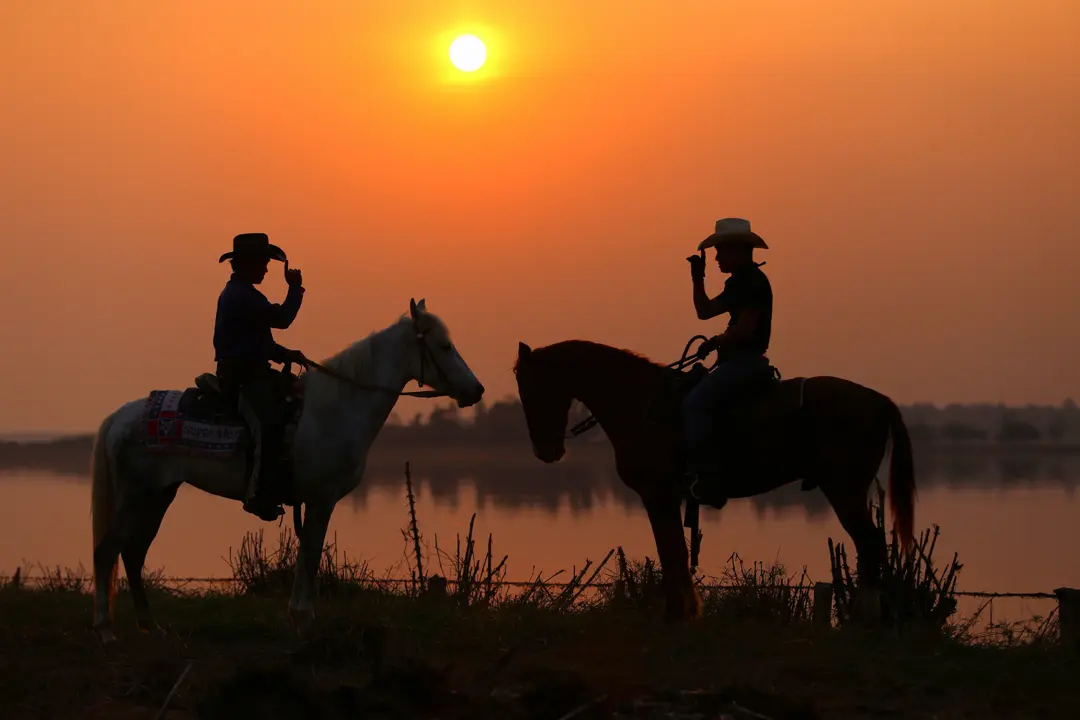
Texas 101: Everything's Bigger-Economy, Culture, and Independence Spirit
Michael Reynolds • 13 Jan 2026 • 135 views • 4 min read.You think Texas is cowboys, oil wells, conservative politics—oversized stereotype of Southern hospitality meets libertarian independence. Reality? Texas is economic juggernaut where GDP $2.4 trillion (larger than Canada, Russia—8th largest economy globally if independent nation), population boom 30 million (second-largest state, growing 3.9 million 2010-2020—California fleeing here), and Fortune 500 magnet hosting 54 headquarters (third nationally—ExxonMobil, AT&T, American Airlines, Texas Instruments, Oracle relocated Austin 2020, Tesla HQ Austin 2021, corporate exodus California accelerating). You dismiss "Don't Mess With Texas" until experiencing genuine pride where Texas flags fly equal U.S. flags, state history taught obsessively (Republic of Texas 1836-1845—only state that was independent nation), and "Texas Forever" mentality creates loyalty impossible elsewhere. You mock "everything's bigger" until driving I-10 877 miles El Paso to Beaumont (12+ hours same state—geographic enormity), eating 72-oz steak challenges Amarillo, visiting Dallas Cowboys $1.2 billion AT&T Stadium (105,000 capacity—larger than most cities). But brutal truth: Texas demands accepting extreme heat (summer 100°F+ months, 2021 winter storm 246 deaths—infrastructure fragile independent grid), political extremism (abortion banned six weeks, book bans, culture wars escalating), income inequality (no state income tax benefits wealthy, poor struggle $7.25 minimum wage), and recognition that Texas exceptionalism masks contradictions between frontier mythology and modern diverse reality. The truth: Texas offers opportunity, growth, freedom—but demands accepting heat extremes, political division, infrastructure vulnerabilities, and understanding that "Texas miracle" provides jobs and space while creating inequality and cultural conflict.
Geography and Climate: Massive, Diverse, Brutal Summers
Understanding Texas:
Size and landscape (truly massive):
- 2nd largest state:
- 269,000 square miles (only Alaska larger—could fit 15 New Jerseys)
- Population: 30 million (2nd after California—though closing gap)
- Density: 112 people/square mile (concentrated cities, vast rural emptiness)
- Four distinct regions:
- East Texas: Piney Woods (forests, Louisiana-like—humid subtropical)
- Gulf Coast: Houston, Corpus Christi (petrochemical industry, hurricanes—flat, humid)
- Hill Country: Austin, San Antonio (limestone hills, springs—scenic, tourist destination)
- West Texas: El Paso, Midland/Odessa (desert, oil fields—remote, harsh)
- Panhandle: Amarillo (high plains, wheat, cattle—isolated, windy)
- Distance reality:
- El Paso to Houston: 746 miles (closer Los Angeles 800 miles than Houston—El Paso Texas identity questioned)
- Texarkana to Brownsville: 850 miles (north to south—longer than New York to Florida)
- Driving Texas: 12-15 hours cross-state (exhausting—gas station culture essential)
Major metro regions (distinct identities):
Houston (4th largest U.S. city):
- Metro: 7.5 million (larger than 38 states—sprawling, car-dependent)
- Economy: Energy capital (oil/gas headquarters—ExxonMobil, ConocoPhillips), petrochemicals, medical (Texas Medical Center largest globally—106,000 employees), space (NASA Johnson Space Center—mission control)
- Culture: Diverse (45% Hispanic, 22% Black, 7% Asian—most diverse major U.S. city), no zoning (anything anywhere—chaotic development)
- Climate: Oppressive (humidity 90%+, hurricanes—Harvey 2017 $125 billion damage)
- Character: Blue-collar grit, entrepreneurial (fortune-seeking—boomtown mentality persists)
Dallas-Fort Worth (Metroplex):
- Metro: 7.8 million (4th largest—rapidly growing)
- Economy: Corporate headquarters (AT&T, American Airlines, Southwest Airlines), finance, technology
- Culture: Affluent suburban (Plano, Frisco—master-planned communities), conservative business (Republican stronghold—Chamber of Commerce influence)
- Split personality: Dallas urban/cosmopolitan, Fort Worth cowboy/Western (Stockyards historic—"Where the West Begins")
- Infrastructure: DFW Airport 3rd busiest globally (American Airlines hub—massive)
Austin (state capital):
- Metro: 2.4 million (fastest-growing major metro—20% 2010-2020)
- Economy: Technology (Dell, Apple campus 5,000 employees, Tesla HQ, Oracle HQ, Samsung), government, University of Texas (50,000 students)
- Culture: "Keep Austin Weird" (progressive island—liberal politics, music scene, food trucks, tattoos), gentrification tension (artists priced out—irony)
- Cost: Exploded ($550,000 median home—highest Texas, approaching coastal)
- Climate: Hot (Lake Travis recreation—100°F summers normal)
San Antonio (historic):
- Metro: 2.7 million (7th largest—military heavy)
- Economy: Military (five bases—200,000+ personnel/families), tourism (Alamo, River Walk), healthcare
- Culture: Hispanic majority (64%—Tejano identity strong), Catholic influence, family-oriented
- Affordability: Cheaper than Austin/Dallas ($280,000 median—accessible)
- History: Spanish colonial (missions UNESCO World Heritage—cultural pride)
Climate (extreme heat defining):
Summer (May-October):
- Houston: 90-95°F (humidity 80-90%—feels 110°F, oppressive, dangerous)
- Dallas: 95-100°F (dry heat—still brutal, infrastructure strained)
- Austin: 95-100°F (drought common—water restrictions, wildfire risk)
- West Texas: 100-105°F (desert—shade essential, dehydration rapid)
- Duration: Six months 85°F+ (air conditioning mandatory—$300-500 summer electric bills)
Winter (mild):
- Houston: 50-65°F (rare freezes—2021 storm exception)
- Dallas: 40-55°F (occasional ice storms—roads shut)
- South Texas: 60-75°F (RV snowbird destination—mild, pleasant)
Severe weather (deadly variety):
- Hurricanes: Gulf Coast (Harvey 2017 60 inches rain Houston—catastrophic flooding, Ike 2008, Rita 2005)
- Tornados: 140+ yearly (second most nationally—DFW tornado alley)
- Droughts: Persistent (2011 extreme—$7.6 billion agriculture losses)
- Floods: Flash floods (Hill Country especially—rapid, deadly)
- Winter Storm Uri 2021: 246 deaths (power grid failed—ERCOT independent grid vulnerability exposed, pipes burst, $200+ billion damage)
No State Income Tax and Business Climate
Understanding Texas economic model:
Tax structure (regressive but appealing):
- Income tax: 0% (constitutional prohibition—voter approval required to change)
- Sales tax: 6.25% state + local (average 8.2%—everything taxed including groceries)
- Property tax: 1.6% average (highest nationally—$400,000 home = $6,400/year, $533/month)
- Franchise tax: Businesses pay (gross receipts tax—somewhat controversial)
Who benefits:
- High earners: Massive savings (California $150,000 salary pays $11,000 state tax, Texas $0—accumulates millions career)
- Corporations: Lower tax burden (headquarters relocations—Oracle, Tesla, HP Enterprise)
- Retirees: No pension/Social Security tax (fixed income stretches—RV snowbirds)
Who pays:
- Low-income: Sales tax regressive (poor spend higher % income—hurts disproportionately)
- Homeowners: Property taxes fund schools (wealthy suburbs excellent schools, poor districts struggle—inequality structural)
- Renters: Property tax passed through rent (landlords include—hidden cost)
Business climate (pro-growth, anti-regulation):
Corporate relocations (California exodus):
- Oracle Austin: 2020 (Larry Ellison moved HQ—tax savings, lifestyle)
- Tesla Austin: 2021 (Elon Musk, Gigafactory—manufacturing, HQ)
- Hewlett Packard Enterprise: San Jose to Houston 2021 (cost savings—workforce follows)
- CBRE: Los Angeles to Dallas 2020 (commercial real estate—6,000 employees)
- Reason: Taxes, cost of living, regulatory environment (California burdensome—Texas freedom)
Tech growth:
- Austin: "Silicon Hills" (venture capital, startups—tech ecosystem growing)
- Dallas: Technology corridor (Plano, Richardson—telecom legacy)
- Houston: Energy tech (oil/gas innovation—carbon capture, hydrogen)
Challenges (hidden costs):
- Infrastructure: Underfunded (roads crumbling, transit minimal—property taxes insufficient)
- Education: Per-pupil spending low ($10,000 versus $18,000 New York—quality varies wildly)
- Healthcare: Uninsured rate highest (18%—Medicaid not expanded, working poor suffer)
- ERCOT grid: Independent (2021 storm exposed—reliability questioned, political resistance winterization)
Texas Pride and Independence Spirit
Understanding Texas identity:
Republic of Texas legacy:
- Independent nation: 1836-1845 (won independence Mexico—Battle of San Jacinto, Sam Houston)
- Annexation: Joined U.S. by choice (treaty negotiated—pride in choice narrative)
- Flag: Lone Star (equal status U.S. flag—flown same height, Texas pledge allegiance schools)
- Secession myth: "Can secede anytime" (false—but belief persists, secessionist movements exist)
Cultural mythology:
Cowboys and ranching:
- King Ranch: 825,000 acres (larger than Rhode Island—still operating)
- Rodeo: State sport (Houston Livestock Show 2.5 million attendance—world's largest)
- Boots, hats, trucks: Everyday wear (not costume—genuine ranching culture persists rural)
Alamo:
- 1836 battle: Mexican victory (188 defenders killed—Crockett, Bowie, Travis)
- "Remember the Alamo": Rally cry (Texas independence—mythology exceeds history)
- Tourism: 2.5 million visitors annually (San Antonio—small building, huge significance)
Don't Mess With Texas:
- Origin: 1986 anti-littering campaign (Texas Department of Transportation—successful)
- Adoption: State motto unofficial (pride, defiance—perfectly captures attitude)
- Merchandise: Everywhere (bumper stickers, t-shirts—identity statement)
Texas exceptionalism (genuine belief):
- Everything's bigger: True often (ranches, stadiums, portions—geographic reality plus cultural amplification)
- Best state: Unironic belief (Texans genuinely think Texas superior—not irony)
- Texas Forever: Loyalty (leave Texas, still Texan—identity persists lifetime)
- Y'all: Inclusive second-person plural (grammatically superior—Texans correct)
Oil Industry and Energy Dominance
Understanding Texas energy:
Oil and gas (foundational):
- Production: 5.5 million barrels daily (40% U.S. production—dwarfs other states)
- Permian Basin: West Texas (Midland/Odessa—richest oil field North America, fracking revolution)
- Eagle Ford Shale: South Texas (San Antonio to Corpus—natural gas)
- Employment: 500,000+ direct jobs (engineers $100,000-200,000, roughnecks $60,000-100,000—boom-bust cycles)
- Boom towns: Midland/Odessa (hotels $300/night 2018 boom, $60 bust—volatile)
Refining and petrochemicals:
- Houston Ship Channel: Largest refining complex globally (ExxonMobil, Shell, Chevron—30% U.S. refining capacity)
- Employment: 250,000+ (chemical engineers, operators—stable careers)
- Pollution: Cancer Alley (Port Arthur, Beaumont—environmental justice concerns)
Renewable energy (paradox):
- Wind: #1 state (40,000 MW capacity—west Texas wind farms endless)
- Solar: Growing rapidly (west Texas sun—ideal conditions)
- Irony: Oil state leads renewables (capitalism, not environmentalism—profit motive)
- ERCOT: 30%+ renewable (intermittency challenges—2021 storm wind turbines froze, natural gas plants failed)
Political Landscape: Red State, Blue Cities
Understanding Texas politics:
Statewide (solidly Republican):
- Presidential: Trump +5.6% 2020 (smaller margin than 2016—trending closer)
- Governor: Greg Abbott (Republican—conservative, culture warrior, border focus)
- Legislature: Republican supermajority (Democrats minimal power—gerrymandering effective)
- Ted Cruz: Senator (Trump ally—polarizing, 2018 nearly lost Beto O'Rourke)
Urban blue islands:
- Houston: Biden +13% (Harris County—demographics shifting)
- Dallas: Biden +32% (Dallas County—urban core liberal)
- Austin: Biden +47% (Travis County—bluest county Texas)
- San Antonio: Biden +16% (Bexar County—Hispanic Democratic)
- El Paso: Biden +35% (border city—Hispanic majority)
Suburban battlegrounds:
- Collin County (Plano): Trump +7% (down from +17% 2012—college-educated shift)
- Fort Bend County (Houston): Biden +11% (flipped—Asian immigration, diversification)
- Tarrant County (Fort Worth): Biden +0.6% (shocked Texas—Fort Worth swing?)
- Williamson County (Austin): Trump +1% (suburbs flipping—growth bringing liberals)
Rural Trump dominance:
- West Texas: Trump +60-80% (oil, ranching—culturally conservative)
- Panhandle: Trump +70-80% (Amarillo—evangelical, agricultural)
- East Texas: Trump +40-60% (Bible Belt—religious, traditional)
Culture war battlegrounds:
- Abortion: Six-week ban (vigilante enforcement—bounties civilians)
- Trans rights: Youth healthcare restricted (bathroom bills—LGBTQ+ targeted)
- Books: School bans (848 titles removed 2021-2022—most nationally)
- Voting: Restrictions increased (mail ballots limited, ID requirements—voter suppression alleged)
- Border: $10+ billion (Operation Lone Star—Abbott buses migrants Democratic cities)
Cost of Living: Affordable, But Rising Fast
Texas expenses:
Housing (varied by metro):
Houston:
- Median: $320,000 (sprawl keeps affordable—build outward endlessly)
- Suburbs: $350,000-500,000 (Katy, Sugar Land—master-planned, excellent schools)
- Energy Corridor: $400,000-700,000 (oil executives—McMansions)
Dallas:
- Median: $380,000 (higher than Houston—less sprawl room)
- Suburbs: Frisco/Plano $450,000-650,000 (master-planned, corporate relocations driving prices)
Austin:
- Median: $550,000 (California refugees—bidding wars, insanity)
- Gentrification: East Austin (historically Black/Hispanic—priced out, tech bros moving in)
- Affordability crisis: Teachers can't afford (housing prices doubled 2010-2020—locals fleeing)
San Antonio:
- Median: $280,000 (most affordable major metro—family-friendly)
Taxes and daily costs:
- Property tax: $6,400 annually $400,000 home (high—but no income tax offsets)
- Sales tax: 8.2% average (everything taxed—adds up)
- Groceries: National average (HEB Texas chain beloved—cult following)
- Gas: $2.90-3.30/gallon (cheap—oil state advantage)
- Utilities: $200-400 summer (air conditioning mandatory—electric bills soar)
Overall verdict:
- Houston/San Antonio: Affordable major metros (homeownership achievable $320,000)
- Dallas: Moderate, rising (corporate influx—pressure increasing)
- Austin: California prices (tech boom—locals priced out, ironic)
Living in Texas: Who Fits?
Who thrives:
Corporate professionals relocated:
- Salaries: Keep California wage Texas cost ($150,000 feels $225,000—lifestyle upgrade)
- Housing: Massive upgrade (California condo → Texas 3,000 sq ft—suburban dream)
- Taxes: Savings huge (California $11,000 state tax → Texas $0—instant raise)
Energy industry workers:
- Oil/gas: $80,000-200,000+ (engineers, geologists—boom periods lucrative)
- Boom-bust: Accept volatility (2014 crash, 2020 crash—resilience required)
Families prioritizing space/cost:
- Housing: $350,000-450,000 suburban (Frisco, Katy, Cinco Ranch—excellent schools, pools, sports)
- Land: Affordable acreage (Hill Country, rural—hobby farms achievable)
Conservatives seeking red state:
- Politics: Aligned values (gun rights, low taxes, limited government—comfortable)
- Culture: Traditional (church, family, patriotism—reinforced)
Who struggles:
Heat-sensitive:
- Summer: Six months 90°F+ (oppressive, dangerous—outdoor activities limited May-October)
- Electric bills: $400-500 summer (air conditioning mandatory—budget impact)
Progressives (except cities):
- Political powerlessness: Gerrymandered (Democrats win cities, lose statewide—representation minimal)
- Culture: Conservative dominance (rural/suburban—uncomfortable social climate)
- Abortion: Banned (six weeks—healthcare access limited)
Car-dependent haters:
- Transit: Non-existent (Houston, Dallas sprawl—car mandatory, traffic brutal)
- Walkability: Minimal (Austin downtown only—suburbs unwalkable)
- Commutes: 30-60 minutes normal (Houston 2 hours possible—life in car)
Income inequality vulnerable:
- Minimum wage: $7.25 (federal—Texas refuses raise)
- Healthcare: Uninsured 18% (Medicaid not expanded—working poor unprotected)
- Education: Poor districts struggling (property tax funding—inequality structural)
Texas offers opportunity for specific populations—corporate professionals escaping California taxes ($150,000 salary saves $11,000 annually, housing upgrade $400,000 → $800,000 equivalent), energy workers in oil/gas boom ($100,000-200,000+ petroleum engineers), families seeking suburban space/affordability ($350,000-450,000 excellent school districts Frisco/Katy versus California $1.2 million), and conservatives embracing red state values (gun rights, limited government—political comfort). Fortune 500 magnet (54 headquarters, Oracle/Tesla relocations), no income tax, Texas pride ("Don't Mess With Texas" genuine—Lone Star identity) appeal to those accepting extreme heat (100°F+ summer six months, $400 electric bills), political extremism (abortion six-week ban, book bans, culture wars), infrastructure vulnerabilities (2021 winter storm 246 deaths, ERCOT independent grid fragile), and income inequality ($7.25 minimum wage, 18% uninsured—regressive taxation). Geographic enormity (269,000 square miles, 12+ hours cross-state driving) creates diverse regions but car-dependency mandatory. Austin affordability collapsed ($550,000 median—tech boom gentrification). For the right person, Texas freedom, growth, opportunity justify heat and political division. For others, extremism and infrastructure risks outweigh benefits.
Texas works for those prioritizing economic opportunity and accepting cultural conservatism.