
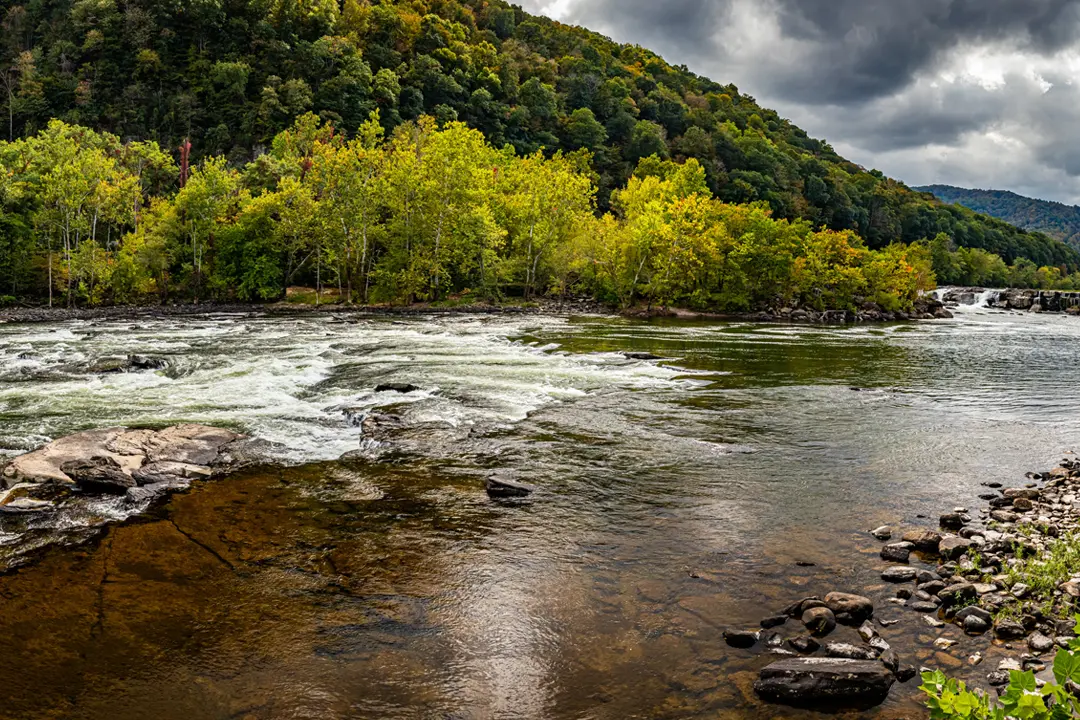
West Virginia 101: Mountains, Coal Country, and America's Rural Heart
Michael Reynolds • 14 Jan 2026 • 136 views • 3 min read.You think West Virginia is America's poorest state Appalachian poverty stereotype—toothless hillbillies, meth epidemic, forgotten coal miners living third-world conditions. Reality? West Virginia is natural beauty treasure where New River Gorge National Park (2020 newest national park—America's second-oldest river, 1,000-foot gorge, 70,000 acres whitewater rafting/rock climbing rivals Colorado fraction tourists), Appalachian Mountains cover entire state (rugged terrain most mountainous state East—24 state parks, Seneca Rocks 900-foot sheer cliff, Dolly Sods wilderness tundra ecosystem unique), and outdoor recreation paradise where skiing Snowshoe Mountain (250 inches annual snow—largest mid-Atlantic resort), mountain biking Hatfield-McCoy Trails (700+ miles singletrack—largest trail system East), and hunting/fishing abundant white-tail deer/trout justify "Wild, Wonderful" slogan—but brutal truth: West Virginia demands accepting crushing poverty (17.9% worst nationally—median income $48,000 lowest, 23% children poor), coal industry collapse (100,000+ miners 1950 to 11,000 now—mechanization/natural gas killed jobs, black lung epidemic 76,000 living sufferers), opioid epidemic ground zero (81 overdose deaths per 100,000 highest nationally—OxyContin flooded region, pharmaceutical companies sued billions damages), terrible education (45th nationally—$13,000 per pupil, teacher exodus constant), population decline (1.8 million peak 1950, now 1.79 million—only state losing population 2010-2020, young people flee opportunities), political transformation (JFK Democrat stronghold to Trump +39% 2020 most Republican state—cultural resentment, "War on Coal" backlash), and recognition that breathtaking scenery can't overcome systemic poverty, infrastructure decay, hopelessness where majority residents trapped generational decline. The truth: West Virginia offers unmatched natural beauty, outdoor recreation, Appalachian culture—but demands accepting America's poorest conditions, opioid crisis, coal collapse, and understanding tourism dollars can't lift state stuck dysfunction cycle.
Geography and Climate: Mountain State, Completely
Understanding West Virginia:
Size and landscape:
- 41st largest state:
- 24,000 square miles (small, compact—entirely mountains)
- Population: 1.79 million (39th—declining, only state lost population 2010-2020 -3.2%)
- Density: 77 people/square mile (no cities, small towns scattered hollows—rural)
- Geography:
- Appalachian Mountains: Entire state (only state entirely mountain—highest mean elevation East 1,500 feet)
- Allegheny Plateau: Eastern (ridges/valleys—most rugged, Dolly Sods wilderness)
- Cumberland Plateau: Southern (coal seams—mining concentrated)
- Ridge-and-Valley: Eastern panhandle (Shenandoah Valley extension—less mountainous)
- Highest point: Spruce Knob 4,863 feet (highest East of Mississippi—tundra ecosystem, cold)
- Rivers: New River paradox (actually ancient 300+ million years—among oldest globally, flows north counterintuitive), Kanawha, Ohio (borders create irregular shape—Northern Panhandle Wheeling Pittsburgh proximity)
- No major cities: Charleston capital 48,000 (largest—tiny by national standards), Huntington 46,000 (second—Ohio River border)
Mountain state definition:
Terrain: Extremely rugged (roads wind hollows—"hollers," isolated communities, infrastructure expensive difficult)
Isolation: Geographic barrier (economic development limited—flat land scarce, transportation challenging)
Beauty: Stunning (fall foliage spectacular—October tourism peak, rivers gorges dramatic)
Climate (four seasons, mountain variation):
Charleston (valleys):
- Summer: 80-85°F (moderate humidity—better than Deep South, tolerable)
- Winter: 30-45°F (snow 30 inches/year—manageable, ice storms occasional)
- Spring/Fall: Beautiful (wildflowers, foliage—best seasons)
Mountains (elevation):
- Summer: 70-75°F (cool—perfect, ski resorts summer bike parks)
- Winter: 20-35°F (snow 150-250 inches Snowshoe Mountain—skiing excellent, prolonged cold)
Severe weather:
- Floods: Deadly (steep terrain flash floods—2016 killed 23, 2001 killed 4, narrow valleys trap water)
- Ice storms: Paralyze (power outages weeks—isolated communities cut off)
- Snow: Heavy mountains (250 inches Snowshoe—but valleys moderate)
- Tornados: Rare (mountains disrupt—but occasional)
Coal Industry: Rise, Dominance, Catastrophic Collapse
Understanding coal's role:
History (boom times):
Early 1900s: Industrialization (coal powered steel—Pittsburgh, railroads, nation-building)
Peak employment: 130,000+ miners 1950 (union wages $70,000 adjusted—middle-class, UMWA United Mine Workers powerful, benefits/pensions strong)
Company towns: Coal camps (housing, stores company-owned—scrip currency not dollars, exploitation common but jobs plentiful)
Culture: Mining identity (generational—grandfather/father/son, dangerous but honorable work, 104,000+ killed mines since records 1900)
Decline (devastating):
Mechanization: 1960s-1980s (longwall mining—machines replace men, productivity up employment down, 130,000 to 50,000)
Mountaintop removal: 1990s-2000s (explosives remove mountains—streams buried, landscapes destroyed, employment minimal 30 workers site versus 300 underground)
Natural gas: Fracking competition (2000s-present—cheaper, cleaner, coal plants retired, demand collapsed)
Regulations: Environmental (Clean Air Act—sulfur limits, Clean Water Act, Obama-era EPA rules "War on Coal" blamed)
Current: 11,000 miners (versus 130,000 peak—90% jobs gone, remaining concentrated southern counties)
Black lung epidemic:
Disease: Coal workers' pneumoconiosis (silica dust—lungs scarred, progressive irreversible, breathing difficulty, early death)
Current: 76,000 living sufferers (receiving benefits—but many denied, fraud lawsuits against doctors who minimized diagnoses)
Increase: 2010s surge (younger miners—thinner seams, more silica dust, rushed cutting)
Compensation: Federal Black Lung Disability Trust Fund ($6 billion debt—coal companies bankrupt, fund underfunded)
Economic devastation:
Unemployment: 20%+ coal counties (McDowell, Wyoming, Mingo—job loss cascading)
Poverty: 30-40% counties (systematic collapse—no replacement industries)
Population: Hemorrhaging (young people flee—aging, dying towns, schools closing)
Political backlash:
"War on Coal": Obama/Democrats blamed (regulations cited—but economics natural gas primary)
Trump: Won 69% 2016, 68% 2020 (+39% 2020—promises revive coal, delivered little but loyalty remains)
Resentment: Coastal elites (climate change policies—perceived attack livelihood, cultural values)
Opioid Epidemic: Ground Zero National Crisis
Understanding West Virginia's crisis:
Scale (worst nationally):
- Overdose deaths: 81 per 100,000 (highest nationally—versus 32 national average, 2.5x rate)
- Total deaths: 1,450+ annually (small population—disproportionate impact, everyone knows victim)
- Fentanyl: 90%+ deaths involve (synthetic opioid—2mg lethal, street drugs contaminated unknowingly)
How it started:
OxyContin: Purdue Pharma 1996 (marketed "non-addictive"—lies, aggressive sales West Virginia targeted)
Pill mills: 2000s (doctors overprescribed—Williamson population 3,000 received 9 million pills 2006-2016, pharmacies flooded)
Economic despair: Coal collapse (injury, hopelessness—self-medication, prescriptions gateway)
Pharmaceutical lawsuits:
Purdue Pharma: Settled $26 billion (bankrupt—Sackler family billions protected controversially)
Distributors: McKesson, Cardinal Health, AmerisourceBergen ($21 billion settlement—flooded pills knowingly)
Pharmacies: CVS, Walgreens ($10 billion—filled suspicious prescriptions)
West Virginia share: $875 million (over 18 years—inadequate treatment need billions annually)
Current crisis:
Fentanyl dominance: Street drugs (heroin, cocaine, meth contaminated—users don't know, deaths spike)
Naloxone: Widespread (Narcan reversal—free distribution, police/EMTs carry, saves thousands)
Treatment: Insufficient (waiting lists 6+ months—buprenorphine/methadone clinics scarce, rural access impossible)
Impact:
Foster care: Overwhelmed (7,000+ children removed—grandparents raising, system strained 13,000+ placements)
Workforce: Unreliable (absenteeism, turnover—employers drug test aggressively, recovery programs inadequate)
Healthcare: Strained (emergency rooms, Medicaid—costs billions)
Generational: Trauma (children born addicted, parents dead/incarcerated—cycle perpetuates)
Natural Beauty: New River Gorge, Outdoor Recreation
Understanding West Virginia's assets:
New River Gorge National Park:
Designation: 2020 (73rd national park—newest, COVID relief bill addition)
Size: 70,000 acres (New River 53 miles protected—whitewater rapids Class III-V)
Bridge: New River Gorge Bridge (1977—876 feet high, third-highest U.S. bridge, Bridge Day October BASE jumping legal annually 100,000+ spectators)
Activities: Whitewater rafting ($100-150 guided trips—thrilling, world-class), rock climbing (1,400+ routes—sandstone cliffs, Endless Wall 1,000 feet), hiking (100+ miles trails)
Visitation: 1.6 million annually (but 74% drive-through—stop overlook, don't explore, economic impact modest $50 million)
Other outdoor recreation:
Seneca Rocks: 900-foot sheer cliff (rock climbing icon East—Tuscarora quartzite, North Fork South Branch Potomac River scenic)
Dolly Sods Wilderness: 17,000 acres (tundra ecosystem—unique East, Allegheny Plateau 4,000 feet, blueberries/cranberries, Red Creek)
Blackwater Falls: 62-foot waterfall (Blackwater River amber tannic acid—photogenic, state park, winter frozen spectacular)
Snowshoe Mountain: Ski resort (250 inches snow—largest mid-Atlantic, vertical 1,500 feet, 60 trails, summer mountain bike park)
Hatfield-McCoy Trails: 700+ miles (ATV/mountain bike—largest trail system East, $140+ million economic impact, Mingo/Logan counties)
Hunting/fishing:
White-tail deer: Abundant (deer per square mile among highest—archery/rifle seasons, license revenue $50+ million)
Trout: Stocked/wild (mountain streams cold—catch-and-release, fly fishing)
Turkey, bear, small game: Seasons (outdoor culture—generations tradition)
Tourism challenges:
Infrastructure: Limited (hotels scarce—Airbnb growing, restaurants basic, services minimal)
Seasonality: Fall foliage (October peak—rest year slow, economic impact concentrated)
Perception: Poverty stereotypes (deters visitors—"dangerous," "toothless," unfair but persistent)
Economic leakage: Visitors from outside (money returns Maryland/Virginia—not circulating locally)
Poverty and Decline: Trapped in Cycle
Understanding West Virginia's conditions:
Poverty (worst nationally):
- Rate: 17.9% (320,000+ residents—highest nationally tied Louisiana)
- Children: 23% (highest—41,000+ kids poor, outcomes devastating)
- Counties: 30-40% southern (McDowell 38%, Mingo 32%—coal collapse, no alternatives)
Income (lowest):
- Median household: $48,000 (versus $69,000 national—30% lower, lowest nationally)
- Per capita: $29,000 (versus $37,000 national—buying power limited)
Population decline (only state):
- 2010-2020: -3.2% (lost 60,000—only state negative, young people flee)
- Brain drain: Severe (college graduates Marshall/WVU leave—84% don't return, Kentucky, Virginia, North Carolina steal talent)
- Aging: 20% over 65 (versus 17% national—burden Medicaid/healthcare)
Education (45th nationally):
Funding: $13,000 per pupil (versus $13,600 national—inadequate, inflation-adjusted declining)
Teacher shortage: Severe (pay $52,000 average 47th—neighboring states pay more, exodus constant, emergency licenses 1,000+)
Outcomes: Bottom tier (test scores—reading/math abysmal, college readiness 15%)
Healthcare:
Rural hospitals: Closing (12 closed 2010-2022—54 risk closure, obstetric deserts drive 2+ hours labor)
Medicaid: Expanded 2014 (300,000 covered—40% population, federal funds essential, but expansion threatened)
Life expectancy: 74.4 years (tied lowest Mississippi—obesity, smoking, opioids, poverty compound)
Infrastructure:
Roads: Crumbling (mountain terrain expensive maintain—potholes, bridges structurally deficient 20%)
Broadband: 30% lack access (rural digital divide—telemedicine, education, jobs impossible)
Water: Aging systems (2014 Charleston chemical spill 300,000 without water—Elk River MCHM leak, infrastructure decay)
Cost of Living: Cheapest, Quality Reflects
West Virginia expenses:
Housing (dirt cheap):
Charleston:
- Median: $150,000 (capital city—cheapest state capitals)
- Suburbs: South Hills $180,000-280,000 (better schools, safe)
- Rent: $700-1,100 1-bedroom (very affordable—but limited quality options)
Morgantown:
- Median: $220,000 (university town—WVU students inflate)
- Rent: $900-1,400 1-bedroom (student demand)
Rural:
- Median: $80,000-120,000 (coal counties—dirt cheap but no opportunities, declining value)
Taxes (low):
- Income tax: 3%-6.5% (moderate—but low incomes = minimal revenue)
- Sales tax: 6% + local (average 6.5%—groceries exempt)
- Property tax: 0.58% (low—$150,000 home = $870/year or $72/month)
Daily costs:
- Groceries: 8-10% below national (cheapest—Walmart dominates, limited competition)
- Gas: $2.80-3.20/gallon
- Dining: $9-13 lunch, $16-25 dinner (very affordable—but options limited, Tudor's Biscuit World local chain $6-10 biscuit sandwiches comfort food)
- Utilities: $120-220 month (electric heat/AC—but moderate use)
Overall verdict:
- Sticker price: 20-22% below national (cheapest state—but jobs scarce)
- Quality: Reflects cost (worst roads, schools, healthcare—poverty trap, can't escape because cheap but no income)
Living in West Virginia: Who Fits?
Who thrives:
Outdoor enthusiasts (specific):
- Recreation: Whitewater rafting, rock climbing, mountain biking (world-class—New River Gorge, Seneca Rocks, Hatfield-McCoy Trails)
- Solitude: Uncrowded (versus Colorado/Utah mobs—West Virginia secret)
Remote workers (limited):
- Arbitrage: Coastal salary West Virginia cost ($100,000 feels $150,000—but broadband limited 30% lack access)
- Morgantown/Charleston only: Infrastructure adequate (rural impossible)
Retirees (narrow):
- Affordability: $150,000-220,000 homes (fixed income stretches—but healthcare concerning rural)
- Natural beauty: Mountains (but services limited)
Hunting/fishing:
- Outdoor culture: Abundant game (white-tail deer, trout—seasons, tradition)
WVU students/employees:
- Morgantown: University town (32,000 students—football Mountaineers passionate, college atmosphere)
Who struggles:
Coal miners (former):
- Jobs: Gone 90% (130,000 to 11,000—no alternatives, retraining failed, "learn to code" insulting)
- Black lung: 76,000 sufferers (disability, early death—compensation inadequate)
Opioid victims:
- Addiction: 81 deaths per 100,000 (everyone knows victim—treatment inadequate, waiting lists 6+ months)
- Families: Foster care (7,000+ children removed—grandparents raising, trauma generational)
Young people:
- Brain drain: 84% college graduates leave (jobs nonexistent—Charleston/Morgantown only, pay low)
- Hopelessness: No future (population declining, schools closing, despair pervasive)
Healthcare-dependent:
- Rural hospitals: Closing (12 closed, 54 risk—drive 2+ hours emergency, maternal mortality)
Career climbers:
- Limited industries: Coal gone, tourism seasonal low-wage (white-collar Charleston government minimal)
- Stagnant economy: GDP lowest per capita ($42,000 versus $63,000 national—no growth)
Those needing services:
- Infrastructure: Crumbling (roads worst nationally, broadband 30% lack, water systems aging)
- Education: 45th nationally (children disadvantaged—cycle perpetuates)
West Virginia offers natural beauty for specific populations—outdoor enthusiasts accessing New River Gorge National Park (whitewater rafting/rock climbing world-class, 2020 newest park), Hatfield-McCoy Trails (700+ miles ATV/mountain bike largest East), Snowshoe Mountain skiing (250 inches snow), hunters/fishers (abundant white-tail deer/trout—seasons tradition), and remote workers limited areas (Morgantown/Charleston broadband adequate—arbitrage coastal salaries 20-22% below national costs). "Wild, Wonderful" scenery mountains entire state, Appalachian culture appeal to those accepting crushing poverty (17.9% worst nationally, median income $48,000 lowest, 30-40% coal counties—systematic collapse), opioid epidemic (81 overdose deaths per 100,000 highest nationally, OxyContin flooded region, pharmaceutical companies sued billions—treatment inadequate), coal industry collapse (130,000 miners 1950 to 11,000 now, black lung 76,000 sufferers—mechanization/natural gas killed jobs), terrible education (45th nationally, teacher exodus constant—brain drain 84% graduates flee), population decline (only state lost 2010-2020 -3.2%—young people escape), infrastructure decay (rural hospitals closing 12, broadband 30% lack, roads crumbling), and recognition tourism dollars can't overcome systemic dysfunction. Trump +39% 2020 most Republican (cultural resentment, "War on Coal"). For the right person, West Virginia's outdoor recreation, affordability justify America's poorest conditions. For most trapped, poverty and hopelessness inescapable.
West Virginia works for outdoor adventurers and those accepting Appalachian poverty reality.