
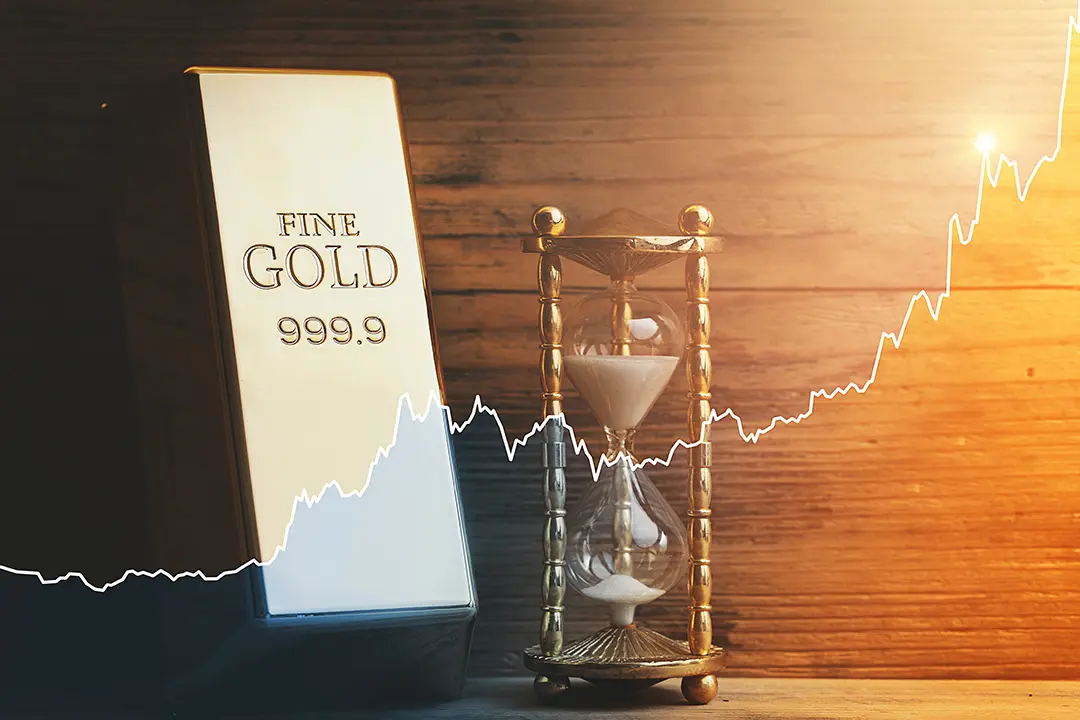
The New Gold Standard: Why Physical Assets are Re-entering Modern Portfolios
Emily Carter • 27 Feb 2026 • 144 views • 4 min read.Let me give you the macro context before the asset categories, because the physical asset conversation makes more sense against the specific economic backdrop that has driven institutional and individual investors back toward tangible assets — and understanding the why makes the what considerably more actionable. The decade from 2010 to 2020 was the decade of financial assets. Near-zero interest rates made bonds unappealing, drove investors into equities, and created a sustained bull market in stocks and real estate that rewarded those heavily allocated to financial assets and punished those who maintained significant positions in gold, commodities, or other physical assets. The conventional wisdom of that period — maximum equity exposure, bonds for stability, no meaningful allocation to "unproductive" physical assets — produced strong results for most of that decade. The period since 2022 has challenged that conventional wisdom in ways that are structural rather than cyclical. Inflation that peaked at forty-year highs in 2022 and has remained stickier than central bank projections suggested exposed the vulnerability of financial asset portfolios to inflationary regimes. Geopolitical fragmentation — the reversal of the globalization trend that underpinned the prior decade's low-inflation environment — has increased the probability of sustained inflation relative to the prior decade. Sovereign debt levels that limit central banks' ability to raise rates aggressively without triggering debt crises suggest a different monetary policy environment going forward than the 2010s provided. Against this backdrop, the institutional allocation shift toward physical assets — gold, commodities, real assets — is not nostalgia or reactionary investing. It is a rational response to changed macro conditions. Here is what is worth considering and why.
The New Gold Standard: Why Physical Assets are Re-entering Modern Portfolios
Gold: The Asset That Keeps Justifying Its Portfolio Role
Gold's investment case is frequently oversimplified in both directions — either as the essential protection against monetary collapse or as a barbarous relic that produces no yield and has no place in a modern portfolio. The honest assessment is more nuanced and more useful than either extreme.
Gold's documented portfolio role is as an asset that maintains purchasing power over very long periods, that performs well in specific macro regimes (high inflation, currency crises, geopolitical stress, financial system stress), and that has low or negative correlation with equities during equity bear markets driven by financial stress. These are specific and limited claims. Gold does not outperform equities over long periods in normal economic conditions. It does not produce income. And it can be volatile — gold lost thirty percent of its value from 2011 to 2015 during a period of low inflation and rising equity markets.
The portfolio math that justifies a modest gold allocation — typically five to ten percent of a diversified portfolio — is the correlation benefit. Because gold's correlation with equity returns is low and sometimes negative during periods of equity stress, adding a modest gold allocation reduces portfolio volatility in ways that increase risk-adjusted returns even if gold itself underperforms equities over the full period. A portfolio that holds ten percent gold and ninety percent equities will typically have lower volatility than an all-equity portfolio, and the drag from gold's underperformance in equity bull markets is outweighed by the reduction in drawdown during equity bear markets.
The specific macro conditions that strengthen gold's portfolio case: sustained inflation above central bank targets (gold has historically maintained purchasing power over inflationary periods), currency debasement through money supply expansion, geopolitical stress that increases demand for assets outside any single country's financial system, and central bank gold buying — which has been at multi-decade highs since 2022 as central banks in emerging markets reduce dollar reserve concentration.
The access options range from physical gold (coins and bars held directly or in allocated storage), gold ETFs (GLD and IAU are the largest and most liquid, with expenses of 0.15-0.40 percent), and gold mining stocks (leveraged exposure to gold price with additional operational risk). For most investors, gold ETFs provide the most practical access — full gold price exposure with low cost and complete liquidity. Physical gold is appropriate for investors who specifically want the non-financial-system characteristics of physical metal and are willing to manage storage and insurance.
Commodities: The Inflation Hedge With Production Economics
Commodities — energy, metals, agricultural products — have the most direct relationship with inflation of any asset class because commodity prices are a primary input into the inflation metrics we measure. When commodity prices rise, inflation follows. Owning commodity exposure therefore provides a hedge against the inflation it partially causes.
The commodity super-cycle thesis — the argument that structural demand growth from emerging market industrialization, underinvestment in supply following the 2014-2020 commodity bear market, and the material intensity of the energy transition will sustain above-average commodity prices for an extended period — has been partially validated and partially challenged by events since 2022. Energy prices remain structurally elevated relative to the 2015-2020 period. Copper and other transition metals face demand growth from electrification that supply is not keeping pace with. Agricultural commodities face structural pressures from climate disruption, soil degradation, and increasing demand.
The practical access for individual investors: broad commodity ETFs (DJP, PDBC) provide diversified exposure across energy, metals, and agriculture. Specific commodity ETFs (USO for oil, CPER for copper) provide concentrated exposure to individual commodities. Commodity-linked equities — energy companies, mining companies, agricultural businesses — provide equity-style returns with commodity exposure. Each approach involves different tradeoffs between direct commodity exposure and operational business risk.
Real Assets Beyond Gold and Commodities
The physical asset category extends beyond gold and commodities to include assets with different characteristics worth understanding.
Farmland has emerged as an institutional-grade investment category with retail access emerging through platforms like AcreTrader and FarmTogether. The investment thesis: farmland produces food, which has inelastic demand, appreciates in value as productive land becomes scarcer, generates rental income from farming operations, and has historically low correlation with financial asset returns. The limitation for retail investors is illiquidity — farmland investments on these platforms typically require three to seven year holding periods and have limited secondary market liquidity.
Timberland has similar characteristics to farmland — a productive physical asset that generates income, appreciates with scarcity, and has low correlation with financial assets — with access through timber REITs (Weyerhaeuser, PotlatchDeltic) that provide listed equity exposure to timberland assets with full liquidity.
Infrastructure — the physical systems that provide essential services including power, water, transportation, and communications — has become a significant institutional asset class with retail access through infrastructure ETFs (PAVE, IFRA) and listed infrastructure companies. Infrastructure assets have regulated or contracted revenue streams that provide inflation-linked income and lower economic sensitivity than general equities.
Physical Asset Categories Compared
| Asset | Inflation Hedge | Income | Liquidity | Volatility | Portfolio Role | Access |
|---|---|---|---|---|---|---|
| Gold (ETF) | Very High | None | Very High | Medium | Tail risk hedge, currency hedge | GLD, IAU — any brokerage |
| Physical gold | Very High | None | Low-Medium | Medium | Non-financial-system store of value | Dealers, allocated storage |
| Broad commodities | Very High | None (roll yield) | High | High | Inflation hedge, diversification | DJP, PDBC ETFs |
| Farmland | High | Medium — rental income | Very Low | Low | Long-term real return, diversification | AcreTrader, FarmTogether |
| Timber REITs | High | Medium — dividends | High | Medium | Inflation-linked income, diversification | Listed equity — any brokerage |
| Infrastructure ETFs | Medium-High | Medium-High — income | High | Medium-Low | Inflation-linked income, stability | PAVE, IFRA — any brokerage |
Frequently Asked Questions
How much of my portfolio should be in physical assets and real assets?
Portfolio allocation to physical and real assets depends significantly on your investment horizon, your inflation expectations, and your existing portfolio composition. The institutional frameworks that have been updated to reflect post-2022 macro conditions generally suggest five to fifteen percent allocation to gold specifically and fifteen to twenty-five percent to real assets broadly (including commodity exposure, infrastructure, and real estate) for long-term portfolios. The specific allocation within this range depends on your view of inflation persistence — if you believe the structural forces driving inflation (geopolitical fragmentation, energy transition material costs, demographic pressure on labor) are persistent, the higher end of these ranges is appropriate. If you believe inflation will return to the prior decade's low levels, the lower end or no allocation is defensible. The portfolio math that is hard to argue with regardless of inflation view: a five to ten percent gold allocation reduces portfolio volatility through its correlation benefit at a relatively modest drag on returns in non-inflationary environments.
Is now a good time to buy gold given that it has already appreciated significantly?
The market timing question for gold is as unanswerable as the market timing question for any asset — nobody reliably knows whether gold will be higher or lower in twelve months. What is answerable is whether the structural case for gold allocation is stronger or weaker than it was a decade ago. The structural case is stronger: inflation has proven stickier than anticipated, central bank gold demand has increased significantly, geopolitical fragmentation has increased the appeal of assets outside any single country's financial system, and sovereign debt levels constrain the policy responses that would be most deflationary. Whether gold is "expensive" relative to its fair value is genuinely uncertain — gold's fair value is not calculable the way an equity's is. The portfolio allocation approach that avoids the market timing problem is periodic rebalancing rather than lump sum timing — establishing a target allocation and rebalancing to it regardless of recent price performance.
What is the difference between owning gold through an ETF versus owning physical gold, and does it matter?
The difference matters primarily in tail scenarios rather than normal investment conditions. Gold ETFs like GLD and IAU hold physical gold in vaults with independent auditing, and shares represent ownership claims on that gold. In normal conditions, the ETF and physical gold provide identical economic exposure — the price of both tracks the gold spot price. The difference emerges in extreme scenarios: if financial markets seize up, if custodians face liquidity crises, or if the broader financial system is under severe stress, the ownership claim represented by an ETF share involves counterparty and financial system dependencies that physical gold in your possession does not. For most investors, this distinction is theoretical — the scenarios where ETF ownership would fail but physical possession would succeed are extreme enough that other aspects of financial planning are more important to focus on. For investors who hold gold specifically because they are concerned about extreme financial system stress, physical gold is the appropriate form.
How does commodity investing differ from stock investing in terms of return drivers?
Commodity investing involves fundamentally different return drivers than equity investing, which is why commodities provide diversification benefits. Equity returns are driven primarily by corporate earnings growth and the valuation multiple the market places on those earnings — ultimately a claim on business productivity and profitability. Commodity returns are driven by supply-demand balances for physical materials, storage costs, the term structure of futures prices (contango and backwardation), and inflation. These drivers are largely independent of corporate earnings in the short to medium term, which is the source of the diversification benefit. The specific return mechanism for commodity ETFs that hold futures rather than physical commodities — which is most of them — involves rolling futures contracts as they expire, which can produce a drag (in contango markets where forward prices are higher than spot) or a benefit (in backwardated markets where forward prices are lower than spot) on returns relative to the spot commodity price. Understanding whether your commodity ETF holds futures or physical commodities, and what the current term structure implies for roll returns, is relevant for evaluating commodity exposure more precisely than the spot price alone suggests.
Physical assets are re-entering modern portfolios not because investors have become nostalgic for pre-digital investing but because the macro regime has changed in ways that improve the case for real assets relative to the prior decade's financial asset dominance.
The structural forces supporting this allocation shift — persistent inflation above prior decade levels, geopolitical fragmentation increasing demand for assets outside any single country's financial system, central bank gold accumulation, and the material intensity of the energy transition — are not guaranteed to continue. But they represent genuine changes in the environment that financial asset-only portfolios were calibrated for.
A five to ten percent gold allocation for the correlation benefit and tail risk protection.
Commodity exposure for the inflation hedge that financial assets cannot provide.
Infrastructure and farmland exposure for inflation-linked income from productive physical assets.
These are not bets that the financial system is going to collapse.
They are the calibration adjustments that a changed macro environment warrants.
The portfolio built for 2015 deserves a review.
Physical assets are part of what that review should include.