
Long-Distance Relationships in 2026: How Technology is Closing the Gap
Camille Cooper • 01 Mar 2026 • 157 views • 3 min read.Let me tell you what the research actually says about long-distance relationships before the technology section, because the cultural assumption that long-distance relationships are inherently inferior to geographically proximate relationships is not supported by the data — and understanding this changes how you use the tools available. Research by Crystal Jiang and Jeffrey Hancock published in the Journal of Communication found that long-distance couples reported higher levels of intimacy, communication quality, and relationship satisfaction than geographically close couples in several measured dimensions. The explanation is counterintuitive but coherent: long-distance partners idealize each other slightly more, communicate more intentionally because contact requires deliberate effort rather than incidental proximity, and disclose more deeply because the communication windows are finite and valued. The quality of attention in a scheduled video call where both partners are fully present frequently exceeds the quality of attention in the same room while both are distracted by the ambient demands of shared daily life. This does not mean long-distance is easy or that physical separation has no cost. The costs are real — the absence of physical touch, the inability to share spontaneous daily moments, the logistical and financial burden of visits, and the specific anxiety that comes from not being able to be present when a partner is struggling. What the research suggests is that these costs are often offset by communication patterns that long-distance couples develop out of necessity, and that the technology available in 2026 has meaningfully reduced several of the costs that made long-distance relationships most difficult in previous decades.
Long-Distance Relationships in 2026: How Technology is Closing the Gap
What Technology Has Actually Changed
The long-distance relationship in 2000 meant expensive phone calls, email that felt formal and asynchronous, and visits that required significant planning and cost. The long-distance relationship in 2010 meant Skype calls with unreliable video quality, text messaging that was continuous but shallow, and the same fundamental absence of presence. The long-distance relationship in 2026 exists in a qualitatively different technological environment in specific ways worth understanding clearly.
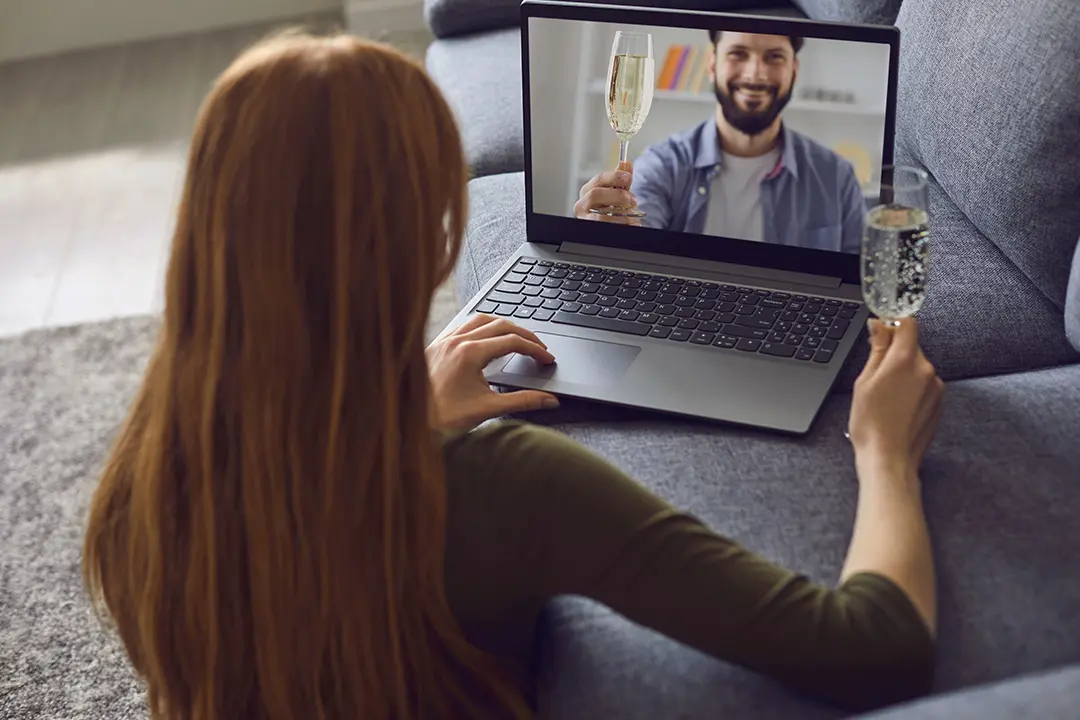
Video calling quality has crossed a threshold that matters psychologically. The difference between a 2010 Skype call — pixelated, laggy, with frequent drops — and a 2026 video call on a fiber or 5G connection is not incremental. The current quality allows genuine reading of facial microexpressions, natural conversation rhythm without the compensations for lag that earlier video calls required, and the specific feeling of presence that poor video quality actively undermined. Research on video communication quality and emotional connection shows that quality thresholds matter — below a certain quality level, video calls feel effortful and unsatisfying; above it, they approach the natural rhythms of in-person conversation.
Always-on ambient video — leaving a video connection open while each partner goes about their day — has emerged as a practice among some long-distance couples that more closely approximates the incidental shared presence of cohabitation than scheduled video calls do. The technology to support this (stable broadband on both ends, devices that can be positioned to show a room while being used for other activities) has become widely accessible. Partners report that the ambient connection — seeing each other cooking, working, watching TV in the background — provides a quality of companionship that scheduled calls, regardless of their quality, do not replicate.
Asynchronous audio and video messaging has partially replaced texting for some couples because it communicates tone, emotion, and personality in ways that text cannot. A thirty-second voice note saying "I just saw something that reminded me of you and I am laughing thinking about it" carries more emotional content than the same message in text. The growth of Marco Polo, voice notes in WhatsApp and iMessage, and similar asynchronous audio/video tools reflects a genuine preference for richer asynchronous communication when real-time connection is not available.
The Presence Technologies Changing Physical Distance
The most significant technological development for long-distance relationships since 2020 is not communication improvement — it is the emergence of presence technologies that simulate physical co-location in ways that previous communication tools could not approach.
Haptic wearables — devices that transmit touch sensations across distance — have moved from research prototype to consumer product in the past four years. Brands including Lovense, Bond Touch, and HereAfter produce wristbands, vests, and other wearables that allow one partner to initiate a touch sensation felt by the other in real time. The technology is not the same as actual physical touch — the haptic feedback is a simplified representation rather than a faithful reproduction. But the research on haptic communication in long-distance relationships shows that even simplified touch signals produce measurable reductions in loneliness and stress, and that the symbolic communication of "I am thinking of you right now" through a physical sensation has emotional significance beyond what text messaging achieves.
Shared digital spaces have evolved from the early experiments with virtual worlds into more practically useful forms. Netflix Party (now Teleparty) allows synchronous shared viewing with chat. Spotify's social features allow shared listening. Co-op video games have become a primary shared activity for long-distance couples who find that doing something together — even virtually — produces a different quality of connection than talking about what they have separately done.
The shared calendar and location sharing tools that would have felt invasive in earlier relationship cultures have been normalized by younger couples as a form of ambient connection rather than surveillance. Knowing that your partner is currently at the gym, or has arrived safely after a late night out, or is currently in a meeting rather than ignoring your message — this background awareness of each other's daily life approximates the incidental knowledge that cohabiting partners have without requiring continuous active communication.
The Practices That Actually Sustain Long-Distance Relationships
The technology is the infrastructure. The practices are what determine whether the relationship deepens or drifts during the distance period.
The scheduled call that both partners protect is more important than any specific technology. The research on long-distance relationship success consistently identifies communication predictability as a primary predictor of relationship satisfaction — not communication frequency, which can become anxiety-driven and exhausting, but the reliable expectation that connection will occur at defined times. Partners who both know that Thursday evening is their call and that this time is protected from other commitments report lower anxiety about the relationship than partners with more frequent but unscheduled communication.
The end-date or progress narrative — a shared understanding of what the long-distance period is working toward — is the single variable most consistently associated with long-distance relationship resilience in the research. Couples who understand their separation as a defined chapter with a specific goal (finishing a degree, completing a work contract, saving for relocation) have fundamentally different psychological experiences of the same distance than couples with no defined endpoint. The technology gap between 2010 and 2026 is significant. It does not substitute for the shared narrative that gives the distance meaning.
Long-Distance Communication Tools Compared
| Tool | Connection Type | Intimacy Level | Best Use Case | Cost | Limitation |
|---|---|---|---|---|---|
| High-quality video call (FaceTime, Zoom) | Real-time visual | High | Scheduled quality time, important conversations | Free | Requires scheduling, both available simultaneously |
| Always-on ambient video | Real-time background | Medium-High — companionship | Daily shared presence, parallel activities | Free | Bandwidth, privacy, distraction |
| Voice notes (WhatsApp, iMessage) | Asynchronous audio | Medium-High | Between calls, spontaneous sharing | Free | Not real-time |
| Marco Polo | Asynchronous video | High | Visual communication without scheduling | Free/premium | Slight delay in exchange |
| Haptic wearables (Bond Touch) | Real-time touch signal | Medium — symbolic | Spontaneous thinking-of-you moments | $60-$150/pair | Simplified sensation only |
| Teleparty/co-op games | Synchronous shared activity | Medium | Doing something together, not just talking | Varies | Requires compatible interests |
| Shared location (Find My, Life360) | Passive ambient | Low-Medium — awareness | Background knowledge of partner's day | Free | Privacy considerations |
Frequently Asked Questions
How much communication is the right amount for a long-distance relationship?
The research is consistent and counterintuitive on this: more communication is not reliably associated with better long-distance relationship outcomes, and excessive communication frequency is associated with worse outcomes in some studies. The couples who fare best are those with predictable, quality communication rather than maximum quantity. Partners who feel compelled to be in constant contact through the day — multiple texts per hour, immediate response expectation — often report higher anxiety rather than higher security, because the communication frequency becomes a monitoring behavior rather than a genuine connection behavior. The healthier framework: define the communication rhythm that both partners find sustainably satisfying, protect the scheduled high-quality contact times, and allow the in-between time to be genuinely in-between rather than a continuous low-grade connection attempt.
How do we handle time zone differences that make scheduling calls difficult?
Significant time zone differences — eight hours or more — represent the most logistically challenging aspect of many long-distance relationships and require explicit rather than implicit negotiation. The strategies that work: identify the overlap window when both partners are awake and not at their most exhausted (this may be early morning for one and evening for another) and protect this window for scheduled calls. Rotate which partner takes the less convenient call time rather than one partner consistently making the sacrifice. For couples with minimal overlap, asynchronous communication — detailed voice notes, video messages, written updates — becomes the primary connection mode with scheduled calls happening less frequently at whatever overlap exists. The time zone challenge is real and has no technology solution — the human negotiation of whose sleep and schedule absorbs the inconvenience is the actual work.
When does long-distance become unsustainable, and how do we know when to close the distance?
The research identifies several factors associated with long-distance relationship dissolution that are worth monitoring: the absence of a defined endpoint or shared plan for closing the distance, asymmetric sacrifice where one partner consistently bears more of the logistical and financial cost of visits, communication patterns that have become primarily conflict-management rather than genuine connection, and the specific experience of feeling more alone in the relationship than outside it. The threshold for "unsustainable" is personal rather than universal — some couples sustain long-distance arrangements for years with high satisfaction while others find months intolerable. The meaningful indicator is not duration but trajectory: is the relationship deepening and maintaining genuine mutual investment despite the distance, or is it gradually becoming a long-distance friendship with romantic history? The end-date conversation — a frank discussion of what closing the distance requires and what both partners are willing to do to achieve it — is the most important relationship maintenance conversation that long-distance couples consistently defer longer than they should.
How do we maintain physical intimacy across distance given the limitations of current technology?
Physical intimacy in long-distance relationships in 2026 exists on a spectrum from the haptic wearables that communicate symbolic touch to the more explicit technologies that some couples use for physical connection across distance. The honest assessment of current technology is that it supplements rather than replicates physical intimacy — the haptic devices communicate presence and attention without replicating the full sensory experience of physical touch. The practices that most successfully maintain physical intimacy across distance combine the available technology with deliberate communication about physical connection — couples who talk explicitly about physical intimacy, who discuss what they miss and look forward to, and who make physical connection a priority during visits rather than distributing visit time exclusively across social obligations, consistently report better physical intimacy maintenance than couples who treat the subject as too awkward to address directly. The visits matter more than the technology for this dimension of the relationship.
Long-distance relationships in 2026 have genuine technological advantages over long-distance relationships in any previous decade — video quality that crosses the presence threshold, haptic devices that communicate touch symbolically, ambient connection tools that approximate shared daily life, and asynchronous rich media that carries emotional content that text messaging cannot.
These tools reduce the cost of distance without eliminating it. The relationship practices that determine whether long-distance deepens or drifts are the same practices that determined outcomes before the technology improved: the protected scheduled connection time, the shared end-date narrative, the explicit communication about what both partners need, and the mutual investment that signals both people are choosing the relationship rather than simply continuing it.
Technology closed the communication gap significantly.
It did not close the intention gap.
That one is still yours to close.
Find the rhythm that works for both of you.
Protect it.
Build toward something.
The distance is a chapter, not the story.