
Van Life 2.0: The Best Off-Grid Spots in the American Southwest
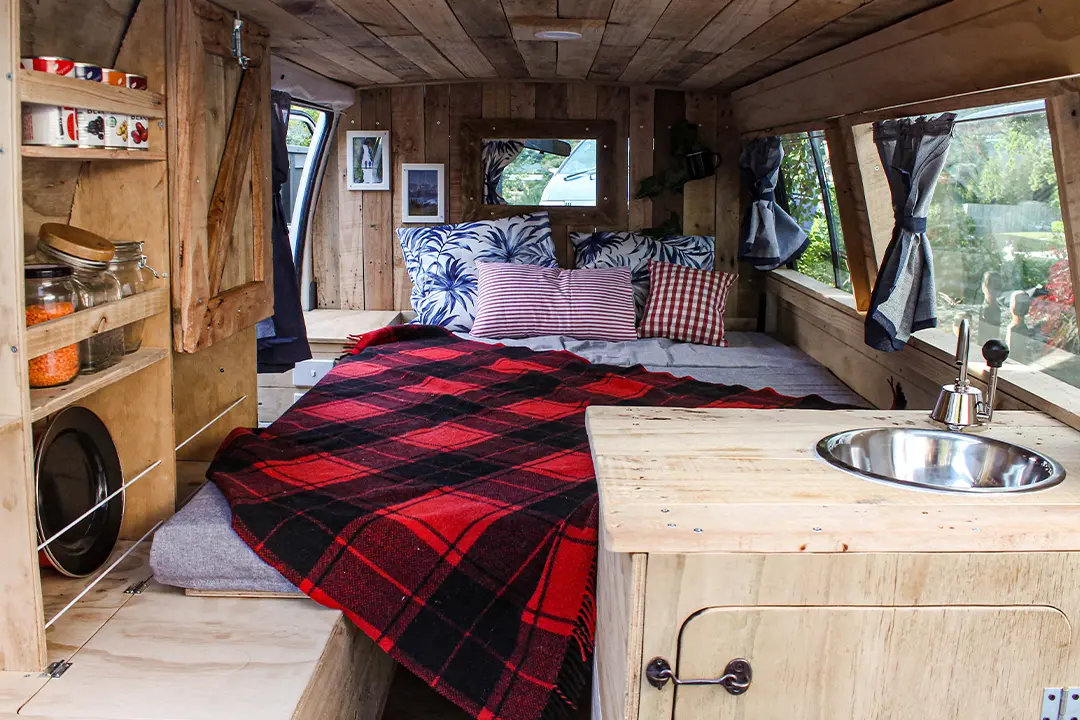
Michael Reynolds • 07 Mar 2026 • 115 views • 4 min read.Let me be direct about what Van Life 2.0 actually means in 2026, because the version being sold on social media and the version that experienced van lifers actually live have diverged significantly. Van Life 1.0 was the Instagram aesthetic — beautiful van builds, golden hour desert shots, the implication that full-time van dwelling was a lifestyle available to anyone willing to romanticize the discomfort. Van Life 2.0 is the more realistic and more useful version: people who have figured out how to actually do this sustainably, who understand the BLM land management rules that make free camping legal, who have solved the water and power and connectivity problems that the aesthetic content conveniently omits, and who know which specific spots are genuinely extraordinary versus which ones are crowded Instagram locations that look nothing like the photos. This guide is for the second category. Here is where the Southwest's best off-grid camping actually is, how to access it legally, and what you need to know before you go.
Van Life 2.0: The Best Off-Grid Spots in the American Southwest
Understanding BLM Land: The Foundation of Southwest Van Life
The Bureau of Land Management administers approximately two hundred and forty-five million acres of public land in the United States, concentrated in the West. On most BLM land, dispersed camping — camping outside of designated campgrounds, typically for free — is legal for up to fourteen days in any twenty-eight-day period. After fourteen days, you must move at least twenty-five miles from your previous location.
This is the legal framework that makes Southwest van life economically viable. The free camping that characterizes the van life experience happens primarily on BLM land, and understanding where BLM land is and what rules apply is the difference between legal dispersed camping and illegal camping that generates fines and contributes to the closure of areas that should be accessible to everyone.
The BLM's own mapping tools — available at blm.gov and through the onX Backcountry and Gaia GPS apps — show which land is BLM-administered and which areas have specific restrictions. Downloading these maps for offline use before entering areas with limited cell service is essential. The Campendium app aggregates user-submitted free camping locations with reviews, which is the most practical tool for finding specific spots within BLM land areas.
The Moab Corridor and Its Alternatives
Moab, Utah, has become so thoroughly discovered that calling it an off-grid destination requires qualification. The town itself is fully built out for tourism. The Canyon Lands National Park adjacent areas are busy. But the BLM land surrounding Moab — particularly along the canyon rims and in the areas between Moab and Canyonlands — still offers dispersed camping with views that are genuinely world-class.
The Gemini Bridges area northwest of Moab provides dispersed camping on BLM land with access to the natural stone bridges and canyon rim views that draw people to this region, without the National Park fee and crowd management. The Hurrah Pass road south of Moab offers canyon camping along the Colorado River corridor that is accessible to most high-clearance vehicles. Tower Ruin dispersed camping area gives access to ancient cliff dwellings in a context that is dramatically less managed and less crowded than the developed archaeological sites in the parks.
The Moab alternative that deserves more attention: the area around Mexican Hat and the Valley of the Gods in southeastern Utah. The Valley of the Gods is BLM land with sandstone formations comparable in drama to Monument Valley on the Navajo Nation immediately to the south, with free dispersed camping available throughout. The scale of the valley relative to the number of visitors creates the genuine solitude that Moab cannot reliably offer.
The Arizona Strip: The Southwest's Least Known Extraordinary Landscape
The Arizona Strip is the portion of Arizona north of the Grand Canyon — effectively cut off from the rest of the state by the canyon itself — and it contains some of the most dramatic and least visited landscape in the American Southwest. The Vermilion Cliffs National Monument, the Paria Canyon-Vermilion Cliffs Wilderness, and the surrounding BLM land create a zone of extraordinary sandstone formations, slot canyons, and high desert terrain that sees a fraction of the visitors that Zion and Bryce Canyon thirty miles north receive.
Coyote Buttes — the location of the famous Wave sandstone formation — requires a lottery permit and is heavily managed. The surrounding Paria Canyon area does not require a permit for day hiking and offers dispersed camping on BLM land that provides access to one of the most visually dramatic canyon environments in the country without the lottery competition.
House Rock Valley Road south of the Vermilion Cliffs provides dispersed camping with California condor viewing — the cliffs are a release and roosting site for the reintroduced condor population, and the concentration of these critically endangered birds in this location is one of the more remarkable wildlife experiences available in the Southwest.
The New Mexico High Desert: The Alternative Nobody Talks About
New Mexico's BLM land is the most underutilized major dispersed camping resource in the Southwest, primarily because New Mexico lacks the iconic landmark names that drive search traffic and social media content. This is precisely what makes it valuable.
The Rio Grande del Norte National Monument north of Taos provides canyon rim camping above the Rio Grande Gorge with views into one of the deepest canyons in North America — less visited than the Grand Canyon but genuinely comparable in certain respects and accessible by any vehicle via paved road. The dispersed camping on the rim is legal, free, and offers sunsets that are among the best available anywhere in the Southwest.
The Bisti/De-Na-Zin Wilderness in northwestern New Mexico is the destination for photographers and anyone who wants genuinely alien landscape without other humans in the frame. The badlands topography — hoodoos, petrified wood, sandstone formations in colors that do not occur in other contexts — is unlike anything else in the Southwest. Access requires a dirt road that is passable in dry conditions by most vehicles, and dispersed camping near the wilderness boundary is legal on adjacent BLM land.
The Jornada del Muerto — the stretch of high desert south of Socorro — has essentially no van life profile despite BLM land with legal dispersed camping and some of the most dramatic Chihuahuan Desert landscape in the country. The emptiness here is real and the night sky is extraordinary.
Southwest Off-Grid Spots Compared
| Location | State | Vehicle Access | Water Availability | Cell Service | Crowd Level | Best Season | Permit Required |
|---|---|---|---|---|---|---|---|
| Valley of the Gods | Utah | High-clearance recommended | None — carry in | Limited | Low | March-May, Sept-Nov | No |
| Vermilion Cliffs BLM | Arizona | 2WD accessible | None — carry in | Very Limited | Low-Medium | March-May, Sept-Nov | No (Wave requires permit) |
| Rio Grande del Norte rim | New Mexico | 2WD accessible | Limited | Partial | Low | April-June, Sept-Oct | No |
| Bisti Wilderness adjacent | New Mexico | Dirt road, dry weather | None — carry in | None | Very Low | March-May, Oct-Nov | No (wilderness entry free) |
| Moab area BLM | Utah | Varies by road | Limited | Partial | Medium | March-May, Sept-Nov | No |
| Anza-Borrego adjacent BLM | California | Varies | Very Limited | Very Limited | Low-Medium | Nov-March | No |
| Big Bend Ranch State Park | Texas | High-clearance recommended | Limited developed sites | None | Low | Oct-April | Yes — state park fee |
Frequently Asked Questions
What does a van actually need for extended Southwest off-grid camping?
The systems that matter for extended desert off-grid living are water storage, power generation, temperature management, and waste. Water is the most critical — the Southwest is genuinely arid and the distances between water sources are real. A minimum of twenty to thirty gallons of storage capacity and knowledge of where to refill along your route is the foundation. Power generation through rooftop solar panels — two hundred to four hundred watts of panel capacity charging a lithium iron phosphate battery bank of two hundred to four hundred amp hours — provides sufficient power for electronics, lighting, and a compressor refrigerator without generator dependence. Temperature management in summer desert camping requires either a compressor-based air conditioning system — which demands significant power — or the discipline to move to elevation during peak summer heat. A composting toilet or cassette toilet handles waste in areas without facilities.
How do I find water in the Southwest when camping on BLM land?
Water sources in Southwest BLM land require advance planning rather than improvisation. The iOverlander app and Campendium both track water sources including potable water at small town gas stations, BLM-maintained water tanks at developed but fee-free campgrounds, and community water sources in small towns. Town water from municipal sources in any small Southwest town is typically accessible — most towns have a gas station or convenience store where asking about water fill-up is straightforward. Some BLM areas have water tanks maintained specifically for dispersed campers. Never assume water is available at a specific location without verification from a current source — desert water sources are seasonal and the gap between a listed source and an available source can be significant.
What time of year should I avoid Southwest van life?
Summer heat in the low-elevation desert Southwest — below four thousand feet in Arizona and New Mexico — is genuinely dangerous for van life without air conditioning. Phoenix in July averages one hundred and five degrees with overnight lows around ninety. A van without active cooling in these conditions is not a comfortable or safe dwelling. The options are either air conditioning sufficient for desert summer — which requires significant electrical infrastructure — or elevation migration, moving to five thousand feet and above where summer temperatures are twenty to thirty degrees cooler. June through September at low elevation in Arizona and New Mexico is the period to avoid or plan carefully around. Utah and Colorado high elevation sites are more manageable in summer but can see sudden afternoon thunderstorms and occasional snow at elevation through May.
Is van life on BLM land actually legal and what happens if I camp somewhere I should not?
Dispersed camping on most BLM land is legal under the fourteen-day rule with no permit requirement. The areas where it is not legal are clearly posted with signs and indicated on BLM maps — wilderness areas often prohibit vehicle camping, some areas require permits, and some areas near sensitive resources have camping restrictions. Camping in prohibited areas can result in fines from BLM rangers. The practical enforcement reality is that BLM rangers patrol popular areas more frequently than remote areas, that interactions are typically educational rather than punitive for first offenses, and that the most common issue is camping in National Park or state park areas without paying the fee rather than on BLM land where camping is legal. Download the official BLM maps, know which land you are on, and follow the posted rules.
How do I handle waste on long-term BLM camping?
Solid human waste on BLM land requires either a self-contained system — composting toilet, cassette toilet, or bags — or following Leave No Trace principles for catholes at least two hundred feet from water, trails, and camp. Most serious van lifers use a self-contained toilet system because the cathole approach is impractical for extended stays in one location and the fourteen-day limit means repeated camping in the same general area. Gray water from dish washing and personal hygiene requires disposal away from water sources and in small enough quantities to allow absorption — concentrated gray water dumping in the same spot creates environmental problems that have led to camping restrictions in some areas. Pack out what you pack in applies to trash with no exceptions — the degradation of BLM areas that leads to restriction and closure almost always starts with accumulated trash from campers who treated public land as a dump.
The Southwest's BLM land offers some of the most extraordinary off-grid camping available anywhere in the country, at zero cost, with legal access that requires only understanding the rules that govern it. The Valley of the Gods produces views comparable to Monument Valley without the tour bus traffic. The Vermilion Cliffs BLM land gives access to canyon environments that rival Zion without the reservation system. The New Mexico high desert is the region's best-kept secret for anyone willing to go somewhere that does not appear on the top-ten lists.
Van Life 2.0 is the version built on understanding BLM land rules, solving the water and power and waste problems before they become problems, knowing which seasons and elevations are viable, and finding the spots that reward the research rather than the spots that reward the algorithm.
Download the offline maps.
Carry more water than you think you need.
Go somewhere that does not have its own Instagram hashtag.
That is where the Southwest actually is.