
Birth Charts Explained: Understanding Your Sun, Moon, and Rising Signs
Savannah Brooks • 10 Jan 2026 • 391 views • 3 min read.Most people know their zodiac sign—the sun sign determined by their birth date—but astrology extends far beyond this single placement. Your complete birth chart, also called a natal chart, is a complex map of planetary positions at the exact moment and location of your birth. This cosmic snapshot reveals a multifaceted personality portrait that explains why people born under the same sun sign can be dramatically different. The three most significant components of any birth chart are the sun sign, moon sign, and rising sign (also called the ascendant). Together, these form what astrologers call "the big three," providing the foundation for understanding your astrological identity. Your sun sign represents your core essence and conscious identity, your moon sign reveals your emotional nature and inner world, and your rising sign indicates how you present yourself to others and approach new situations. While skeptics dismiss astrology as pseudoscience, millions find value in birth chart analysis as a framework for self-reflection, personal growth, and understanding relationship dynamics. Whether you approach astrology as literal truth, psychological tool, or entertaining exploration, learning to read your birth chart offers fascinating insights into personality patterns and life themes. This guide will demystify birth charts, explaining how to calculate yours and interpret the meanings of your sun, moon, and rising signs.
What Is a Birth Chart and How to Get Yours
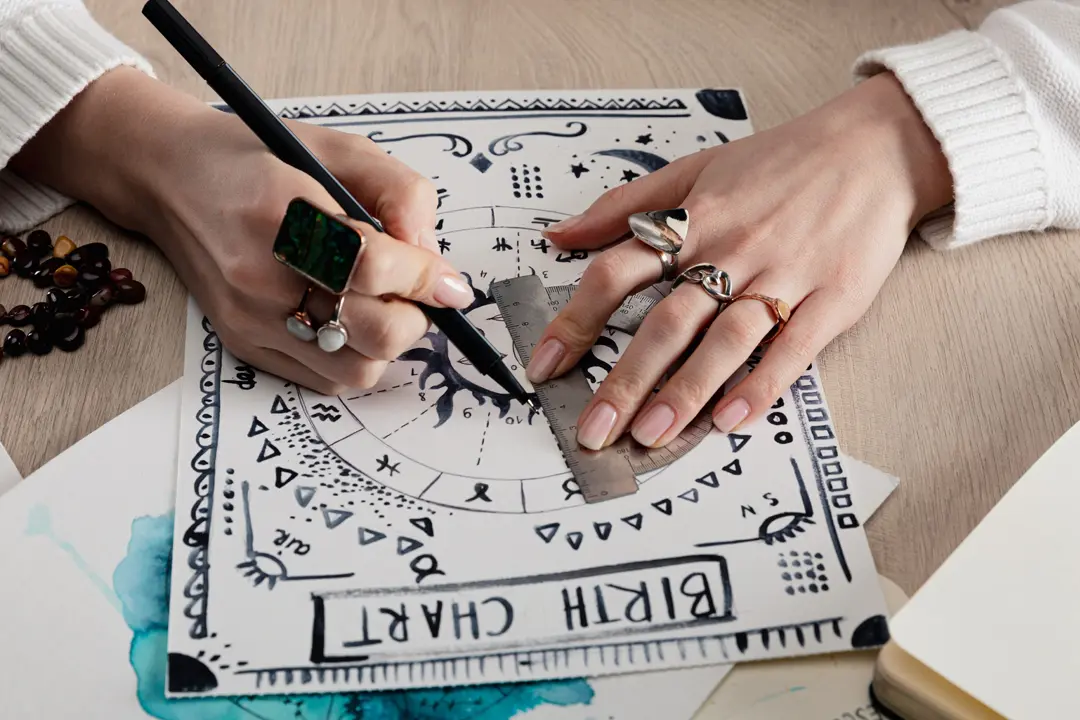
A birth chart is essentially a snapshot of the sky from your exact birthplace at your precise time of birth. The chart displays the positions of the sun, moon, and planets across the twelve zodiac signs and twelve astrological houses. Think of it as a cosmic fingerprint—no two birth charts are identical unless people were born at the exact same moment in the same location. To generate your birth chart, you need three pieces of information: your birth date, exact birth time, and birth location (city and country). Birth time is crucial because the rising sign changes approximately every two hours, and the moon sign shifts every 2-3 days. If you don't know your exact birth time, check your birth certificate, ask family members, or contact the hospital where you were born. Many vital records offices can provide this information. Once you have these details, numerous free websites generate birth charts instantly. Popular options include Astro.com (Astrodienst), Co-Star, Cafe Astrology, and Astro-Charts. Simply enter your information and the site produces a circular chart showing planetary positions, along with interpretations of key placements. The chart appears complex initially, filled with symbols, lines, and geometric patterns, but you only need to understand a few basic elements to extract valuable insights. Focus first on identifying your sun, moon, and rising signs before exploring deeper chart elements like planetary aspects and house placements.
Your Sun Sign: Core Identity and Life Purpose
The sun sign is what most people mean when they ask "What's your sign?" This placement indicates which zodiac constellation the sun occupied at your birth moment. The sun represents your core essence, conscious identity, ego, and the fundamental qualities you're developing throughout life. It reveals how you express vitality, what makes you feel alive, and where you naturally shine. Fire signs (Aries, Leo, Sagittarius) are passionate, enthusiastic, and action-oriented. Earth signs (Taurus, Virgo, Capricorn) are practical, grounded, and focused on tangible results. Air signs (Gemini, Libra, Aquarius) are intellectual, communicative, and socially oriented. Water signs (Cancer, Scorpio, Pisces) are emotional, intuitive, and deeply feeling. Your sun sign describes the hero's journey you're on—the qualities you're meant to cultivate and express confidently. For example, Leo sun learns to embrace authentic self-expression and leadership, while Virgo sun develops discernment and service to others. The sun also relates to your sense of purpose and what you're here to contribute to the world. It's the face you grow into with maturity and confidence, becoming more pronounced as you age. However, the sun sign alone provides an incomplete picture. Many people feel their sun sign doesn't fully describe them because other chart placements, particularly the moon and rising signs, significantly influence personality expression. Some individuals strongly identify with their sun sign, while others resonate more with their moon or rising sign depending on which receives more emphasis in their particular chart.
Your Moon Sign: Emotional Nature and Inner World
While the sun represents conscious identity, the moon reveals your emotional nature, unconscious patterns, and inner world. The moon sign describes how you process feelings, what makes you feel secure, your instinctive reactions, and what you need for emotional well-being. This placement often explains the private self that emerges in intimate relationships, comfortable environments, and vulnerable moments. Many people relate more strongly to their moon sign than their sun sign because emotional patterns feel more immediate and real than abstract identity concepts. For instance, someone with Gemini sun and Cancer moon might appear intellectually oriented and socially adaptable outwardly, but privately crave emotional security, nurturing relationships, and home-centered activities. The moon sign also indicates childhood conditioning and the emotional environment you experienced growing up. Fire moon signs (Aries, Leo, Sagittarius) process emotions actively and directly, preferring to address feelings through action or creative expression. Earth moon signs (Taurus, Virgo, Capricorn) seek emotional stability through routine, practical solutions, and tangible security. Air moon signs (Gemini, Libra, Aquarius) intellectualize emotions, processing feelings through talking, analyzing, and gaining perspective. Water moon signs (Cancer, Scorpio, Pisces) experience emotions intensely and intuitively, requiring time to feel deeply before moving forward. Understanding your moon sign explains relationship patterns, particularly what you need to feel emotionally satisfied in partnerships. It also reveals self-care needs—what activities and environments help you process stress and recharge emotionally.
Your Rising Sign: Social Mask and First Impressions
The rising sign, or ascendant, is the zodiac sign that was ascending on the eastern horizon at your birth moment. This placement changes approximately every two hours, making birth time critical for accurate calculation. The rising sign represents your social personality, the mask you wear when meeting new people, and your instinctive approach to new situations. It's literally how you "rise" to meet the world. Many astrologers consider the rising sign equally important to the sun sign because it governs physical appearance, mannerisms, and the energy you project before people know you well. The rising sign is the "you" that strangers encounter—your first impression, body language, and spontaneous reactions. For example, Scorpio rising often appears intense, mysterious, and penetrating even if their sun sign is lighthearted Sagittarius. The rising sign also rules the first house of self and identity, setting the stage for the entire birth chart structure. All other houses fall in sequence from the rising sign, influencing which life areas receive emphasis. Additionally, the rising sign's ruling planet becomes the chart ruler, the single most important planet in the birth chart. Understanding your rising sign explains why you might act differently in public versus private settings. It's the adaptive mechanism you developed early in life for navigating the external world. Over time, people often grow into their rising sign, becoming more comfortable expressing these qualities naturally rather than as a protective facade.
The Big Three Working Together
The magic of birth chart interpretation emerges when understanding how sun, moon, and rising signs interact to create your unique personality blend. These three placements form the foundation, with other planetary positions adding nuance and complexity. Consider someone with Leo sun, Pisces moon, and Virgo rising. Their core identity (Leo) seeks creative self-expression and recognition, their emotional nature (Pisces) is deeply sensitive and empathetic, and their social presentation (Virgo) appears practical, analytical, and service-oriented. This creates interesting internal dynamics—the confident Leo sun must integrate Pisces emotional vulnerability and express through Virgo's modest, helpful persona. These combinations explain why identical sun signs manifest so differently. Two Leos with different moon and rising signs will express Leo qualities through completely different filters. The sun shows what you're becoming, the moon reveals what you need, and the rising indicates how you approach everything. Sometimes these placements harmonize naturally—fire sun with fire moon and fire rising creates consistent, straightforward expression. Other times they conflict, creating internal tension—earth sun wanting security, air moon craving mental stimulation, and water rising appearing emotionally sensitive. Neither harmonious nor conflicting combinations are better or worse; they simply create different personality textures and life experiences requiring different integration approaches.
Beyond the Big Three
Once you understand your sun, moon, and rising signs, birth chart interpretation expands to include planetary placements, aspects (angles between planets), and house positions. Mercury governs communication style, Venus reveals relationship patterns and aesthetic preferences, Mars indicates how you take action and handle conflict. The outer planets—Jupiter, Saturn, Uranus, Neptune, and Pluto—describe generational themes and major life lessons. Aspects show how different chart parts interact, creating harmony or tension. Houses indicate life areas where planetary energies manifest—career, relationships, home, creativity, and more. Professional astrologers spend years mastering these complexities, but understanding your big three provides substantial self-knowledge. Numerous books, websites, and apps offer detailed interpretations of every placement. Approach birth chart exploration as an ongoing journey rather than one-time reading. Your chart doesn't change, but your understanding deepens with life experience, revealing new layers of meaning as you mature.
Birth charts offer a sophisticated framework for understanding personality beyond simple sun sign astrology. Your sun sign represents core identity and life purpose, your moon sign reveals emotional nature and inner needs, and your rising sign indicates social presentation and first impressions. Together, these three placements form the foundation of astrological identity, explaining why people born under the same sun sign express such different personalities. Calculating your birth chart requires only your birth date, time, and location, with free websites providing instant results and basic interpretations. Whether you view astrology as cosmic truth, psychological tool, or entertaining self-reflection, birth chart exploration offers valuable insights into personality patterns, relationship dynamics, and personal growth areas. Start by understanding your big three, then gradually explore deeper chart elements as curiosity leads. Astrology provides a language for discussing personality complexity and human nature, useful regardless of literal belief in planetary influences. The birth chart serves as a mirror reflecting qualities you might recognize, deny, or aspire to develop, making it a powerful tool for self-awareness and personal development throughout life.