
Meal Prep for Busy Professionals: 5 Recipes That Stay Fresh All Week
Camille Cooper • 19 Feb 2026 • 89 views • 3 min read.The meal prep advice that fails most people is built around recipes that sound great on Sunday and taste like regret by Wednesday. Soggy grain bowls. Reheated proteins that turned rubbery. Salads that became soup. The problem is not the concept — batch cooking genuinely saves time and money and eating decisions throughout the week. The problem is choosing the wrong recipes and the wrong storage approach. The five recipes below are specifically selected because they hold their quality for four to five days in the refrigerator without losing texture, flavor, or appeal. They reheat cleanly or require no reheating at all. And they are designed to work as a system — components that can be combined differently throughout the week so Tuesday's lunch does not feel like a depressing repeat of Monday's dinner. Here is how to make a week of good food happen in about two hours on Sunday.
Meal Prep for Busy Professionals: 5 Recipes That Stay Fresh All Week
The System Before the Recipes
Two hours of Sunday prep works if you run the kitchen like a production line rather than cooking one recipe at a time. While the oven handles one thing, the stovetop handles another. While something simmers, you chop the next component. The recipes below are sequenced for this kind of parallel execution.
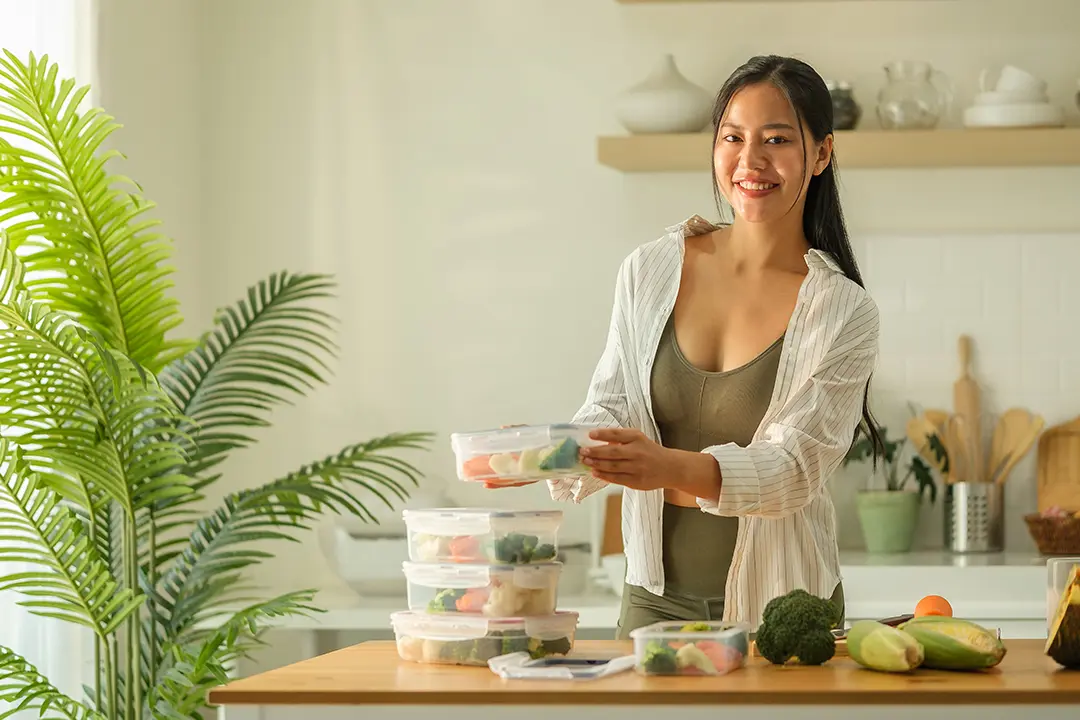
You need five containers minimum — glass is worth the investment because it does not absorb flavors or stain, goes from refrigerator to microwave without transferring to another dish, and does not leach anything into food stored for multiple days. Wide, flat containers keep things like grain salads and roasted vegetables from compressing into a dense mass that reheats unevenly.
Label containers with the day they were made. Four days in the refrigerator is the reliable window for cooked proteins and grains. Day five is a judgment call. Day six is not a judgment call.
Recipe One: Sheet Pan Roasted Chicken Thighs
Bone-in, skin-on chicken thighs are the meal prep protein that actually stays good all week. Unlike chicken breasts, which dry out within two days of refrigeration, thighs have enough fat content to maintain moisture and flavor through multiple reheat cycles. The skin keeps the meat from drying during storage.
Season six chicken thighs generously with salt, pepper, smoked paprika, garlic powder, and a small amount of olive oil. Roast at 425 degrees for thirty-five to forty minutes until the skin is crispy and the internal temperature reaches 165 degrees. Rest for ten minutes before storing.
These can be eaten cold on salads, reheated in a skillet for two minutes per side to re-crisp the skin, or shredded and used in wraps or grain bowls. The flavor actually improves after a day in the refrigerator as the spices penetrate further.
Storage: four to five days refrigerated. Reheat in skillet or oven at 400 degrees for eight minutes — microwave reheating works but sacrifices the skin texture.
Recipe Two: Farro and Roasted Vegetable Base
Farro is the grain that solved the soggy grain bowl problem. Unlike rice or quinoa, farro has a chewy, al dente texture that holds up to refrigeration and reheating without becoming mushy. Cook two cups of dry farro according to package directions — typically boiling in salted water for twenty-five to thirty minutes. Dress while warm with a small amount of olive oil and lemon juice to prevent clumping.
Simultaneously, roast whatever vegetables you have. Cut bell peppers, zucchini, red onion, and cherry tomatoes into similar sizes, toss with olive oil, salt, pepper, and a pinch of dried oregano, and roast at 425 degrees alongside the chicken for twenty to twenty-five minutes until caramelized at the edges.
Combine farro and roasted vegetables into one large container. This base pairs with the chicken thighs, with a fried egg on top for breakfast, with chickpeas for a vegetarian version, or with any sauce or dressing you add fresh each day to prevent the whole batch from absorbing a flavor you may not want by day four.
Storage: five days refrigerated. Serve warm or at room temperature.
Recipe Three: Lemon Tahini Dressing
A good sauce changes what everything else can be. This dressing takes five minutes, keeps for ten days, and makes grain bowls, raw vegetables, roasted vegetables, proteins, and even toast taste considered rather than assembled in a hurry.
Whisk together three tablespoons of tahini, two tablespoons of lemon juice, one clove of garlic minced or pressed, one tablespoon of olive oil, salt, and enough water — typically two to four tablespoons — to thin to a pourable consistency. The water amount varies with tahini brand. Add it slowly until the dressing moves easily off a spoon.
This is the element that makes the same farro base feel different on Monday versus Thursday. Different proteins, different add-ins, but a consistent sauce creates coherence without monotony.
Storage: ten days refrigerated in a sealed jar. Stir or shake before using — separation is normal.
Recipe Four: White Bean and Kale Soup
Soup is the meal prep format that genuinely improves over several days in the refrigerator. The flavors concentrate and develop in ways that make Wednesday's bowl better than Sunday's. It also reheats in three minutes from refrigerator cold and requires nothing alongside it to constitute a complete meal.
In a large pot, sauté one diced onion, three cloves of garlic, and two stalks of celery in olive oil until soft — about eight minutes. Add one can of diced tomatoes, two cans of drained white beans, four cups of broth, a parmesan rind if you have one, salt, pepper, and a pinch of red pepper flakes. Simmer for fifteen minutes. Add one large bunch of kale, stems removed and leaves roughly chopped, and cook for another five minutes until the kale is tender but not dissolved.
The parmesan rind is the detail that elevates this from adequate to genuinely good — it adds a savory depth that is hard to identify but obvious in its absence. Save rinds in the freezer for exactly this purpose.
Storage: five days refrigerated, three months frozen. This recipe doubles easily and the extra portion freezes well for weeks when Sunday prep does not happen.
Recipe Five: Overnight Oats with Adaptable Toppings
Breakfast is the meal most people abandon first when mornings get chaotic, defaulting to something worse because it requires no preparation. Overnight oats solve this by making the preparation happen the night before, producing a breakfast that is ready when you open the refrigerator and requires nothing except eating.
For five servings, combine two and a half cups of rolled oats — not instant — with two and a half cups of milk of your choice, half a cup of Greek yogurt, two tablespoons of chia seeds, two tablespoons of maple syrup or honey, and a half teaspoon of vanilla extract. Stir well, divide into five containers, and refrigerate overnight.
In the morning, the chia seeds and oats have absorbed the liquid and created a thick, pudding-like texture that is filling and high in protein and fiber. Add toppings fresh each day — sliced banana, berries, nut butter, granola, whatever is available — to keep each morning's version distinct.
Storage: five days refrigerated. Do not freeze.
The Five Recipes Compared
| Recipe | Prep Time | Cook Time | Storage Life | Reheat Required | Versatility |
|---|---|---|---|---|---|
| Sheet Pan Chicken Thighs | 10 min | 40 min | 4-5 days | Optional (skillet best) | High — works in bowls, salads, wraps |
| Farro and Roasted Vegetables | 15 min | 30 min | 5 days | No (room temp) or microwave | High — base for multiple meals |
| Lemon Tahini Dressing | 5 min | None | 10 days | No | Very High — works on almost anything |
| White Bean and Kale Soup | 15 min | 25 min | 5 days / 3 months frozen | Yes (3 min microwave) | Medium — complete meal on its own |
| Overnight Oats | 10 min | None | 5 days | No | Medium — toppings change daily |
Frequently Asked Questions
How do I keep meal prep from getting boring by mid-week?
The component approach solves this better than complete-meal prep. When you store proteins, grains, and sauces separately and combine them fresh, the same ingredients can produce different experiences throughout the week. Chicken thigh over farro with tahini on Monday tastes different from the same chicken shredded into a wrap with hot sauce on Wednesday. One sauce is not enough — prep a second condiment like a simple vinaigrette or a store-bought salsa verde to rotate.
What containers are actually worth buying?
Glass containers with locking lids — Pyrex, OXO, or the Weck jar system — are worth the investment for anyone who meal preps regularly. The microwave-safe property eliminates the transfer step. The lack of plastic means no flavor absorption over time. They are heavier and more expensive upfront than plastic alternatives and last years instead of months. For soup specifically, wide-mouth mason jars in quart size are practical, inexpensive, and stack cleanly.
Can these recipes be adapted for dietary restrictions?
The farro base works with gluten-free grains — substitute brown rice or millet for the farro if avoiding gluten, accepting that the texture will be softer. The white bean soup is naturally vegetarian and easily made vegan by omitting the parmesan rind and using vegetable broth. The chicken can be replaced with baked salmon, hard-boiled eggs, or roasted chickpeas for different dietary needs. The overnight oats work with any milk alternative and the Greek yogurt can be swapped for a dairy-free version.
What if I only have an hour for prep instead of two?
Prioritize in this order: the overnight oats take ten minutes and solve the breakfast problem for the entire week. The lemon tahini dressing takes five minutes and makes everything else better. The sheet pan chicken goes in the oven and works largely unattended. If time cuts short, skip the soup — it is the item that requires the most active attention and can be made in twenty-five minutes on a weeknight when time allows.
How much does this system cost per week for one person?
The five recipes above use roughly two pounds of chicken thighs, two cups of dry farro, two cans of white beans, one bunch of kale, assorted vegetables, and pantry staples. In most markets, the ingredient cost for one person runs between forty-five and sixty-five dollars depending on location and where you shop. The per-meal cost across fourteen meals — five breakfasts, five lunches, four dinners — typically comes out to between three and five dollars per meal.
Two hours on Sunday buys you a week of mornings where breakfast is already in the refrigerator, lunches you are not dreading, and dinners that require nothing beyond reheating and whatever fresh element you want to add.
The recipes above are not exciting Instagram content. They are reliable, genuinely good food that holds its quality across four to five days and gives you enough flexibility to eat differently throughout the week without cooking differently.
The overnight oats handle breakfast. The farro and chicken handle the lunch and dinner base. The soup handles the days when you want something warm that requires no effort. The tahini dressing makes everything better than it would otherwise be.
That is the whole system.
Two hours in. Five days out.
Do it once and you will keep doing it.