
The Science of Fermentation: How to Make Your Own Probiotic Foods at Home
Camille Cooper • 28 Feb 2026 • 148 views • 3 min read.Let me give you the mechanism before the recipes, because understanding what fermentation actually is makes the practical steps obvious rather than arbitrary, and it explains why the specific details — salt concentration, temperature, vessel type — matter rather than being fussy preferences. Fermentation is the metabolic process by which microorganisms — bacteria, yeasts, or both — convert sugars and starches into acids, gases, or alcohol in the absence of oxygen. The fermented foods with probiotic value — sauerkraut, kimchi, yogurt, kefir, kombucha — are produced by lactic acid bacteria (LAB) that convert sugars to lactic acid, creating an acidic environment that preserves the food, produces complex flavors, and populates the product with live beneficial microorganisms. The practical implication of the mechanism: fermentation is not a single process but a competitive microbial environment where you are selectively cultivating the organisms you want (Lactobacillus, Bifidobacterium, and other beneficial bacteria) by creating conditions that favor them and disfavor spoilage organisms. Salt concentration, oxygen exclusion, and temperature are the variables you control to tilt this competition in the right direction. Get them right and the beneficial bacteria dominate, produce lactic acid, and create the stable, flavorful, probiotic-rich product you are after. Get them wrong and spoilage organisms get a foothold. This is not difficult. Humans have been doing it without understanding the microbiology for thousands of years. But understanding the mechanism means you can troubleshoot problems and know why each step matters.
The Science of Fermentation: How to Make Your Own Probiotic Foods at Home
The Probiotic Evidence: What Home Fermentation Actually Delivers
Before the recipes, a calibrated statement on the health claims, because fermented food marketing often overclaims in ways that create unrealistic expectations.
The evidence for fermented foods and gut health is genuine but more specific than "eating fermented foods cures everything." The strongest evidence is for fermented dairy — yogurt and kefir — where controlled trials show benefits for lactose intolerance symptoms, antibiotic-associated diarrhea, certain inflammatory conditions, and immune function in specific populations. The evidence for vegetable ferments — sauerkraut, kimchi — is more limited in controlled trial form but supported by observational research on traditional diets high in fermented vegetables correlating with better gut microbiome diversity.
The critical caveat on probiotic survival: many of the bacteria in home-fermented foods do not survive the journey through stomach acid to reach the intestine in sufficient numbers to colonize. The benefit of fermented foods may come less from direct colonization and more from the metabolites the bacteria produce, the impact on gut pH, and the interaction with existing gut microbiome populations. You do not need to resolve this debate to benefit from making and eating fermented foods — the evidence is sufficient to support the practice, and the foods are genuinely delicious regardless of the precise mechanism.
Lacto-Fermented Vegetables: The Simplest Starting Point
Lacto-fermented vegetables — the category that includes sauerkraut, kimchi, and fermented pickles — are the most accessible fermentation project because they require no special starter culture. The beneficial bacteria already live on the surface of vegetables, particularly on cabbage and other brassicas. Your job is to create the conditions for them to thrive.
The salt brine is the key variable. Salt draws water out of the vegetables through osmosis, creating the brine that the vegetables ferment in. More importantly, the salt concentration — typically two to three percent by weight — inhibits the growth of most spoilage bacteria while allowing the salt-tolerant Lactobacillus species to thrive and begin producing lactic acid. Below two percent, you risk spoilage. Above three to four percent, you slow or inhibit the fermentation. The measurement matters: use weight rather than volume measurements for the salt.
Basic sauerkraut — the fermentation project with the highest success rate for beginners — requires cabbage and salt and nothing else. The process: shred one kilogram of cabbage, mix with twenty grams of non-iodized salt (iodine can inhibit fermentation), massage and squeeze until the cabbage releases enough liquid to submerge itself, pack tightly into a clean glass jar pressing down until liquid covers the cabbage, weigh down to keep the cabbage submerged below the brine, cover with a cloth or airlock lid, and ferment at room temperature (sixty-five to seventy-five degrees Fahrenheit optimal) for one to four weeks depending on your flavor preference.
The variables that affect outcome: temperature determines fermentation speed — warmer temperatures produce faster, more strongly flavored results; cooler temperatures produce slower, more complex flavor development. The most common beginner mistake is insufficient brine covering the vegetables. Exposed vegetable surfaces can develop white kahm yeast (harmless but visually alarming) or, less commonly, true spoilage mold. Check daily for the first week and press the vegetables down if they have risen above the brine.
Yogurt and Kefir: The Dairy Ferments With the Strongest Evidence
Yogurt and kefir have the most controlled trial evidence for probiotic benefit and are among the more approachable home fermentation projects.
Yogurt production requires only milk, a starter culture (two tablespoons of any plain yogurt with live cultures, or a purchased starter), and temperature control. The mechanism: Lactobacillus bulgaricus and Streptococcus thermophilus (the standard yogurt bacteria) ferment at temperatures between ninety-five and one hundred and fifteen degrees Fahrenheit — a relatively narrow window that sets yogurt apart from room-temperature ferments. Heat milk to one hundred and eighty degrees to denature proteins (this produces thicker yogurt and eliminates competing bacteria), cool to one hundred to one hundred and ten degrees, whisk in the starter culture, and maintain temperature for six to twelve hours while fermentation occurs.
The temperature maintenance challenge is the primary difficulty of home yogurt making. A dehydrator set to one hundred and ten degrees, an oven with only the pilot light on, a yogurt maker, or an insulated cooler with a warm water bath all accomplish this. The longer fermentation time (up to twelve hours) produces more sour flavor and more thorough lactose conversion — relevant for lactose-sensitive people. Shorter fermentation (six hours) produces milder yogurt with more residual lactose.
Kefir is substantially easier than yogurt because it ferments at room temperature. Kefir grains — colonies of bacteria and yeast in a polysaccharide matrix that look like small cauliflower florets — are added to milk, left at room temperature for twenty-four to forty-eight hours, strained out, and the grains reused indefinitely. The resulting kefir is tangy, slightly effervescent, and contains a broader diversity of probiotic organisms than yogurt. Kefir grains are available from online suppliers and from home fermentation communities where grains are often shared free because they reproduce and produce surplus.
Home Fermentation Projects Compared
| Project | Difficulty | Equipment Needed | Fermentation Time | Probiotic Evidence | Cost to Start |
|---|---|---|---|---|---|
| Sauerkraut | Very Low | Glass jar, knife, salt | 1-4 weeks | Medium — observational strong | Under $5 |
| Kimchi | Low | Glass jar, grater, salt, pepper | 1-5 days active + weeks | Medium — observational strong | $10-$20 |
| Yogurt | Low-Medium | Thermometer, temperature control | 6-12 hours | High — controlled trials | $5-$15 (+ yogurt maker optional) |
| Milk kefir | Very Low | Glass jar, strainer, kefir grains | 24-48 hours | High — controlled trials | $10-$20 for grains (then free) |
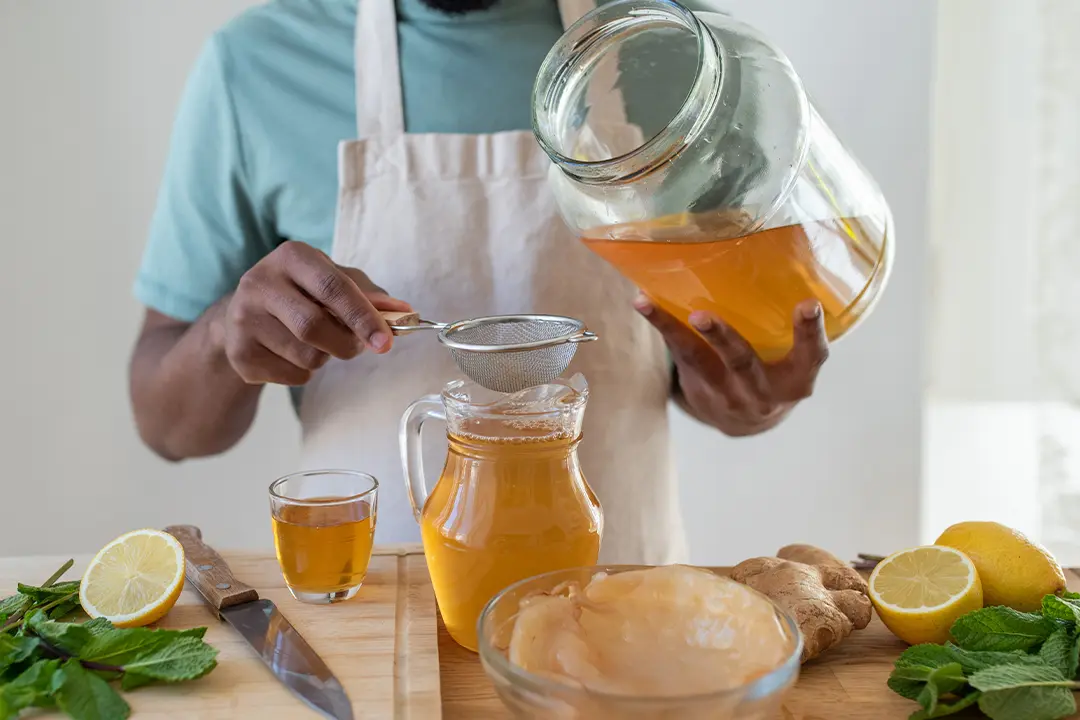
| Kombucha | Medium | Glass jar, SCOBY, cloth cover | 7-14 days + optional second | Medium | $15-$30 for SCOBY |
| Water kefir | Low | Glass jar, water kefir grains | 24-48 hours | Medium | $10-$20 for grains |
Frequently Asked Questions
How do I know if my ferment has gone bad versus just looking strange but being fine?
The most important safety concept in vegetable fermentation is that lactic acid fermentation is self-preserving — once the pH drops sufficiently through lactic acid production, the environment actively inhibits dangerous pathogens. True spoilage in properly conducted lacto-fermentation is rare. The distinctions worth knowing: white film on the surface of brine is almost always kahm yeast — a harmless surface yeast that forms when brine surface is exposed to air. It looks alarming, smells yeasty or slightly off, but is not dangerous. Scrape it off and ensure vegetables remain submerged. Fuzzy mold — green, black, or pink — on vegetable surfaces above the brine line indicates actual mold contamination. If the mold is on the surface film only and the vegetables below the brine are undamaged and smell sour rather than putrid, many experienced fermenters remove the affected portion and continue. If the mold penetrates into the vegetables or the smell is putrid rather than sour, discard and start again. The smell test is your most reliable guide — properly fermented sauerkraut smells pleasantly sour and tangy. Something gone wrong smells rotted, putrid, or chemically wrong in ways that are unmistakable.
Does home-fermented food actually contain more probiotics than store-bought?
The comparison depends on the specific products. Commercial yogurt and kefir with live cultures contain viable probiotic bacteria — the live cultures claim on labels is regulated and meaningful. Commercial sauerkraut and kimchi sold in the refrigerated section (not shelf-stable canned versions, which are pasteurized and contain no live cultures) contain live bacteria but often in lower concentrations than fresh home ferments because the refrigeration slows fermentation and the commercial product is typically at a more advanced fermentation stage than fresh home ferment. The honest answer: home-fermented vegetables at active fermentation stage (one to three weeks) contain very high concentrations of live lactic acid bacteria. The concentration decreases as fermentation continues and as the product is refrigerated. Store-bought refrigerated ferments vary widely by brand and age. The primary advantage of home fermentation is freshness and the ability to consume the ferment at the fermentation stage with the highest live bacteria concentration.
What equipment do I actually need to start fermenting at home?
The honest answer is less than most fermentation equipment marketing suggests. For lacto-fermented vegetables: a clean glass jar (wide-mouth mason jars work excellently), a kitchen scale (important for accurate salt ratios), non-iodized salt, and something to weigh down the vegetables (a small zip-lock bag filled with brine works well as a weight). A dedicated fermentation crock, airlock lids, and ceramic weights are useful but not necessary for initial projects. For yogurt: a food thermometer is genuinely necessary (temperature control matters and is difficult without measurement), and some form of temperature maintenance (oven, dehydrator, or yogurt maker). For kefir: nothing beyond a glass jar and a fine-mesh strainer. The equipment spending recommendation: start with what you have and the scale you will need to buy for accurate salt ratios, then add specific equipment if you continue and find you want the convenience.
How do I incorporate fermented foods into my diet if I am not used to eating them?
Start small — a few tablespoons of sauerkraut or a small glass of kefir daily rather than large servings. Introducing large amounts of fermented foods too quickly can cause digestive discomfort (gas, bloating) as the gut microbiome adjusts. This is temporary for most people and reduces within one to two weeks of regular consumption. The most practical incorporation strategies: sauerkraut alongside any meal that benefits from an acidic, tangy component (sausages, eggs, grain bowls, sandwiches); yogurt as a component of breakfast or as a base for dressings and dips; kefir as a base for smoothies where the tang blends with fruit. The goal is not consuming large therapeutic doses but including small regular servings that maintain gut microbiome exposure to diverse fermented food bacteria.
Home fermentation is the food project with the highest ratio of impressive result to technical difficulty. Sauerkraut requires cabbage, salt, a jar, and patience — the output is a genuinely complex, beneficial food that costs a fraction of the store-bought equivalent and tastes demonstrably fresher.
The science is real: lactic acid bacteria performing lacto-fermentation are doing something that took human culture thousands of years to learn and that modern food processing has largely eliminated from the standard diet. Making fermented foods at home reconnects a practice that was universal in pre-refrigeration cooking with the daily diet.
Start with sauerkraut.
Get the salt ratio right by weighing rather than measuring by volume.
Keep the vegetables submerged below the brine.
Taste after one week and every few days thereafter until the flavor is what you want.
Refrigerate when it reaches your preferred sourness.
The process is genuinely that simple.
Everything else in fermentation is a variation on these same principles.