
Yellowstone National Park: Best Time to Visit & Must-See Spots
Michael Reynolds • 25 Jan 2026 • 148 views • 2 min read.Yellowstone changed how the world thinks about nature preservation. Established in 1872, it became the first national park anywhere on Earth. The decision protected 2.2 million acres of wilderness, geysers, and wildlife. Four million visitors arrive annually to witness its wonders. But most see only a fraction of what Yellowstone offers. They watch Old Faithful, snap photos, and leave within hours. This guide helps you experience Yellowstone properly. We cover timing, must-see locations, and practical planning tips. You'll arrive prepared to explore America's most iconic natural wonder.
Yellowstone National Park: Best Time to Visit & Must-See Spots
Quick Summary:
- America's first national park spans three states
- Peak season runs June through August with massive crowds
- Spring and fall offer wildlife viewing with fewer visitors
- Old Faithful is just the beginning of geothermal wonders
When to Visit Yellowstone
Timing dramatically affects your Yellowstone experience. Each season offers different advantages and challenges. Understanding these tradeoffs helps you plan the perfect trip.
Summer (June-August) brings the largest crowds and best accessibility. All roads and facilities operate fully. Weather stays warm and predictable mostly. However, parking becomes impossible at popular sites midday.
Spring (April-May) offers excellent wildlife viewing opportunities. Bears emerge from hibernation with cubs. Wolves hunt more actively during this period. Some roads remain closed until late May typically.
Fall (September-October) delivers stunning colors and bugling elk. Crowds thin dramatically after Labor Day. Weather cools but remains pleasant generally. Some facilities close in October progressively.
Winter (November-March) transforms Yellowstone into a frozen wonderland. Most roads close to regular vehicles completely. Snowcoach and snowmobile access opens limited areas. Wildlife viewing becomes exceptional against white landscapes.
Must-See Geothermal Features
Yellowstone sits atop a massive volcanic hotspot. This geology creates half the world's geysers. Understanding the park's thermal areas maximizes your experience.
Old Faithful erupts approximately every 90 minutes reliably. The visitor center posts predicted eruption times. Arrive 30 minutes early for seating on benches. The geyser shoots 130-180 feet high for 2-5 minutes.
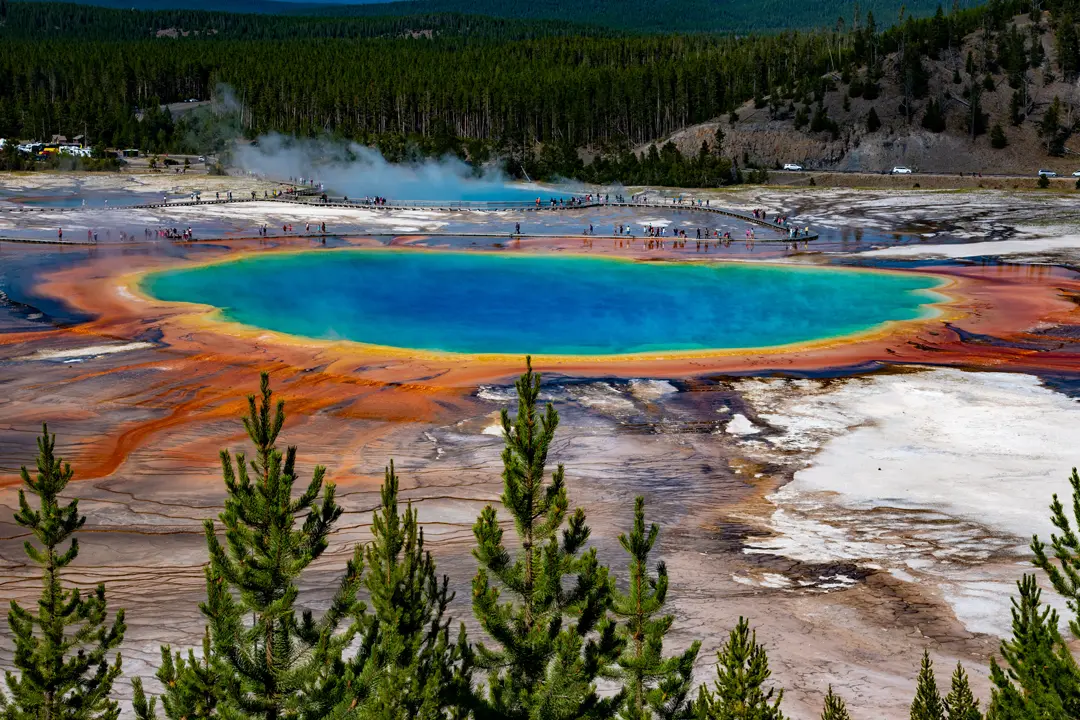
Grand Prismatic Spring displays nature's most stunning colors. The largest hot spring in North America spans 370 feet. Orange, yellow, and green bacteria create the rainbow effect. The Fairy Falls overlook provides the best aerial view.
Mammoth Hot Springs features terraced limestone formations uniquely. Hot water deposits travertine creating white terraces. The formations change constantly as springs shift. Upper and lower terraces require separate exploration times.
Norris Geyser Basin contains the park's hottest and most dynamic area. Steamboat Geyser holds the world's tallest active geyser record. The basin changes dramatically between visits sometimes. Porcelain Basin offers otherworldly landscapes.
West Thumb Geyser Basin sits directly on Yellowstone Lake's shore. Hot springs emerge in the lake itself remarkably. The location combines thermal features with mountain views. This area sees fewer crowds than other basins.
Wildlife Viewing Hotspots
Yellowstone hosts the largest concentration of wildlife in the lower 48 states. Proper timing and location increase your viewing chances dramatically. Respect wildlife distance requirements for safety always.
Lamar Valley earns its nickname as America's Serengeti. Wolves, bison, bears, and elk roam this expansive valley. Dawn and dusk provide the best viewing opportunities. Bring binoculars or spotting scopes for distant animals.
Hayden Valley offers similar wildlife viewing along the Yellowstone River. Bison herds number in the hundreds during summer. Grizzly bears frequent the valley regularly. The valley sits conveniently between major attractions.
Tower Junction area provides excellent bear viewing spring through fall. Black bears and grizzlies both frequent this region. The road between Tower and Mammoth offers consistent sightings. Pull completely off the road when wildlife appears.
Scenic Drives and Viewpoints
| Location | Highlight | Best Time | Crowds | Time Needed |
|---|---|---|---|---|
| Grand Canyon of Yellowstone | Dramatic waterfall views | Morning light | Heavy | 2-3 hours |
| Artist Point | Classic Lower Falls view | Sunrise | Heavy | 30 minutes |
| Inspiration Point | Canyon panorama | Any time | Moderate | 30 minutes |
| Mount Washburn | 360-degree park views | Midday | Light | 4-6 hours (hike) |
| Lake Butte Overlook | Yellowstone Lake sunset | Evening | Light | 30 minutes |
| Dunraven Pass | Alpine scenery | Summer only | Light | Drive-through |
Planning Your Visit
Entrance fees cost $35 per vehicle for seven days. Annual passes cost $80 and cover all national parks. The fee provides access to all five park entrances. Keep your receipt for re-entry during your trip.
Accommodations book up months in advance for summer. Old Faithful Inn offers historic charm but sells out quickly. Canyon Lodge provides modern amenities centrally located. Camping requires reservations at most campgrounds.
Getting around requires a vehicle for meaningful exploration. The Grand Loop Road connects major attractions over 142 miles. Gas stations exist inside the park but charge premium prices. Fill up before entering when possible.
Cell service remains extremely limited throughout the park. Download offline maps before arriving definitely. Let family know your itinerary in advance. WiFi exists at some lodges but runs slowly.
Altitude affects many visitors unexpectedly. The park sits between 5,000 and 11,000 feet elevation. Drink extra water and take breaks frequently. Altitude sickness symptoms include headache and nausea.
Frequently Asked Questions
How many days do I need in Yellowstone?
Three days allows you to see major highlights comfortably. Five days enables deeper exploration of different areas. One day feels rushed but covers Old Faithful and the canyon. A week lets you hike, relax, and avoid rushing.
Which entrance should I use?
West Entrance provides closest access to Old Faithful directly. North Entrance stays open year-round uniquely. South Entrance connects conveniently from Grand Teton. Choose based on your lodging and priority destinations.
Can I see wildlife guaranteed?
Bison sightings are virtually guaranteed during summer months. Other wildlife requires luck, timing, and patience. Dawn and dusk dramatically improve your chances. Lamar Valley offers the best overall odds.
Is Yellowstone safe to visit?
Yes, but respect the dangers seriously. Thermal features can kill instantly if you leave boardwalks. Wildlife requires 100-yard distance for bears and wolves. Weather changes rapidly at high elevations.
Should I visit Grand Teton too?
Absolutely. The parks connect directly and complement each other. Grand Teton offers dramatic mountain scenery Yellowstone lacks. Adding two days for Teton creates an ideal trip.
When is the least crowded time?
Late September through early October offers fall colors with minimal crowds. Early June before school ends also works well. Weekdays always beat weekends for crowd avoidance. Early morning beats midday at any time.
Can I bring my dog?
Dogs face significant restrictions in Yellowstone. They cannot leave paved roads or parking areas. Trails, boardwalks, and thermal areas prohibit pets completely. Consider leaving pets at home for this trip.
What about the supervolcano?
Yellowstone sits above an active volcanic system accurately. Scientists monitor activity constantly with no imminent threat detected. The last major eruption occurred 640,000 years ago. Enjoy the geothermal features without apocalypse concerns.
The Bottom Line
Yellowstone deserves its status as America's most iconic national park. Geysers, wildlife, and canyons create unforgettable experiences. But proper planning separates frustrating visits from magical ones.
Choose your timing based on priorities carefully. Summer guarantees access but brings crushing crowds. Shoulder seasons reward patience with solitude and wildlife.
Allocate sufficient time for meaningful exploration. Rushing through Yellowstone wastes the opportunity entirely. Three days minimum allows proper appreciation of major features.
Book accommodations and camping months ahead for peak season. Arrive at popular spots early morning or evening. Respect wildlife and thermal features for everyone's safety.
Yellowstone changed how humanity values wild places forever. It continues inspiring millions of visitors annually. Plan well and prepare for an experience you'll remember forever.