
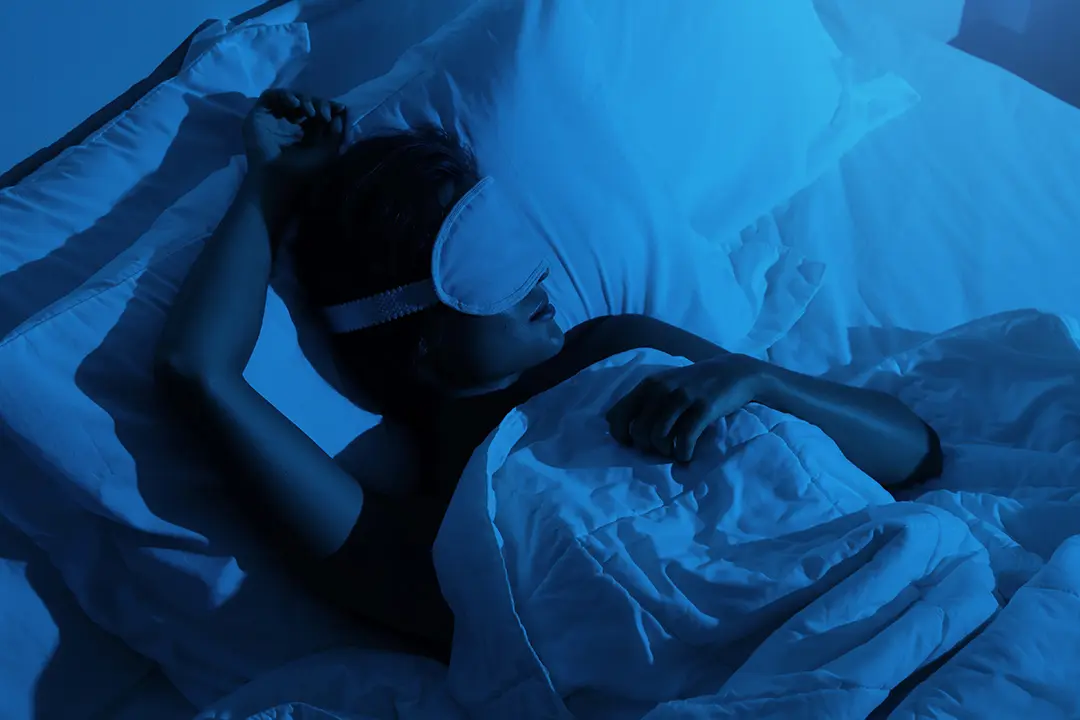
Biohacking for Beginners: Simple Habits to Optimize Your Sleep and Focus
Camille Cooper • 07 Mar 2026 • 124 views • 4 min read.Let me clear up what biohacking actually means before we get into the tactics, because the term has been colonized by the expensive end of the wellness industry in ways that obscure the genuinely useful core of the concept. Biohacking in its most useful form is simply the practice of using evidence-based interventions to improve how your biology functions — specifically sleep quality, cognitive performance, energy, and stress response. The interventions that work best are almost entirely free or very cheap. The interventions that cost the most — continuous glucose monitors for people without diabetes, infrared saunas, peptide injections, cold plunge tubs — have the weakest evidence base relative to their cost. This guide covers the high-evidence, low-cost interventions that actually move the needle on sleep and focus. Everything here is supported by peer-reviewed research. Nothing here requires a supplement stack, a biometric device, or a financial investment that would be difficult to justify.
Biohacking for Beginners: Simple Habits to Optimize Your Sleep and Focus
Sleep: The Foundation That Everything Else Depends On
The biohacking community has a complicated relationship with sleep — it is simultaneously recognized as the single most important variable for cognitive performance, recovery, and long-term health, and treated as something to optimize around rather than prioritize. The executives who proudly report sleeping five hours per night while using stimulants, cold exposure, and nootropics to maintain function are doing something that the research on sleep deprivation makes clearly counterproductive: spending significant money and effort to partially compensate for a damage they are inflicting on themselves voluntarily.
The foundational biohack for sleep is not a supplement or a device. It is consistent sleep and wake timing.
Your circadian rhythm — the internal clock that regulates sleep timing, hormone release, body temperature, and dozens of other biological processes — operates most efficiently when your sleep and wake times are consistent across the week. The social jet lag produced by sleeping until noon on weekends and waking at six AM on weekdays creates a circadian disruption comparable to traveling two to three time zones every weekend. The research on social jet lag shows associations with increased risk for metabolic disease, mood disorders, and cognitive impairment that compound over years of inconsistent sleep timing.
The practical implementation: set a consistent wake time — including weekends — and work backward to determine your target bedtime based on your sleep need, which ranges from seven to nine hours for most adults. The wake time is easier to control than the sleep onset time, and consistent wake timing anchors your circadian rhythm more effectively than trying to fall asleep at the same time each night.
Light: The Master Circadian Signal
Your circadian rhythm is set primarily by light exposure, specifically by the blue-wavelength light that signals to your suprachiasmatic nucleus — the circadian clock in your brain — what time of day it is. Two light habits produce more sleep improvement than almost any supplement or device: morning sunlight exposure and evening blue light reduction.
Morning sunlight exposure within thirty to sixty minutes of waking — ten to thirty minutes of outdoor light, not through a window — signals to your circadian clock that the day has begun and anchors your cortisol awakening response and subsequent melatonin timing for the evening. Andrew Huberman's work at Stanford on this mechanism is one of the more well-publicized pieces of circadian neuroscience in recent years, and the underlying research it draws on is solid. The light intensity required — ten thousand lux, which outdoor light provides even on overcast days — is not achievable through indoor lighting or standard light therapy lamps for most people.
Evening blue light reduction in the two to three hours before your target sleep time — using blue light filtering glasses, switching devices to night mode, and reducing overhead lighting — allows melatonin to rise on schedule. Melatonin suppression from evening light exposure delays sleep onset and reduces sleep quality even when sleep quantity is maintained.
Both of these interventions are free. The morning sunlight requires going outside. The evening light reduction requires changing habits. Neither requires a device or a supplement.
Caffeine: The Most Misused Performance Tool
Caffeine is the most widely used psychoactive substance in the world, it genuinely improves cognitive performance and alertness, and most people use it in ways that undermine its benefits and damage their sleep.
The two caffeine habits worth changing: timing and quantity.
Caffeine's quarter-life — the time for twenty-five percent of a dose to be cleared — is roughly twelve hours in most adults with normal caffeine metabolism. This means that half a cup of coffee's worth of caffeine from a morning cup is still circulating at midnight. More practically: caffeine consumed after two PM is measurably affecting sleep quality at eleven PM for most people, even when they feel like they fall asleep normally. The research shows that late afternoon caffeine consumption reduces slow-wave sleep — the most restorative sleep phase — without necessarily preventing sleep onset, which means people feel like they slept but wake feeling less restored.
The delay before the first morning coffee is the second evidence-based caffeine intervention. Cortisol — your natural alertness hormone — peaks within thirty to forty-five minutes of waking in most people. Consuming caffeine during this natural cortisol peak blunts the cortisol response and produces tolerance without much benefit. Delaying coffee ninety to one hundred and twenty minutes after waking allows the cortisol peak to pass and lets caffeine work on a different biological mechanism, producing more sustained alertness with less afternoon crash.
Focus: The Attention Management Framework
Cognitive performance is primarily a function of sleep quality, managed caffeine, regular physical activity — which has the strongest evidence base of any intervention for cognitive function — and the management of attention fragmentation.
The attention fragmentation problem in 2026 is severe and getting worse. Smartphone usage averages four to five hours per day for adults, structured around notification-driven interruption that produces constant context switching. Each context switch — the interruption, the redirect of attention, the return to the original task — has a recovery cost. Research on task-switching shows that full cognitive recovery after an interruption takes fifteen to twenty-three minutes. In an environment of constant notifications, sustained focus becomes structurally impossible rather than a matter of willpower.
The intervention is structural rather than motivational: notification management at the operating system level, scheduled phone access times rather than continuous availability, and dedicated focus blocks — ninety-minute sessions without device access — scheduled into the day.
The ninety-minute block is not arbitrary. Ultradian rhythms — biological cycles shorter than the circadian rhythm — run approximately ninety to one hundred and twenty minutes in humans and correspond to naturally occurring peaks and troughs in alertness and cognitive performance. Scheduling intensive cognitive work within single ninety-minute blocks aligns with natural alertness peaks rather than fighting against biological cycles.
Biohacking Interventions Compared
| Intervention | Evidence Strength | Cost | Difficulty | Impact on Sleep | Impact on Focus |
|---|---|---|---|---|---|
| Consistent sleep and wake timing | Very High | Free | Medium — requires habit change | Very High | High — via sleep quality |
| Morning sunlight exposure | High | Free | Low — 10-20 min outside | High — circadian anchoring | Medium — cortisol timing |
| Evening blue light reduction | High | Free-$30 (glasses) | Medium — habit change | High — melatonin timing | Low direct |
| Caffeine timing (delay + cutoff) | High | Free | Medium — habit change | High | High — sustained alertness |
| Notification management | High | Free | Medium — setup required | Low direct | Very High |
| 90-minute focus blocks | High | Free | Medium — scheduling discipline | Low direct | Very High |
| Regular aerobic exercise | Very High | Free-Low | High — requires consistency | High | Very High |
| Cold exposure (shower) | Medium | Free | Medium | Low-Medium | Medium — alertness |
| Magnesium glycinate supplement | Medium | $15-25/month | Very Low | Medium | Low direct |
| Melatonin (low dose, 0.5mg) | Medium | $5-10/month | Very Low | Medium — for timing issues | Low direct |
Frequently Asked Questions
Is melatonin worth taking for sleep?
Low-dose melatonin — zero-point-five to one milligram, not the three to ten milligram doses typically sold over the counter — is evidence-supported for specific sleep issues: adjusting circadian timing (shift work, jet lag, delayed sleep phase), not for the general insomnia that most people use it for. The doses sold over the counter in the United States are typically five to ten times higher than the doses that research shows are effective, which can actually worsen sleep quality by causing next-day grogginess. If you use melatonin, low-dose formulations are available and more appropriate than standard retail doses. For general sleep improvement without a circadian timing issue, the light exposure and timing interventions above have stronger evidence.
What is the most impactful single biohacking change for someone who does nothing currently?
Consistent wake time is the answer most sleep researchers would give, and it is the correct one. It anchors your circadian rhythm, improves sleep onset and quality, and is the foundation on which every other sleep intervention builds. The person who sleeps at random times and wakes at random times will not get meaningful benefit from sleep supplements, tracking devices, or any other intervention until the timing consistency is established. If you do one thing, set a wake time and maintain it for thirty days — including weekends.
Are wearable sleep trackers worth it for biohacking?
For behavior change through feedback, yes — with the caveat that consumer sleep trackers measure sleep stages with moderate rather than high accuracy. Oura Ring, WHOOP, and Apple Watch's sleep tracking provide useful aggregate data about sleep duration trends, heart rate variability, and readiness that is directionally accurate even when specific staging accuracy is limited. The value is not clinical precision — it is the behavioral awareness that comes from seeing data on how lifestyle choices (late caffeine, alcohol, inconsistent timing) correlate with recovery metrics. If the data motivates better habits, it is worth the cost. If it creates anxiety about sleep quality that makes falling asleep harder, it is counterproductive — a phenomenon documented enough to have a name: orthosomnia.
Does alcohol help or hurt sleep?
Alcohol is one of the most consistent sleep disruptors in the research literature and the most counterintuitive, because it genuinely accelerates sleep onset — it helps people fall asleep faster — while substantially degrading sleep quality. The mechanism: alcohol suppresses REM sleep, the sleep phase associated with memory consolidation and emotional processing, in the first half of the night. The rebound effect in the second half of the night — more frequent waking, lighter sleep, reduced sleep quality — produces the characteristic low-quality sleep that follows alcohol consumption even when the quantity consumed seems modest. One to two drinks within three hours of sleep reduces sleep quality measurably. The biohacking intervention for people who drink is not necessarily abstinence — it is timing, with earlier drinking giving more clearance time before sleep.
What is heart rate variability and why do biohackers track it?
Heart rate variability — HRV — is the variation in time between consecutive heartbeats, which counterintuitively is higher when the nervous system is healthier and lower when the body is under stress, fighting illness, sleep deprived, or recovering from intense exercise. Higher HRV is associated with better cardiovascular health, better stress resilience, and better recovery capacity. Wearable devices that measure HRV — Oura, WHOOP, Polar — provide a daily metric that reflects cumulative physiological state rather than moment-to-moment conditions. The practical use for most people is not the absolute number — which varies significantly between individuals — but the personal baseline and deviations from it, which signal when the body needs more recovery before training or when illness is developing before symptoms appear.
The most effective biohacking interventions for sleep and focus cost nothing and require habit change rather than financial investment. Consistent wake timing. Morning sunlight. Evening light reduction. Caffeine timing. Structured focus blocks. Notification management.
These six interventions, applied consistently, produce more measurable improvement in sleep quality and cognitive performance than any supplement stack, cold plunge protocol, or biometric device. They are not marketed aggressively because there is no product to sell. They are supported by more research than most of the expensive alternatives.
The expensive biohacking ecosystem is not worthless — some tools provide genuine feedback and some supplements have real effects at the margins. But the margins are where expensive interventions operate. The fundamentals are where the large effects live.
Fix the fundamentals first.
The fundamentals are free.
Everything else is optimization at the margin.