
Intermittent Fasting for Beginners: Benefits and Common Pitfalls
Camille Cooper • 14 Feb 2026 • 113 views • 3 min read.Let me be straight with you about intermittent fasting before we go any further: it works for some people, does not work for others, and the research is considerably more nuanced than the enthusiast community typically acknowledges. It is not a magic protocol. It is a meal timing strategy that some people find makes it easier to eat less without feeling like they are constantly restricting — and eating less, over time, is what produces the health outcomes attributed to intermittent fasting in most studies. That framing matters because it changes how you evaluate whether intermittent fasting is worth trying for your specific life and body. If you find that restricting your eating window naturally reduces your caloric intake without making you miserable, it is an excellent tool. If you find that fasting makes you so hungry that you overeat in your eating window, or so irritable that it affects your relationships and work, it is not the right tool regardless of what the wellness content you have been consuming suggests. Here is what the evidence actually shows and how to implement it without the common mistakes.
Intermittent Fasting for Beginners: Benefits and Common Pitfalls
What Intermittent Fasting Actually Is
Intermittent fasting is an umbrella term for eating patterns that cycle between periods of eating and periods of fasting. It is not a specific diet — it does not prescribe what to eat, only when. The most common protocols are time-restricted eating, where you confine all eating to a specific daily window, and alternate-day or periodic fasting, where you dramatically reduce calories on specific days.
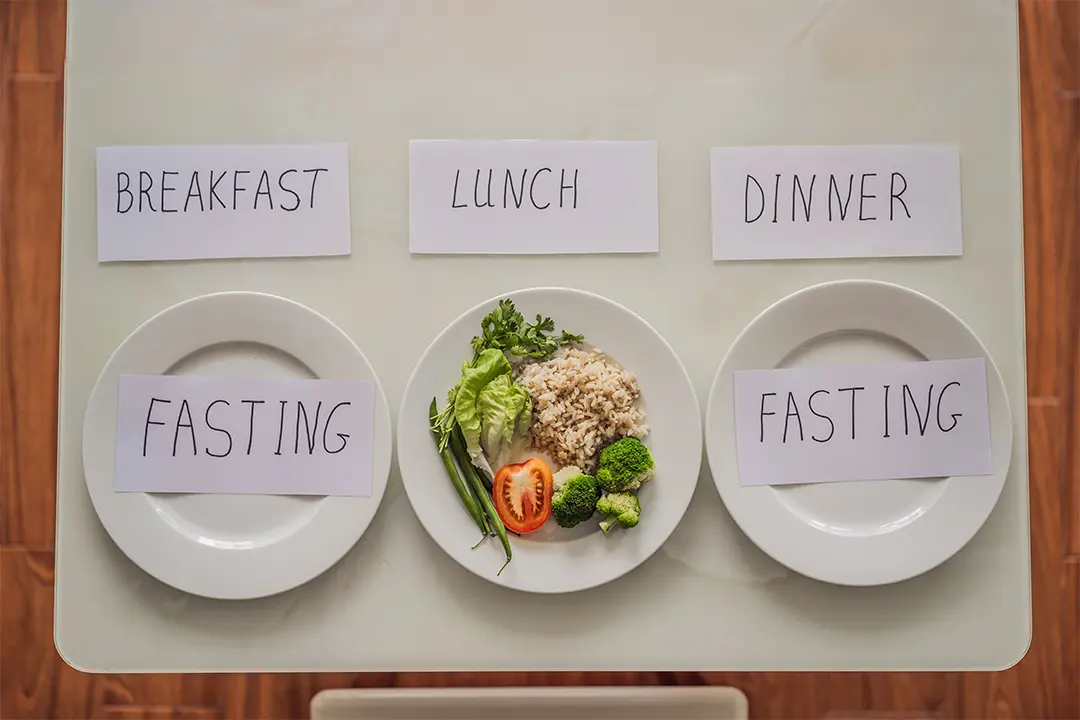
The most widely practiced version is the 16:8 protocol — sixteen hours of fasting followed by an eight-hour eating window. For most people this means skipping breakfast and eating between noon and eight PM, or eating between ten AM and six PM. The overnight fast of eight hours you already do while sleeping means you are extending that fast by four to eight hours on either end.
The 5:2 protocol involves eating normally five days per week and consuming approximately five hundred to six hundred calories on two non-consecutive days. This is more flexible in terms of daily eating window but requires more significant restriction on fasting days.
The one-meal-a-day approach — OMAD — compresses all eating into approximately one hour. This is the most aggressive version and also the most difficult to sustain and to eat adequate nutrition within.
What the Evidence Actually Shows
The benefit case for intermittent fasting that has the strongest research support is weight management through caloric restriction. Multiple randomized controlled trials have compared intermittent fasting to continuous caloric restriction and found roughly equivalent outcomes — people who restrict when they eat lose similar amounts of weight to people who restrict how much they eat when followed over the same period. The practical implication: intermittent fasting works for weight management primarily because it reduces total caloric intake, not because of something unique about the fasting window itself.
Where intermittent fasting may offer benefits beyond simple caloric restriction is more contested. Animal studies show significant metabolic benefits from fasting, including improvements in insulin sensitivity, reduction in inflammatory markers, and autophagy — the cellular cleanup process where damaged components are cleared and recycled. Human studies show similar effects, but the effect sizes are smaller and more variable than the animal research would suggest.
The insulin sensitivity improvements are the most consistently replicated in human research — people with type 2 diabetes or prediabetes show meaningful improvements in glucose management with time-restricted eating in multiple studies. If metabolic health rather than weight is your primary motivation, the evidence base is more specifically supportive.
The cardiovascular benefits — improvements in blood pressure, cholesterol profiles, and inflammatory markers — show up in some studies and not others, with effect sizes that are modest and often explained by the associated weight loss rather than the fasting mechanism independently.
The Common Pitfalls That Undermine Results
The compensation problem is the most common. People skip breakfast, feel virtuous about the fast, and then eat significantly more at lunch and dinner than they would have otherwise — sometimes more than they would have eaten if they had simply eaten breakfast. Intermittent fasting only produces a caloric deficit if you do not compensate for the skipped meal. Tracking food intake for the first few weeks, even loosely, tells you whether compensation is happening.
Protein under-consumption in compressed eating windows is a real problem that receives less attention than it deserves. Adequate protein intake — typically zero-point-seven to one gram per pound of body weight for active people — is important for preserving muscle mass during weight loss and for satiety. Fitting enough protein into an eight-hour window is possible but requires intentional planning. People who do not plan this tend to eat carbohydrate-heavy meals during their window and inadequate protein, which produces hunger, muscle loss, and worse metabolic outcomes than the protocol's proponents would suggest.
Disordered eating patterns can be reinforced by fasting protocols for people with certain histories or tendencies. If you have experienced disordered eating, restriction-based approaches to eating — including intermittent fasting — deserve particular caution and ideally consultation with a healthcare provider who knows your history before starting.
Electrolyte depletion during longer fasting windows produces the headaches, irritability, and brain fog that many people attribute to detox or adjustment. The actual mechanism is typically sodium, potassium, and magnesium depletion during the fast. Adding electrolytes — sodium in particular — during the fasting window without breaking the fast eliminates most of these symptoms.
The social isolation problem is real and rarely discussed. Eating is a social activity. If your eating window runs noon to eight PM and your social life involves breakfast meetings, family breakfasts, or early morning social occasions, you are creating friction between your protocol and your social life that accumulates into resentment. A protocol you sustain imperfectly for two years produces better outcomes than a protocol you follow perfectly for six weeks.
Intermittent Fasting Protocols Compared
| Protocol | Fasting Window | Eating Window | Difficulty | Best For | Main Challenge |
|---|---|---|---|---|---|
| 16:8 | 16 hours | 8 hours | Low-Medium | Most beginners, daily practice | Social flexibility, adequate protein |
| 14:10 | 14 hours | 10 hours | Low | Beginners, people who need breakfast | Smaller caloric deficit than 16:8 |
| 18:6 | 18 hours | 6 hours | Medium | People comfortable with 16:8 wanting more restriction | Harder to eat adequately |
| 5:2 | 2 days at 500-600 cal | 5 normal days | Medium | People who prefer weekly flexibility | Restriction days are genuinely difficult |
| OMAD | 23 hours | 1 hour | High | Experienced practitioners only | Nutritional adequacy, sustainability |
| Alternate Day Fasting | Every other day | Every other day | High | Research context — difficult to sustain | Social impossibility, energy variability |
Frequently Asked Questions
Does black coffee or tea break a fast?
Black coffee, plain tea, and water do not break a fast in the metabolically meaningful sense — they do not trigger an insulin response or interrupt the fasted state that produces the metabolic benefits. Adding milk, cream, sugar, or any caloric addition does break the fast. Bulletproof coffee — coffee with butter or MCT oil — adds significant calories and breaks the fast for weight management purposes, though some people use it specifically as an intentional modification. If your goal is purely caloric restriction, a small amount of cream is unlikely to meaningfully affect outcomes. If your goal is specifically the metabolic fasting benefits, strict black coffee and water is the cleaner approach.
How long does it take to adapt to intermittent fasting?
Most people experience the most significant hunger and irritability in the first one to two weeks as the body adjusts to the new eating pattern. Hunger hormones — particularly ghrelin — are partly habitual, peaking at times you have trained your body to expect food. As the new eating window becomes the established pattern, ghrelin peaks shift and hunger before the eating window decreases. The adaptation period is real and worth expecting, but it typically resolves within two to three weeks for most protocols.
Is intermittent fasting safe for women?
The research on sex-based differences in fasting response is an area of active study with some nuance. Some research suggests women are more sensitive to caloric restriction signals and may experience disruption to reproductive hormones under aggressive fasting protocols, particularly very long daily fasting windows or alternate day fasting. The 16:8 protocol is generally considered safe for most women, and many women find it effective. More aggressive protocols warrant more caution, and women who are pregnant, breastfeeding, or trying to conceive should avoid fasting protocols without medical guidance.
Can I exercise during my fasting window?
Yes, for most types of exercise. Moderate-intensity cardio and lower-intensity training during the fasting window is generally well-tolerated and some research suggests enhanced fat oxidation during fasted exercise. High-intensity training and heavy resistance training typically benefit from proximity to food — the ability to use stored glycogen and the anabolic response to protein consumption post-workout are relevant for performance and muscle retention. If you exercise in the morning during a fast, consuming protein relatively soon after an intense session — even if it means adjusting your eating window slightly — is likely to produce better training outcomes than rigid adherence to the window.
What should I eat during my eating window to maximize results?
Protein at every meal, adequate vegetables for micronutrients and fiber, and whole food sources of carbohydrates and fats rather than processed alternatives. The eating window is not a license for unrestricted eating of anything — the quality of what you eat during the window affects satiety, energy, and metabolic outcomes. Higher protein intake within the window reduces hunger during fasting periods and preserves muscle mass during weight loss. Processed food, refined carbohydrates, and high-calorie low-satiety options eaten during the window can easily eliminate the caloric deficit that makes the protocol work.
The Bottom Line
Intermittent fasting is a legitimate, evidence-supported tool for managing caloric intake that works well for some people and poorly for others. The mechanism is primarily caloric restriction through time limitation — and whether that is easier or harder for you than other approaches to eating less depends on your specific psychology, schedule, social life, and relationship with food.
The protocol worth trying if you are curious: 16:8, starting with a fourteen-hour window and extending gradually. Track what you eat during the eating window for the first two weeks to confirm you are not compensating for the skipped meal. Add electrolytes if you experience headaches or brain fog during the fast. Adjust the window to fit your social life rather than the other way around.
Give it four to six weeks before evaluating.
If it makes eating less feel easier without making your life harder, it is working.
If it makes you miserable or creates more problems than it solves, the evidence does not support suffering through it.
The best eating pattern is the one you sustain.