
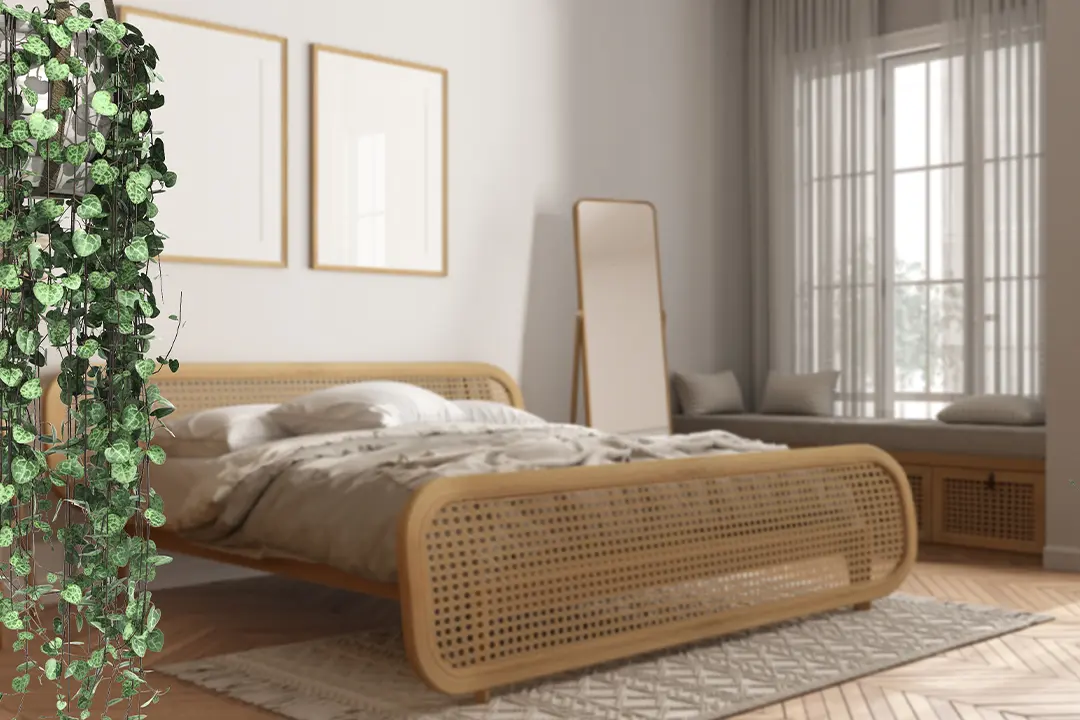
Biophilic Design: How to Turn Your Apartment into a Stress-Free Indoor Jungle
Camille Cooper • 10 Mar 2026 • 113 views • 4 min read.Let me tell you what biophilic design actually is before we get into the plants and the aesthetics, because the term gets used in interior design content in ways that strip out the science that makes it interesting. Biophilia — the term coined by biologist E.O. Wilson — refers to the innate human affinity for nature and living systems that developed over millions of years of evolution in natural environments. Biophilic design is the application of this principle to built environments: designing spaces that satisfy the human nervous system's deep preference for natural patterns, materials, light, and living organisms. The research backing this is more substantial than most wellness trends. Studies on hospital patients in rooms with window views of nature versus brick walls showed faster recovery, lower pain medication use, and shorter stays. Research on office environments with plants and natural light shows measurable improvements in cognitive function, stress hormone levels, and reported wellbeing. A meta-analysis of multiple studies found that even simulated nature — photographs, nature sounds, natural materials without living plants — produces measurable physiological stress reduction compared to purely artificial environments. The indoor jungle aesthetic that has proliferated on social media is a visual expression of biophilic principles that happens to also be supported by actual research. Here is how to implement it in a way that actually works for your nervous system rather than just your Instagram feed.
Biophilic Design: How to Turn Your Apartment into a Stress-Free Indoor Jungle
The Science Behind Why Plants Reduce Stress
The stress reduction effect of indoor plants operates through several distinct mechanisms that are worth understanding separately, because they point to different design decisions.
Visual complexity at the right scale is the first mechanism. Natural environments contain fractal patterns — self-similar structures that repeat across scales, from tree branching to leaf veining to bark texture — that human visual processing finds deeply non-threatening. Research by physicist Richard Taylor has shown that fractal patterns in the mid-range of complexity (fractal dimension 1.3 to 1.5) produce measurable reduction in stress physiology, and that natural forms reliably fall in this range while most architectural surfaces do not. The visual texture of plants — the layering of leaves, the variation in size and shape, the movement in air currents — provides this fractal complexity in ways that blank walls and flat surfaces do not.
Air quality improvement is the second mechanism, though the research here is more nuanced than the famous NASA clean air study from 1989 suggested. The NASA study showed that plants removed volatile organic compounds from sealed test chambers, which generated widespread claims that houseplants purify indoor air. Subsequent research has shown that the effect size in real rooms — which are not sealed and exchange air with outdoors — requires an unrealistic number of plants to produce measurable air quality improvement. The honest conclusion: plants contribute to air quality but are not a substitute for ventilation. The stress reduction from plants is primarily through visual and sensory mechanisms rather than through meaningful air purification.
Attention restoration is the third mechanism, drawn from Attention Restoration Theory developed by Rachel and Stephen Kaplan. Their research distinguishes between directed attention — the effortful concentration required for work, screens, and complex cognitive tasks — and involuntary attention — the effortless fascination that natural environments engage. Natural environments restore directed attention capacity by engaging involuntary attention, allowing the directed attention system to recover. A few minutes of genuinely attending to a plant — noticing its structure, its growth, its texture — produces the attention restoration effect that has been validated in multiple research contexts.
Building Your Indoor Jungle by Light Condition
The most common cause of plant failure in indoor environments is mismatching plant light requirements with actual light availability. Before buying any plants, assess your actual light conditions honestly rather than optimistically.
Direct light — bright sun falling on the plant for several hours per day — exists within approximately three feet of south or west-facing windows in most climates. Very few interior spaces have direct light away from windows. Plants requiring direct light (cacti, most succulents, herbs) must be within this zone to thrive.
Bright indirect light — the light in a room with large south or west windows, away from the direct sun beam — supports the widest range of tropical foliage plants: pothos, philodendrons, monsteras, snake plants, ZZ plants, and most commonly sold houseplants. This is the condition most apartments can provide near windows.
Low light — north-facing rooms, spaces away from windows, interior rooms — supports a narrower range: ZZ plants, snake plants, pothos (which tolerates low light though it does not thrive), and cast iron plants. The marketing of plants as "low light" often means they survive rather than thrive — growth will be slow and new leaves small.
The biophilic design principle for apartment plant placement: concentrate plant density near your primary living and working areas rather than distributing plants evenly. A substantial grouping of plants near your desk or primary seating produces more stress reduction benefit than the same number of plants distributed one per room across your apartment.
The Plant Species That Actually Work for Beginners
The indoor jungle aesthetic requires living plants that stay alive without horticultural expertise, which means species selection matters more than aesthetics at the start.
Pothos (Epipremnum aureum) is the most forgiving plant available in the houseplant market. It tolerates low light, irregular watering, and neglect that would kill most other species. It trails attractively from shelves and hanging positions, adds visual complexity quickly, and communicates its water needs clearly by wilting slightly before reaching critical drought stress. Start here.
Monstera deliciosa — the split-leaf philodendron that dominates indoor jungle aesthetics — earns its popularity through genuine ease combined with dramatic visual impact. It tolerates moderate indirect light, grows at a satisfying rate in good conditions, and produces the large fenestrated leaves that create the tropical density that characterizes the indoor jungle look. It needs more light than pothos to look its best and less water than beginners typically provide.
Snake plants (Sansevieria, now classified as Dracaena trifasciata) are the most drought-tolerant common houseplant. They survive weeks without water, tolerate low light, and add vertical structure to plant groupings. They are essentially impossible to kill through neglect, though they are easy to kill through overwatering — the most common mistake with succulents and drought-tolerant plants.
ZZ plants (Zamioculcas zamiifolia) are the correct answer for genuinely low-light spaces. Their glossy dark green leaves add visual richness, they tolerate irregular watering through water storage in their rhizomes, and they maintain their appearance in conditions that defeat most other plants. They grow slowly, which can be frustrating but also means they remain an appropriate size for their location.
Indoor Plants for Biophilic Design Compared
| Plant | Light Requirement | Watering Frequency | Growth Rate | Visual Impact | Beginner Suitability | Cost |
|---|---|---|---|---|---|---|
| Pothos | Low to bright indirect | Every 1-2 weeks | Fast | Medium — trailing | Excellent | $5-$15 |
| Monstera deliciosa | Bright indirect | Every 1-2 weeks | Medium-Fast | Very High — large leaves | Good | $20-$60 |
| Snake plant | Low to bright indirect | Every 2-6 weeks | Slow | High — structural | Excellent | $10-$30 |
| ZZ plant | Low to moderate | Every 2-4 weeks | Very Slow | High — glossy | Excellent | $15-$40 |
| Pothos marble queen | Bright indirect | Every 1-2 weeks | Medium | High — variegated | Good | $10-$25 |
| Fiddle leaf fig | Bright indirect-direct | Every 1-2 weeks | Medium | Very High — statement | Poor — finicky | $30-$100 |
| Peace lily | Low to moderate | Every 1-2 weeks | Medium | Medium — flowering | Good | $15-$35 |
| Bird of paradise | Bright to direct | Every 1-2 weeks | Slow-Medium | Very High — tropical | Moderate | $40-$150 |
Frequently Asked Questions
How many plants do I actually need to see a stress reduction benefit?
Research suggests that visual density matters more than plant count — a few large plants or a concentrated grouping of several smaller plants in your primary visual field produces more benefit than many plants scattered individually throughout a space. The practical threshold for measurable psychological effect in research contexts has been approximately eight to ten percent of visual field covered by plants. For a typical living room, this translates to roughly three to five substantial plants placed in your primary sight lines rather than twenty small plants scattered throughout the room. Quality and placement beat quantity.
What is the most common reason houseplants die and how do I avoid it?
Overwatering is the leading cause of indoor plant death by a significant margin, not underwatering. The intuition that plants need regular watering leads most beginners to water on a schedule — every Sunday, every three days — rather than watering in response to actual soil moisture. Roots in constantly wet soil cannot access oxygen and rot, killing the plant from below while the visible leaves appear initially healthy and then decline suddenly. The correct approach: check soil moisture before watering by inserting a finger two inches into the soil. Water thoroughly when the top two inches are dry (for most tropical plants) or when the soil is completely dry (for succulents and drought-tolerant plants). Let water drain completely and never leave plants sitting in standing water. The schedule is determined by the plant's needs in your specific conditions, not by the calendar.
Can I create biophilic benefits without live plants — through photographs, materials, or patterns?
Yes, and this is one of the more interesting findings in biophilic design research. Photographs of natural scenes — forests, water, landscapes — produce measurable stress reduction compared to urban scenes or abstract images, though the effect is smaller than the effect of actual living plants. Natural materials — wood, stone, linen, wool — engage tactile and visual systems that artificial materials do not in the same way. Fractal patterns in art, wallpaper, or textiles can provide some of the visual complexity benefit of natural forms. The practical application for spaces where plants are difficult — rental restrictions on floor damage, travel frequency, low light — is that combining these elements produces meaningful biophilic benefit even without abundant living plants. Natural wood furniture, linen textiles, nature photography, and a few low-maintenance plants in the best-lit spots is a realistic implementation for spaces with genuine constraints.
What should I do if my apartment has very limited natural light?
Grow lights have improved enough that they are a genuine solution rather than an ugly workaround for low-light spaces. Full-spectrum LED grow lights that simulate sunlight spectrum in attractive form factors — the Soltech Aspect, the GE Grow Light Bulb in standard sockets, various pendant and clip-on options — allow plant cultivation in spaces that would not otherwise support it. The fixtures with the most natural appearance are pendant designs that look like normal light fixtures from a distance. For spaces with no natural light, grow lights can maintain pothos, snake plants, and ZZ plants adequately. For light-hungry plants like monsteras and bird of paradise, grow lights need to be close to the plant and on for twelve to sixteen hours per day to substitute for natural light.
How do I incorporate the indoor jungle aesthetic without my apartment looking chaotic?
The visual coherence of a successful indoor jungle comes from plant grouping rather than plant distribution, consistent pot materials rather than mixed materials, and intentional placement relative to furniture and architectural elements rather than random addition. Choosing two or three pot materials — terracotta and white ceramic, or all neutral tones — and sticking to them creates visual cohesion even with many plants. Grouping plants creates the density that reads as intentional rather than accumulated. Varying plant heights — floor plants, mid-height plants on furniture, trailing plants from shelves — creates the layered visual complexity that produces the jungle effect without disorder. The plants that read as chaotic are typically small plants in mismatched containers scattered individually rather than composed groupings of varied species in coordinated containers.
Biophilic design is not an interior trend that happens to involve plants. It is the application of research-backed understanding of what human nervous systems need from their environments — visual complexity, natural patterns, living organisms, natural materials — to create spaces that genuinely support wellbeing rather than just looking appealing in photographs.
The indoor jungle that produces real stress reduction benefit is built around your primary living spaces with plants matched to actual light conditions, watered in response to plant needs rather than calendar schedules, and composed for visual density rather than distributed for visual coverage.
Start with pothos and snake plants in your best-lit spaces.
Add a monstera when you are confident about your watering habits.
Group them where you spend the most time.
The nervous system benefit is real.
The aesthetic benefit is visible.
Both are available in a one-bedroom apartment on a reasonable budget.