
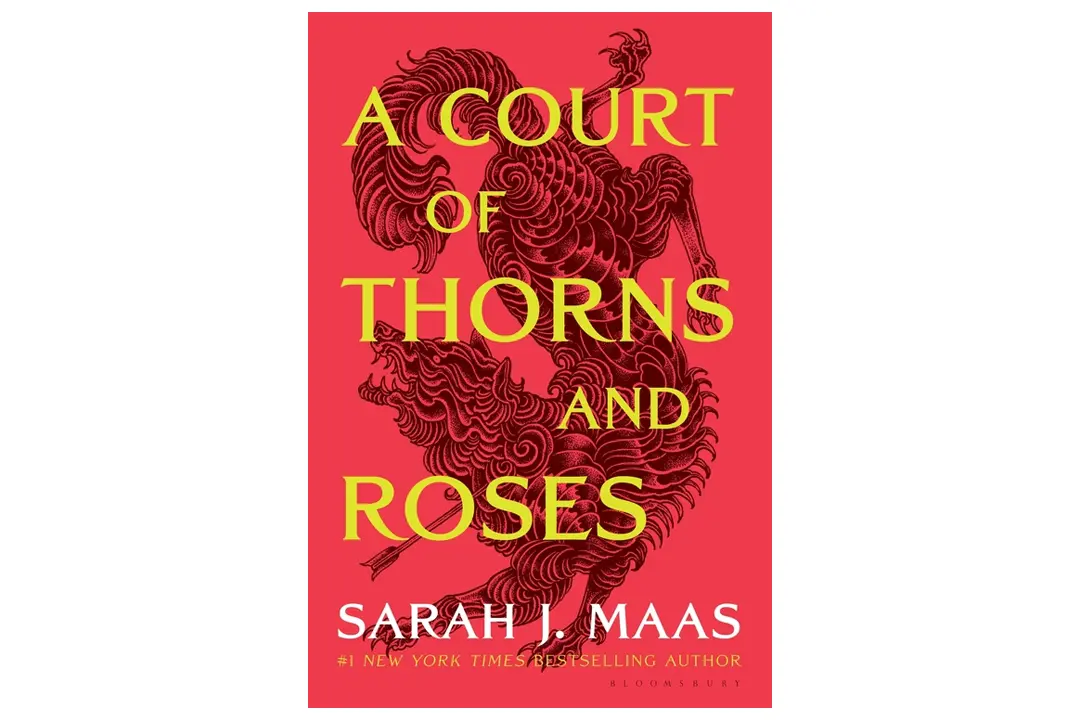
A Court of Thorns and Roses – Sarah J. Maas: Book Summary
Beverly Ashford • 11 Mar 2026 • 61 views • 3 min read.Let me tell you about the book that launched a thousand BookTok videos. Sarah J. Maas took a fairy tale everyone knows—Beauty and the Beast—and turned it into something darker, more romantic, and significantly more adult. The result became a phenomenon that defined a generation of fantasy romance readers. A Court of Thorns and Roses (ACOTAR to fans) isn't subtle. It's lush, dramatic, romantic, and occasionally brutal. It wears its influences openly. And millions of readers fell completely in love with it. If you've been wondering what the hype is about—or if the series is for you—here's what you're getting into.
A Court of Thorns and Roses – Sarah J. Maas: Book Summary
Quick Summary:
- A huntress kills a wolf that turns out to be a faerie in disguise
- She's taken to the immortal realm to pay for her crime
- A Beauty and the Beast retelling with dark twists
- Published in 2015, it launched one of the biggest fantasy romance series of the decade
The Setup
Feyre Archeron is nineteen, starving, and the only person keeping her family alive.
Her father was once a wealthy merchant. Bad luck and bad deals destroyed everything. Now they live in a hovel at the edge of the woods. Her two older sisters, Nesta and Elain, refuse to help—Nesta out of bitterness, Elain out of gentleness. Feyre hunts.
One winter day, she kills a wolf. The arrow finds its mark, and she hauls the body home to sell the pelt.
But the wolf wasn't a wolf. It was a faerie—an immortal creature from the realm beyond the wall that separates human lands from Prythian, the faerie kingdom. Killing faeries is forbidden by an ancient treaty.
That night, a beast appears at their door. Massive, with a wolf's face and a predator's eyes. He demands payment: Feyre must come to Prythian to live out her days, or die immediately.
She goes.
The Spring Court
The beast is Tamlin, High Lord of the Spring Court, one of seven faerie courts in Prythian. His mask—all the fae wear masks—hides features that are more beautiful than monstrous when he takes his true form.
The Spring Court is paradise. Eternal springtime. A magnificent manor. Servants who attend Feyre's every need. Tamlin is cold at first but gradually thaws. His friend Lucien provides sardonic commentary and reluctant friendship.
Feyre expects imprisonment. She finds something closer to luxury.
But something is wrong. Tamlin is bound somehow—limited in his power. The servants move strangely. A blight spreads across Prythian, sickening the land. And Tamlin has a terrible temper that frightens her even as she's drawn to him.
She falls in love anyway. He falls in love with her. They resist and then surrender. (This is, after all, a romance.)
But their happiness is interrupted by a greater threat.
The True Villain
Amarantha rules Under the Mountain—a tyrant who conquered most of Prythian fifty years ago. She enslaved the High Lords through trickery, including Tamlin. The masks the fae wear are her curse.
The blight spreading through Spring Court? That's Amarantha draining Tamlin's power because he refused to be her lover.
There's a way to break the curse. Tamlin needs a human woman to confess her love for him. Feyre was brought to Spring Court in hopes she might be that woman.
But before the words can be spoken, Amarantha captures Feyre.
Under the Mountain
The final third of the book takes place in Amarantha's underground kingdom. Here the tone shifts dramatically.
Feyre is thrown into trials—three impossible tasks that will kill her or free Tamlin and all Prythian. She faces monsters, riddles, and torture. The faerie courts watch, mostly unsympathetic. Tamlin is forced to witness, powerless.
One faerie helps her survive: Rhysand, High Lord of the Night Court. He's beautiful, cruel, and clearly playing his own game. He demands a bargain—one week per month of Feyre's time in exchange for his assistance. She accepts because she has no choice.
The trials are brutal. Feyre nearly dies repeatedly. She's injured, humiliated, and pushed beyond all limits.
The final test is a riddle. Feyre solves it. She declares her love for Tamlin. She breaks the curse.
But Amarantha doesn't accept defeat. She kills Feyre.
And then every High Lord in Prythian gives a drop of power to bring Feyre back—transformed into High Fae, immortal, remade.
The book ends with Tamlin and Feyre reunited, the curse broken, and a new life beginning.
Key Characters
| Character | Role | Represents |
|---|---|---|
| Feyre Archeron | Protagonist, huntress | Survival, transformation, hidden depths |
| Tamlin | High Lord of Spring, love interest | Beauty and the Beast, tragic protector |
| Lucien | Tamlin's friend, emissary | Comic relief, loyalty, hidden pain |
| Rhysand | High Lord of Night | Mystery, danger, alternative paths |
| Amarantha | Villain, tyrant | Control, obsession, cruelty |
| Nesta & Elain | Feyre's sisters | Family complexity, future importance |
The Romance
ACOTAR is a romance above all else.
The Feyre-Tamlin relationship dominates this first book. It follows familiar beats: captor becomes protector becomes lover. The attraction is physical, emotional, and inevitable. Maas writes desire explicitly—this is why the series is marketed to adults despite its YA-adjacent tropes.
But seeds are planted for complications. Tamlin's protectiveness edges toward control. His temper flashes dangerously. Rhysand's presence suggests alternatives.
Readers who've read the full series know where these threads lead. In this first book, Tamlin is clearly positioned as the romantic hero. That positioning will shift dramatically in sequels.
What the Book Is Really About
Survival and transformation. Feyre begins as a human who survives through skill and determination. She ends as something more than human, remade by magic. The transformation is literal but also emotional—she grows from provider to partner.
The cage of protection. Even in this first book, questions emerge about what protection means versus control. Tamlin keeps Feyre safe but also keeps her confined. These questions will become central later.
Love as liberation and trap. Love frees Tamlin from his curse. But the circumstances that create love—captivity, dependence, isolation—complicate that freedom. Is this romance or Stockholm syndrome? The book invites the question without fully answering it.
Fairy tales are darker than we remember. The original Beauty and the Beast is a story about a woman given to a monster. Maas leans into that darkness rather than sanitizing it.
Should You Read the Sequels?
This is where things get complicated.
ACOTAR is a complete story with a satisfying ending. The sequels (A Court of Mist and Fury, A Court of Wings and Ruin, plus novellas and a spinoff series) take the story in radically different directions.
Many readers consider book two, ACOMAF, to be dramatically better than book one. It's also where the romance shifts to a different love interest. If you finish ACOTAR unsure whether you want to continue, many fans recommend trying ACOMAF before deciding.
The series becomes increasingly adult as it progresses, with more explicit content and darker themes.
Frequently Asked Questions
Is this appropriate for teenagers?
Debatable. It's marketed as adult fantasy romance but has significant YA readership. This first book has sexual content but less explicit than later entries. Parents might want to preview.
Is the writing good?
Maas writes readable, propulsive prose with vivid imagery. She's not a stylist—don't expect literary fiction—but she knows how to create page-turners. Some readers find her prose purple; others find it immersive.
Does the series get better?
Most fans say yes. Book two is widely considered the highlight. The worldbuilding expands significantly. The romance becomes more complex.
Is Tamlin really a good love interest?
In this book, he's presented as one. Later books... complicate this. Without spoiling, the series interrogates the dynamic established here.
How explicit is the romance?
This first book is moderately explicit—romantic scenes are clear but not extremely detailed. Later books become much more explicit.
Should I watch the show first?
No show yet, though adaptation has been announced. Read the books first.
Here's what Sarah J. Maas achieved.
She wrote a fantasy romance that hit every button its target audience wanted: an enemies-to-lovers arc, a brooding male lead, a resourceful heroine, elaborate worldbuilding, and explicit romantic content. She wasn't trying to reinvent the genre. She was trying to deliver exactly what readers craved, and she succeeded spectacularly.
ACOTAR is not subtle or literary. It's indulgent fantasy romance that knows exactly what it is. If that's what you want, it delivers completely. If that's not your thing, you'll find it overwrought.
Millions of readers found it life-changing. Your mileage may vary. But there's a reason this series dominates BookTok.