
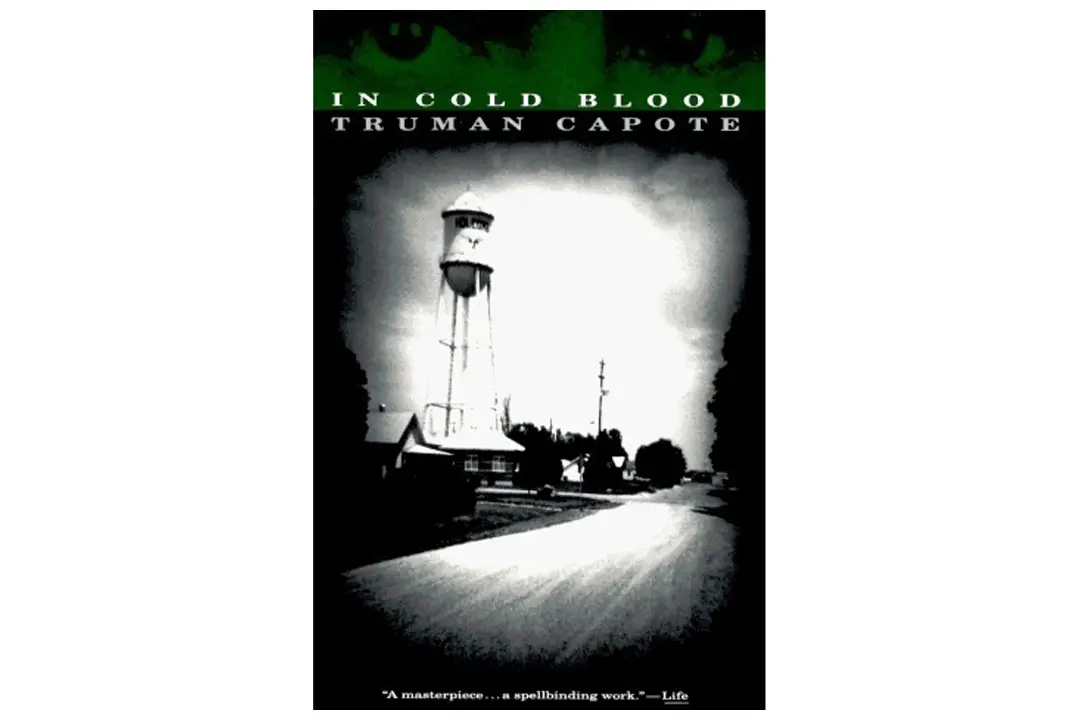
In Cold Blood by Truman Capote: Book Summary
Beverly Ashford • 03 Mar 2026 • 183 views • 3 min read.Let me tell you about the book that Truman Capote called his masterpiece, that took six years of his life to research and write, and that he never fully recovered from completing. Truman Capote read a brief news item in The New York Times in November 1959: a wealthy wheat farmer, his wife, and their two teenage children had been murdered in their home in Holcomb, Kansas. No apparent motive. No witnesses. No suspects. Capote went to Kansas with his childhood friend Harper Lee — who was finishing To Kill a Mockingbird at the time — to research what he believed would be a magazine article about the impact of violent crime on a small community. He stayed six years. By the time he left, two men had been caught, tried, and hanged, and Capote had conducted hundreds of interviews, developed a complex personal relationship with one of the killers, and written something that did not fit any existing category. He called it a nonfiction novel. Publishers did not know what to do with that. Readers did not care what it was called. It serialized in The New Yorker in 1965 and became the most talked-about piece of writing of the decade before the book version was even published.
In Cold Blood by Truman Capote: Book Summary
Quick Summary:
- A meticulous reconstruction of the 1959 murder of the Clutter family in rural Kansas and the investigation, capture, trial, and execution of the two men who killed them
- Published in 1966 after six years of research, it invented the true crime genre as a serious literary form
- Capote's central achievement: making readers understand the killers as human beings without excusing what they did — and making that understanding more disturbing than simple condemnation would have been
- A book that destroyed its author and created a genre simultaneously
The Clutter Family
Capote opens not with the murder but with the morning before it — November 14, 1959, a clear cold day in Holcomb, Kansas. He introduces the Clutters with the patience and care of a novelist building characters readers will spend time with, which makes what is coming worse by precise design.
Herbert Clutter is prosperous, respected, and dry — a disciplined man who has built a successful farm through diligence and principle. He does not drink and does not permit alcohol on his property. He is the kind of man his community depends on and takes entirely for granted.
Bonnie Clutter is his wife, fragile in ways that have never been properly diagnosed or treated, spending increasing amounts of time in her room. She is present in the novel's early pages as an absence — someone who should be more central to her own life than she is.
Nancy Clutter is sixteen, the most beloved girl in Holcomb — pretty, capable, endlessly kind, involved in everything, the person everyone expects to do exactly what her life seems to have planned for her. Her boyfriend Bobbie Rupp is the last person outside the family to see any of them alive.
Kenyon Clutter is fifteen, quieter than his sister, working on a cedar chest he intends to give to a future girlfriend he has not met yet. The cedar chest is one of the novel's haunting details — finished, beautiful, waiting for someone who will never receive it.
The Killers
Richard Hickock and Perry Smith met in prison. Hickock had heard from a former cellmate that Herbert Clutter was a wealthy man who kept a safe in his house. The information was wrong — Clutter ran his farm on checks, not cash, and kept no safe. Hickock and Smith drove from Kansas City to Holcomb on the night of November 14 expecting to find ten thousand dollars.
They found a family.
What happened in the Clutter house that night took approximately forty-five minutes. By the end of it, all four members of the family had been bound, and each had been killed — Herbert and Kenyon with a shotgun at close range, Nancy and Bonnie in their beds. The killers took approximately fifty dollars in cash, a pair of binoculars, and a portable radio.
Capote's reconstruction of the crime is precise without being gratuitous. He is more interested in the hours and days before it — the drive from Kansas City, the conversation between Hickock and Smith, the specific psychology of each man approaching what they are about to do — than in the act itself. The restraint is the craft.
Perry Smith
The novel's psychological center is Perry Smith, and Capote's relationship with him is the most discussed aspect of the book's creation and the most ethically complicated.
Smith is the more complex of the two killers. He grew up in poverty and violence — a father who abandoned the family, a mother who drank herself to death, siblings who died or drifted. He has genuine artistic sensibility, draws and writes, has an interior life that is more developed than almost anyone around him. He is also capable of what he did in the Clutter house. Capote spent years in conversation with him, developing something that was described by both men, at various points, as friendship.
Hickock is more straightforwardly readable. He is charming, manipulative, and consistently dishonest — a man who knows exactly what he is and performs whatever version of himself is useful in any given moment. He is easier to condemn and less interesting to understand.
Capote gives both men full portraits. He includes their own accounts of the crime, which contradict each other in significant ways. He includes their childhoods, their prison years, their psychological evaluations. He makes readers understand how two specific people arrived at that specific night — without suggesting that the understanding changes what they did or to whom they did it.
The Investigation and Trial
Kansas Bureau of Investigation agent Alvin Dewey becomes the novel's third major figure — the investigator who worked the case for six weeks before a tip from a prison informant identified Hickock and Smith. Capote gives Dewey and his family enough space on the page that the investigation feels human rather than procedural.
The trial is brief and, by later standards, inadequate. The defense attorneys were underfunded and had no real investigative resources. The psychological evidence — Smith in particular had clear indicators of serious mental illness — was presented but did not overcome the legal standard or the community's desire for resolution. Both men were sentenced to death.
They spent five years on death row while appeals worked through the courts. Capote visited them regularly. He was present at their executions in April 1965.
The Four Victims Compared
| Victim | Age | Who They Were | How Capote Portrays Them |
|---|---|---|---|
| Herbert Clutter | 48 | Prosperous farmer, community leader | Disciplined, respected, taken for granted by those who needed him |
| Bonnie Clutter | 45 | Wife, mother, struggling with undiagnosed illness | Present as an absence — more ghost than person even before her death |
| Nancy Clutter | 16 | Most beloved girl in Holcomb, capable and kind | The loss the community feels most acutely and most personally |
| Kenyon Clutter | 15 | Quieter than his sister, building a cedar chest | Remembered through objects — the unfinished and the finished |
Frequently Asked Questions
Did Capote invent facts or fabricate dialogue?
This question has followed the book since publication. Capote claimed that his memory was so precise he did not need a recorder — he could reconstruct conversations verbatim after the fact. Subsequent investigation of the book's claims has found some inaccuracies and inventions, particularly in reconstructed scenes he could not have witnessed. Most critics classify the book as creative nonfiction with acknowledged license rather than journalism in the strict sense.
What was Capote's relationship with Perry Smith really like?
Capote said he fell in love with Smith — using the word love carefully and not romantically but in the sense of genuine profound connection to another person's inner life. He also needed Smith to keep talking to him, which complicated the relationship's dynamics considerably. Gerald Clarke's Capote biography and later accounts suggest the relationship was real, mutual in some sense, and ethically problematic in ways Capote acknowledged privately but rarely publicly.
Did the book destroy Capote?
He never completed another major work after In Cold Blood. He spent the remainder of his life — he died in 1984 — working on an unfinished novel called Answered Prayers, publishing fragments that alienated his social circle, drinking heavily, and giving interviews that became increasingly erratic. Whether In Cold Blood caused this or whether Capote's constitution would have produced the same outcome regardless is genuinely uncertain. He believed the book had cost him something he could not name.
How does this compare to modern true crime?
In Cold Blood created the template that most serious true crime follows — the reconstruction of crime and investigation through novelistic technique, the attempt to understand perpetrators without excusing them, the attention to victims as fully realized people rather than narrative functions. Most of what the genre does well can be traced to techniques Capote developed here. Most of what it does badly is what happens when those techniques are applied without his level of craft.
Is this appropriate given that real people died?
This is the ethical question the book raises and does not resolve. The Clutter family's survivors had complicated responses to the book — some felt it honored their family, others felt Capote had used their grief for his career. The killers' portrayal, particularly Smith's, has been criticized for humanizing men who committed a brutal crime and for the asymmetry of attention given to killers versus victims. These are legitimate criticisms and worth holding while reading.
What should I read next?
Helter Skelter by Vincent Bugliosi covers the Manson murders with the same ambition and less literary craft — the essential companion for understanding how true crime handles collective trauma. The Executioner's Song by Norman Mailer applies similar nonfiction novel techniques to Gary Gilmore's story and explicitly positions itself as the genre's next major work. Devil in the White City by Erik Larson is the more accessible entry point for readers new to literary true crime.
The Bottom Line
Here is what Truman Capote actually built over six years in Kansas and on death row.
Not a crime story. An argument about the relationship between biography and culpability — about how far back into a person's history you have to go before you understand why they did what they did, and whether that understanding changes anything about what justice requires.
The Clutters were real people. Their deaths were real deaths. Herbert Clutter's last morning — the handshake with his daughter, the check written to the hired hand, the specific texture of a life that had no idea it was ending — is rendered with the care that usually goes into fiction because Capote believed the care was what the truth required.
Perry Smith grew up in violence and poverty and carried something broken into that house in Kansas. Understanding that does not bring the Clutters back. It does not change what happened in forty-five minutes on November 14, 1959.
But Capote believed you could not write honestly about what happened without including it.
He was right. It is also what made the book impossible to walk away from clean.
He never did.