
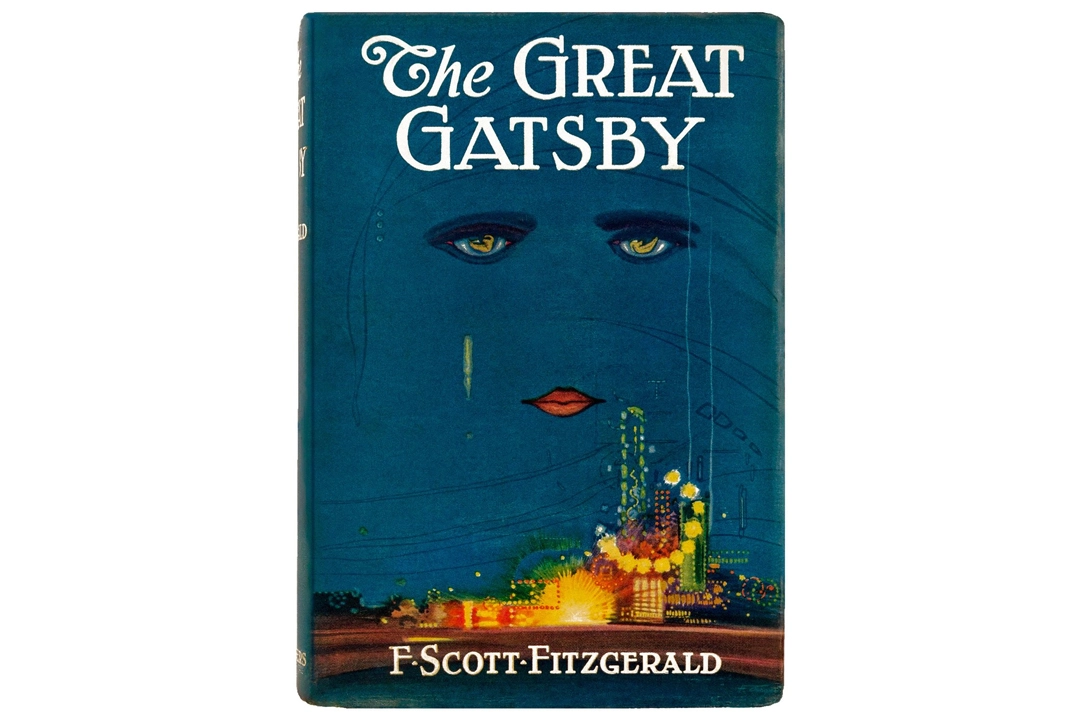
The Great Gatsby – F. Scott Fitzgerald: Book Summary
Beverly Ashford • 12 Feb 2026 • 176 views • 3 min read.Let me tell you about the best short novel in American literature. F. Scott Fitzgerald wrote The Great Gatsby in 1925. It sold modestly. Reviews were mixed. He died in 1940 thinking he was a failure. Then something strange happened. The book was sent to soldiers during World War II. It found new readers. It entered school curricula. It never left. Now it's considered the Great American Novel by many. Every sentence has been analyzed. Every symbol has been dissected. And yet it still works as a story—a sad, beautiful story about wanting something you can never really have. Here's what happens in those 180 pages, and why they matter.
The Great Gatsby – F. Scott Fitzgerald: Book Summary
Quick Summary:
- A tragic love story wrapped in Jazz Age glamour and excess
- Jay Gatsby reinvents himself to win back a woman from his past
- The American Dream examined and found hollow at its core
- Only 180 pages but endlessly rich with meaning
The World of the Novel
Long Island, summer of 1922. The Roaring Twenties are roaring. Prohibition is the law but nobody's sober. New money is flooding into America. The economy is booming. Everyone believes tomorrow will be better than today.
Two communities face each other across the bay. East Egg houses old money—families whose wealth stretches back generations. West Egg houses new money—the recently rich who throw bigger parties because they have something to prove.
Nick Carraway, our narrator, has just moved to West Egg. He's a Yale graduate from the Midwest working in bonds. He's adjacent to wealth but not quite of it. His tiny rental cottage sits next to a mansion where parties happen every weekend—wild, lavish parties thrown by a man named Gatsby.
Across the water, a green light blinks at the end of a dock. That light belongs to Nick's cousin Daisy and her husband Tom Buchanan. It will come to mean everything.
The Story Unfolds
Nick meets the players. He visits Daisy and Tom in their enormous East Egg mansion. Tom is old money, a former football star, casually brutal and openly racist. Daisy is beautiful, charming, and empty. Nick learns Tom has a mistress in the city—Myrtle Wilson, married to a garage owner in the gray wasteland between Long Island and Manhattan.
Gatsby emerges. Nick finally meets his mysterious neighbor. Gatsby is younger than expected, formal, oddly nervous. He throws parties but doesn't seem to enjoy them. He watches the green light across the water. He asks about Daisy.
The connection reveals itself. Gatsby and Daisy knew each other years ago, before the war, when he was a poor soldier and she was a golden girl. He loved her. She loved him back. But he had nothing, and she married Tom's money. Now Gatsby has reinvented himself entirely—changed his name from James Gatz, amassed a fortune through unclear means—all to become worthy of her.
They reconnect. Gatsby asks Nick to invite Daisy for tea. They meet again. The affair begins. Gatsby believes he can erase five years, that he and Daisy can recapture what they had, that his dream is finally within reach.
Everything collapses. Tom discovers the affair. A confrontation at the Plaza Hotel forces Daisy to choose. She can't choose. Driving back to Long Island in Gatsby's car, Daisy strikes and kills Myrtle Wilson—Tom's mistress, running into the road. They don't stop.
The aftermath is fatal. Tom tells Myrtle's husband George that Gatsby was driving. George finds Gatsby in his pool and shoots him, then himself. Gatsby dies still believing Daisy will call.
She never calls. She and Tom disappear. Almost nobody comes to Gatsby's funeral. The parties, the hundreds of guests, the connections—none of it was real. Nick moves back to the Midwest, disillusioned with the East and everything it represents.
Major Characters
| Character | Role | Represents |
|---|---|---|
| Jay Gatsby | Mysterious millionaire, dreamer | The American Dream, romantic idealism |
| Nick Carraway | Narrator, observer | The reader's eyes, moral ambiguity |
| Daisy Buchanan | Gatsby's obsession, Nick's cousin | Old money carelessness, unattainable desire |
| Tom Buchanan | Daisy's husband, bully | Old money brutality, racism, hypocrisy |
| Jordan Baker | Daisy's friend, Nick's romance | Modern cynicism, dishonesty |
| Myrtle Wilson | Tom's mistress | Aspiration and its costs |
| George Wilson | Myrtle's husband, garage owner | The forgotten, the destroyed |
The Symbols Everyone Talks About
The green light across the water represents Gatsby's dream—close enough to see, too far to touch. He reaches toward it. He never grasps it. The light is hope, desire, the future that always recedes.
The eyes of Doctor T.J. Eckleburg watch from a faded billboard over the valley of ashes—the gray wasteland between the Eggs and Manhattan where the Wilsons live. They're just an advertisement, but characters see them as God's eyes watching and judging. In a godless novel, advertising fills the void.
The valley of ashes represents the true cost of wealth. Someone has to live in the wasteland created by the rich. George and Myrtle Wilson are trapped there while the wealthy drive through without seeing.
Gatsby's parties symbolize the hollowness beneath the glamour. Hundreds attend but nobody knows him. The spectacle exists for one purpose—to attract Daisy. When she's won, the parties stop.
The clock that Gatsby nearly knocks over when meeting Daisy represents time—his enemy. He wants to stop it, reverse it, pretend five years didn't happen. "Can't repeat the past?" he says. "Why of course you can!"
He can't.
The American Dream, Corrupted
Fitzgerald wrote during the height of 1920s prosperity. The American Dream promised that anyone could rise through hard work and reinvention. Gatsby is that promise embodied.
He was born poor. He transformed himself through pure will. He became rich. He built the mansion, threw the parties, wore the beautiful shirts. He achieved everything the Dream promises.
And it wasn't enough.
Because the Dream has a lie at its center. It promises that success brings belonging, that money erases origins, that the past can be rewritten. None of this is true.
Gatsby's money is new. His name is invented. His history is fiction. Tom Buchanan sees through him immediately. Daisy chooses the security of old money over the instability of new. The doors that matter never truly open.
The novel asks: What if the Dream is achieved and it's still empty? What if you get everything you wanted and lose everything anyway?
The Prose That Makes It Art
Fitzgerald's sentences are why this book endures. Consider the famous ending:
"So we beat on, boats against the current, borne back ceaselessly into the past."
Or Nick's description of Gatsby's smile: "It was one of those rare smiles with a quality of eternal reassurance in it... It understood you just so far as you wanted to be understood, believed in you as you would like to believe in yourself."
Every page contains sentences worth reading aloud. The language elevates a story that could be melodrama into something approaching poetry.
Frequently Asked Questions
Is Gatsby actually "great"?
The title is partly ironic. Gatsby is a criminal, a liar, a man devoted to an unworthy woman. But there's genuine greatness in his capacity for hope. Nick calls his dream "incorruptible." Gatsby believes in something bigger than himself, even if that something is ultimately an illusion.
Did Daisy ever love Gatsby?
She loved him once, probably. She might love him still in some limited way. But Daisy loves comfort more. She chooses Tom's stability over Gatsby's intensity. Her voice is "full of money," Nick observes. That tells you everything.
What did Gatsby actually do to get rich?
The novel is deliberately vague. He was involved with Meyer Wolfsheim, a gambler who fixed the 1919 World Series. Bootlegging during Prohibition is strongly implied. Other "gonnegctions" are hinted at. The point is that the money isn't clean—the Dream required corruption.
Why does Nick tolerate these people?
Nick is complicit. He's fascinated by wealth even as he judges it. He enables Gatsby's affair. He covers up what happened with Myrtle. His claim to honesty is questionable throughout. He's not the moral center he presents himself as.
Is this still relevant today?
The Dream persists. The gap between aspiration and reality persists. The carelessness of wealth persists. Fitzgerald captured something true about American desire that hasn't changed in a century.
Here's what Fitzgerald achieved in 180 pages.
He wrote a tragedy dressed as a party. He examined the American Dream and found it beautiful and deadly. He created a character who embodies romantic hope and its destruction simultaneously.
Gatsby reaches for the green light. He believes in the promise. He does everything right by the Dream's logic. And he dies in a pool, shot by a man he never wronged, mourned by almost nobody, betrayed by the woman he remade his life for.
That's not a story about the 1920s. That's a story about wanting something so badly that you can't see it clearly. That's a story about us.
Read it again. You'll find something new.