
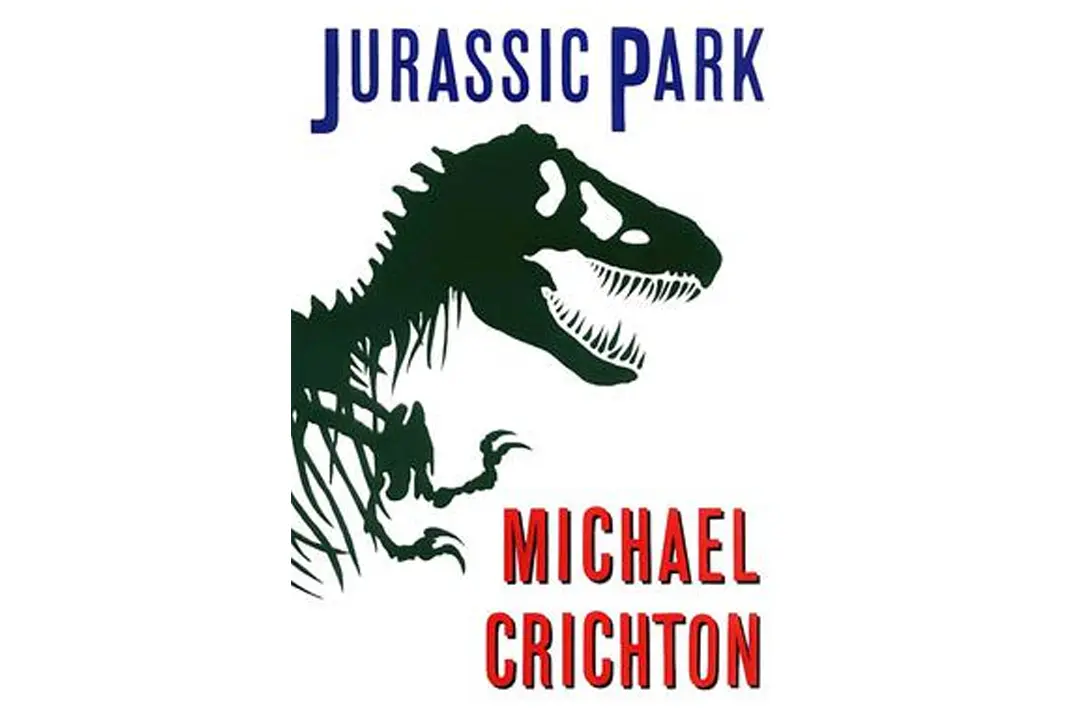
Jurassic Park by Michael Crichton: Book Summary
Beverly Ashford • 01 Mar 2026 • 116 views • 3 min read.Let me tell you about the novel that made an entire generation simultaneously terrified of velociraptors and genuinely interested in nonlinear dynamics — which is not something most thrillers accomplish. Michael Crichton published Jurassic Park in 1990. He had spent years researching genetics, paleontology, and chaos theory — reading actual academic papers, consulting with actual scientists — and then built a thriller around a question that was genuinely being asked in scientific circles at the time: what would happen if you could extract ancient DNA and use it to resurrect extinct species? Crichton's answer is the novel. His argument is not that the science is impossible. His argument is that the science being possible is precisely the problem — because the people most likely to pursue it are the people least likely to understand why they should not.
Jurassic Park by Michael Crichton: Book Summary
Quick Summary:
- A billionaire builds a theme park populated with cloned dinosaurs, ignores every warning from every expert, and discovers that nature is considerably less manageable than his investors were told
- Published in 1990, it became one of the bestselling science thrillers ever written and the source material for one of the highest-grossing film franchises in history
- Crichton's central argument: the most dangerous thing you can do with scientific power is assume you understand it well enough to control it
- A novel that is simultaneously a dinosaur adventure, a serious engagement with chaos theory, and a sustained argument against human arrogance dressed up as progress
The Setup
John Hammond is a billionaire entrepreneur with the specific variety of visionary confidence that does not distinguish between what can be done and what should be done. He has funded a genetics company called InGen that has spent years perfecting a process for extracting dinosaur DNA from prehistoric insects preserved in amber, filling the gaps with frog DNA, and using the completed genome to clone living dinosaurs.
He has built Jurassic Park on Isla Nublar, a remote island off the Costa Rican coast — a fully functioning theme park populated with fifteen species of dinosaurs, designed to open to the paying public within a year. Before the park's investors will sign off, Hammond needs a group of outside experts to tour the park and provide endorsements.
He assembles a group that includes Alan Grant, a paleontologist who studies dinosaur behavior; Ellie Sattler, a paleobotanist; Ian Malcolm, a mathematician who specializes in chaos theory; and Donald Gennaro, the lawyer representing the investors. Hammond's grandchildren — Tim and Lex — are also visiting.
Malcolm spends the journey to the island explaining, with increasing urgency, why the park will fail. Not might fail. Will fail. His argument is mathematical and specific: complex systems with the kind of variables Jurassic Park involves cannot be controlled — they can only be temporarily constrained, and the constraint will eventually and inevitably break down. Nobody listens to Malcolm. He is correct about everything.
Chaos Theory as Argument
Crichton uses Malcolm as the novel's philosophical voice, and the chaos theory lectures that interrupt the thriller plot are not padding — they are the point. Crichton spent real time understanding nonlinear dynamics and uses Malcolm to translate it for a general audience.
The core insight: complex systems are not predictable beyond a certain horizon, regardless of how much data you have or how sophisticated your models are. Small differences in initial conditions produce dramatically different outcomes over time. You cannot control a complex system. You can only observe it and respond to what it does.
Jurassic Park is a complex system. Hammond's team has modeled every variable they can identify — animal populations, feeding schedules, containment protocols, power requirements. What they have not modeled is what they do not know they do not know. The dinosaurs are reproducing despite being engineered as all-female. The lysine dependency that was supposed to keep them from surviving outside the park is being worked around. The park's computer systems have more interdependencies than anyone mapped.
These are not failures of execution. They are properties of complexity. Malcolm says so at every opportunity. The park's operators respond by adjusting parameters and assuming they have solved the problem. They have not solved the problem. You cannot solve complexity. You can only delay its expression.
The Breakdown
The breakdown begins with a deliberate act of sabotage. Dennis Nedry — the park's chief programmer, underpaid and resentful — has been bribed by a rival genetics company to steal frozen dinosaur embryos. To cover his theft, he disables the park's security systems for a planned eighteen-minute window. The window extends when Nedry crashes his car in the rain and is killed by a Dilophosaurus.
With the security systems down, the electric fences fail. The Tyrannosaur paddock opens first. The animal that emerges is not a monster in the traditional horror sense — Crichton is careful about this. The Tyrannosaur is doing exactly what a Tyrannosaur does. It is apex predator behavior in an environment that suddenly has no functioning containment. The problem is not the dinosaur. The problem is Hammond's certainty that he had accounted for this.
The Velociraptors are the novel's most sustained threat. Crichton's raptors are intelligent — not metaphorically but literally, in ways that change how they approach problems. They test fences systematically. They hunt in coordinated groups. They learn the layout of the visitor center. The humans who survive the novel do so partly through competence and partly through the specific way raptor intelligence operates — differently enough from human intelligence that specific behaviors can be anticipated and used against them.
Hammond and the Argument He Will Not Hear
Hammond is not a villain in the conventional sense. He is a man of genuine enthusiasm for what he has built, genuine affection for his grandchildren, and genuine inability to hear the argument Malcolm is making.
Every time something goes wrong, Hammond's response is that it can be fixed — that the problem has been identified and the adjustment will solve it. Malcolm keeps telling him that fixing individual problems is not the same as controlling a complex system. Hammond keeps not understanding the distinction, or understanding it and choosing not to believe it.
Crichton is not making Hammond stupid. He is making Hammond representative — of every entrepreneur who has confused capability with wisdom, every investor who has heard warnings and chosen optimism, every institution that has proceeded with insufficient information because the potential returns justified the risk.
The park fails not because of bad luck or a single catastrophic decision. It fails because it was always going to fail, and the people who built it chose not to know this.
Key Characters Compared
| Character | Role | Core Quality | Relationship to the Park's Failure |
|---|---|---|---|
| John Hammond | Park founder | Visionary enthusiasm without epistemic humility | Embodies the arrogance the novel argues against |
| Alan Grant | Paleontologist | Scientific competence and adaptability | Survives by learning rather than controlling |
| Ian Malcolm | Chaos theorist | Intellectual honesty delivered without tact | Correct about everything from the beginning |
| Ellie Sattler | Paleobotanist | Practical competence under pressure | Restores park power while Grant protects the children |
| Dennis Nedry | Chief programmer | Resentment and financial desperation | The human trigger for a failure that was already inevitable |
| Tim Murphy | Hammond's grandson | Curiosity and computer knowledge | His skills matter more than any adult's expertise at key moments |
| Henry Wu | Lead geneticist | Technical brilliance and ethical incuriosity | Created the system without asking what it would become |
| Robert Muldoon | Park warden | Competence without illusions | Respects the animals accurately — and is still killed |
Frequently Asked Questions
How accurate is the science?
The DNA extraction from amber concept has been definitively ruled out by subsequent research — ancient DNA degrades too completely over millions of years for viable genetic material to survive. Crichton knew the science was speculative when he wrote it and frames it as plausible extrapolation rather than established fact. The chaos theory is accurately represented. The behavioral biology of the dinosaurs draws on real paleontological debates happening in the field at the time about whether dinosaurs were warm-blooded and social.
How does the novel compare to the Spielberg film?
The film is a more optimistic story — Hammond is more sympathetic, the moral complexity is reduced, the ending is cleaner. Crichton's novel is significantly darker: Hammond dies, Malcolm's injuries are worse, and the overall argument against technological hubris is made without the film's sense that everything mostly worked out. The film is a great adventure movie. The novel is a more serious argument.
Is Malcolm's chaos theory explanation readable for non-scientists?
Crichton writes Malcolm's explanations for a general audience and uses concrete examples throughout. Readers without mathematics backgrounds consistently report following and engaging with the material. The explanations are integrated into the thriller narrative rather than presented as separate lectures, which helps. They are also genuinely interesting — Crichton's research was thorough enough that the chaos theory content holds up.
Why are the Velociraptors so much bigger in the film than the science supports?
The real Velociraptor was roughly turkey-sized. Crichton based his raptors on Deinonychus, a larger related species, and used the Velociraptor name. By the time the film was in production, discoveries in Mongolia had found a species called Velociraptor mongoliensis that was larger than previously known, partially closing the gap. The film's raptors are still significantly larger than any known species. The name has stuck culturally regardless.
What happened to the dinosaurs at the end?
The Costa Rican government firebombs Isla Nublar. The novel ends with government officials questioning the survivors about additional InGen sites — implying that the island was not the only place Hammond's company had been working. The sequel, The Lost World, follows up on this implication.
What should I read next?
The Lost World by Crichton continues the story with Malcolm returning to a second island where dinosaurs have been surviving without human management — and explores what the animals have become without interference. Sphere by Crichton covers similar themes of human arrogance in contact with the genuinely unknown. The Hot Zone by Richard Preston is nonfiction that applies the same this-is-how-it-actually-works-and-it-is-terrifying approach to the Ebola virus.
The Bottom Line
Here is what Michael Crichton actually built inside a dinosaur adventure novel.
Not a warning about genetic engineering specifically. A warning about the gap between capability and wisdom — the specific human tendency to ask whether something can be done before asking whether it should be, and then to assume that the ability to do it constitutes evidence that it is safe to do it.
Hammond built a park because he could. He filled it with animals that had been extinct for sixty-five million years because the technology existed and the market opportunity seemed extraordinary. He ignored Malcolm because Malcolm's argument — that the system was too complex to control — was incompatible with the business plan.
The business plan did not survive contact with complexity.
It never does.
Crichton's dinosaurs are not metaphors. They are animals doing what animals do in an environment that temporarily failed to contain them. The horror is not the Tyrannosaur in the rain. It is Hammond in the control room, adjusting parameters and announcing that the problem has been identified and corrected.
Right up until it cannot be corrected anymore.