
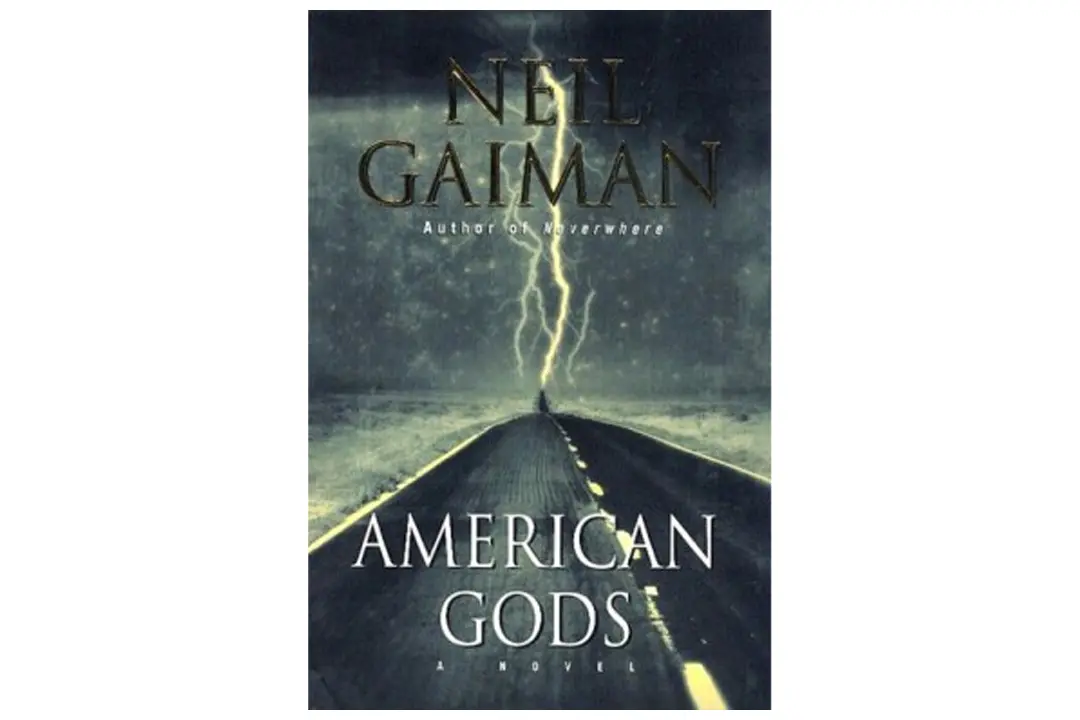
American Gods by Neil Gaiman: Book Summary
Beverly Ashford • 28 Feb 2026 • 122 views • 3 min read.Let me tell you about the novel that took Neil Gaiman three years to write, required him to drive across America researching roadside attractions and forgotten mythology, and produced something that does not fit comfortably inside any single genre — which is exactly what he intended. Neil Gaiman published American Gods in 2001. He had been thinking about it for years before that — specifically about what happens to gods when the people who believed in them emigrate to a new country. Do the gods travel with them? Do they arrive diminished, dependent on the thin belief of a diaspora community rather than the full devotion of a homeland? What do they become after generations of neglect? The answers Gaiman arrived at are strange, melancholy, funny, and occasionally devastating. American Gods is the kind of novel that rewards rereading because the first time through you are discovering the story. The second time, you can see the architecture — all the things Gaiman put in plain sight that you were not ready to understand yet.
American Gods by Neil Gaiman: Book Summary
Quick Summary:
- A recently released convict is hired as a bodyguard by a mysterious conman and drawn into a war between the old gods brought to America by immigrants and the new gods of technology, media, and globalization
- Published in 2001, it won the Hugo, Nebula, and Bram Stoker Awards and became Gaiman's most celebrated novel
- Gaiman's central argument: America is a bad land for gods — it takes belief and gives nothing back, consuming everything eventually
- A road novel, a mythology, a meditation on identity, and a magic trick whose full mechanism only reveals itself in the final pages
The Setup
Shadow Moon is released from prison three days early when his wife Laura dies in a car accident. He has done his time quietly, avoided trouble, and planned a careful return to civilian life. The plan evaporates with Laura's death. On the plane home, a large man named Wednesday sits next to him, knows things about him he should not know, and offers him a job.
Wednesday is old, one-eyed, fond of coin tricks and misdirection, and almost certainly not who he says he is. Shadow takes the job — he has nowhere else to go. What follows is a cross-country journey through the parts of America that tourism brochures do not feature: small dying towns, roadside attractions built on mystery, the specific texture of places that used to matter and have been mostly forgotten.
Shadow is an unusual protagonist. He is large, calm, and remarkably unshockable — he absorbs increasingly impossible information without the conventional thriller hero's need to demand explanations. He watches. He waits. He performs coin tricks he taught himself in prison. He is not passive — he makes choices throughout — but his mode of engagement is reception rather than assertion, which makes him the right vessel for a story that needs a reliable witness more than it needs a hero.
The Old Gods
Every god in the novel arrived in America the same way — carried by immigrants who believed in them, sustained by the offerings and devotion of their people, and then slowly starved as assimilation diluted and eventually replaced the old worship with new concerns.
Anansi — the West African spider trickster god — arrived with enslaved Africans. He runs a funeral home in Georgia and still has enough power to be dangerous when he chooses to be. Czernobog — the Slavic dark god — came with Eastern European immigrants and now works in a Chicago slaughterhouse, swinging a sledgehammer. Bilquis — the Queen of Sheba — operates in contemporary Los Angeles, reclaiming devotion through intimacy in ways that are explicit and genuinely strange.
Wednesday — who is Odin, which attentive readers will recognize early — is organizing. He is traveling the country trying to convince the old gods to stand together against the new gods, who are growing stronger as American belief shifts increasingly toward screens and systems and the intoxicating gods of the digital age.
Gaiman gives each old god a specific texture — the weight of their mythology, the specific way centuries of diminishment have changed them, the particular sadness of a being who was once genuinely powerful and is now running a scam or working a day job or existing at the margins of a country that has forgotten they ever existed.
The New Gods
The new gods are sleek, confident, and contemptuous of the old ones. Mr. World, Mr. Town, the Technical Boy, Media — they speak in the language of market share and demographic data. They offer Shadow demonstrations of their power that involve screens and surveillance and the specific omnipresence of contemporary technology.
They are not sympathetic. Gaiman does not romanticize the old gods at the expense of making the new ones cartoonishly villainous — but the new gods have a specific quality of hollowness, of power without depth, that the old gods despite their diminishment do not share. They have not yet accumulated the weight that comes from millennia of human meaning-making. They are powerful and empty in roughly equal measure.
The war the novel builds toward — old gods versus new gods for the soul of America — is set up with care across four hundred pages. What Gaiman does with it in the final act is the novel's great achievement and its great surprise. The war is not what it appears to be. The sides are not what they appeared to be. The mechanism Gaiman has been building toward requires that readers trust him through a long middle section that feels like it is going somewhere other than where it actually goes.
Laura and the Question of Love
Shadow's dead wife Laura is the novel's most unusual element. She is dead — genuinely, physically dead — and she keeps appearing to Shadow anyway, smelling of decay, trying to protect him from threats he does not fully understand.
Laura loved Shadow. She also betrayed him — the car accident that killed her was not simple, and what she was doing in that car is something Shadow learns and must process. Her continued presence after death, and what she is willing to do for Shadow despite being dead, is Gaiman's exploration of what love looks like when it has been stripped of every social convention and every comfortable form and reduced to the thing underneath.
She is also extremely funny in a way that undercuts her horror. Gaiman's Laura is the novel's most purely original creation — a dead woman navigating the logistics of undeath with pragmatic matter-of-factness that plays against the supernatural backdrop with genuine wit.
Old Gods vs New Gods Compared
| Dimension | Old Gods | New Gods |
|---|---|---|
| Origin | Brought by immigrants, carried in cultural memory | Emerged from American belief in technology and media |
| Power source | Devotion, ritual, sacrifice, cultural memory | Attention, consumption, data, screen time |
| Current condition | Diminished, running scams and day jobs, largely forgotten | Growing, confident, contemptuous of competition |
| Relationship to America | Ill-fitting — America is a bad land for gods | Native — grew from American soil and American habits |
| Depth | Centuries of accumulated human meaning | Power without historical weight |
| Representatives | Anansi, Czernobog, Bilquis, Anansi, Wednesday | Mr. World, Technical Boy, Media |
| What they want | Survival, recognition, the old devotion | Dominance, elimination of competition |
Frequently Asked Questions
Do I need to know mythology to appreciate the novel?
Prior knowledge enriches the reading but is not required. Gaiman builds enough context around each god that readers without mythology backgrounds can follow who they are and what they represent. The pleasure of recognition for readers who do know the myths is real — catching Wednesday's specific attributes early, for instance — but the novel works without it.
What is the significance of the roadside attractions?
Gaiman spent real time researching American roadside attractions — the World's Largest Ball of Twine, the mystery spots, the peculiar monuments — and builds them into the novel as places where old power pools and collects. His argument is that Americans still need to believe in something mysterious and inexplicable, and these attractions are where that need goes when formal religion does not satisfy it. They are the sacred spaces of a country that does not know it has sacred spaces.
How does the Starz television adaptation compare?
The 2017 series captures the novel's visual imagination and casting — Ian McShane's Wednesday is definitive — but expands certain storylines significantly and adds material not in the book. The first season is the most faithful. Later seasons deviated substantially. Watch the first season alongside the novel and treat what follows as a separate creative work.
Is the novel anti-technology?
Gaiman is careful about this. The new gods are not presented as evil because they represent technology — they are presented as hollow because they are new, without depth, without the accumulated weight of genuine human meaning-making. The argument is not that screens are bad but that the things humans are choosing to believe in most completely are not yet worthy of that belief. Whether they eventually earn it is a question the novel leaves open.
What edition should I read?
The author's preferred text — an expanded version released in 2011 — restores approximately twelve thousand words of material cut from the original publication. Most readers consider it the definitive version. It includes additional scenes with secondary characters and expands some of the novel's more elliptical moments. If you are reading for the first time, start with the author's preferred text.
What should I read next?
Anansi Boys by Gaiman is a companion novel following Anansi's sons — lighter in tone, funnier, and more focused than American Gods while sharing its world. Norse Mythology by Gaiman is his retelling of the source myths for several American Gods characters. Good Omens by Gaiman and Terry Pratchett shares the blend of mythology, humor, and genuine feeling that defines American Gods at its best.
The Bottom Line
Here is what Neil Gaiman built over three years of American road trips and mythology research.
Not a fantasy novel in the conventional sense. An argument about what America does to belief — how it takes the gods people carry across oceans, feeds on their devotion for a generation or two, and then discards them when something newer and shinier comes along. How the country is littered with forgotten sacred things that have nowhere to go. How even the new gods, powerful as they are, will eventually be discarded the same way.
Shadow watches all of this with the patience of someone who has learned that the best response to impossible things is to keep watching until they make sense. The sense they eventually make is not the sense anyone expected.
Gaiman's magic trick runs for four hundred pages. The reveal in the final act recontextualizes everything that came before it — the journey, the war, Wednesday himself, Shadow's role in all of it.
America is a bad land for gods, the novel says.
But the gods keep coming anyway.
Because the people who believe in them keep coming.
And you cannot cross an ocean and leave what you love most behind.