
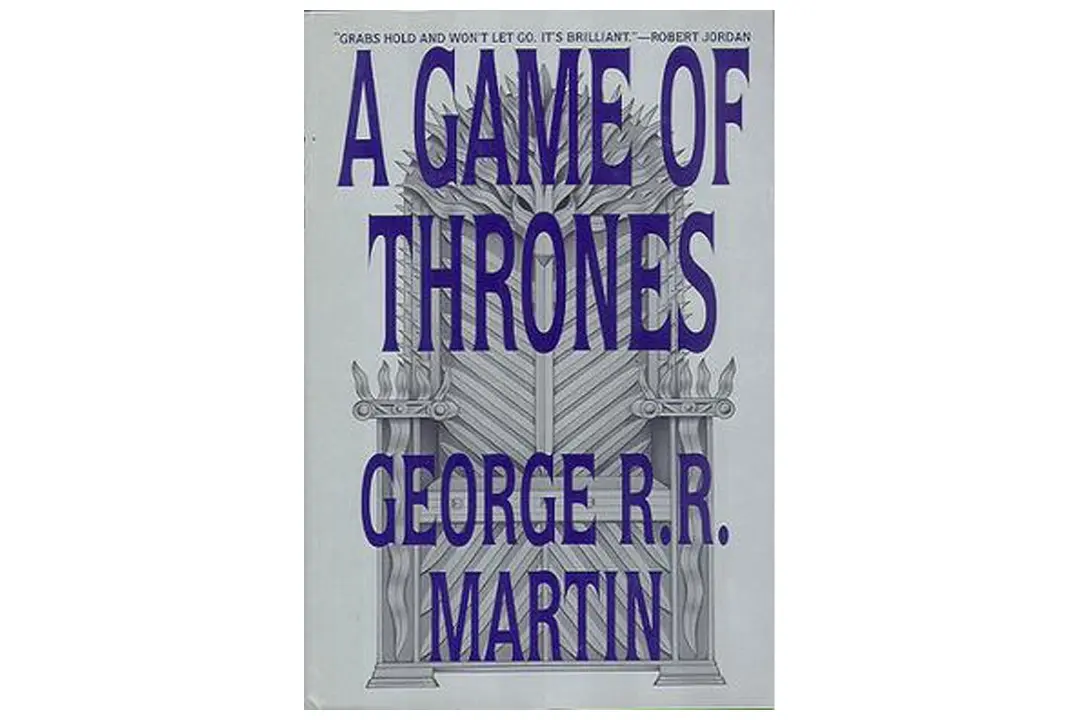
A Game of Thrones by George R.R. Martin: Book Summary
Beverly Ashford • 16 Feb 2026 • 99 views • 3 min read.Let me tell you about the fantasy novel that trained an entire generation of readers to distrust safety — to understand that being central to the story is not the same as being protected by it, and that the author is not your friend in the way you assumed authors were your friends. George R.R. Martin published A Game of Thrones in 1996 after years of working primarily in television. He had been frustrated by the constraints of filmed storytelling — the budget limitations that prevented genuine battle scenes, the network pressures that prevented genuine consequences. He wanted to write something with the scope of Tolkien and the moral complexity of the Wars of the Roses, and he wanted to write it in a form where no budget could constrain him and no network could soften what the story required. He wrote it. It took him years. The result was longer than his publisher expected, more complex than the market typically rewarded, and more willing to kill beloved characters than almost anything previously published in the genre. The HBO adaptation arrived in 2011 and introduced the story to an audience that dwarfed the book's existing readership. Many of those viewers eventually became readers. The fifth book in the series was published in 2011. The sixth book has not yet been published, which the internet also has opinions about.
A Game of Thrones by George R.R. Martin: Book Summary
Quick Summary:
- Seven noble houses war for control of the Iron Throne while an ancient supernatural threat gathers beyond the northern border and a exiled princess plots her return across the sea
- Published in 1996, it redefined epic fantasy by introducing genuine consequences — major characters die, morality is complicated, and the good guys do not automatically win
- Martin's central argument: power is not held by the righteous or the strong but by those willing to do what the righteous and strong will not
- A novel of staggering scope that works because Martin cares as much about the texture of individual lives as he does about the fate of kingdoms
The World
Westeros is a continent roughly the size of South America, ruled from King's Landing by whoever sits the Iron Throne — a seat made from the swords of defeated enemies, forged by dragonfire, deliberately uncomfortable as a reminder that ruling is not meant to be easy.
The continent is divided into seven kingdoms unified under a single crown, administered by noble houses with hereditary control over their regions. The great houses — Stark, Lannister, Baratheon, Tully, Arryn, Greyjoy, Tyrell, Martell — each have their words, their sigils, their histories, and their specific relationship to the throne.
To the north, the Wall separates Westeros from the lands beyond — an eight-hundred-year-old fortification of ice, three hundred miles long and seven hundred feet high, maintained by the Night's Watch. The Night's Watch has been guarding the Wall against what most people in the south believe is nothing — wildlings, perhaps, cold weather, the remnants of old stories. What is actually gathering beyond the Wall is something considerably worse.
Across the Narrow Sea, the Free Cities of Essos are home to Daenerys Targaryen — the last surviving heir of the dynasty that ruled Westeros before Robert Baratheon's rebellion, living in exile with her brother Viserys and pursuing the dragons she was told are her birthright.
The Stark Perspective
The novel opens in the north, with the Stark family of Winterfell. Eddard Stark — Ned — is the Lord of Winterfell, the Warden of the North, and an honorable man in a world that treats honor as a liability.
His family includes his wife Catelyn Tully Stark; his eldest son Robb, heir to Winterfell; his daughters Sansa, who wants to be a proper southern lady, and Arya, who emphatically does not; his younger sons Bran and Rickon; his ward Theon Greyjoy, hostage-guest from a defeated rebellion; and his bastard son Jon Snow, whose mother's identity Ned has never revealed.
King Robert Baratheon rides north to ask Ned to serve as Hand of the King — the King's primary administrator — following the death of the previous Hand, Jon Arryn. Ned does not want to go. Catelyn does not want him to go. He goes.
In King's Landing, Ned discovers that Jon Arryn was investigating something before he died — something about the royal children. The investigation leads Ned toward a truth that the most powerful family in the kingdom has every reason to prevent him from finding.
The Lannister Reality
The Lannisters are the wealthiest family in Westeros and the most politically sophisticated. Queen Cersei Lannister — Robert's wife, Ned's antagonist — has spent years managing her husband's failures and her family's position. Her twin brother Jaime Lannister is the most celebrated knight in the kingdom, known as the Kingslayer for killing the king he swore to protect — the Mad King Aerys, Daenerys's father, whom Jaime killed as he was about to burn the city of King's Landing alive.
The third Lannister sibling is Tyrion — a dwarf, the family's most intelligent member, and the novel's most complex figure. Tyrion navigates a world that has offered him nothing but contempt with sardonic intelligence and a survival instinct that passes for cynicism and might be something more complicated.
The truth Ned discovers about the royal children — the truth Jon Arryn died for — is the novel's central political secret. Martin makes the reader understand it before Ned can act on it, which is the specific cruelty of the narrative design. Ned is honorable. He acts honorably. Honor, in this novel, is not a virtue that protects you.
Jon Snow and the Wall
Jon Snow goes to the Wall as a volunteer — the Night's Watch sounds romantic to a bastard boy who wants to earn his own distinction. The reality is men who joined because they had no better option: criminals, failures, younger sons with nothing. Jon arrives expecting to be a ranger. He is made a steward — assigned to serve the Lord Commander.
The Wall sections introduce the supernatural threat that runs beneath the entire novel as a counterpoint to the political maneuvering in the south. While the houses play the game of thrones, something is moving beyond the Wall. The Night's Watch knows. Nobody south of the Wall particularly cares.
Jon's relationship with the Lord Commander Jeor Mormont, with the wildling prisoner Ygritte who does not appear until later in the series, with the mysterious Samwell Tarly — these establish the north as its own story, operating by different rules than the political thriller happening at the court.
Daenerys Across the Sea
Daenerys Targaryen begins the novel as her brother's property — a seventeen-year-old girl he sells in marriage to Khal Drogo, the greatest of the Dothraki warlords, in exchange for an army to reconquer Westeros. Viserys is vain, cruel, and entirely convinced of his own rightful destiny.
Martin tracks Daenerys's transformation from terrified girl to something considerably more formidable across the novel's length. Her marriage to Drogo evolves from what it begins as into something she chooses. She learns the language and the culture. She discovers that she has resources her brother never gave her credit for.
The dragon eggs she receives as a wedding gift are believed to be petrified — decorative, historical, inert. They are not inert.
The Great Houses Compared
| House | Seat | Words | Core Quality | Fatal Weakness |
|---|---|---|---|---|
| Stark | Winterfell | Winter Is Coming | Honor and loyalty | Honor in a world that punishes it |
| Lannister | Casterly Rock | Hear Me Roar | Wealth and political intelligence | Arrogance and family dysfunction |
| Baratheon | Storm's End | Ours Is The Fury | Military strength and charisma | Robert's inability to govern what he won |
| Targaryen | Dragonstone (in exile) | Fire and Blood | Dragons and dynastic legitimacy | Tendency toward madness under pressure |
| Tully | Riverrun | Family, Duty, Honor | Alliance-building and loyalty | Dependent on stronger houses |
| Arryn | The Eyrie | As High As Honor | Judicial integrity | Geographic isolation and political naivety |
| Greyjoy | Pyke | We Do Not Sow | Naval power and raiding | Isolation and inability to hold conquered territory |
| Tyrell | Highgarden | Growing Strong | Agricultural wealth and political ambition | Dependent on alliance rather than independent strength |
Frequently Asked Questions
Do I need to watch the HBO show first?
Neither order is wrong. The show covers the first five books across eight seasons with significant differences in the later seasons. Reading the books first gives you Martin's prose and the full complexity of the political world. Watching first gives you visual context for the geography and characters that many readers find helpful. The books contain characters and storylines the show eliminated or condensed. If you want Martin's full vision, the books are the source.
Is it true that major characters die?
Yes, and this is not a spoiler so much as a genre warning. Martin establishes early and repeatedly that centrality to the narrative does not confer protection. Characters you invest in deeply will die, sometimes suddenly and without the narrative ceremony the genre usually provides for significant deaths. This is partly what makes the novel compelling and partly what makes it genuinely difficult for some readers.
How long is the series and is it finished?
A Song of Ice and Fire is planned as seven books. Five have been published — A Game of Thrones, A Clash of Kings, A Storm of Swords, A Feast for Crows, and A Dance with Dragons. The sixth book, The Winds of Winter, has not been published as of early 2026. The seventh book has not been written. Martin's timeline for completion has been a subject of ongoing discussion among readers for over a decade.
Is the world-building overwhelming?
The novel has appendices listing the major houses and their members, which most readers consult freely. The geography becomes intuitive within a hundred pages. Martin builds the world through character perspective rather than exposition — you learn about the political history through what characters remember and care about rather than through dedicated historical summary. It is dense but navigable.
How does this compare to Tolkien?
Tolkien built mythology and moral clarity — the world of Middle-earth has deep history and the conflict is fundamentally between good and evil. Martin builds political complexity and moral ambiguity — his world has deep history but the conflict is fundamentally between human beings with competing legitimate and illegitimate claims. They are trying to do different things. Both succeed at what they attempt.
What should I read next?
The remaining books in the series are the natural continuation. For comparable political complexity in fantasy, Joe Abercrombie's The First Law trilogy — beginning with The Blade Itself — is the closest analogue in tone and moral ambiguity. Steven Erikson's Malazan Book of the Fallen series offers comparable scope with different structural priorities. Patrick Rothfuss's Kingkiller Chronicle shares Martin's investment in prose craft within epic fantasy.
The Bottom Line
Here is what George R.R. Martin actually built in 1996 after years of television constraints.
Not a fantasy novel about good versus evil. A novel about power — who gets it, who holds it, what it costs, and what it does to the people who pursue it and the people who refuse to.
Ned Stark is a good man. He is honest and loyal and genuinely concerned with justice. He is also catastrophically unsuited to the environment he enters, and his goodness does not protect him or the people who depend on him. Martin is not saying goodness is worthless. He is saying goodness without political intelligence is insufficient — and that insufficient goodness costs the people around you more than it costs you.
The game of thrones is not won by the righteous. It is won by the people willing to understand its rules and operate within them without illusion. The Lannisters understand the rules. The Starks trust that the rules will be followed by people who have no intention of following them.
Winter is coming.
It always was.
The novel's first scene shows us what comes before winter.
Everything after that is the game.