
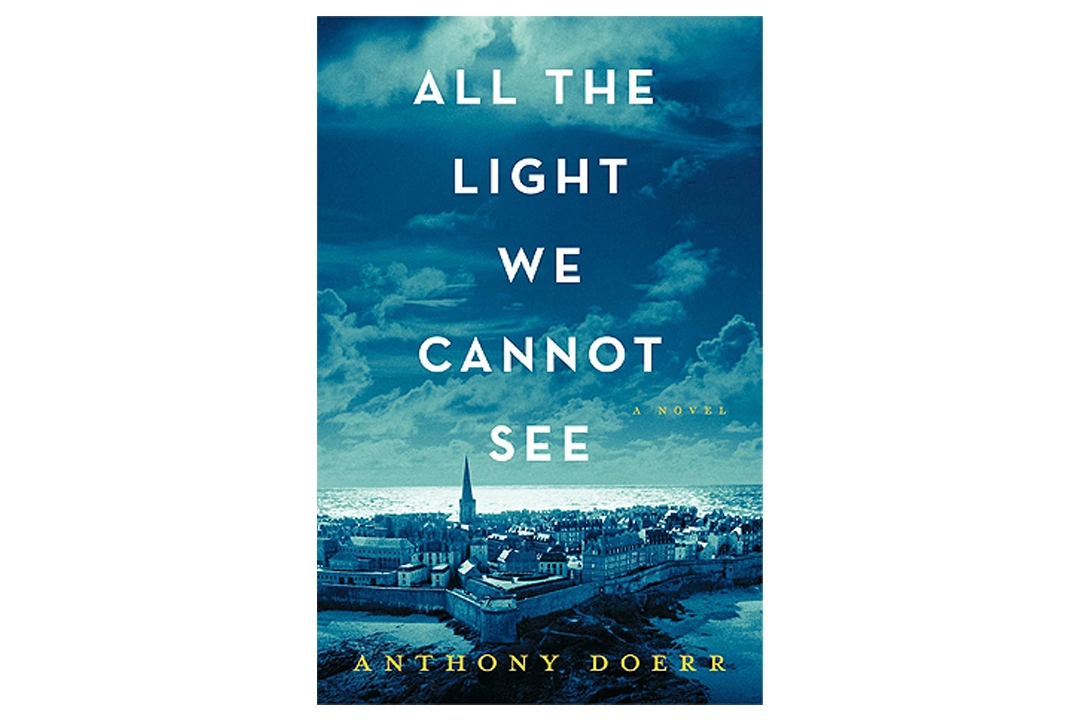
All the Light We Cannot See – Anthony Doerr: Book Summary
Beverly Ashford • 12 Mar 2026 • 82 views • 3 min read.Let me tell you about the book that made World War II feel both intimate and cosmic. Anthony Doerr spent ten years writing All the Light We Cannot See. The result was a novel that won the Pulitzer Prize, sold millions of copies, and was adapted into a Netflix limited series. The book does something unusual: it makes you love two characters who should be enemies, and then brings them together in a way that feels both inevitable and miraculous. It's about war, but it's really about connection—how radio waves and stories and kindness travel through darkness. The prose is extraordinary. The structure is demanding. The payoff is devastating.
All the Light We Cannot See – Anthony Doerr: Book Summary
Quick Summary:
- A blind French girl and a German soldier's paths converge during World War II
- The novel weaves between occupied France and Nazi Germany
- Radio waves, hidden gems, and moral choices connect them
- Published in 2014, it won the Pulitzer Prize and became a beloved literary phenomenon
The Two Worlds
Marie-Laure LeBlanc lives in Paris with her father, the master locksmith at the Museum of Natural History. She lost her sight at age six.
Her father builds her models of their neighborhood so she can memorize the streets. He creates elaborate puzzle boxes that challenge and delight her. He reads her Jules Verne novels—Twenty Thousand Leagues Under the Sea becomes her favorite.
When the Nazis invade, they flee Paris for the walled city of Saint-Malo on the Brittany coast, where Marie-Laure's reclusive great-uncle Etienne lives.
Werner Pfennig grows up in an orphanage in a German coal-mining town. He and his younger sister Jutta are destined for the mines—boys go down at fifteen, and few come back healthy.
But Werner is brilliant with radios. He can build them, repair them, understand their invisible workings. A talent for electronics becomes his ticket out of the mines—and into a Nazi military school that trains him to hunt Resistance radio operators.
The Structure
Doerr tells the story in short, alternating chapters—some only a page long. The narrative jumps between:
- 1934-1940: Marie-Laure and Werner's childhoods
- August 1944: The Allied bombing of Saint-Malo, where their stories converge
- After the war: Brief glimpses of what follows
The non-linear structure creates suspense and resonance. We know the bombing is coming. We know these two characters will meet. We don't know how—or what it will cost.
Key Characters
| Character | Role | Represents |
|---|---|---|
| Marie-Laure | Blind French girl | Perception, survival, inner light |
| Werner | German soldier | Talent corrupted, moral awakening |
| Daniel LeBlanc | Marie-Laure's father | Love, protection, craft |
| Etienne | Great-uncle | Trauma, hidden resistance |
| Jutta | Werner's sister | Conscience, what Germany could be |
| Von Rumpel | Nazi gem hunter | Obsession, cruelty |
| Frederick | Werner's friend | Innocence destroyed |
The Sea of Flames
The novel has a secondary plot involving a legendary diamond called the Sea of Flames.
According to legend, the stone grants immortality to its keeper but brings misfortune to everyone around them. The museum had three copies made; when Paris falls, each is sent a different direction. No one knows which is real.
Marie-Laure's father carries one—possibly the real one—to Saint-Malo. A dying Nazi sergeant, Von Rumpel, is obsessed with finding it. He believes it will save him from cancer.
The diamond creates thriller tension, but it's also a metaphor. The stone that promises immortality brings only death. Real survival comes from human connection, not magical objects.
Werner's Corruption
Werner's arc is the novel's moral center.
He's a gentle boy who loves science and his sister. His skill with radios could make him a hero—Resistance operators broadcast hope across occupied Europe.
Instead, his talent is weaponized. At the military school, he's trained to track illegal transmissions. His unit hunts Resistance broadcasters across occupied territory. He watches Nazis execute people based on coordinates he's provided.
Frederick is Werner's closest friend at school—a bird-obsessed boy unsuited for military life. When Frederick refuses to participate in cruelty, he's beaten so severely he's permanently brain-damaged.
Werner does nothing. This haunts him.
By the time he reaches Saint-Malo, Werner is complicit in countless deaths. But he still has one choice left.
The Broadcast
Marie-Laure's uncle Etienne has a secret.
For years, he's been broadcasting science programs on a hidden radio—recordings originally made by his brother (Marie-Laure's grandfather) before the first World War. Numbers stations hidden within the broadcasts contain messages for the Resistance.
When Etienne is arrested, Marie-Laure takes over the broadcasts, reading scientific facts and Resistance coordinates into the microphone.
Werner, hunting illegal transmissions, hears her voice.
The Convergence
August 1944. Saint-Malo is under siege. American bombs are falling. The walled city is burning.
Marie-Laure is trapped in Etienne's house, hiding in the attic while Von Rumpel searches below. He's found her. He wants the diamond.
Werner is in the city with his unit. He hears Marie-Laure broadcasting—the same voice he's been hearing for years, the voice that sounds like hope, reading science into the darkness.
He finds her house. He climbs the stairs. He kills Von Rumpel.
For a brief moment, they are together—the blind girl and the German soldier, enemy and savior, two people who have been listening to the same frequencies across the war.
Werner helps Marie-Laure escape. Then he walks into a minefield.
He dies stepping on a mine hours before the liberation.
The Ending
Marie-Laure survives. She lives a long life in Paris, becomes a scientist, has children and grandchildren.
Werner's sister Jutta survives. After the war, she learns what her brother did—both the deaths he caused and the life he saved.
Years later, Jutta visits Marie-Laure. They share memories. Werner's belongings are returned. The story comes full circle.
The final pages show Marie-Laure as an old woman, still marveling at the invisible world around us—the radio waves, the light, all the things we cannot see but that connect us anyway.
What the Book Is Really About
Invisible connections. Radio waves travel through walls, across borders, through war. Marie-Laure and Werner are connected long before they meet. The book argues that we're all connected in ways we cannot see.
The cost of compliance. Werner is not evil. He's talented, curious, capable of love. But he follows orders. He uses his gifts for destruction. The novel asks: How do ordinary people become complicit in atrocity?
Different ways of seeing. Marie-Laure is blind but perceives the world richly through other senses. Werner has eyes but can't see the moral reality around him until it's too late. Sight and blindness are not what they seem.
Beauty persists. Even in war, there are shells to collect, birds to name, stories to read, voices on the radio describing how the world works. Beauty is resistance.
Frequently Asked Questions
Why is the structure so fragmented?
Doerr wants you to feel the chaos of war and the patterns that emerge despite it. The short chapters create momentum while the time-jumping creates resonance.
Is the diamond real?
Within the novel, it seems to be real—though its power may be psychological. Doerr leaves some ambiguity. The diamond is less important than what it reveals about obsession.
How does the Netflix series compare?
The 2023 limited series is beautifully made and faithful. It necessarily compresses but captures the emotional core. Watch after reading.
Is this appropriate for younger readers?
There's war violence and some intensity. Most readers 14+ can handle it. It's literary rather than graphic.
Why does Werner die?
His death feels both unfair and inevitable. He saved Marie-Laure but cannot save himself from the war machine he served. Redemption doesn't mean survival.
The Bottom Line
Here's what Anthony Doerr achieved.
He wrote a World War II novel that feels both epic and intimate. He made readers love characters on opposite sides of a war, then brought them together in a moment that earns every page that came before.
The book argues that light—literal and metaphorical—travels through darkness. That voices on the radio can save lives. That kindness persists even when everything seems broken.
Marie-Laure cannot see. Werner cannot escape. But they find each other anyway.
That's the light we cannot see.