
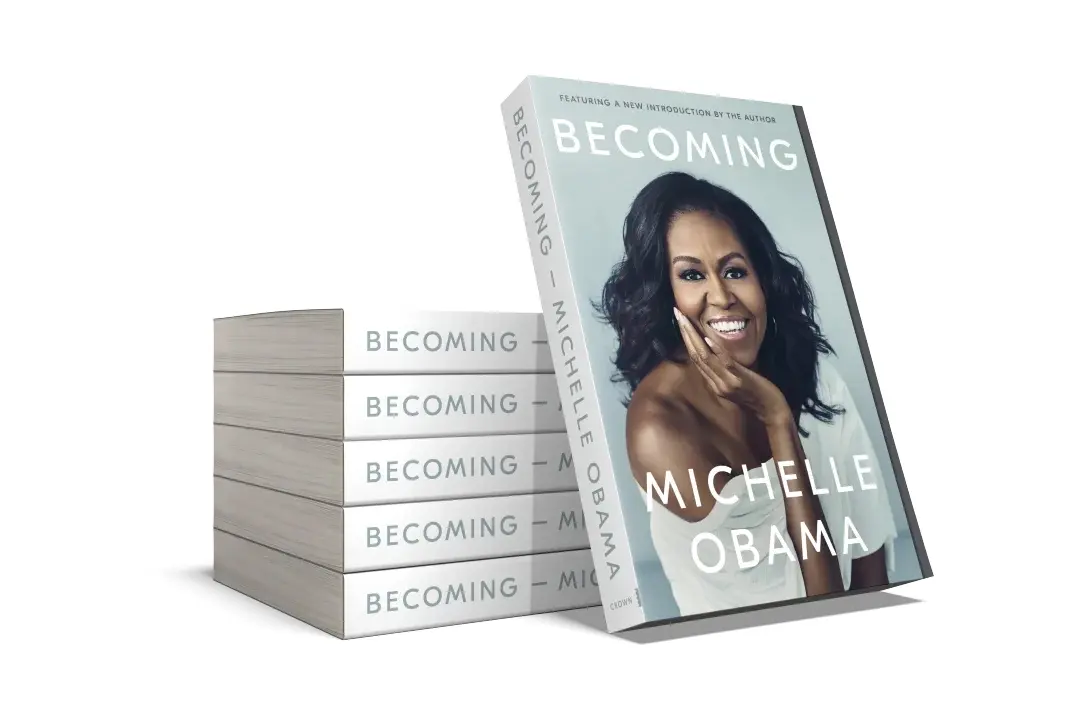
Becoming – Michelle Obama: Book Summary
Beverly Ashford • 11 Mar 2026 • 75 views • 2 min read.Let me tell you about the book that sold more copies than anyone expected. Michelle Obama's memoir became a phenomenon—over 17 million copies sold worldwide, the best-selling memoir ever. People who never buy books bought this one. The accompanying tour filled arenas like a rock concert. Why? Because Becoming isn't just a political memoir or celebrity autobiography. It's an intimate story about becoming yourself—whoever you are, wherever you started. Michelle Obama writes about her fears, doubts, and frustrations with the same honesty she applies to triumphs. She makes the White House feel human. The title says everything. She doesn't claim to have arrived. She's still becoming.
Becoming – Michelle Obama: Book Summary
Quick Summary:
- The memoir of a South Side Chicago girl who became First Lady
- Organized in three parts: Becoming Me, Becoming Us, Becoming More
- An intimate portrait of identity, family, race, and purpose
- Published in 2018, it became the best-selling memoir in history
Part One: Becoming Me
Michelle LaVaughn Robinson grows up in a small apartment on Chicago's South Side. Her father, Fraser, works for the city's water plant despite having multiple sclerosis that progressively worsens. Her mother, Marian, stays home to raise Michelle and her older brother Craig.
The apartment is cramped—she and Craig sleep in the living room, separated by a partition. But it's stable, loving, and filled with high expectations.
Education is everything. Michelle is driven, competitive, and eager to prove herself. She's tracked into gifted programs, attends a magnet high school across the city, and sets her sights on Princeton despite a guidance counselor who tells her she's not Princeton material.
She proves the counselor wrong. Princeton accepts her.
But Princeton is complicated. She's one of few Black students on campus. She feels the weight of representation, the isolation of being different, the constant question of whether she belongs. She studies sociology, writes her senior thesis on how Black Princeton graduates feel about race, and graduates with honors.
Then Harvard Law School. More achievement, more proving herself, more navigating spaces where people like her are rare. She becomes an attorney at a prestigious Chicago firm, making more money than her parents ever had.
She's done everything right. She's "made it."
And she's not happy.
Part Two: Becoming Us
Enter Barack Obama.
He arrives as a summer associate at her law firm. She's assigned to mentor him. She's skeptical at first—he's late, he's casual, and everyone keeps telling her how impressive he is. But he's also different. He reads poetry. He talks about community organizing. He asks questions she's never considered.
She falls in love.
Their courtship is complicated by her ambition and his. She's climbing the corporate ladder. He's drawn to public service and politics. She worries about what life with a politician would look like.
They marry. She shifts careers—first to city government, then to nonprofits, eventually to the University of Chicago hospital system. She focuses on community work, mentoring young people, trying to contribute beyond her paycheck.
Then daughters arrive. Malia in 1998, Sasha in 2001. Motherhood transforms her priorities. She scales back professionally, frustrated by the trade-offs women face.
Then politics arrives. Barack runs for state senate, then U.S. Senate, then president. Each step requires more sacrifice, more time apart, more of her life becoming public property.
She resists his presidential run initially. She's protecting her family, her privacy, her sanity. But she comes to believe in what he's trying to do—and in what her support could mean for other young Black girls watching.
Barack Obama becomes president. Michelle Obama becomes First Lady.
Key Themes
| Theme | How It Appears | What It Means |
|---|---|---|
| Striving | Education, career, constant achievement | Proving worth in spaces that question it |
| Identity | Race, gender, class | Navigating who you are vs. who others see |
| Family | Parents, Craig, Barack, daughters | The foundation beneath everything |
| Sacrifice | Career, privacy, independence | What public life costs |
| Authenticity | Being herself despite pressure | Refusing to shrink |
| Becoming | Ongoing process, not destination | You're never finished |
Part Three: Becoming More
The White House years.
Michelle Obama becomes one of the most scrutinized women in the world. Every outfit is analyzed. Every word is dissected. The attacks are often racist, sexist, and vicious. She's called angry. She's called unpatriotic. Her body is mocked.
But she also discovers purpose.
Let's Move! tackles childhood obesity. She plants a garden, exercises with kids, pushes for healthier school lunches. It's criticized as nanny-state overreach, but she persists.
Reach Higher encourages first-generation college students. She visits schools, meets with students, uses her platform to open doors she had to push through alone.
Let Girls Learn promotes education for girls globally. She travels to meet girls who face barriers she never experienced, recognizing how circumstance shapes opportunity.
The role evolves. She learns to use the spotlight rather than resent it. She dances on Ellen. She does Carpool Karaoke. She shows that serious people can also be joyful.
Then it ends. The Obama family leaves the White House as Donald Trump takes office. Michelle describes the transition—the smallness of the new administration's inaugural crowd, her complicated feelings about what comes next.
She's no longer First Lady. She's still becoming.
What Makes This Memoir Different
It's genuinely personal. Political memoirs are often sanitized. Michelle Obama writes about marriage counseling, miscarriage, IVF, feeling like a single parent during Barack's campaigns. She shares what most public figures hide.
It centers her story, not his. Barack is present but not dominant. The book is about Michelle—her childhood, her ambitions, her struggles. His presidency is context, not the main text.
It addresses race directly. She doesn't shy away from being the first Black First Lady, the weight of that representation, and the racism she faced. These aren't asides—they're central.
It's aspirational without being preachy. She doesn't tell readers what to do. She shows her own path, with its doubts and detours, and lets readers draw their own lessons.
Frequently Asked Questions
Is this political?
Less than you'd expect. There's minimal policy discussion. She criticizes Trump but mostly avoids partisan debate. The book is personal, not ideological.
Should I read this if I didn't support the Obamas?
Possibly. The personal sections—childhood, parenting, marriage—transcend politics. You might not agree with everything but can still appreciate the human story.
How much is about Barack?
He's significant but not dominant. She writes about meeting him, falling in love, and navigating his political career. But the focus stays on her experience of their shared life.
Does she discuss controversies?
Some. She addresses the "angry Black woman" stereotype, the attacks on her patriotism, the challenges of public scrutiny. She doesn't relitigate every controversy but doesn't hide from hard topics.
Is the writing good?
Yes. It's clear, warm, and accessible. She has a conversational voice that makes 400+ pages feel manageable. She writes about serious things without being heavy.
What has she done since?
Continued advocacy, particularly for voting rights and girls' education. Released a follow-up book, The Light We Carry. Her influence extends well beyond the White House years.
The Bottom Line
Here's what Michelle Obama achieved with this memoir.
She wrote a book that feels intimate despite her enormous fame. She showed that public figures can be genuinely vulnerable on the page. She gave voice to experiences—being a Black woman in white spaces, balancing ambition with family, supporting a partner's dreams while nurturing your own—that millions of readers recognized.
The title captures her philosophy. "Becoming" isn't past tense. It's continuous. She's still figuring out who she is, still growing, still working.
That's the message that resonated: you don't have to have arrived to share your story. The process is the point.
Michelle Obama isn't done becoming. Neither are you.