
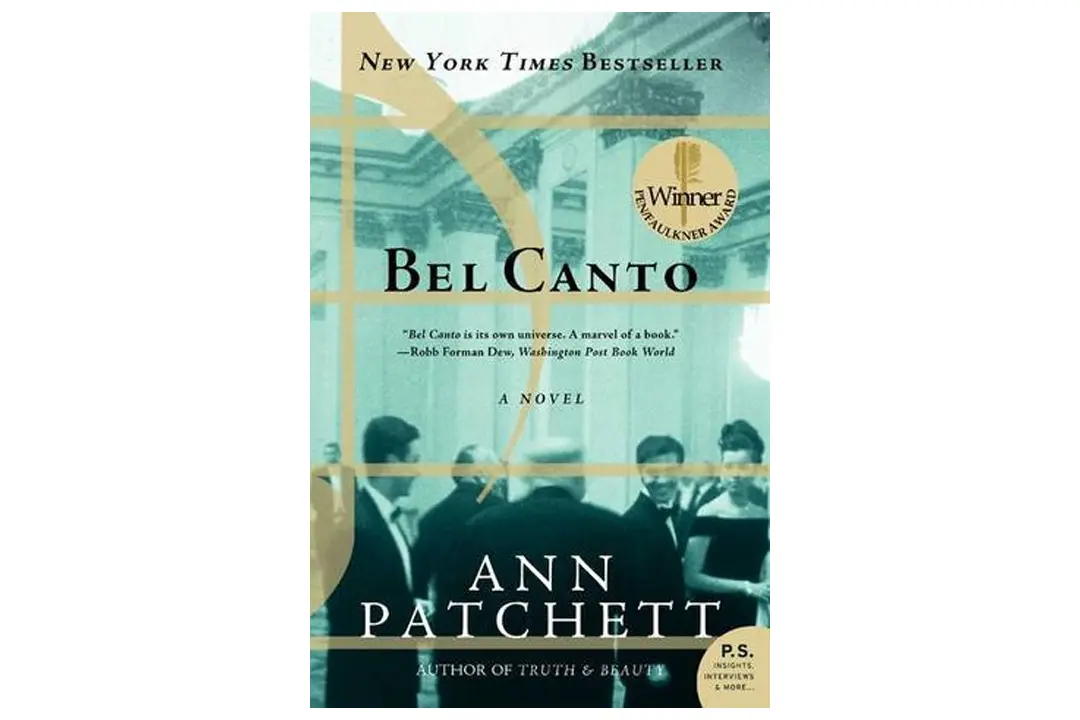
Bel Canto – Ann Patchett: Book Summary
Beverly Ashford • 13 Mar 2026 • 90 views • 2 min read.Let me tell you about the book that makes you fall in love with people who should be enemies. Ann Patchett wrote a novel about a hostage crisis that becomes something like a utopia. Terrorists seize a mansion full of international businessmen and dignitaries. Then the days stretch into weeks. Then the weeks stretch into months. And something strange happens: people start to form a community. Bel Canto is based loosely on the 1996 Japanese embassy hostage crisis in Lima, Peru, but it's not interested in politics. It's interested in what happens when people from different worlds are forced together, when routine is suspended, when beauty creates connection where none should exist. The ending is devastating precisely because of what comes before it.
Bel Canto – Ann Patchett: Book Summary
Quick Summary:
- Terrorists take hostages at a South American mansion during an opera performance
- What begins as crisis becomes an unexpected community
- Music transcends language, politics, and violence
- Published in 2001, it won the PEN/Faulkner Award and the Orange Prize
The Setup
Mr. Katsumi Hosokawa is a Japanese industrialist, one of the richest businessmen in his country. An unnamed South American government wants to lure him to invest. They learn his passion: the opera singer Roxane Coss.
They arrange a birthday party in his honor at the vice president's mansion. Roxane Coss will perform. The president is supposed to attend but stays home to watch his favorite soap opera.
Roxane sings. The lights go out. Terrorists storm the mansion.
The plan goes wrong immediately. The terrorists wanted the president—but he's not there. They're stuck with a houseful of businessmen, diplomats, and servants. They have no leverage. The crisis becomes a stalemate.
The military surrounds the mansion. Nobody leaves. Days pass. Then weeks. Then months.
The Community
What Patchett does is remarkable: she makes the siege feel almost peaceful.
The terrorists—members of a leftist guerrilla group—are mostly young, poor, and idealistic. Their three leaders, the Generals, are hardened. But the foot soldiers are teenagers who've never seen a working toilet, never tasted real food, never heard music like Roxane's voice.
Roxane Coss becomes the center of the household. She practices every day. Her voice fills the mansion. Hostages and terrorists alike stop to listen. Music becomes the shared language.
Gen Watanabe is Mr. Hosokawa's translator—a young Japanese man who speaks many languages. He becomes essential: the only person who can communicate across the groups. He falls in love with Carmen, a young terrorist disguised as a boy to join the movement.
Mr. Hosokawa falls in love with Roxane. Their romance develops slowly, silently, across a language barrier—they communicate through Gen's translations and through shared listening.
The terrorists learn. One young guerrilla, Cesar, has a voice. Roxane discovers it and begins teaching him opera. Others learn chess, learn to read, learn that the world is larger than their mountains.
Key Characters
| Character | Role | Transformation |
|---|---|---|
| Roxane Coss | Opera singer, American | Becomes the community's heart |
| Mr. Hosokawa | Japanese industrialist | Finds love he never expected |
| Gen Watanabe | Translator | Falls in love, becomes essential |
| Carmen | Young terrorist | Discovers love, vulnerability |
| Cesar | Terrorist with a voice | Becomes Roxane's student |
| General Benjamin | Terrorist leader | Shows unexpected humanity |
| Father Arguedas | Priest, hostage | Provides spiritual center |
| Simon Thibault | French diplomat | Discovers unexpected love |
The Suspension of Time
The novel creates an impossible space.
The outside world fades. Negotiations continue through a Red Cross intermediary, but they go nowhere. The military waits. The hostages wait. Everyone forgets what day it is.
Normal rules dissolve. Businessmen who never cooked learn to prepare meals. Terrorists who were taught to hate the rich play cards with them. A priest hears confessions from captors and captives alike.
Beauty takes over. Roxane's voice becomes the organizing principle. When she practices scales, the house is silent. When she performs, everyone gathers. Music creates community where ideology would create division.
Love flourishes. Mr. Hosokawa and Roxane share something profound without sharing a language. Gen and Carmen meet secretly at night, teaching each other their worlds. Others find unexpected connections.
For a while, it seems like it could last forever. For a while, everyone forgets it can't.
The Meaning of "Bel Canto"
"Bel canto" is Italian for "beautiful singing"—an operatic style emphasizing vocal beauty over dramatic action.
The title is both literal (Roxane's singing) and metaphorical. The novel argues for beauty as a force—something that can transform, connect, and briefly transcend the circumstances that divide us.
Roxane's voice performs miracles. Enemies become listeners. Violence is suspended. People who should hate each other share something larger than their differences.
But the world outside doesn't share this suspension. And eventually, the world intrudes.
The Ending
The stalemate cannot last. The military prepares an assault.
The raid happens suddenly. The novel doesn't sensationalize it—the violence is quick and brutal. Nearly all the terrorists are killed. Some hostages die too, including Mr. Hosokawa, shot while trying to protect Roxane.
Cesar is killed mid-note. He's singing when the soldiers break in. He dies with music in his throat.
Carmen is killed. She never gets to leave the mountains with Gen, never gets to become what she might have been.
Gen survives. Roxane survives. But the community they'd built is destroyed in minutes.
The epilogue takes place years later. Gen and Roxane have married. It's not a romantic ending—it's two survivors holding onto what remains of that suspended time. They couldn't have the people they loved, so they have each other.
What the Book Is Really About
Beauty as transcendence. Roxane's voice doesn't solve anything. The terrorists still die. The crisis still ends violently. But for months, beauty created a space where humanity flourished. That's not nothing.
Impossible communities. The mansion becomes a kind of utopia—people from radically different worlds living together, learning from each other. Patchett suggests this is always possible and always temporary.
The cost of returning to reality. The ending is devastating because the novel has made you forget it's coming. You've been suspended too. The violence reminds you that the world doesn't allow such spaces for long.
Love across difference. The romances are all transgressive—across language, nationality, class, and role. Patchett argues that connection doesn't require common background, only common attention.
Frequently Asked Questions
Is this based on a true story?
Loosely. The 1996 Lima hostage crisis lasted four months before a military raid killed all the MRTA terrorists. Patchett uses the structure but invents the characters and focuses on different themes.
Why doesn't the outside world matter more?
Patchett deliberately keeps politics vague. The country is unnamed. The ideology is sketched. The focus is on human connection, not political commentary.
Is the ending too abrupt?
Some readers think so. But the abruptness is the point—the raid is how such situations actually end. The gentleness of the middle makes the violence more shocking.
How does the opera movie compare?
The 2018 film adaptation is respectful but can't fully capture the novel's interiority. The music works on screen; the psychology is harder to translate.
Should I read Patchett's other books?
Absolutely. The Dutch House, Commonwealth, and State of Wonder all explore family, loss, and unexpected connection with similar grace.
Why does Gen marry Roxane?
They're not in love romantically—they're in grief together. They share something no one else can understand. The marriage is about holding onto the only person who remembers what that house was.
The Bottom Line
Here's what Ann Patchett achieved.
She wrote a novel about a hostage crisis that's really about what happens when beauty suspends ordinary rules. She made readers love a community that couldn't last. She made the inevitable ending feel like tragedy, not inevitability.
Bel Canto argues that humans can always connect—across language, across politics, across violence. It also argues that the world doesn't let us stay in those spaces.
Roxane's voice filled a mansion with something like grace.
Then the world came back.