
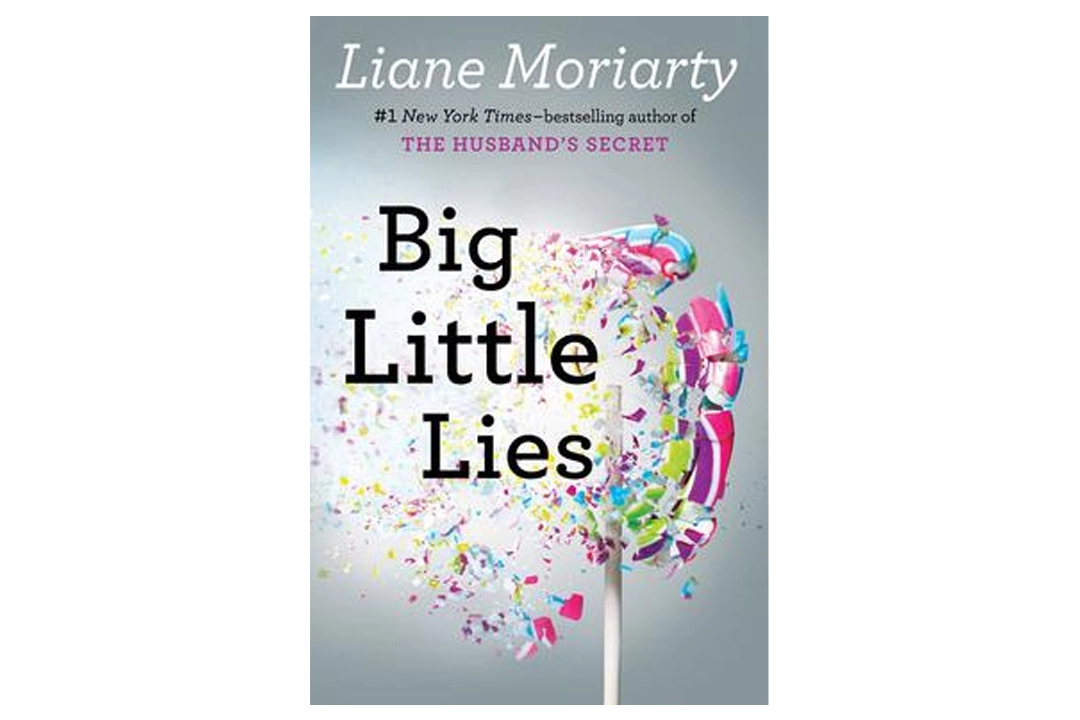
Big Little Lies – Liane Moriarty: Book Summary
Beverly Ashford • 11 Mar 2026 • 74 views • 3 min read.Let me tell you about the book that proved suburban drama can be deadly. Liane Moriarty wrote a mystery that unfolds entirely within the world of school pickups, birthday parties, and parent committees. It sounds lightweight. It isn't. Big Little Lies uses the rhythms of domestic life to explore domestic violence, female friendship, and the lies people tell to survive. The structure is brilliant—we know someone dies at a school trivia night, but we don't know who or how until the final pages. The book sold millions of copies. The HBO adaptation starring Reese Witherspoon and Nicole Kidman became a cultural event. It made people realize that books about mothers could be thrillers, not just "women's fiction."
Big Little Lies – Liane Moriarty: Book Summary
Quick Summary:
- Someone dies at an elementary school trivia night, and everyone's a suspect
- Three mothers with very different lives become unlikely friends
- Beneath the school gates drama lies domestic violence, secrets, and solidarity
- Published in 2014, it became an HBO phenomenon and book club staple
The Setup
Pirriwee Public School is in an upscale Australian coastal community. The parents are competitive, judgmental, and always watching each other.
The novel opens after the fact. Someone has died at Trivia Night. Police are interviewing parents. Everyone has a different story about what happened. Everyone's pointing fingers.
Then we flash back to the beginning of the school year and meet our three protagonists—three women whose lives will intertwine in ways none of them expects.
The Three Women
Madeline Martha Mackenzie is a force of nature. She's blonde, petite, and says whatever she's thinking—loudly. She's fiercely loyal and holds grudges forever.
Her ex-husband Nathan has moved to Pirriwee with his new wife Bonnie. They've enrolled their daughter in the same school as Madeline's kids. This is unforgivable.
Madeline seems like a comedy character—the outraged suburban mom. But beneath the drama is real pain: abandonment, aging, the fear that she's defined entirely by her role as mother.
Celeste White is the beautiful one. Stunning, wealthy, married to Perry—equally gorgeous, equally successful. They have twin boys. They seem perfect.
They're not. Perry abuses Celeste. Violently, regularly, followed by apologies and passionate reconciliation. Celeste hides the bruises. She minimizes. She thinks it's partly her fault.
Moriarty depicts domestic violence with devastating accuracy: the cycle, the excuses, the love that coexists with terror.
Jane Chapman is the newcomer. Young, single, raising her son Ziggy alone. She's quiet, anxious, and clearly hiding something.
Five years ago, Jane was raped by a stranger. Ziggy is the result. She's never told anyone. She's moved to Pirriwee for a fresh start.
On the first day of school, Ziggy is accused of choking a classmate. Jane insists he's innocent. The accusation spirals into community warfare.
Key Characters
| Character | Role | What They Represent |
|---|---|---|
| Madeline | Alpha mom, fierce friend | Loyalty, righteous anger, surface vs. depth |
| Celeste | Abuse victim | The hidden violence in perfect lives |
| Jane | Single mother, survivor | Trauma, resilience, searching for truth |
| Perry White | Celeste's husband | Charming abuser, the monster next door |
| Nathan/Bonnie | Madeline's ex and new wife | Past wounds, unexpected allies |
| Renata Klein | Wealthy, aggressive mother | Class warfare, protective ferocity |
| Ziggy | Jane's son, accused | Innocence under suspicion |
The Bullying Mystery
Ziggy is accused of hurting Amabella, the daughter of wealthy Renata Klein. Ziggy denies it. Jane believes him.
The accusation divides the community. Renata wants Ziggy expelled. Other parents take sides. The conflict escalates through birthday party exclusions, petitions, and social media gossip.
But someone is hurting Amabella. It's not Ziggy. The question of who—and why Amabella won't name her actual bully—runs through the novel.
This mystery interweaves with the larger question: Who died at Trivia Night? The bullying subplot seems small but becomes central to the climax.
The Friendship
Madeline, Celeste, and Jane become friends almost by accident. Jane is new and overwhelmed. Madeline adopts her immediately—she collects people. Celeste is drawn in, grateful for connection outside her controlled life.
Their friendship is genuine but imperfect. Madeline talks too much. Celeste can't share her biggest secret. Jane holds everyone at a distance.
What makes the friendship work: They show up for each other. When Jane needs backup at the school, they're there. When Celeste finally confesses about Perry, they believe her.
Moriarty argues that female friendship can be life-saving—literally.
The Domestic Violence Plot
Celeste's storyline is the book's dark heart.
Perry hits her. He throws her against walls. Then he apologizes, cries, makes love to her. She stays because she loves him, because she's scared, because the children, because she thinks she provokes him, because leaving seems impossible.
Moriarty doesn't sensationalize. She shows the internal logic that keeps victims trapped. Celeste sees a therapist who slowly helps her plan an exit. It takes the whole book.
The violence is realistic: It's not constant. Perry is wonderful much of the time. The abuse cycles with periods of peace. This is harder to leave than constant terror.
The Revelation
The climax brings everything together.
At Trivia Night, truths emerge:
The bully hurting Amabella is revealed—it's Max, one of Celeste's twins. He's been watching his father abuse his mother. He's imitating what he's seen.
Jane discovers something worse: Perry is the man who raped her five years ago. Perry is Ziggy's biological father. He recognizes her. She recognizes him.
Perry attacks. On the school balcony, surrounded by witnesses, he grabs Celeste. The violence he's hidden for years becomes public.
Bonnie pushes him. Bonnie—Nathan's yoga-practicing, peaceful wife—sees Perry hurting Celeste and shoves him. He falls over the railing. He dies.
The Aftermath
The women close ranks. They protect Bonnie by maintaining ambiguity about exactly what happened. Perry's death is investigated but not prosecuted.
Celeste is free. Traumatized, grieving, relieved, guilty—all of it. She begins rebuilding.
Jane has closure. Her rapist is dead. Ziggy has a biological father he'll never know, and that's probably for the best.
Bonnie confesses to the police eventually. She receives a suspended sentence—she was defending another woman from assault.
The novel ends with the community returning to normal rhythms. But the women who know the truth are bonded forever.
What the Book Is Really About
The lies women tell to survive. Celeste lies about her bruises. Jane lies about Ziggy's father. Madeline lies about being okay with her ex. The "little lies" protect them, but also isolate them.
Domestic violence hides in plain sight. Perry is handsome, successful, charming. No one suspects. Moriarty shows how abusers maintain public masks while terrorizing private spaces.
Female solidarity. The women save each other—not through magic or coincidence, but by paying attention and showing up. Friendship is the counterforce to isolation.
The violence of ordinary life. School politics, marriage tensions, community gossip—Moriarty finds real stakes in settings often dismissed as trivial.
Frequently Asked Questions
How does the HBO series compare?
The show moves the setting to Monterey, California, and adds star power. It's faithful to the book's spirit while expanding certain roles. Both are excellent.
Is this a mystery or women's fiction?
Both. The mystery structure drives the plot, but the emotional core is domestic. Moriarty proves these aren't separate categories.
Is the domestic violence content difficult?
It's handled responsibly but unflinchingly. If you have personal experience, be prepared. The book ultimately affirms survivors.
Should I read Moriarty's other books?
Absolutely. Nine Perfect Strangers, The Husband's Secret, and What Alice Forgot all balance commercial readability with real emotional depth.
Why is Bonnie the one who pushes Perry?
Bonnie was abused by her father as a child. She recognizes the pattern and acts. Her peaceful exterior hides someone who knows violence intimately.
The Bottom Line
Here's what Liane Moriarty achieved.
She wrote a page-turner about school politics that's also a serious examination of domestic violence. She created three women whose friendship is both flawed and redemptive. She structured the novel so perfectly that the climax satisfies while still surprising.
Big Little Lies proves that stories about mothers, marriages, and communities can be just as gripping as any crime thriller—because they are crime thrillers, just set in living rooms and schoolyards.
The little lies add up. The big truths come out eventually.
Someone always pushes back.