
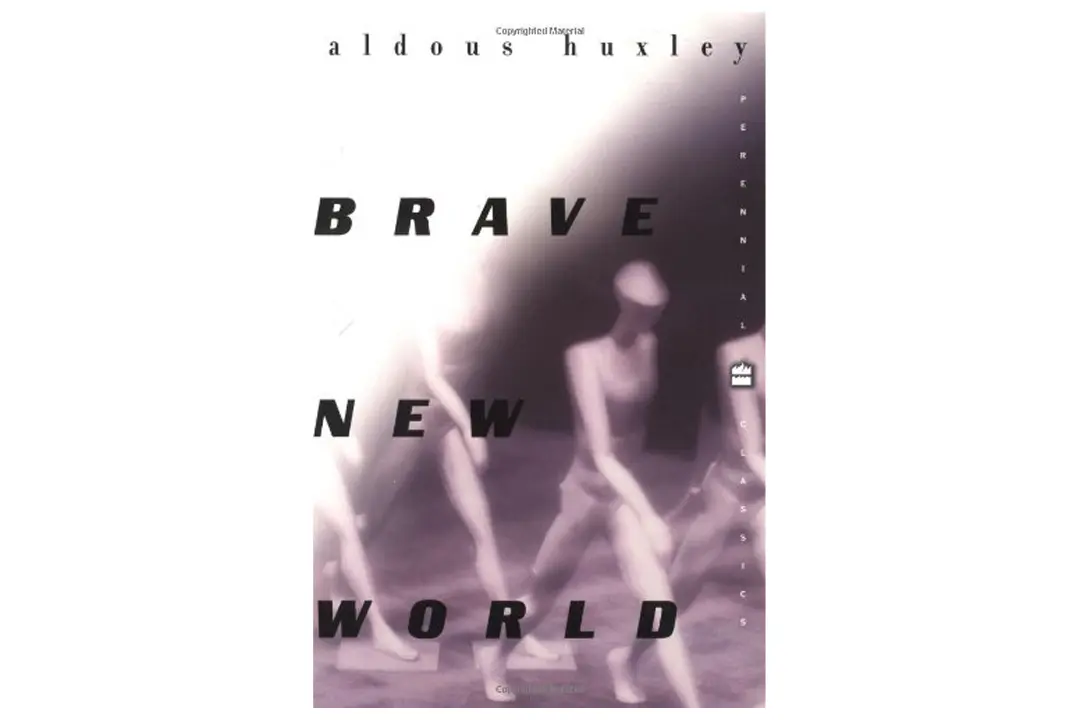
Brave New World by Aldous Huxley: Book Summary
Beverly Ashford • 19 Mar 2026 • 96 views • 3 min read.Let me tell you about the dystopia that will bother you more than 1984 — because the people in it are perfectly happy, and that is exactly the problem. Aldous Huxley published Brave New World in 1932. He was responding partly to the technological optimism of H.G. Wells and partly to his own observations of American consumer culture during the 1920s — the assembly lines, the advertising, the emerging entertainment industry, the sense that pleasure was becoming the primary organizing principle of modern life. He imagined those trends extended six hundred years forward and arrived at a world that has solved every problem humans have historically suffered from. No war. No poverty. No disease. No loneliness. No grief. No existential uncertainty. Also no Shakespeare, no God, no family, no love, and no possibility of being genuinely unhappy for more than a few minutes before the state provides a drug that fixes it. The question the novel asks — and refuses to answer cleanly — is whether this is utopia or the most sophisticated hell ever constructed.
Brave New World by Aldous Huxley: Book Summary
Quick Summary:
- A dystopian novel set six hundred years in the future where humanity has achieved perfect stability — by eliminating art, science, religion, family, and genuine human emotion
- Published in 1932, it remains the most unsettling dystopia ever written because its nightmare looks disturbingly like a good time
- Huxley's central argument: the greatest threat to human freedom is not a boot on your face but a drug in your hand and a screen in front of you
- A book that is more relevant in the age of social media, streaming, and pharmaceutical happiness than it was when written
The World State
The novel is set in 632 A.F. — After Ford, the year being calculated from the introduction of the Model T assembly line, which the World State treats as the founding event of civilization. Henry Ford is effectively worshipped as a deity. The sign of the cross has been replaced by the sign of the T.
Human beings are no longer born. They are manufactured on assembly lines — Bokanovsky's Process allows a single egg to be budded into up to ninety-six identical embryos, each one chemically and environmentally conditioned from conception for its predetermined social role. Alphas and Betas receive full development and complex cognitive capacity. Gammas, Deltas, and Epsilons are deliberately stunted — oxygen deprivation, chemical treatments, conditioning — to produce workers suited to simple, repetitive tasks who will be content with their lot because they were designed for it.
This is the World State's central achievement: the elimination of unhappiness through the elimination of the conditions that produce unhappiness. Desire is manufactured to match supply. Citizens are conditioned from infancy to love what they have and want nothing more. The drug soma — a government-issued happiness pill with no side effects and no hangover — is available on demand for any residual discomfort.
The conditioning is comprehensive. Children are sleep-taught slogans that they will repeat as adults without knowing their origin. Sexual promiscuity is mandated — exclusive attachment to one person is considered antisocial. Family is not merely gone; the words mother and father are obscene. History before Ford has been suppressed. Art that produces genuine emotional complexity has been replaced with entertainment that produces pleasant sensation without meaning.
The Characters
Bernard Marx is an Alpha who is slightly too small — a rumor suggests alcohol in his blood surrogate — and whose physical inadequacy has made him an outsider despite his caste. He is dissatisfied in ways he cannot fully articulate, attracted to the idea of freedom without fully understanding what it would require.
Lenina Crowne is everything Bernard is not — socially adapted, conventionally attractive, genuinely content with her conditioning, and unable to understand why Bernard finds contentment unsatisfying. She is not a villain. She is a person who works exactly as designed and finds Bernard's discontent baffling and slightly tedious.
Helmholtz Watson is an Alpha Plus, extremely competent at his work as an emotional engineer writing hypnopaedia slogans, who feels vaguely that his abilities should be used for something more than manufacturing pleasant feelings — but cannot articulate what that something would be.
John — called the Savage — is the novel's central figure. He is the son of two World State citizens who ended up on a Savage Reservation in New Mexico, where he was raised among people living outside the World State system. He grew up with Shakespeare — the only book available — and has constructed a framework of meaning, suffering, beauty, and transcendence from those plays. When Bernard brings him to London, John encounters the World State as a genuinely outside observer.
The Collision
The novel's argument arrives through John's revulsion and the Controller Mustapha Mond's defense.
John finds the World State unbearable. Not because it is cruel — it is not cruel. Because it has eliminated everything that makes suffering meaningful and therefore everything that makes joy meaningful. He quotes Othello. He quotes The Tempest. He demands the right to be unhappy, to experience danger, to be free to make mistakes, to know God, to write poetry, to suffer.
Mond, one of the ten World Controllers who know the suppressed history and chose stability over truth, explains with genuine intelligence why each of these things was sacrificed. He is not a monster. He is a man who made a calculation and has lived with it for decades. Art produces dangerous emotions. Science produces dangerous knowledge. God produces dangerous hope that competes with state loyalty. All were traded for happiness.
John's response — that he wants the right to all of it, including the suffering — is the novel's thesis. Huxley is not arguing that suffering is good. He is arguing that the capacity for suffering is inseparable from the capacity for genuine experience, genuine love, genuine meaning. A happiness that has been manufactured by eliminating the conditions for unhappiness is not happiness. It is anesthesia.
John's final choice — and it is a devastating one — is the novel's answer to the question it spent the book refusing to answer.
World State vs Savage Reservation Compared
| Dimension | World State | Savage Reservation |
|---|---|---|
| Reproduction | Factory manufacturing, Bokanovsky Process | Natural birth, family structures |
| Happiness | Chemically maintained, universally available | Authentic, earned, mixed with genuine suffering |
| Art and Literature | Replaced by sensation-entertainment | Shakespeare, ritual, genuine cultural expression |
| Religion | Ford worship, state conditioning | Traditional Native practices, genuine spirituality |
| Science | Suppressed beyond state-approved application | Absent but irrelevant |
| Freedom | Absent but unfelt — desires match supply | Present but constrained by poverty and tradition |
| Meaning | Unnecessary — designed out of experience | Central — the organizing principle of life |
| Suffering | Eliminated through soma and conditioning | Present, genuine, and inseparable from joy |
Frequently Asked Questions
How does this compare to 1984?
Huxley and Orwell were contemporaries and the comparison is inevitable. Orwell's dystopia operates through fear, surveillance, and violent coercion — the boot on the face. Huxley's operates through pleasure, distraction, and the elimination of the desire for freedom. Neil Postman argued in Amusing Ourselves to Death that Huxley's vision proved more accurate for Western democracies. The two books are complementary rather than competing — they describe different mechanisms of control that can operate simultaneously.
Is the novel pessimistic about technology?
More precisely, it is pessimistic about the use of technology to eliminate the conditions for genuine human experience in the pursuit of stability. Huxley is not anti-technology. He is against the sacrifice of depth for comfort, of meaning for happiness, of genuine emotion for pleasant sensation. The technology is the mechanism, not the target.
Why does John choose what he chooses at the end?
Without detailing the ending for those who have not read it — John's final act is a refusal. He cannot live within the World State and cannot return to the Reservation. He attempts to create a third option that the World State ultimately will not permit him. His choice reflects Huxley's argument that genuine humanity — with its suffering, its spiritual longing, its capacity for both beauty and violence — is incompatible with manufactured happiness.
Is Brave New World more relevant now than when published?
Most contemporary readers find it more disturbing than they expected precisely because the mechanisms are familiar. Soma looks like pharmaceutical happiness management. The entertainment industry that replaces art looks like streaming. The conditioning that manufactures desire looks like targeted advertising. Huxley's extrapolation was off in the specifics and accurate in the direction.
Is this appropriate for younger readers?
The novel contains sexual content — promiscuity is mandatory in the World State — that is relatively explicit for a canonical work. It is commonly taught in high school and the sexual content serves the thematic argument rather than being gratuitous. Appropriate for mature teenagers and adults.
What should I read next?
1984 by George Orwell is the essential companion — read both and decide which vision of control you find more plausible. Fahrenheit 451 by Ray Bradbury covers the destruction of literature and depth as a third perspective on similar concerns. Amusing Ourselves to Death by Neil Postman is the nonfiction argument that Huxley was right and Orwell was wrong about which dystopia we were building.
The Bottom Line
Here is what Aldous Huxley actually feared in 1932.
Not a tyrant with a whip. Not a surveillance state with cameras on every corner. Not even a government that lies to its citizens.
A system so perfectly calibrated to human desire that the citizens never want anything the system cannot provide — and therefore never want freedom, because freedom is the ability to want things that make you uncomfortable, to suffer for what matters, to choose difficulty over ease when the difficulty is meaningful.
The World State does not oppress its citizens. It loves them, in the way that a very comfortable cage loves a bird. It gives them everything they want because it designed their wants in advance.
John the Savage reads Shakespeare and weeps and rages and desires and suffers and is alive in a way that no one in London is alive.
He also ends up alone, because the World State cannot permit his kind of aliveness to spread.
Huxley's question — whether the trade is worth it — lands differently in an era of algorithmic content, pharmaceutical mood management, and entertainment designed to maximize engagement rather than meaning.
You already live closer to the World State than John does.
The novel is asking whether you have noticed.