
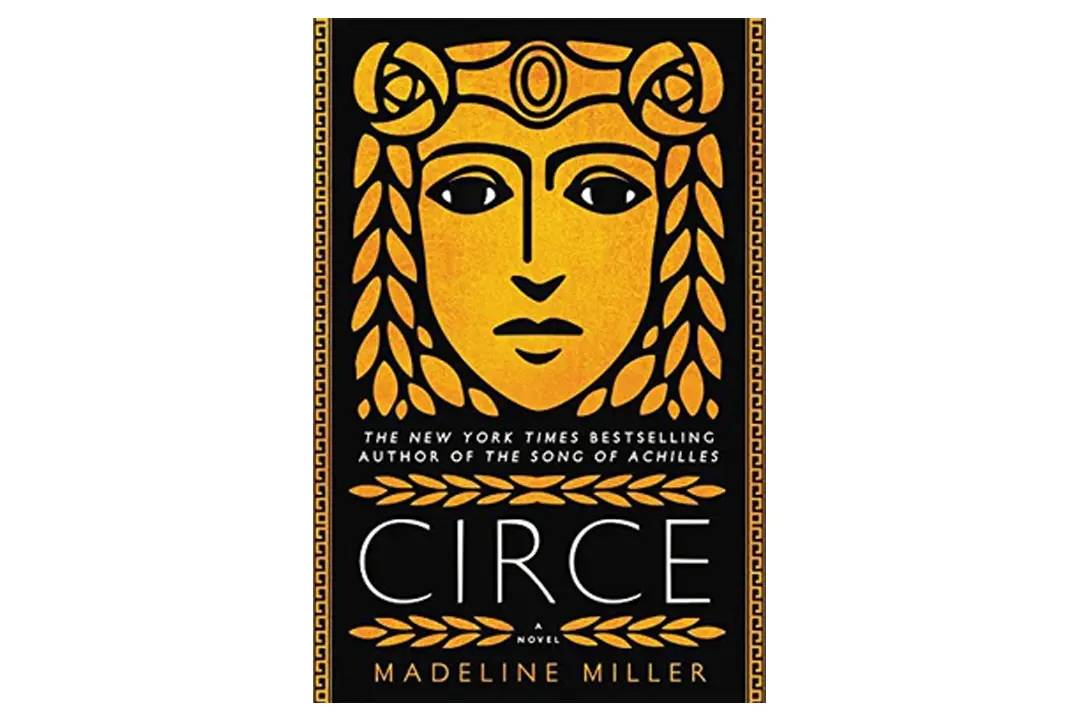
Circe – Madeline Miller: Book Summary
Beverly Ashford • 11 Mar 2026 • 63 views • 3 min read.Let me tell you about the villain who became a hero. In Homer's Odyssey, Circe appears for one episode. She turns Odysseus's men into pigs, becomes his lover, then sends him on his way. She's a minor witch, a cautionary figure, a detour. Madeline Miller gave her three thousand years and a voice. Circe reimagines the witch as a complex woman navigating a world that despises her—first for her weakness, then for her power. It's a story about finding yourself when everyone around you is a god or a hero, and you're neither. It's also, somehow, a book about loneliness, motherhood, and what it means to be mortal in a world that treats mortality as a curse.
Circe – Madeline Miller: Book Summary
Quick Summary:
- The witch from the Odyssey tells her own story across millennia
- Born immortal but powerless, she discovers magic and faces exile
- She encounters gods, monsters, and mortals—and chooses her own fate
- Published in 2018, it became a feminist reimagining of Greek mythology
Daughter of the Sun
Circe is born to Helios, the sun god, and Perse, a minor sea nymph. In the halls of the gods, she's nobody—her voice is strange, her appearance plain, her divine powers nonexistent.
The gods are petty, vain, and cruel. They celebrate power and beauty. Circe has neither. Her siblings mock her. Her mother dismisses her. Her father barely notices her existence.
She finds kinship only with mortals—specifically with Glaucos, a fisherman she falls in love with. He's kind. He sees her. He's the first person who ever has.
When Glaucos is injured, Circe saves him using herbs she's discovered have strange properties. She transforms him—accidentally, unknowingly—into a sea god.
And he forgets her immediately.
Newly divine, Glaucos desires Scylla, a beautiful nymph who scorns him. Circe, jealous and heartbroken, uses her herbs again. She transforms Scylla into a monster—the six-headed creature who will later kill sailors by the dozens.
The gods notice now. Circe has discovered pharmakeia—witchcraft. It frightens them. They exile her to the island of Aiaia, alone, forever.
The Island
The bulk of the novel takes place on Aiaia, where Circe spends centuries alone.
She learns her craft. Plants, herbs, spells—she becomes genuinely powerful through practice, not divine inheritance. She builds a life. She tends pigs and gardens. She weaves.
But visitors come.
Hermes arrives periodically, bringing gossip from the divine world and occasionally sharing her bed. He's entertaining but unreliable—a god being exactly what gods are.
Daedalus comes with his son Icarus, seeking refuge. He builds her loom. Their friendship is genuine, and watching him leave—watching mortal bonds inevitably break—teaches her the cost of caring about creatures who die.
Sailors arrive increasingly, drawn by rumors of the witch's island. At first, Circe is hospitable. Then sailors assault her. She turns them into pigs—not as random cruelty, but as protection. The reputation grows. Men learn to fear her.
She becomes what they expect: the witch who transforms men into beasts.
The Famous Encounters
Medea arrives—Circe's niece, sorceress, murderer. Circe helps her despite misgivings. Medea's cold calculation terrifies her, showing what power without conscience becomes.
Odysseus finally comes, after years of war and wandering. He's clever, charming, brutal. They become lovers for a year. He tells her stories of Troy—of heroes and horrors. She sees in him the mortality she's always envied and the capacity for violence she's always feared.
When he leaves, she's pregnant.
Telegonus, her son, becomes the center of her world. Motherhood transforms her more than witchcraft ever did. But raising a demigod on an isolated island proves impossible. He's restless, curious, drawn to the mortal world she's been exiled from.
Key Characters
| Character | Role | Represents |
|---|---|---|
| Circe | Protagonist, witch | The outsider who builds herself |
| Helios | Her father, sun god | Godly indifference, power without love |
| Scylla | Monster Circe created | The consequences of jealousy |
| Odysseus | Hero, lover | Mortal charisma and cruelty |
| Telegonus | Circe's son | The vulnerability of motherhood |
| Penelope | Odysseus's wife | Female solidarity, survival |
| Athena | Goddess of wisdom | Divine malice toward mortals |
The Final Act
The novel's conclusion weaves together threads spanning millennia.
Telegonus grows up. He goes to Ithaca seeking his father—and accidentally kills Odysseus with a poisoned spear. The prophecy that haunted Odysseus is fulfilled by the son he never knew.
Telegonus returns to Aiaia with Penelope (Odysseus's widow) and Telemachus (Odysseus's legitimate son). The strange household—two of Odysseus's lovers, two of his sons—becomes something new.
Circe and Telemachus fall in love. He's mortal, gentle, exhausted by heroism. She's immortal, weary of eternity.
The ending poses a choice: Circe can remain immortal, alone with her power, watching everyone she loves die. Or she can use her greatest magic to transform herself—becoming mortal, becoming finite, becoming free.
She chooses mortality. She chooses to end.
What the Book Is Really About
Power and isolation. Circe gains power but spends millennia alone. The gods have power and are monstrous. Power without connection is hollow; power used for protection is necessary.
Female agency in a man's world. Circe lives in a universe where gods rape nymphs casually and heroes define themselves through violence. Her witchcraft is dangerous because it gives her control. Her transformation of men into pigs isn't random cruelty—it's defense against assault.
Mortality as gift. The immortal gods are bored, cruel, petty. Mortals have urgency, growth, meaning. Circe's choice to become mortal isn't resignation—it's liberation.
Making yourself. Circe isn't born powerful. She builds her craft through centuries of work. She isn't born wise. She learns through catastrophic mistakes. Her identity isn't given—it's constructed.
Mothers and monsters. The book is obsessed with what we create—children, monsters, ourselves. Circe creates Scylla and spends thousands of years living with that guilt. She creates Telegonus and spends years protecting him. Creation carries responsibility.
Miller's Style
The prose is deliberately formal—a high register that evokes ancient storytelling without becoming archaic. It's beautiful and occasionally distancing. Miller trusts readers to follow classical references without excessive explanation.
The pacing is slow. Centuries pass in chapters. If you want action, you'll be frustrated. If you want interiority and transformation, you'll be satisfied.
The mythology is altered thoughtfully. Miller changes details from ancient sources but maintains emotional logic. Scholars might quibble; most readers won't care.
Frequently Asked Questions
Do I need to know Greek mythology?
Basic familiarity helps (knowing who Odysseus is, for instance), but Miller provides enough context. The book makes myths accessible without condescending.
How does this compare to Miller's Song of Achilles?
Song of Achilles is shorter, more focused, and tells a love story between two men. Circe is longer, more sprawling, and follows one woman across millennia. Both are excellent; they're doing different things.
Is this a feminist retelling?
Yes, explicitly. Miller centers female experience, examines how mythology sidelines women, and gives voice to a character defined by male writers as minor. If this bothers you, this isn't your book.
Is it historically accurate?
It's mythologically accurate to sources while reimagining psychology. Ancient Greeks didn't write Circe as a traumatized survivor of assault—Miller does. The bones are old; the flesh is new.
Should I read Homer first?
Not necessary, though reading the Odyssey enriches the experience. Miller assumes you either know the stories or will accept not knowing everything.
Is there a movie or show coming?
As of 2026, a TV adaptation has been announced but not yet released. The slow, internal nature of the book will be challenging to adapt.
Here's what Madeline Miller achieved.
She took a minor figure from ancient myth and gave her interiority that feels modern without being anachronistic. She wrote about power, loneliness, and motherhood across three thousand years. She made immortality a curse and mortality a gift.
Circe isn't a hero in the Greek sense—she doesn't slay monsters or win wars. She survives. She learns. She chooses.
In a world of gods and heroes who value glory above all, she values something different: connection, creation, the acceptance of endings.
That's its own kind of heroism.