
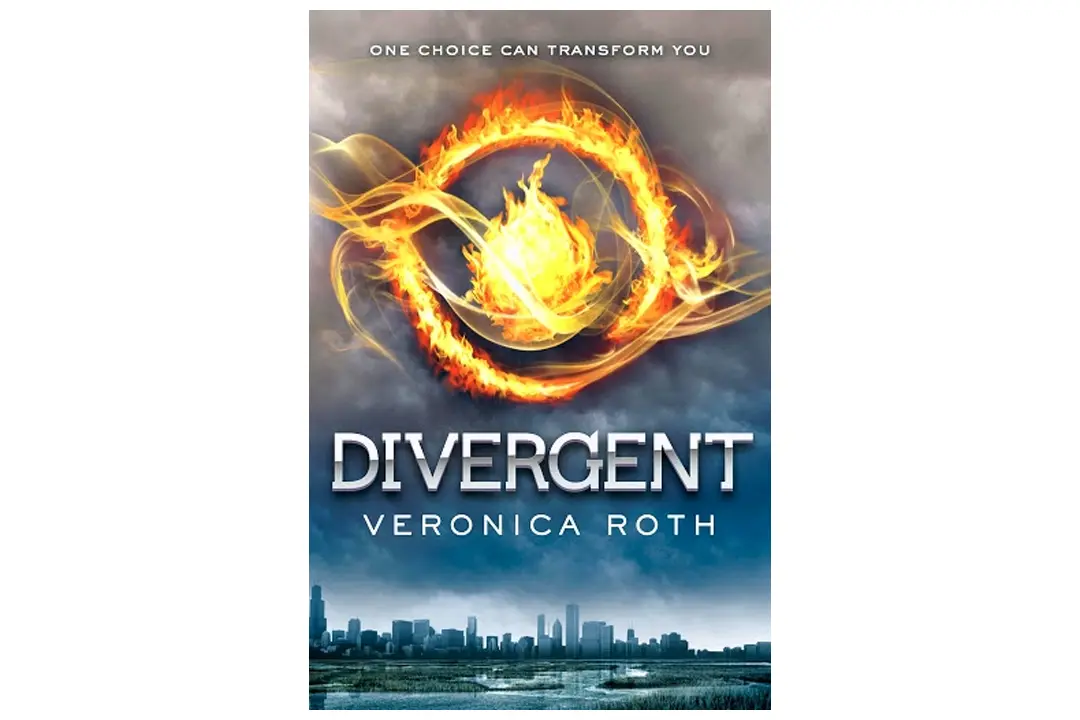
Divergent by Veronica Roth: Book Summary
Beverly Ashford • 25 Feb 2026 • 102 views • 3 min read.Let me tell you about the YA novel that Veronica Roth wrote during her senior year of college, sold before she graduated, and watched become a global franchise — and why, underneath the action sequences and the romance, it is asking a genuinely interesting question about whether any system that reduces people to a single virtue can survive contact with actual human beings. Veronica Roth published Divergent in 2011. She was twenty-two. She had written it during a winter break from Northwestern University, drawing on her psychology coursework and her own experience with anxiety and the pressure to perform a consistent identity. It sold to HarperCollins while she was still a student. The film rights sold before publication. The first film arrived in 2014 with Shailene Woodley as Beatrice Prior. The novel is fast. Roth does not linger. Chapters end on propulsive beats, the training sequences have genuine tension, and the romance builds without overwhelming the plot. It is engineered for readability in ways that reward the engineering — this is not a criticism. Knowing what you are making and making it well are skills, and Roth demonstrates both.
Divergent by Veronica Roth: Book Summary
Quick Summary:
- In a future Chicago divided into five factions based on personality virtues, a sixteen-year-old girl chooses to leave her family's faction — and discovers she does not fit neatly into any of them
- Published in 2011 when Roth was twenty-two years old, it became one of the defining YA dystopian novels of its generation
- Roth's central question: is identity fixed by nature, chosen by will, or something more complicated than either faction system allows?
- A fast-paced thriller that works as pure entertainment and rewards thinking about what it actually says about conformity, courage, and selfhood
The World
Chicago after some unspecified catastrophe. Human society has reorganized itself around the belief that conflict is caused by character flaws — and that the solution is to sort people by virtue and have them live separately, so each faction's single-minded commitment to their value cannot be contaminated by other values competing with it.
Abnegation values selflessness. They run the government because people devoted to selflessness cannot be corrupted by power. They wear grey, eat plain food, and are not supposed to look in mirrors. Beatrice Prior was born here.
Dauntless values courage. They are the military and police force, known for running everywhere, jumping onto moving trains, and a general attitude toward danger that suggests a high tolerance for concussion. They wear black.
Erudite values intelligence. They are the scientists and academics, researchers and teachers, wearing blue and generating the knowledge base the society depends on. They are also ambitious and increasingly resentful of Abnegation's political control.
Amity values kindness and peace. They farm, they sing, they wear red and yellow, and they avoid conflict with the dedication of people who have made it a virtue rather than a choice.
Candor values honesty. They are the lawyers and judges, incapable of tact and proud of it, wearing black and white.
At sixteen, every faction member takes an aptitude test that identifies which faction they are suited for, then makes their final choice at the Choosing Ceremony. They can choose to stay with their family's faction or transfer to a new one. Transfer is permanent — faction before blood is the motto. Those who fail their new faction's initiation become the Factionless — homeless, marginalized, the society's permanent underclass.
Beatrice and the Test
Beatrice Prior has grown up Abnegation and has never felt like she belongs there. She admires the selflessness genuinely but cannot sustain it — she notices mirrors, she wants things for herself, she does not feel naturally other-focused in the way the faction requires.
Her aptitude test should tell her which faction fits. Instead, the administrator who runs it — a woman named Tori — gives her an unusual result and urgent instructions to tell no one. Beatrice's results are inconclusive. She showed aptitude for three factions: Abnegation, Erudite, and Dauntless. This is called Divergent. Tori tells her it is dangerous. She does not explain why.
At the Choosing Ceremony, Beatrice chooses Dauntless. She cuts her hand, lets her blood fall on the burning coals, and leaves her family behind — including her brother Caleb, who simultaneously chooses Erudite. Both Prior children leave Abnegation on the same day. The weight of that parallel choice runs quietly through the novel.
Dauntless Initiation
The novel's longest and most kinetic section covers Beatrice — now going by Tris — through Dauntless initiation. The faction accepts only a fixed number of transfers. Those who rank at the bottom are cut and become Factionless. The competition is real and the stakes are permanent.
The initiation stages move from physical combat training to simulations — fear landscapes, artificial environments designed to identify and force you to confront your deepest fears. The physical training sections are brutal and Roth does not romanticize the violence. Tris is small and unprepared and gets hurt. She also improves, develops strategy, and earns respect that is not simply awarded.
Four — real name Tobias Eaton — is her instructor. He is intimidating, exacting, and slowly revealed to be something more complicated than his role suggests. The romance develops with restraint: Roth allows it to build through repeated meaningful interaction rather than instant attraction, which gives it more weight than the compressed timeline technically supports.
The fear simulation sequences are where Roth's psychology background appears most directly. Each initiate's fears are personal and specific. Tris's fears reveal things about her character that the faction system is not equipped to process — because the system requires people whose fears cluster neatly around a single virtue's opposite, and Tris's do not.
The Political Threat
Underneath the initiation plot, something is moving. Erudite has been publishing increasingly aggressive reports attacking Abnegation's leadership. The faction's ambitions are clear to anyone paying attention. What is less clear is how Erudite plans to displace Abnegation from government — until the novel's final act, when the plan emerges and the story moves from initiation thriller to something with considerably higher stakes.
The divergent quality that made Tris's test result dangerous is the key. The simulation technology that Dauntless uses for training can be adapted. People who think within a single faction's framework are vulnerable to manipulation through that framework in ways that divergent thinkers — people whose minds resist single-track conditioning — are not. This is why the system fears them. A society built on sorting people into singular identities cannot accommodate people who contain multitudes.
The Five Factions Compared
| Faction | Core Virtue | Role in Society | Fatal Flaw | Color |
|---|---|---|---|---|
| Abnegation | Selflessness | Government and social services | Self-erasure becomes its own kind of identity | Grey |
| Dauntless | Courage | Military and police | Confuses recklessness with bravery | Black |
| Erudite | Intelligence | Research and education | Believes knowledge justifies everything | Blue |
| Amity | Kindness | Farming and conflict resolution | Avoidance of necessary conflict | Red and yellow |
| Candor | Honesty | Law and justice | Mistakes bluntness for virtue | Black and white |
| Factionless | None | Marginalized labor | The system's discarded people | None |
Frequently Asked Questions
Is this appropriate for younger readers?
The novel is classified as young adult and is appropriate for readers twelve and up. The violence is present and not sanitized — initiation combat is genuinely brutal — but it is not gratuitous. The romance is restrained. The themes around identity, belonging, and the pressure to conform are particularly resonant for adolescent readers navigating similar pressures.
How does it compare to The Hunger Games?
Both are YA dystopian novels with teenage female protagonists in systems designed to control populations through institutionalized competition. The Hunger Games is more politically sophisticated and darker in tone. Divergent is more focused on identity and belonging and somewhat faster paced. They occupy the same genre space and appeal to overlapping audiences, but they are doing different things thematically. Reading both in sequence reveals how differently two writers can work the same conventions.
Does the trilogy hold together?
Divergent is the strongest of the three. Insurgent continues competently. Allegiant — the third novel — takes a significant structural risk with its ending that divided readers sharply and permanently. Many readers consider the ending brave and thematically consistent. Others found it a betrayal of the series' emotional contract. The debate is genuine and both positions are defensible.
Is the faction system meant to be taken literally as social philosophy?
Roth is clear in interviews that the faction system is not a proposal. It is a thought experiment about what happens when societies try to solve the problem of human complexity by enforcing simplicity. The system's fundamental flaw — that it cannot accommodate people who contain more than one virtue — is the novel's argument, not its premise. Beatrice is the proof that the system produces exactly the problem it was designed to eliminate.
How does the film compare?
The 2014 film with Shailene Woodley is a competent adaptation that captures the visual world of Chicago and the initiation sequences effectively. Woodley's performance is strong. The film necessarily compresses the internal psychological material that gives the novel its depth. Read the novel first — the film works better as a companion than as an introduction.
What should I read next?
Insurgent and Allegiant complete the trilogy. The Hunger Games by Suzanne Collins is the essential genre companion. Legend by Marie Lu offers a similar fast-paced YA dystopian structure with a dual-narrator approach. An Ember in the Ashes by Sabaa Tahir is a natural next step for readers who want more YA with genuine darkness and political complexity.
The Bottom Line
Here is what Veronica Roth actually wrote in a college dorm during winter break.
Not a simple adventure story, though it is also that. A novel about the specific anxiety of being sixteen and not knowing who you are — and the way that systems, institutions, and peer groups demand that you perform a coherent identity before you have had enough time to find one honestly.
The faction system is a thought experiment about every institution that tells people they need to choose — choose a major, choose a tribe, choose an identity and commit to it completely because ambivalence is weakness and complexity is a problem.
Tris does not fit. The test said so. The system calls this dangerous. The novel calls it human.
The faction system cannot accommodate a person who is brave and selfless and curious and kind in different proportions on different days — because that is what actual people are, and actual people are the one thing a system built on sorted virtues cannot process.
Divergent is the best version of itself — a fast, kinetic, emotionally honest story about a girl who discovers that not fitting is not the problem she was told it was.
It might be the beginning of a solution.