
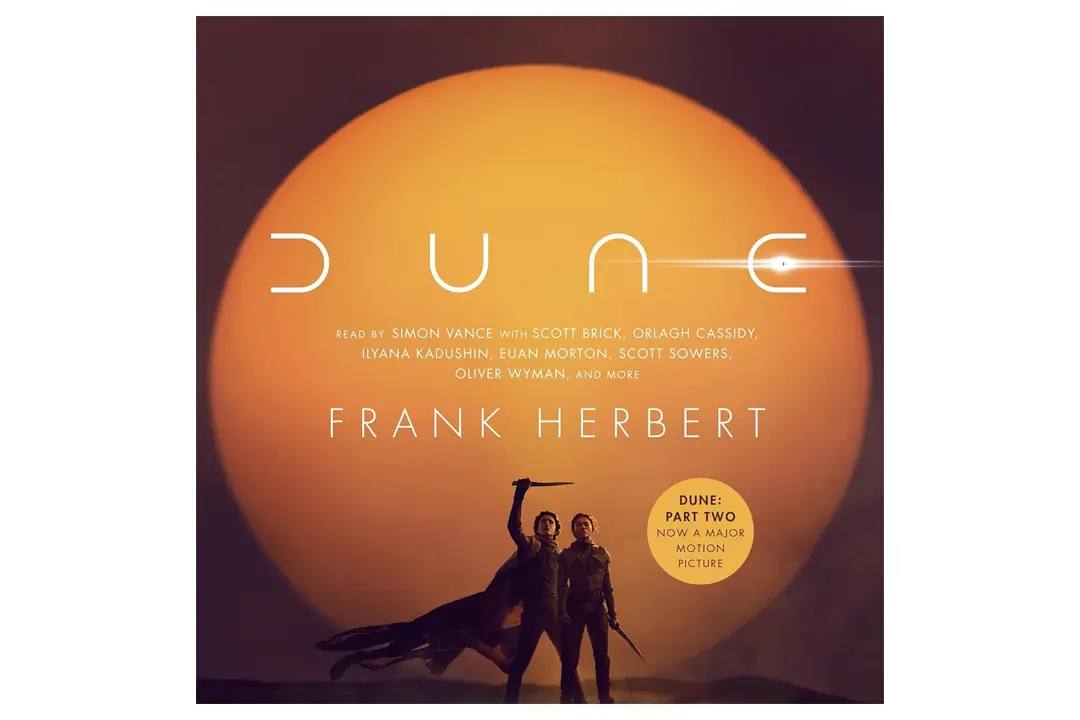
Dune – Frank Herbert: Book Summary
Beverly Ashford • 11 Mar 2026 • 80 views • 3 min read.Let me tell you about the book that changed science fiction forever. Frank Herbert wrote Dune after studying ecology, religion, and the dynamics of desert ecosystems. He created a world—Arrakis—that felt completely real. Not just the sand and the giant worms, but the politics, the religion, the economics, the complex web of power that makes civilizations function. Before Dune, science fiction was often about rockets and robots. After Dune, it could be about everything—belief systems, resource wars, the corruption of prophecy, the ecology of entire planets. The book is dense, challenging, and rewarding. Here's what you need to know.
Dune – Frank Herbert: Book Summary
Quick Summary:
- A young duke's son becomes a messianic leader on a desert planet
- The novel examines religion, ecology, politics, and power
- Spice is the universe's most valuable substance—and it only exists on one planet
- Published in 1965, it became the best-selling science fiction novel ever written
The Universe
Far in the future, humanity has spread across the galaxy. There are no computers—a religious crusade called the Butlerian Jihad banned thinking machines. Instead, humans have evolved special capabilities: Mentats calculate like computers; Bene Gesserit sisters develop near-supernatural physical and mental abilities; Guild Navigators fold space for interstellar travel.
The Spice Melange is the most valuable substance in existence. It extends life, expands consciousness, and enables the Guild Navigators to see paths through space. Without spice, galactic civilization collapses.
Spice only exists on one planet: Arrakis. Also called Dune.
Whoever controls Arrakis controls the universe. This is why House Atreides is being sent there—and why it's a trap.
The Atreides
Duke Leto Atreides is a good man in a bad system. He rules Caladan, a water-rich planet, and he's beloved by his people. He has two people closest to him: his concubine Lady Jessica and their son Paul.
The Emperor orders House Atreides to take control of Arrakis from their enemies, House Harkonnen. This seems like an honor. It's actually a death sentence.
Leto knows it's a trap. The Harkonnens have run Arrakis for 80 years and won't surrender it willingly. The Emperor fears Leto's popularity and wants him destroyed. But refusing isn't an option—the forms must be observed.
The family moves to Arrakis. They try to build alliances with the Fremen, the desert people who have lived on Arrakis for generations, adapting to its brutal conditions, dreaming of terraforming it into a paradise.
Then the trap springs.
The Fall
The Harkonnens attack with the Emperor's secret support. Sardaukar—the Emperor's elite troops—disguise themselves as Harkonnen soldiers.
Duke Leto is killed. Betrayed by his own doctor (whose wife was held hostage), Leto dies attempting to assassinate Baron Harkonnen with a poison gas hidden in a tooth.
Jessica and Paul escape into the desert. They should die—no one survives the deep desert. But Jessica is Bene Gesserit, trained in survival and mental discipline. Paul is something more.
Paul is the product of Bene Gesserit breeding. For generations, the Sisterhood has been selectively breeding bloodlines to produce the Kwisatz Haderach—a male Bene Gesserit who can access genetic memories and see possible futures. Jessica was supposed to produce a daughter. She had a son instead, for love of Leto.
Paul may be the Kwisatz Haderach—a generation early, uncontrolled, and outside Bene Gesserit plans.
Key Characters
| Character | Role | Significance |
|---|---|---|
| Paul Atreides | Protagonist, heir | Becomes Muad'Dib, the messianic leader |
| Duke Leto | Paul's father | Good ruler destroyed by political forces |
| Lady Jessica | Paul's mother, Bene Gesserit | Her choices alter everything |
| Baron Harkonnen | Villain, Atreides enemy | Cruelty, decadence, political cunning |
| Stilgar | Fremen leader | Guide to desert ways |
| Chani | Fremen woman | Paul's love, mother of his children |
| Feyd-Rautha | Baron's nephew | Paul's mirror, Harkonnen heir |
| Emperor Shaddam IV | Galactic ruler | The hidden hand behind the trap |
Among the Fremen
Paul and Jessica find the Fremen and earn their place among them.
Paul becomes Usul—his private name—and Muad'Dib—his public name. Muad'Dib means "desert mouse," a creature that survives against impossible odds. It becomes synonymous with revolution.
The Fremen have been waiting for a messiah. The Bene Gesserit planted prophecies among them generations ago, insurance in case a Sister ever needed refuge. Now those planted myths attach to Paul, whether he wants them or not.
Paul's abilities awaken. Spice exposure unlocks his powers. He begins seeing possible futures—not one path, but millions. He sees a terrible purpose: a jihad in his name that will sweep across the universe, killing billions.
He tries to find a path that avoids the jihad. He can't. The forces he's riding are too powerful. The myth he's becoming has its own momentum.
Paul becomes a warrior. He rides sandworms. He leads raids. He takes Chani as his woman. He becomes what the Fremen need him to be.
Two years pass.
The Climax
Paul launches his revolution.
He exploits a secret: The Fremen have been stockpiling water for generations. They have atomics. They have the fanaticism of true believers. And they have Paul.
He threatens the spice itself. With the Water of Life (a poison he transforms by drinking it), Paul achieves full prescient awareness. He can destroy the spice cycle forever, crashing galactic civilization. This gives him leverage no one can ignore.
The Emperor comes to Arrakis to deal with the Fremen problem. Paul defeats him.
The Baron dies. Killed by Alia, Paul's younger sister—born with full ancestral memory because Jessica drank the Water of Life while pregnant. Alia is two years old and terrifying.
Paul kills Feyd-Rautha in single combat. He takes the Emperor's daughter as wife (for political alliance) while keeping Chani as his concubine (for love).
Paul becomes Emperor. The jihad he foresaw will happen anyway. He's ridden the wave; he hasn't controlled it.
What Dune Is Really About
The danger of messiahs. Paul is the hero. Paul is also the problem. His superhuman abilities don't save humanity—they enable destruction. Herbert deliberately undermines the charismatic leader archetype.
Ecology as destiny. Arrakis shapes everything—politics, religion, culture. The Fremen's dream of terraforming is beautiful but will destroy the sandworms and thus the spice. Every action has consequences.
Religion as control. The Bene Gesserit use planted prophecies to manipulate. The Fremen believe because they need to. Even Paul, who knows the prophecies are manufactured, cannot escape becoming what they describe.
Power corrupts purpose. Paul wants revenge and justice. He gets a holy war that will kill billions. Good intentions don't prevent terrible outcomes.
Colonialism and resource extraction. Arrakis parallels oil-rich Middle Eastern nations—exploited for a vital resource, its native people dismissed or romanticized. Herbert was deliberate about this.
Frequently Asked Questions
Is Dune hard to read?
It's challenging. The book throws you into the deep end with invented terminology and complex politics. A glossary exists. The reward justifies the effort.
Should I watch the movies first?
The recent Denis Villeneuve films are excellent adaptations. They capture atmosphere beautifully but necessarily simplify. Reading first gives you the full experience; watching first makes reading easier.
Are the sequels worth reading?
Opinions vary. Dune Messiah and Children of Dune complete the original arc. God Emperor of Dune is strange and philosophical. The final two (Heretics, Chapterhouse) are different again. Stop whenever you're satisfied.
What about the Brian Herbert books?
Written by Frank Herbert's son and Kevin J. Anderson, they're controversial among fans. They fill in backstory but lack the original's depth. Optional.
Is Paul a hero or villain?
Both, deliberately. He's sympathetic but also a warning about charismatic leadership and the dangers of prophecy fulfilled.
The Bottom Line
Here's what Frank Herbert achieved.
He wrote a science fiction novel that's also political philosophy, ecological treatise, and religious critique. He created a hero who wins and loses simultaneously—gains power and loses his soul.
Dune argues that power is dangerous, leaders are dangerous, and human beings will worship anything that promises meaning. It's not hopeful.
It is magnificent.