
Foundation – Isaac Asimov: Book Summary
Beverly Ashford • 11 Mar 2026 • 76 views • 3 min read.Let me tell you about the book that inspired Elon Musk, Paul Krugman, and generations of scientists and dreamers. Isaac Asimov started writing Foundation as short stories in 1942. He was 21 years old. He'd been inspired by Gibbon's The History of the Decline and Fall of the Roman Empire and wondered: What if someone could predict such a fall mathematically? What if someone could shorten the dark age that followed? The result was a series that won the Hugo Award for "Best All-Time Series" and influenced everything from Star Wars to the modern tech industry's obsession with long-term thinking. It's not a typical novel. It's more like historical snapshots across centuries, showing how one man's plan unfolds across generations.
Foundation – Isaac Asimov: Book Summary
Quick Summary:
- A mathematician predicts the fall of a galactic empire and plans for recovery
- The Foundation survives through science, trade, and political cunning
- History follows patterns that can be mathematically predicted
- Published in 1951, it became one of the most influential science fiction series ever
The Premise
The Galactic Empire has ruled for 12,000 years. Twenty-five million planets. Quadrillions of humans. The greatest civilization in history.
It's dying.
Hari Seldon is a mathematician who has developed psychohistory—a science that combines history, sociology, and statistics to predict the future. Not individual futures, but mass behavior over time. Large populations behave predictably, like gas molecules in physics.
Seldon has run the numbers. The Empire will fall within 300 years. What follows will be 30,000 years of barbarism before a new empire rises.
He has a plan. He can't prevent the fall—the forces are too vast. But he can reduce the interregnum from 30,000 years to just 1,000. He establishes two Foundations at opposite ends of the galaxy, ostensibly to create an Encyclopedia Galactica preserving human knowledge.
The real purpose is more complex. The Foundation will become the nucleus of the second empire. Its growth is mathematically predicted. At key moments—"Seldon Crises"—the Foundation will face existential threats. If it follows the path Seldon calculated, it will survive and expand.
Seldon appears as a holographic recording at each crisis, having predicted not only the problem but the solution.
The Structure
The book is five connected novellas, each set decades apart:
"The Psychohistorians" — Seldon is tried for treason on Trantor, the Imperial capital. He uses the trial to arrange his exile to Terminus, a resource-poor planet at the galaxy's edge, where the Foundation will begin.
"The Encyclopedists" — Fifty years later. The Foundation faces its first crisis. Neighboring kingdoms have seized former Imperial territories and threaten Terminus. The solution isn't military—it's political. The Foundation plays enemies against each other.
"The Mayors" — The Foundation has established a religion around its technology—atomic power seems miraculous to barbarized planets. When a ambitious trader threatens this arrangement, the Mayor must find a new path.
"The Traders" — Expansion continues through commerce. A trader facing execution on a hostile planet must use wits and economics rather than force to survive.
"The Merchant Princes" — The Foundation's trading empire now faces internal conflict. The old religious approach is failing. A new model—pure economic power—must emerge.
Key Concepts
| Concept | What It Means | Significance |
|---|---|---|
| Psychohistory | Mathematical prediction of mass behavior | Knowledge as power, determinism |
| Seldon Crises | Predicted moments of existential threat | Each forces evolution |
| The Plan | Seldon's calculated path to new empire | Can humanity be engineered? |
| Religion of Science | Technology presented as miraculous | Control through perceived power |
| Trade as conquest | Economic dependence replacing military force | Soft power over hard power |
| The Second Foundation | The mysterious other Foundation | Hidden insurance policy |
The Crises
Each Seldon Crisis follows a pattern:
The problem seems impossible. Military threats, internal conflict, economic collapse—each crisis appears to doom the Foundation.
Violence isn't the answer. Asimov deliberately made the Foundation weak militarily. They can't fight their way out. They must think their way out.
Seldon appears. His holographic message confirms the crisis and hints at the solution, though he doesn't give explicit instructions.
The solution changes the Foundation. Each crisis transforms the Foundation's structure—from encyclopedia project to theocratic power to trading federation. Evolution is built into the plan.
The First Crisis: The Foundation is threatened by four neighboring kingdoms. The mayor, Salvor Hardin, realizes that the real threat is the Foundation's own leadership, who still think they're just making an encyclopedia. He seizes power and plays the kingdoms against each other using atomic technology as leverage.
The Second Crisis: The foundation has spread its technology as religion—priests trained on Terminus maintain atomic power plants throughout the region. When a powerful enemy threatens, the Foundation relies on the religious infrastructure to trigger rebellion.
The Third Crisis: A trader discovers that religious conversion no longer works on more sophisticated planets. The new model is pure commerce—make planets economically dependent on Foundation technology.
The Philosophy
Asimov was exploring big ideas through adventure stories:
Can history be predicted? Psychohistory assumes that large populations behave like physical systems—chaotic individually, predictable in aggregate. This influenced real fields like cliodynamics (mathematical history) and big history.
Determinism versus free will. If Seldon predicted everything, do the Foundation's leaders have real choices? Asimov threads this needle carefully—the Plan predicts outcomes, not specific individuals. Heroes still matter, but within constraints.
The end of empire. The book is deeply influenced by Rome's fall. The parallels are explicit: centralization failing, periphery fragmenting, knowledge being lost, religion filling power vacuums.
Progress through crisis. The Foundation grows stronger through near-death experiences. Seldon designed it this way—each crisis forces adaptation that enables the next expansion.
Trade over conquest. Asimov, writing in the 1940s, imagined empire through economic interdependence rather than military occupation. This was prescient about post-WWII American hegemony.
Key Characters
| Character | Role | Era |
|---|---|---|
| Hari Seldon | Creator of psychohistory, planner | Beginning (appears in recordings throughout) |
| Salvor Hardin | First Mayor of Terminus | First two crises |
| Hober Mallow | Master Trader | Third crisis |
| The Emperors | Declining rulers | Background throughout |
| Anacreon | Threatening kingdom | First crisis |
Characters matter less than in most fiction. Asimov was interested in forces, institutions, and ideas. Individual psychology takes a back seat to historical sweep.
The Sequels and Prequels
Foundation is the first of seven novels:
Original Trilogy:
- Foundation (1951)
- Foundation and Empire (1952)
- Second Foundation (1953)
Later Sequels:
- Foundation's Edge (1982)
- Foundation and Earth (1986)
Prequels:
- Prelude to Foundation (1988)
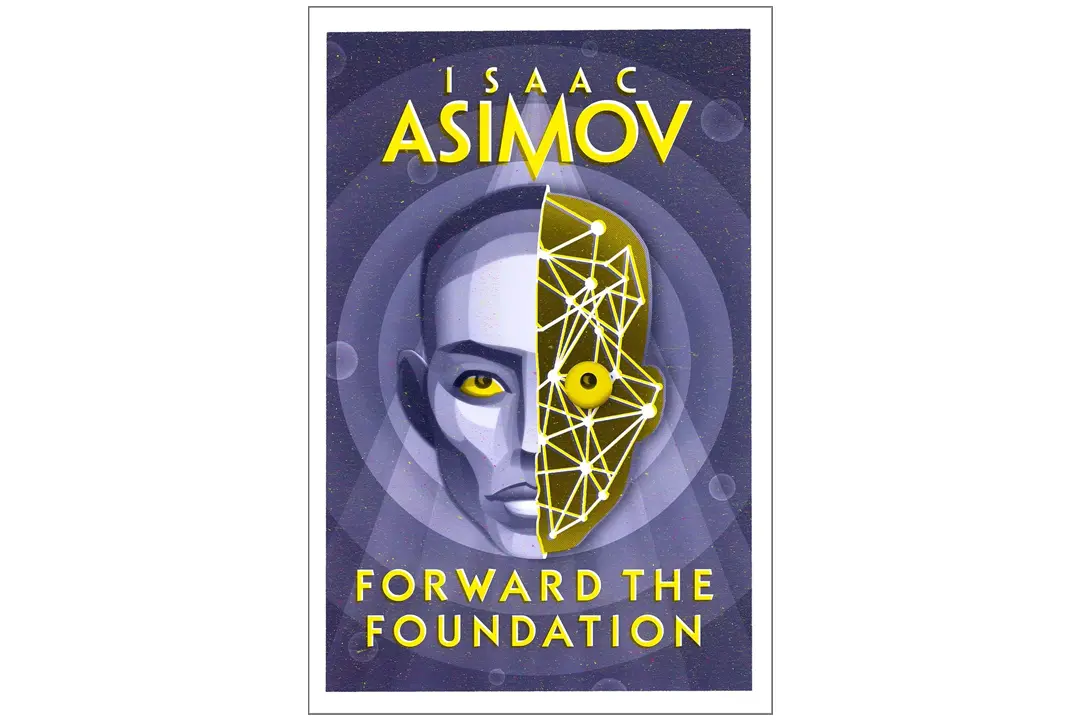
- Forward the Foundation (1993)
The later books connect Foundation to Asimov's Robot novels, creating a unified future history spanning 20,000 years.
Frequently Asked Questions
Is this hard to read?
The prose is functional rather than beautiful. Asimov prioritized ideas over style. The episodic structure and time jumps can be disorienting. But the concepts are compelling.
Should I read the whole series?
The original trilogy tells a complete story. The 1980s sequels are divisive—Asimov's style changed, and he added complications some fans dislike. Try the first three and decide.
How does the Apple TV+ show compare?
The show is a loose adaptation—it adds characters, changes the timeline, and emphasizes visuals over ideas. It's beautiful but different. The book is headier; the show is more emotional.
Did psychohistory influence real science?
Somewhat. Peter Turchin's cliodynamics and various complexity science approaches echo Seldon's ideas. The concept has influenced how people think about historical patterns.
Why is this book so influential?
It proposed that civilization could be understood and steered through science. For readers who became scientists, entrepreneurs, or futurists, this was electrifying. The Foundation represents planned progress through knowledge.
The Bottom Line
Here's what Isaac Asimov achieved.
He wrote science fiction about ideas rather than gadgets. The technologies barely matter—what matters is how societies evolve, how empires fall, how knowledge is preserved and weaponized.
Foundation asks: Can we understand history mathematically? Can we plan for centuries? Can we shorten the darkness between civilizations?
These aren't idle questions. Every long-term institution—churches, universities, governments—grapples with them. Asimov gave the problem a story.
The Foundation survives not through strength but through intelligence—playing enemies against each other, making itself necessary, adapting to each crisis.
That's the lesson: civilizations that think survive. Those that don't become barbarians.