
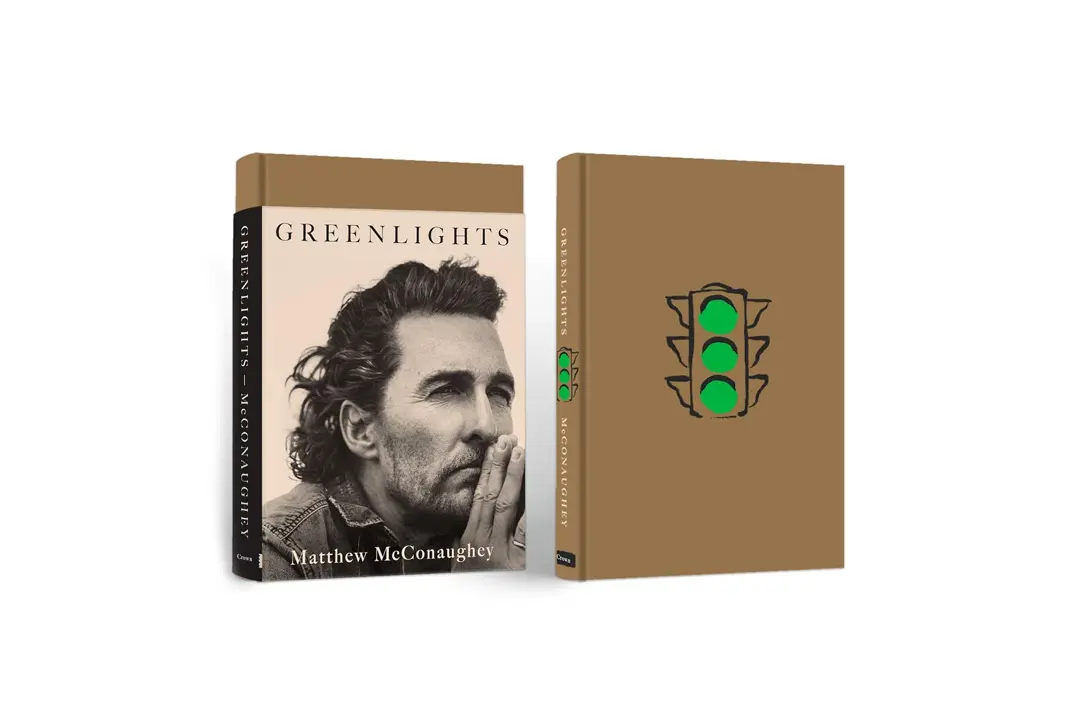
Greenlights – Matthew McConaughey: Book Summary
Beverly Ashford • 11 Mar 2026 • 68 views • 3 min read.Let me tell you about the book nobody expected from Matthew McConaughey. We thought we knew him—the shirtless guy from romantic comedies, the "alright, alright, alright" dude, the Lincoln commercial philosopher. Then he wrote a memoir pulled from 36 years of personal journals, and it turned out he'd been thinking deeply about life the whole time. Greenlights isn't a conventional memoir. It's not chronological. It's not always coherent. It's part poetry, part bumper sticker, part adventure story, part philosophy lecture from a guy who spent a year living in a monastery and another year in a trailer in Mali. It's exactly as strange and compelling as that sounds.
Greenlights – Matthew McConaughey: Book Summary
Quick Summary:
- Part memoir, part philosophy, part wild adventure story
- Built from 36 years of personal journals
- "Greenlights" are moments when life says yes—and red lights can become green
- Published in 2020, it became a surprise bestseller and revealed depths behind the rom-com star
The Concept
McConaughey builds the book around a simple metaphor: greenlights.
A greenlight is when life says yes. When things go your way. When opportunities appear and you catch them. When the universe seems to cooperate.
But here's his argument: red lights and yellow lights aren't failures—they're greenlights that haven't turned yet. Obstacles become opportunities. Setbacks become setups. If you're patient enough, persistent enough, and alive long enough, most red lights eventually turn green.
This isn't toxic positivity. He acknowledges real suffering, real loss, real tragedy. But he believes that even those experiences, processed correctly, become fuel for forward motion.
The book is organized loosely around this philosophy, bouncing between childhood memories, travel adventures, career insights, and aphorisms he's collected over decades of journaling.
The Childhood
McConaughey grows up in Uvalde, Texas, the youngest of three boys. His parents, Jim and Kay, have a volatile relationship—they divorce twice and marry each other three times. Their love is passionate, physical, and sometimes violent.
His father is a former football player who worked in the oil industry. He's tough, demanding, and present. He dies of a heart attack when Matthew is filming a movie. McConaughey learns about it in a phone call on set.
His mother is fiercely protective and completely honest with her sons—sometimes brutally so. She's the one who tells him his father died in the most direct terms possible.
The household is wild but loving. The boys fight physically. The parents' relationship swings between explosive arguments and passionate reconciliation. McConaughey frames this as teaching him that love isn't neat—it's messy, intense, and worth fighting for.
Key moment: His parents tell him and his brothers that they're not just expected to succeed—they're expected to be the best at whatever they do. Not arrogantly, but earnestly. Excellence is the family standard.
The Adventures
The book's most memorable sections are McConaughey's wild adventures:
Australia at 18. He goes as an exchange student, lives with a family in a small town, and has his first real experiences away from home. He learns independence and discovers that leaving comfort zones leads to growth.
The monastery. He spends time in a monastery in silence, reflecting on his life and purpose. No phones, no distractions, just thinking. He emerges with clarity about what matters.
Mali. He lives in a trailer in the Malian desert, wrestling with his career frustrations and searching for meaning beyond Hollywood. It sounds like a midlife crisis, but he frames it as intentional exploration.
Peru. He travels to the Amazon, participates in traditional ceremonies, and has profound experiences that reshape his spiritual understanding.
These aren't celebrity vacations. They're deliberate escapes from fame toward something more authentic. He keeps returning to isolation when Hollywood feels suffocating.
Key Concepts
| Concept | Meaning | Application |
|---|---|---|
| Greenlights | When life says yes | Recognize and catch them |
| Red lights | Obstacles, setbacks | They become greenlights with time |
| Yellow lights | Warnings to proceed carefully | Pay attention but don't stop |
| "Just keep livin'" | His personal motto | Forward motion is the answer |
| Less impressed, more involved | Don't be a spectator | Participate fully in your life |
| The art of running downhill | Don't fight momentum | When things are working, accelerate |
| Know the difference | What to want vs. what to need | Clarity prevents wasted effort |
The Career
McConaughey's Hollywood story is more strategic than it appears.
The early success comes easy. After Dazed and Confused, he's a rising star. A Time to Kill makes him a leading man. He's getting offers constantly.
Then the rom-com trap. He becomes known for shirtless romantic comedies—How to Lose a Guy in 10 Days, Failure to Launch, Fool's Gold. He's rich and famous but artistically frustrated. The roles feel empty.
The risky decision. He stops taking rom-coms cold turkey. For two years, he turns down every offer—$15 million paydays included. His agents think he's crazy. Hollywood assumes he's finished.
The McConaissance. By refusing easy money, he forces the industry to reconsider him. New offers arrive: The Lincoln Lawyer, Mud, Dallas Buyers Club, True Detective. He wins an Oscar. His career transforms.
The lesson: Sometimes you have to stop doing what's working to get what you want. The red light of no work became a greenlight to better work.
The Philosophy
McConaughey isn't a systematic thinker, but patterns emerge:
Show up. Most of life is just being present. Adventures require leaving the house. Success requires entering the arena.
Don't half-ass it. Whatever you do, do it fully. Commitment creates meaning.
Life isn't fair—that can work for you. Unfairness goes both ways. Sometimes you get lucky breaks. Accept both without complaint.
Unbelievable is the stupidest word. Everything that happens is, by definition, believable—because it happened. Stop being surprised by reality.
The best advice comes from yourself. Other people's wisdom is useful, but your own journals, reflections, and accumulated experience matter more.
Live by your own scorecard. Define success for yourself. Don't let others tell you what winning looks like.
The Writing Style
The book is formatted unconventionally:
- Poems appear randomly
- Bumper sticker wisdom gets its own pages
- Photos and journal entries break up the text
- Some sections are stream-of-consciousness
- Others are carefully crafted storytelling
It's not for everyone. Some readers find it scattered or self-indulgent. Others find the unconventional format reflects his unconventional mind.
The audiobook—which McConaughey reads himself—is particularly effective. His voice brings the philosophy to life in ways print can't fully capture.
Frequently Asked Questions
Is this a self-help book?
Partly. It has aphorisms, advice, and philosophy. But it's also memoir and adventure narrative. Genre-blending is kind of the point.
Do I need to like Matthew McConaughey to enjoy this?
It helps. If his persona annoys you, you'll probably be annoyed by the book. But some skeptics have been won over by the unexpected depth.
Is he as thoughtful as the book suggests?
The journals are real—36 years of documented reflection. Whether you agree with his philosophy, the thinking is genuine.
Is this just celebrity nonsense?
Less than you'd expect. The adventures could feel like humble-bragging, but McConaughey frames them as search rather than achievement. He's refreshingly honest about his struggles.
Should I read or listen?
Listen. His narration adds dimensions the text can't convey. It's like having a conversation with him.
What's the main takeaway?
Keep living. Keep moving forward. Trust that red lights will turn green. Create your own greenlights when you can. And never stop journaling.
The Bottom Line
Here's what Matthew McConaughey achieved with this book.
He revealed that the rom-com guy had been seriously thinking about life for decades. He shared a philosophy—not systematic, not academic, but genuine—that resonated with millions of readers. He proved that celebrity memoirs don't have to be ghostwritten pablum.
Greenlights is messy, like its author. It wanders, digresses, and occasionally loses you. But it's also surprisingly profound, frequently funny, and completely authentic.
The central message is simple: life will give you greenlights if you keep moving forward and learn to see obstacles as opportunities. Red lights don't mean stop forever. They mean wait—and prepare for when the light changes.
Alright, alright, alright.