
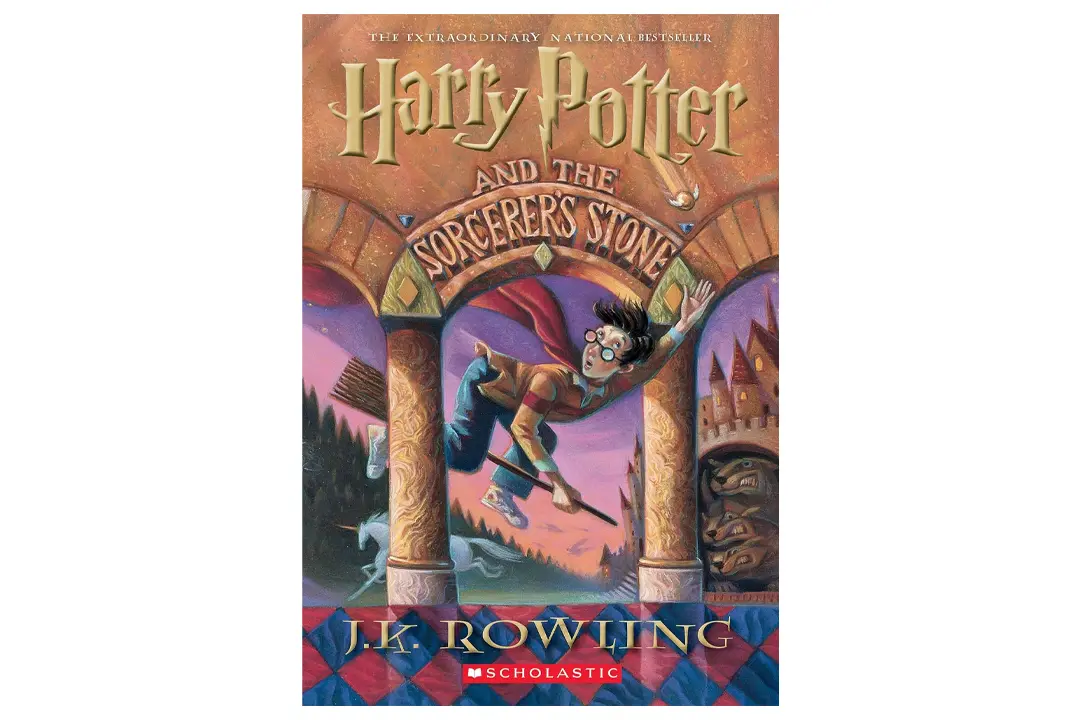
Harry Potter and the Sorcerer's Stone – J.K. Rowling: Book Summary
Beverly Ashford • 11 Mar 2026 • 61 views • 3 min read.Let me tell you about the book that made reading cool again. J.K. Rowling was a single mother on welfare when she wrote Harry Potter and the Sorcerer's Stone (Philosopher's Stone in the UK) in Edinburgh cafés. Twelve publishers rejected it. Then Bloomsbury took a chance, and a children's book about a wizard school became the most successful publishing phenomenon in modern history. The series sold over 500 million copies. It spawned movies, theme parks, and a global cultural phenomenon. More importantly, it made millions of kids—and adults—fall in love with reading. Here's where it all started.
Harry Potter and the Sorcerer's Stone – J.K. Rowling: Book Summary
Quick Summary:
- An orphan boy discovers he's a wizard and attends a magical school
- Harry finds friendship, belonging, and an enemy who wants him dead
- The book introduces the world that captivated a generation
- Published in 1997, it launched the best-selling book series in history
The Boy Who Lived
Harry Potter lives in a cupboard under the stairs at 4 Privet Drive.
His aunt Petunia and uncle Vernon Dursley despise him. His cousin Dudley bullies him. They tell him his parents died in a car crash. They tell him nothing about who he really is.
Strange things happen around Harry. A snake talks to him at the zoo. He ends up on the school roof when running from Dudley. Glass disappears at the reptile house.
Then the letters arrive.
Letters addressed to "Mr. H. Potter, The Cupboard Under the Stairs." The Dursleys destroy them. More letters come. They flee to a shack on a rock in the sea. On Harry's eleventh birthday, at midnight, the door crashes down.
Rubeus Hagrid, an enormous man with a wild beard, delivers the truth: "Harry—yer a wizard."
The World Revealed
Harry learns everything at once:
His parents were magical. They didn't die in a car crash—they were murdered by Lord Voldemort, the most dangerous dark wizard in history. Voldemort tried to kill baby Harry too. But something happened. The curse rebounded. Voldemort vanished. Harry survived with only a lightning-bolt scar.
He's famous in the wizarding world. The Boy Who Lived.
Hagrid takes Harry to Diagon Alley—the hidden street where wizards shop. He gets a wand (holly, phoenix feather core, brother to Voldemort's own wand). He gets books, robes, and an owl named Hedwig. He gets a glimpse of Gringotts bank and a mysterious package Hagrid retrieves from a high-security vault.
Then he boards the Hogwarts Express from Platform 9¾.
Hogwarts
The train ride changes Harry's life.
He meets Ron Weasley—red-haired, funny, from a large pure-blood family with no money. Ron becomes his best friend. He meets Hermione Granger—bushy-haired, bossy, Muggle-born, and the smartest witch of her age. He meets Draco Malfoy—blond, sneering, rich, and offering friendship Harry refuses.
At Hogwarts, the Sorting Hat places Harry in Gryffindor (bravery) rather than Slytherin (ambition). The Hat considered Slytherin—Harry has qualities that would fit—but Harry chose Gryffindor. Choice, the book suggests, matters more than nature.
The castle is wondrous. Moving staircases. Talking portraits. A ceiling that mirrors the sky. Ghosts who float through dinner. A sport played on broomsticks—Quidditch.
Harry makes the Gryffindor Quidditch team as Seeker, the youngest house player in a century. He's a natural on a broomstick, just like his father.
Key Characters
| Character | Role | Represents |
|---|---|---|
| Harry Potter | Protagonist, orphan, wizard | The ordinary child who's extraordinary |
| Ron Weasley | Best friend, loyal sidekick | Friendship, loyalty, insecurity |
| Hermione Granger | Best friend, brilliant witch | Knowledge, determination, outsider finding belonging |
| Albus Dumbledore | Headmaster | Wisdom, protection, mystery |
| Hagrid | Groundskeeper, guide | Kindness, introduction to magic |
| Draco Malfoy | Rival, antagonist | Prejudice, wealth, the path not taken |
| Severus Snape | Potions teacher | Apparent villain, complexity |
| Voldemort/Quirrell | True villain | Evil, immortality obsession |
The Mystery
The plot centers on a mystery.
The three-headed dog. Harry, Ron, and Hermione stumble onto a forbidden corridor guarded by a massive three-headed dog standing on a trapdoor. Something's being hidden.
The Sorcerer's Stone. They learn it's the creation of Nicolas Flamel—a stone that produces the Elixir of Life and turns metal into gold. It's been moved to Hogwarts for protection.
The suspect. Snape, the sinister Potions master, seems determined to steal it. He hates Harry. He tried to jinx Harry's broomstick during Quidditch. He was bitten by the three-headed dog.
The trio investigates, navigating Hogwarts rules and their own rivalries. Hermione's knowledge, Ron's chess skills, and Harry's courage become essential.
They decide to protect the Stone themselves when adults don't believe them.
The Final Confrontation
Harry passes through the trapdoor.
The obstacles: A devil's snare. Flying keys. A giant chess game (Ron sacrifices himself). A logic puzzle with potions (Hermione solves it). Each challenge requires different skills. Each friend contributes.
The revelation: The thief isn't Snape. It's Professor Quirrell—the stammering, nervous Defense Against the Dark Arts teacher. And he's not working alone.
Quirrell removes his turban. On the back of his head is a face—Voldemort's face. Voldemort has been possessing Quirrell, sharing his body, drinking unicorn blood to stay alive.
Voldemort wants the Stone to return to full power. He tries to use Harry to get it. Harry sees the Stone appear in his pocket—the mirror Dumbledore enchanted gives it only to someone who wants it but won't use it.
Harry survives through love. Quirrell can't touch Harry without burning. His mother's sacrifice created a protection that lives in his skin. Voldemort flees. Quirrell dies.
Harry wakes in the hospital wing. Dumbledore explains: the Stone has been destroyed. Voldemort will find other ways to return.
The adventure is over. The war is just beginning.
What the Book Establishes
Found family. Harry gains what the Dursleys denied him: friendship, belonging, people who value him. Hogwarts becomes home.
Choices define us. The Sorting Hat nearly placed Harry in Slytherin. Harry chose Gryffindor. Dumbledore tells him: "It is our choices, Harry, that show what we truly are, far more than our abilities."
Good versus evil isn't simple. Snape seems evil but protected Harry. Quirrell seemed harmless but served Voldemort. Appearances deceive.
Love is the deepest magic. Lily Potter's sacrifice saved Harry. This protection theme will expand throughout the series. Love is power Voldemort cannot understand.
Rules exist to be broken (carefully). Harry, Ron, and Hermione break numerous rules. They're rewarded because their cause was right. Wisdom involves knowing when rules don't apply.
Frequently Asked Questions
Why Sorcerer's Stone, not Philosopher's Stone?
The American publisher changed it, fearing "Philosopher" sounded academic. The original UK title references a real alchemical legend. Rowling has expressed regret about allowing the change.
Should adults read this?
Millions have. The first book is the most childlike; the series matures as readers age. Adults may appreciate it differently but it's not embarrassing.
Is Snape good or bad?
This book makes him seem villainous. The full answer requires all seven books. Snape is the series' most complex character.
How does this connect to the later books?
Everything planted here pays off later: the scar, the wand connection, Snape's history, Dumbledore's secrets. Rowling planned extensively.
Should I read before watching the films?
The films are good adaptations but necessarily compressed. Reading first provides richer experience. The books contain more detail, more humor, and more internal life.
Is the series problematic?
Debates exist about representation, Rowling's later statements, and certain elements in the worldbuilding. Readers approach these questions differently. The books remain culturally significant regardless of these discussions.
The Bottom Line
Here's what J.K. Rowling achieved with this first book.
She created a world that feels complete and magical while remaining emotionally true. The fantasy elements—wands, spells, moving staircases—are delightful. But the story works because Harry's loneliness, his desire to belong, his discovery of friendship are universally human.
The book is a children's story that doesn't condescend. It has darkness—parents murdered, children in danger, evil that wants to kill. But the darkness exists within a framework of hope, friendship, and love that always matters more.
Harry Potter enters Hogwarts a boy who sleeps in a cupboard.
He leaves knowing he's loved, he belongs, and he's capable of more than he imagined.
That's what the best children's books do.