
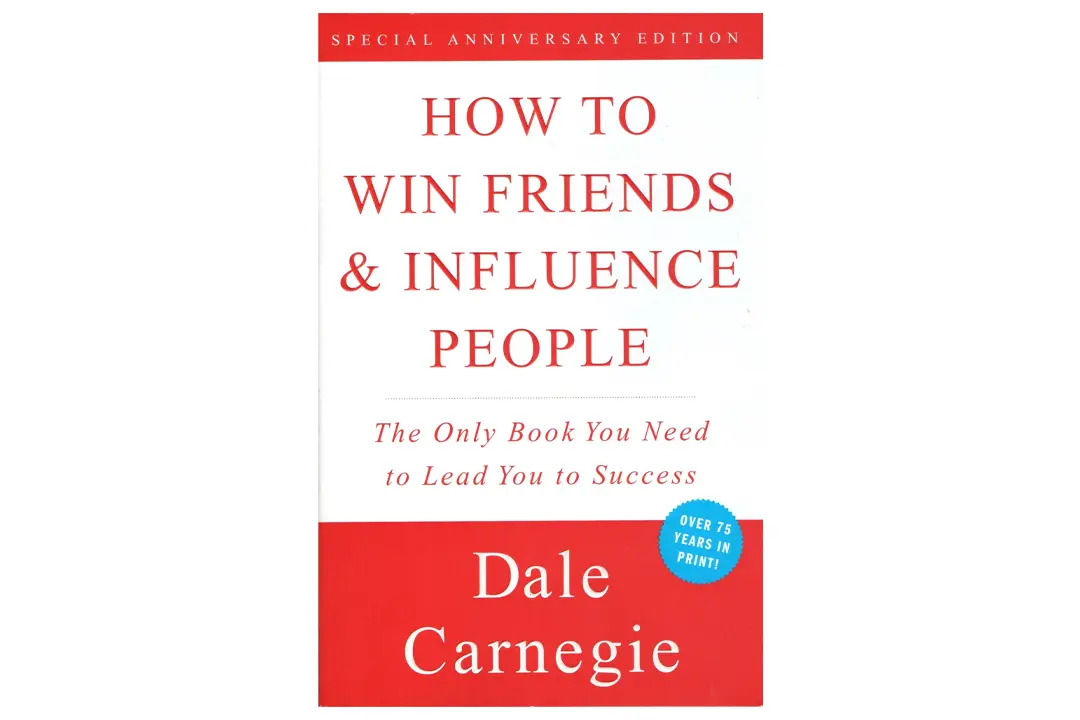
How to Win Friends and Influence People by Dale Carnegie: Book Summary
Beverly Ashford • 13 Mar 2026 • 59 views • 3 min read.Let me tell you about the book that has been called manipulative by people who never read it and life-changing by people who did. Dale Carnegie published How to Win Friends and Influence People in 1936. It has sold over 30 million copies. Warren Buffett took Carnegie's public speaking course at nineteen and calls it one of the most important things he ever did. The book has never gone out of print in nearly ninety years. And yet a lot of people dismiss it before reading it. The title sounds like a con artist's handbook. The cover looks like something sold at airport newsstands. The principles, when summarized, sound obvious to the point of insult. Here is the thing about obvious principles: obvious is not the same as practiced. Carnegie's insight is not that these ideas are secret. It is that almost nobody actually applies them consistently — and the gap between knowing and doing is where most failed relationships, careers, and conversations live.
How to Win Friends and Influence People by Dale Carnegie: Book Summary
Quick Summary:
- Published in 1936, it remains the most widely read book about human relations ever written
- Carnegie's core argument: people are not creatures of logic, they are creatures of emotion
- The principles are simple, obvious, and almost universally ignored in practice
- This is not a manipulation manual — it is a case for genuine interest in other people
The Core Argument
Carnegie opens with a premise that everything else depends on: people do not change their behavior because of logic. They change because of how they feel. Criticism makes people defensive. Arguments make people dig in. Lecturing makes people tune out.
If you want to genuinely influence someone — not manipulate them, but actually move them — you have to understand what they want and connect your request to that want. This sounds simple. It requires a complete reorientation of how most people approach conversation, conflict, and persuasion.
The book is organized into four parts, each with specific principles. The structure is practical rather than theoretical. Carnegie illustrates every principle with historical examples — Lincoln, Roosevelt, business leaders, ordinary people — showing the same ideas working across contexts.
Part One: Fundamental Techniques in Handling People
Three principles anchor the entire book.
Do not criticize, condemn, or complain. Carnegie is not saying pretend problems do not exist. He is saying that criticism triggers defensiveness and resentment, not change. When you criticize someone, their first move is to justify themselves — not to improve. If you want behavior to change, criticism is almost always the least efficient tool available.
Give honest and sincere appreciation. Not flattery. Carnegie is specific about this distinction. Flattery is insincere and people sense it immediately. Genuine appreciation requires actually finding something to value in the other person and saying it directly. The operative word is sincere. Empty compliments are manipulation. Real appreciation is connection.
Arouse in the other person an eager want. This is Carnegie's reframe of persuasion. Instead of presenting what you want, ask what the other person wants and find the genuine overlap. A child who refuses vegetables eats them when told they help you grow strong like a favorite athlete. The vegetable did not change. The framing did.
Part Two: Six Ways to Make People Like You
This section is where Carnegie gets specific about daily interaction.
Become genuinely interested in other people. Not performed interest — real curiosity. Carnegie argues that you can make more friends in two months by being interested in others than in two years by trying to get others interested in you. Most people spend conversations waiting to talk about themselves. The person who asks real questions and actually listens becomes memorable immediately.
Smile. Carnegie dedicates an entire chapter to this and it is not as shallow as it sounds. His point is that your face communicates your attitude before your words do. A genuine smile signals safety, warmth, and welcome. You cannot fake a real one — Carnegie quotes research showing people detect insincere smiles — but you can cultivate the genuine article by actually thinking of something you appreciate about the person you are meeting.
Remember that a person's name is the sweetest sound in any language. Using someone's name in conversation signals that they matter to you specifically, not as a generic interaction. Forgetting names — something most people treat as harmless — communicates the opposite.
Be a good listener and encourage others to talk about themselves. The best conversationalists are not the wittiest or most informed. They are the ones who make the other person feel heard. Ask questions that invite the other person to expand. Then actually listen to the answer.
Talk in terms of the other person's interests. Before any important conversation, Carnegie suggests asking what the other person cares about and entering through that door. Roosevelt famously researched the interests of every visitor before meeting them. People who feel seen in their interests trust you faster.
Make the other person feel important — and do it sincerely. Everyone wants to feel that their existence matters. Acknowledging someone's contribution, their knowledge, their effort — sincerely, specifically — costs nothing and builds enormous goodwill.
Part Three and Four: Winning People to Your Way of Thinking and Being a Leader
The final sections address persuasion and leadership with the same underlying logic.
Avoid arguments. Carnegie's position is that you cannot win an argument. Even if you demolish someone's reasoning, you have wounded their pride — and wounded pride hardens into resistance. The goal is not to be right. The goal is to move forward together.
Show respect for the other person's opinions. Never say "you're wrong" directly. Even when someone is wrong, saying so triggers defensiveness. Acknowledge what is valid in their position before introducing your own view.
If you are wrong, admit it quickly and emphatically. Disarming self-criticism takes the weapon out of the other person's hands. People are far more forgiving of those who acknowledge their mistakes directly than of those who defend them.
Begin with praise and honest appreciation before delivering criticism. The sequence matters. Criticism absorbed after genuine acknowledgment lands differently than criticism delivered cold.
Principles at a Glance
| Principle | Category | What It Actually Means | Why Most People Skip It |
|---|---|---|---|
| Do not criticize or complain | Handling People | Criticism triggers defense, not change | Feels satisfying in the moment |
| Give sincere appreciation | Handling People | Find something real to value and say it | Confuse it with flattery |
| Arouse an eager want | Handling People | Connect your request to their interest | Too focused on own agenda |
| Become genuinely interested | Making Friends | Real curiosity, not performed attention | Most people prefer talking to listening |
| Remember names | Making Friends | Names signal that a person matters specifically | Treated as minor social formality |
| Be a good listener | Making Friends | Ask and actually hear the answer | Preparing next response instead |
| Avoid arguments | Influencing People | Winning the argument loses the relationship | Confuse being right with being effective |
| Admit mistakes quickly | Influencing People | Disarming self-criticism builds trust | Pride and defensiveness |
| Begin with praise | Leadership | Sequence criticism after genuine acknowledgment | Jump straight to the problem |
| Ask questions instead of giving orders | Leadership | Invitation generates ownership | Efficiency feels faster |
Frequently Asked Questions
Is this book manipulative?
The question comes up constantly and Carnegie addresses it directly. The distinction is sincerity. Every principle in the book requires genuine interest, honest appreciation, and real respect for the other person. Applied cynically as a manipulation toolkit, the techniques fail — people detect inauthenticity. Applied as Carnegie intends, they are simply good human relations.
Is a book from 1936 still relevant?
Human psychology has not changed since 1936. The specific examples feel dated. The underlying principles about defensiveness, pride, the desire to feel important, and the gap between logic and emotion are as accurate now as they were then.
How does this compare to modern influence books like Influence by Cialdini?
Cialdini's Influence is more scientific — it documents psychological mechanisms like reciprocity, scarcity, and social proof with research backing. Carnegie is more practical and interpersonal — focused on daily conversation and relationship building rather than persuasion architecture. They complement each other well.
Does this work in professional settings?
Extensively. Carnegie's principles apply directly to management, sales, negotiation, client relationships, and leadership. Many executives cite this as the most practically useful book they have read for working with people.
Is there a condensed version?
The original is already concise — around 290 pages with large type and short chapters. There is no meaningful shortcut. Each principle benefits from Carnegie's extended examples, which are where the application becomes clear.
What should I read next?
Influence by Robert Cialdini for the psychology of persuasion with research backing. Never Split the Difference by Chris Voss for high-stakes negotiation using empathy as the primary tool. Both books operate in the same territory Carnegie opened.
The Bottom Line
Here is what Dale Carnegie actually figured out in 1936.
People do not want to be corrected. They want to be understood. They do not want to be impressed by you. They want to feel interesting to you. They do not change because of logic. They change because of how you make them feel about themselves.
None of this is secret. All of it is ignored constantly — in offices, in families, in friendships, in negotiations, in arguments that accomplish nothing except proving who is smarter.
The book has sold thirty million copies because the gap between knowing and doing is enormous, and most people need someone to lay it out plainly before they believe it is worth trying.
It is worth trying.