
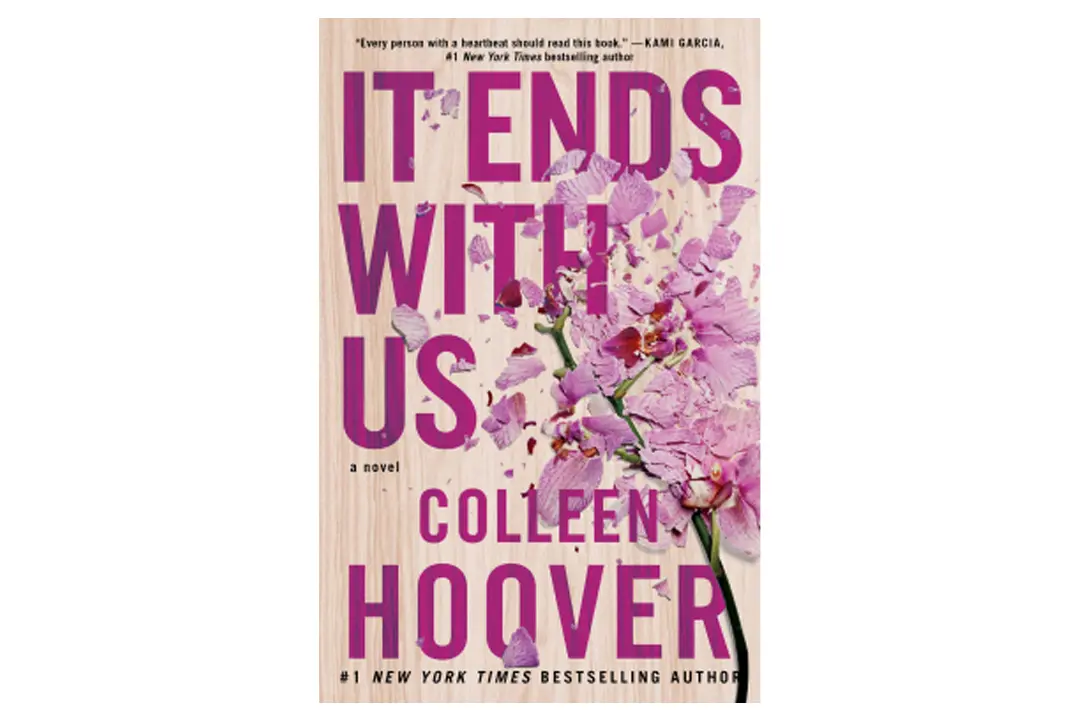
It Ends with Us – Colleen Hoover: Book Summary
Beverly Ashford • 11 Mar 2026 • 66 views • 3 min read.Let me tell you about the book that made millions of readers uncomfortable in the best possible way. Colleen Hoover is known for emotional romances, but It Ends with Us isn't your typical love story. It starts like one—a meet-cute on a rooftop, instant chemistry, sweeping romance. Then it becomes something else entirely. The genius of the book is that it tricks you. It makes you fall for the same man Lily falls for. It makes you make the same excuses Lily makes. Then it forces you to ask yourself: How did I not see this coming? That's exactly how domestic violence works.
It Ends with Us – Colleen Hoover: Book Summary
Quick Summary:
- Lily Bloom falls for a charming neurosurgeon with a troubling dark side
- The story confronts domestic violence through an unexpected romance
- Lily must reconcile her past trauma with her present relationship
- Published in 2016, it became a TikTok phenomenon and cultural touchstone
The Setup
Lily Bloom (yes, she knows the name is ridiculous) is on a Boston rooftop after her father's funeral. She's not mourning. She hated her father, an abusive man who beat her mother throughout Lily's childhood.
A stranger joins her—Ryle Kincaid, a neurosurgeon having a terrible night. They talk. He's attractive, intense, and brutally honest. He doesn't do relationships, he says. Just one-night stands. Lily doesn't do one-night stands. They part ways.
Months later, Lily opens her flower shop (her lifelong dream) and reconnects with Ryle through his sister Allysa, who becomes her employee and friend. The chemistry hasn't faded. Ryle decides to break his no-relationship rule for Lily.
Everything seems perfect.
But throughout the book, we're also reading Lily's teenage diaries, addressed to Ellen DeGeneres. They tell the story of Atlas Corrigan—a homeless boy Lily loved at sixteen, who taught her what kindness looked like. Atlas disappeared from her life, but he never disappeared from her heart.
Then Atlas shows up in Boston. And Ryle notices the way Lily reacts to him.
The Turn
The first incident is shocking.
Ryle and Lily are cooking together. She laughs at something. He reacts badly. Before either understands what's happening, he's shoved her. She hits her head on a cabinet door. She's bleeding.
He's horrified. He's sorry. He doesn't know what happened. He loves her. It will never happen again.
Lily has heard these words before—from her father to her mother, dozens of times throughout her childhood.
She forgives Ryle. Because she loves him. Because it was an accident. Because it won't happen again.
It happens again.
Each incident escalates. Each is followed by remorse, tears, promises. Lily finds herself making the same excuses her mother made. She finds herself hiding injuries. She finds herself wondering what she did wrong to trigger him.
The reader watches in horror, understanding the trap even as Lily falls deeper into it.
The Central Tension
The book doesn't portray Ryle as a monster. That's what makes it so effective.
Ryle is handsome, successful, devoted to his career, capable of tenderness. He had childhood trauma too—he accidentally killed his brother with a gun when they were kids. His rage isn't random; it's triggered, often by jealousy over Atlas or feelings of rejection.
Lily understands him. She sees his pain. She wants to help him. She believes she can love him through it.
This is how abusers maintain relationships. They're not villains 24/7. The good times are genuinely good. The person exists between the incidents. Leaving means leaving the good parts too.
Atlas represents another path—patient, gentle, still carrying feelings for Lily after all these years. But running to another man isn't the answer either. Lily has to make choices for herself, not for anyone else.
Key Characters
| Character | Role | Represents |
|---|---|---|
| Lily Bloom | Protagonist, florist | The cycle of abuse, the struggle to break it |
| Ryle Kincaid | Love interest, neurosurgeon | The charming abuser, complex and irredeemable |
| Atlas Corrigan | First love, chef | Safety, patience, what healthy love looks like |
| Allysa | Ryle's sister, Lily's friend | Complicated family loyalties |
| Lily's Mother | Abuse survivor | Where Lily might end up if she stays |
| Lily's Father | Deceased abuser | What Lily's children might inherit |
The Climax
Lily becomes pregnant.
This changes everything. She's not just choosing for herself anymore. She's choosing what her child will grow up seeing. She's choosing whether to repeat her own childhood.
The final confrontation is violent and terrifying. Ryle assaults Lily badly enough that Atlas intervenes. The cycle has become undeniable.
Lily has to choose.
She chooses to end it. Not because of Atlas. Not because she doesn't love Ryle. Because she refuses to let her daughter watch her mother being beaten the way Lily watched her own mother being beaten.
The title finally makes sense: the cycle ends with her.
What the Book Does Right
It shows why people stay. The question "why doesn't she just leave?" reveals ignorance about how abuse works. Hoover dramatizes the emotional complexity—the love, the hope, the shame, the isolation, the genuine good moments that make the bad ones harder to accept as patterns.
It refuses to make the abuser a cartoon villain. Ryle is sympathetic in many ways. That's the point. Abusers are often charming, successful, wounded. Making them monsters would let readers believe they'd never fall for one.
It doesn't solve everything with romance. Atlas is waiting in the wings, but Lily doesn't leave for him. She leaves for herself and her child. The sequel explores the Atlas relationship, but this book is about Lily's choice.
It honors real experience. Hoover based the story partly on her mother's experience with domestic violence. The dedication acknowledges this. The emotional truth comes from real observation.
The Controversy
The book has been criticized, particularly as it became a viral phenomenon.
Romanticizing abuse? Some argue the book's romance-novel trappings glamorize a serious topic. The love triangle, the attractive characters, the dramatic moments can feel at odds with the reality of domestic violence.
The TikTok phenomenon. BookTok made this book hugely popular, sometimes with promotional material that emphasized the romance over the abuse themes. "Team Atlas vs. Team Ryle" discourse missed the point entirely.
Sequel complications. It Starts with Us continues the story, focusing on the Atlas romance. Critics argue this undermines the first book's message about choosing yourself over choosing a man.
Is it appropriate for young readers? The book is marketed as adult fiction but has a huge teenage audience. Parents and educators debate whether it handles the topic responsibly enough.
Frequently Asked Questions
Is this book triggering for abuse survivors?
For some, yes. It depicts domestic violence graphically. For others, it's validating—seeing their experience reflected and taken seriously. Content warnings apply.
Is Ryle redeemable?
The book says no. He seeks therapy, he's sorry, he loves Lily—but he can't stop. Some readers want him redeemed. The book refuses to offer that comfort.
Should I read the sequel?
It Starts with Us focuses on the Atlas relationship and Lily's coparenting with Ryle. If you want that story, read it. If the first book felt complete, you can stop there.
Is this literary fiction?
No, and it doesn't pretend to be. It's commercial fiction with genre romance elements. The prose is accessible rather than literary. That accessibility is part of why it reached so many readers.
Why is it so popular?
TikTok, emotional gut-punches, and a topic that resonates more than people admit. Domestic violence affects many families. Seeing it portrayed in mainstream fiction feels important to many readers.
Does Lily end up with Atlas?
By the end of this book, she's chosen herself. The sequel develops the Atlas relationship more fully.
Here's what Colleen Hoover achieved with this book.
She smuggled a serious examination of domestic violence into a commercial romance. She made readers complicit in the cycle—falling for Ryle, making excuses for him, understanding Lily's reluctance to leave. Then she forced them to reckon with what they'd been complicit in.
The book isn't perfect. The romance elements sometimes clash with the abuse narrative. The sequel undercuts some of this book's power. The TikTok promotion often trivialized the themes.
But millions of readers finished this book seeing domestic violence differently. Some recognized patterns in their own relationships. Some understood for the first time why leaving is so hard.
The cycle of abuse is real. This book shows why it's hard to break—and why breaking it matters.
That's worth something.