
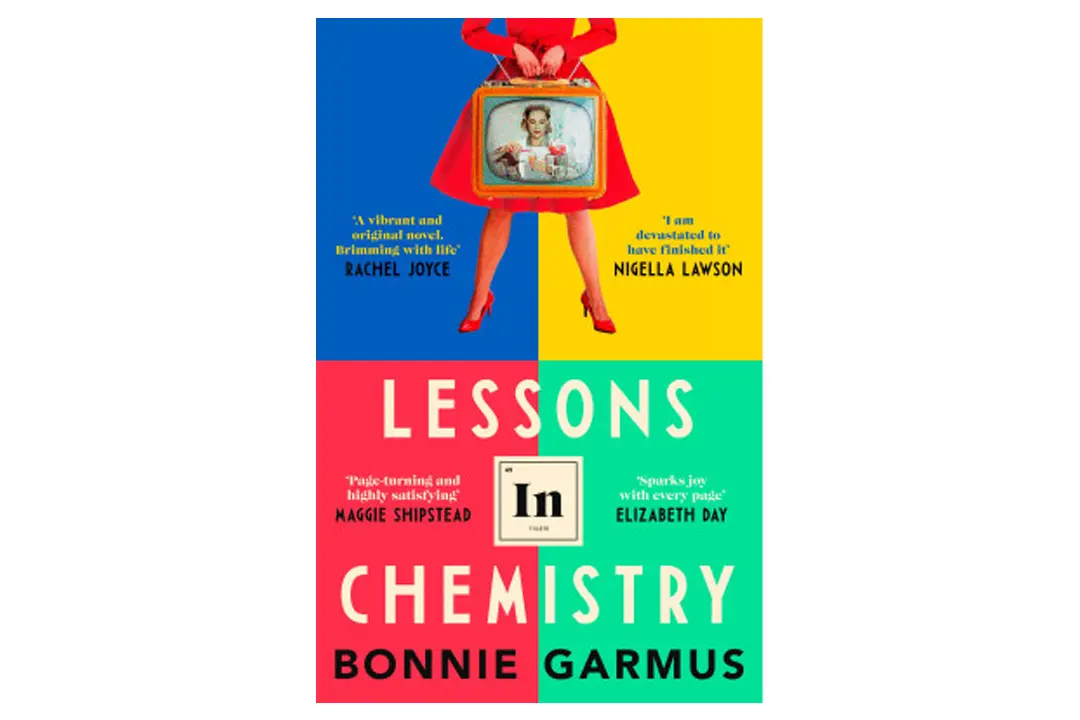
Lessons in Chemistry – Bonnie Garmus: Book Summary
Beverly Ashford • 11 Mar 2026 • 64 views • 3 min read.Let me tell you about the book that makes you laugh while it makes you furious. Bonnie Garmus wrote a debut novel about a woman scientist in the early 1960s. The sexism is infuriating. The protagonist is prickly, literal-minded, and refuses to compromise. The situations are often absurd. And somehow, it's also deeply funny and surprisingly moving. Lessons in Chemistry does something difficult: it shows systemic misogyny without making the book a misery tour. It makes you angry about what women faced (and often still face) while also celebrating a heroine who refuses to accept it. The combination is addictive. Also, there's a dog who's basically a co-protagonist. Did I mention the dog?
Lessons in Chemistry – Bonnie Garmus: Book Summary
Quick Summary:
- A brilliant female chemist in the 1960s becomes an unlikely cooking show host
- She treats cooking as chemistry and accidentally starts a revolution
- The novel blends feminism, science, humor, and heartbreak
- Published in 2022, it became a massive bestseller and Apple TV+ series
Elizabeth Zott: The Chemist Who Wouldn't Bend
Elizabeth Zott is a chemist. Not a lab assistant. Not a secretary who sometimes helps with research. A chemist—with a nearly completed PhD (stolen from her by her male advisor) and a mind that sees the world in molecular structures.
In 1961, this makes her almost unemployable.
She lands a position at Hastings Research Institute, where she's expected to fetch coffee and look pretty. She does neither. She works on her own research in stolen moments, demands respect she'll never receive, and generally confuses everyone by acting as if competence should matter more than gender.
Then she meets Calvin Evans.
Calvin is also a chemist—brilliant, famous, and equally socially awkward. He recognizes Elizabeth's genius immediately. They fall in love in the lab, bonding over science and shared inability to perform social niceties.
For a while, things seem possible.
The Losses
Calvin dies. Suddenly, absurdly, hit by a car while jogging. Elizabeth is pregnant with their daughter.
She's fired from Hastings (officially for other reasons, actually because she's unmarried and pregnant). She loses her career, her partner, and her future in one terrible stretch.
She also gains a dog. Six-Thirty—so named because that's when Calvin fed him—is preternaturally intelligent. He thinks in an extensive vocabulary and serves as a secondary narrator. Yes, this sounds ridiculous. Yes, it works.
Elizabeth raises her daughter Madeline alone, teaching her chemistry, refusing to lie about Santa Claus or the tooth fairy, and generally creating a child who's as unconventional as her mother.
But she can't find work as a chemist. No lab will hire her. Her research goes nowhere.
Then television comes calling.
Supper at Six
A producer sees something in Elizabeth—he's not sure what—and offers her a cooking show. She needs money. She has no other options. She accepts, planning to hate every minute.
Instead, she transforms it.
Elizabeth treats cooking as chemistry. She explains reactions, molecular structures, and nutritional science. She refuses to be a typical TV housewife, speaking to her audience as intelligent adults. She tells women that cooking is a form of chemistry, that they are scientists in their own kitchens.
"Children, set the table. Your mother needs a moment to herself."
The show becomes a phenomenon. Not because women want cooking tips (though they get those), but because Elizabeth treats them with respect they rarely receive elsewhere. She tells them they're capable. She refuses to condescend. She accidentally starts a revolution in living rooms across America.
Housewives begin demanding more from their lives. They go back to school, pursue careers, challenge their husbands. They cite Elizabeth Zott.
None of this was her plan. She just wanted to explain chemistry.
Key Characters
| Character | Role | Represents |
|---|---|---|
| Elizabeth Zott | Protagonist, chemist, TV host | Uncompromising intelligence, feminist defiance |
| Calvin Evans | Elizabeth's love, fellow chemist | Intellectual equals recognizing each other |
| Madeline | Elizabeth's daughter | The next generation, raised without limitations |
| Six-Thirty | The dog | Loyalty, intelligence, a different perspective on humans |
| Harriet Sloane | Neighbor and friend | Female solidarity across differences |
| Walter Pine | TV producer | Men who try to understand and support women |
| Dr. Boryweitz | Elizabeth's thesis advisor | Institutional sexism personified |
The Dog
We need to talk about Six-Thirty.
The dog has his own chapters. He thinks in words, observes humans with gentle bewilderment, and is essentially a full character. He knows over 500 words. He grieves Calvin, protects Elizabeth, and helps raise Madeline.
This could easily be twee or unbearable. It works because Garmus treats it matter-of-factly. Six-Thirty isn't magical or talking—he's just a smart dog whose internal life we're allowed to see. His perspective adds humor and tenderness.
He's also, honestly, a metaphor. He understands more than humans give him credit for. So do women. So do children.
What the Book Is Really About
Women's intellectual potential denied. Elizabeth is brilliant. The world doesn't care. She's dismissed, harassed, stolen from, and fired—not despite her ability but because of it. Her competence threatens men who need to feel superior.
The chemistry of everyday life. Cooking is chemistry. So is parenting, love, grief. Elizabeth's literal-mindedness becomes wisdom: understanding the composition of things helps you understand everything.
Refusing to perform. Elizabeth won't smile on command, won't pretend ignorance, won't soften her intelligence to make men comfortable. This makes her life harder. It also makes her free in a way other characters envy.
Unlikely solidarity. Elizabeth is socially awkward and initially dismissive of other women. She learns that solidarity doesn't require sameness—that the housewife next door and the woman scientist are fighting the same war.
Legacy and change. Elizabeth's TV show starts changing minds, but slowly. Madeline's generation might have more options. The book argues that progress comes from persistence, not from waiting for the world to evolve on its own.
The Tone
The book is funny. Not subtle humor—often broad, absurd, even farcical. Elizabeth's literalness creates comedy. Six-Thirty's observations are dryly hilarious. The sexism is so blatant it becomes satirical.
But the losses are real. Calvin's death is devastating. Elizabeth's stolen research is infuriating. Madeline's childhood is marked by her mother's struggle. The comedy doesn't negate the pain—it coexists with it.
This tonal balance is the book's achievement and occasionally its weakness. Some readers find the humor undercuts the serious themes. Others find it necessary survival strategy.
Frequently Asked Questions
Is this historically accurate?
The broad strokes are true—women in 1960s science faced everything Elizabeth faces. Some specific details are exaggerated for effect. It's a novel, not a documentary, but the systemic sexism is based in reality.
Is it preachy?
It's overtly feminist, yes. If you find female characters refusing to accept discrimination "preachy," you'll find this preachy. If you think such stories are necessary and overdue, you'll find it satisfying.
Is the dog thing too much?
Subjective. Most readers love Six-Thirty. Some find the talking-animal chapters a step too far. You'll know quickly which camp you're in.
Should I watch the Apple TV+ series?
Brie Larson plays Elizabeth, and the adaptation is well-reviewed. The show expands certain elements and changes others. Book first is probably the richer experience, but either works.
Who should read this?
Anyone who's been told they're "too much." Anyone who's interested in mid-century feminism. Anyone who wants a book that's simultaneously angry and joyful.
Is there romance?
Yes, though Calvin dies early. The Elizabeth-Calvin relationship is tender and unconventional—two weirdos who recognize each other. Later in the book, there are hints of other possibilities.
The Bottom Line
Here's what Bonnie Garmus achieved with her debut.
She wrote a feminist novel that entertains while it educates. She created a heroine who's neither warm nor likable in conventional ways, but utterly compelling. She smuggled rage into a book that feels like a pleasure read.
Elizabeth Zott doesn't inspire because she wins against the system. She inspires because she refuses to pretend the system is fair. She keeps being herself—brilliant, awkward, uncompromising—in a world determined to make her less.
The book argues that this matters. That being authentically yourself, even when it's costly, is its own form of revolution. That chemistry is everywhere, and women are scientists whether the world acknowledges it or not.
Also, get yourself a dog like Six-Thirty.