
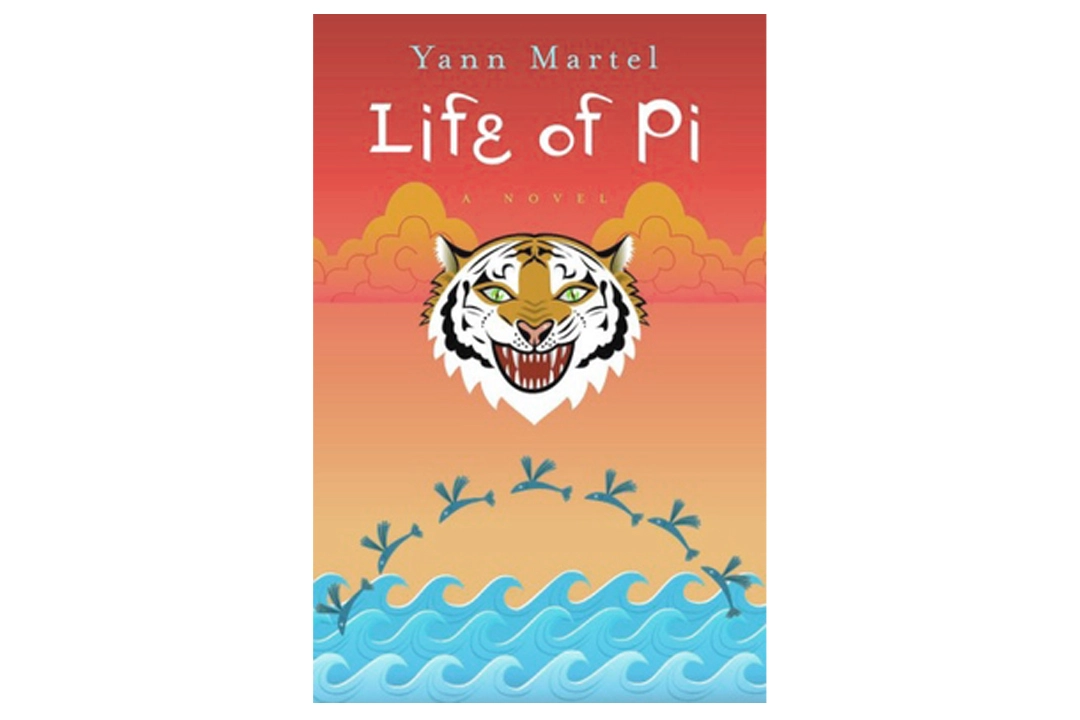
Life of Pi – Yann Martel: Book Summary
Beverly Ashford • 12 Mar 2026 • 78 views • 2 min read.Let me tell you about the book that makes you question what's real—and whether that's the right question. Yann Martel wrote a novel about a shipwreck, a lifeboat, and a Bengal tiger named Richard Parker. It's an adventure story, a survival tale, and a philosophical puzzle all at once. But here's the thing: at the end, the book offers a second version of events. A darker version. And it asks you to choose which one you believe. Your choice, Martel suggests, reveals everything about how you approach life. Life of Pi won the Booker Prize, sold millions of copies, and became an Oscar-winning film. It's been called a story that will make you believe in God. Whether it does depends on you.
Life of Pi – Yann Martel: Book Summary
Quick Summary:
- A boy survives 227 days in a lifeboat with a Bengal tiger
- The novel asks which story you'd rather believe
- It's about faith, survival, and the stories we need to live
- Published in 2001, it won the Booker Prize and became a beloved meditation on belief
Part One: Pondicherry
Piscine Molitor Patel is named after a French swimming pool. At school, the name becomes "Pissing Patel." He rechristens himself Pi.
Pi grows up in Pondicherry, India, where his father runs a zoo. He learns animal behavior—especially that wild animals are dangerous, unpredictable, and should never be romanticized. His father makes him watch a tiger kill a goat to drive the point home.
Pi is obsessed with religion. Born Hindu, he discovers Christianity at fourteen and is moved by the story of divine love. Then he discovers Islam and is drawn to its radical equality and devotion. He practices all three.
When the local priest, imam, and pandit confront him together, demanding he choose, Pi says: "I just want to love God."
His father says he's going to try atheism next. Pi says he could—atheists make a leap of faith too. What he can't understand is agnosticism: doubt that doesn't commit to anything.
The family decides to emigrate to Canada. They'll sell the zoo animals to North American zoos and start a new life. They board a Japanese cargo ship called the Tsimtsum.
The ship sinks.
Part Two: The Pacific Ocean
Pi wakes on a lifeboat. He's survived. So have four animals:
- Richard Parker, a 450-pound Bengal tiger
- An injured zebra
- An orangutan named Orange Juice
- A hyena
The food chain activates. The hyena kills the zebra. The hyena kills Orange Juice. Richard Parker kills the hyena.
Now it's just Pi and a tiger.
Pi survives through ingenuity and routine. He builds a raft to keep distance from Richard Parker. He learns to fish and collect rainwater. He reads a survival manual. He establishes dominance over the tiger through training techniques remembered from his father's zoo.
They drift for 227 days.
Pi describes the physical horrors: hunger, thirst, exposure, storms, blindness from dehydration. He describes moments of beauty: luminescent jellyfish, flying fish, a humpback whale. He describes despair and faith and the thin line between them.
Richard Parker keeps him alive. The need to care for the tiger, to stay vigilant, to maintain routines—this gives Pi purpose. Without the tiger, he might have given up.
They reach a carnivorous island of algae populated by meerkats. It sustains them briefly but is deadly at night—the algae dissolves flesh. They leave.
Finally, they reach the coast of Mexico. Richard Parker walks into the jungle without looking back. Pi weeps at this lack of farewell.
He's rescued. He's the only survivor.
Key Characters
| Character | Role | Represents |
|---|---|---|
| Pi Patel | Narrator, survivor | Faith, storytelling |
| Richard Parker | Bengal tiger | Nature, savagery, survival instinct |
| Orange Juice | Orangutan | Gentleness lost to violence |
| The Hyena | First predator | Brutality |
| The Zebra | Injured victim | Innocence destroyed |
| Pi's Father | Zookeeper | Reason, pragmatism |
Part Three: The Second Story
Japanese insurance investigators interview Pi in a Mexican hospital. They don't believe his story. A tiger? A carnivorous island? Impossible.
Pi offers them another version.
In this version, there were no animals on the lifeboat. There were four humans: Pi, his mother, a sailor with a broken leg, and the ship's cook.
The cook killed the sailor for bait and food. The cook killed Pi's mother. Pi killed the cook.
Pi survived alone.
The parallels are clear. The sailor is the zebra. Pi's mother is the orangutan. The cook is the hyena. And Pi? Pi is Richard Parker.
The Question
The investigators ask: Which story is true?
Pi responds: "Which is the better story?"
They say: The one with the tiger.
Pi says: "And so it goes with God."
The book doesn't tell you which story is true. Both explain the facts. The first is beautiful, fantastical, and keeps Pi innocent. The second is brutal, realistic, and makes Pi a killer.
Which do you believe?
What the Book Is Really About
Storytelling and survival. Pi survives not just through physical endurance but through the stories he tells himself. The tiger version may be a protective fiction—a way to process unbearable trauma.
Faith as choice. Martel isn't arguing for any particular religion. He's arguing that believing in a meaningful universe—even without proof—is a choice worth making. "The better story" is the one that allows you to live.
The nature of truth. The novel questions whether factual accuracy is the only truth. The tiger story might be false but emotionally true. The murder story might be factually true but spiritually incomplete.
Coexisting with the beast. Richard Parker can be read literally or as Pi's own savage survival instinct—the part of himself he needed to survive but couldn't integrate into his identity.
Frequently Asked Questions
Did the tiger story really happen?
Martel deliberately leaves it ambiguous. The "better story" structure asks you to decide. Most readers feel the second story is factually true, but the first story is how Pi needs to remember it.
What's with the name Richard Parker?
It's a real name with a strange coincidence: multiple shipwreck cannibalism cases involved people named Richard Parker. Martel liked the literary echo.
Is the carnivorous island real?
In the tiger story, it exists. It's the most fantastical element—many readers see it as proof the first story is symbolic rather than literal.
What religion is the book promoting?
None specifically. Pi practices three religions simultaneously. The book promotes faith itself—the act of believing—rather than any particular creed.
How does the movie compare?
Ang Lee's 2012 film is visually stunning and faithful to the book's structure. It won four Oscars. The ambiguity is preserved; the question remains.
What does the ending mean?
It means: you choose your truth. If you believe the tiger story, you're choosing beauty and meaning over bare fact. If you believe the murder story, you're choosing harsh reality. Pi suggests God works the same way.
The Bottom Line
Here's what Yann Martel achieved.
He wrote an adventure novel that's really about the stories we tell to survive. He created a narrative that works on multiple levels—literal and symbolic, realistic and fantastical—without insisting on one reading.
Life of Pi argues that faith isn't about evidence. It's about which story you need. The story that lets you keep living. The story that makes the world bearable.
Richard Parker walks into the jungle without looking back. Pi weeps that the tiger didn't acknowledge their bond.
But maybe Richard Parker was never what Pi thought. Maybe that's the point.
The better story is the one that saves you.