
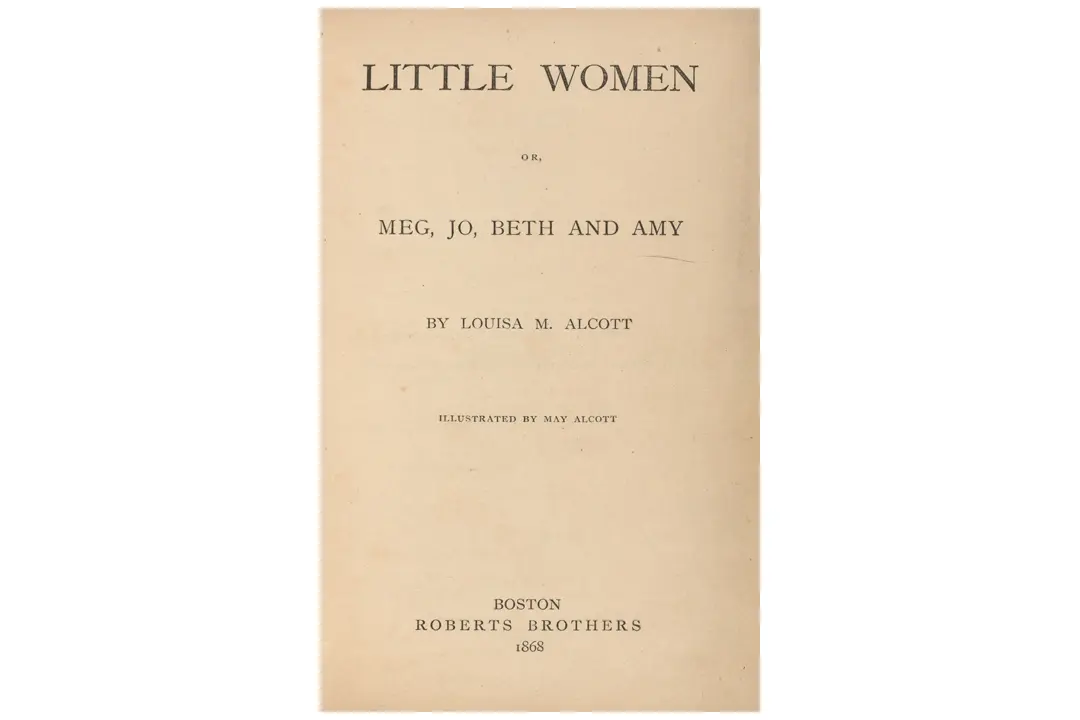
Little Women – Louisa May Alcott: Book Summary
Beverly Ashford • 08 Mar 2026 • 87 views • 3 min read.Let me tell you why this book refuses to go away. Louisa May Alcott wrote Little Women in 1868 because her publisher asked for "a book for girls." She didn't want to write it. She thought it was boring. She told her publisher she'd never liked girls except her own sisters. Then she wrote one of the most enduring novels in American literature. The book has been adapted constantly—movies, TV shows, Broadway, even an opera. Every generation rediscovers it. The 2019 Greta Gerwig film proved the story still moves audiences. Jo March remains a hero to every young woman who ever felt too loud, too ambitious, or too herself for the world. Here's the story that made all that happen.
Little Women – Louisa May Alcott: Book Summary
Quick Summary:
- Four sisters navigate growing up during and after the Civil War
- Each sister represents a different path for women of the era
- Jo March became one of literature's most beloved heroines
- Published in 1868, it still resonates with readers finding their place in the world
The March Family
Concord, Massachusetts. The Civil War is happening somewhere far away. At home, the four March sisters live with their mother, Marmee, while their father serves as a chaplain with the Union Army.
They're genteel poor—educated and cultured but struggling financially. Their wealthy neighbors, the Laurences, provide contrast and eventually connection when young Laurie befriends the sisters.
The novel follows the girls from adolescence into adulthood across two parts (sometimes published as separate books). Part One covers roughly a year. Part Two, often called "Good Wives," spans several more years as the sisters grow up, marry, face tragedy, and find their paths.
Meg, the eldest at sixteen, is beautiful, conventional, and dreams of luxury and romance. She'll marry for love over money and learn contentment in domesticity.
Jo is the heart of the book—fifteen, tall, boyish, temperamental, and determined to be a writer. She chafes against every expectation for young women. She sells her hair to fund her mother's trip to their wounded father. She writes stories in the attic. She refuses to be tamed.
Beth is thirteen, painfully shy, kind to everyone, devoted to her piano and her dolls. She has no ambitions beyond home and family. She's also marked from the beginning—too good for this world, in the sentimental tradition of the era.
Amy is twelve, artistic, vain, concerned with appearances but genuinely talented. She evolves from bratty youngest to surprisingly mature woman, eventually becoming an artist who understands the compromises life requires.
The Story Arc
Part One establishes the family's life and values. The sisters put on amateur theatricals, navigate jealousies and reconciliations, form a "Pickwick Club" for literary pursuits, and befriend Laurie, the lonely boy next door. Jo and Laurie become instant best friends—equals in energy and mischief.
The pivotal crisis comes when Beth contracts scarlet fever from a poor family Marmee was helping. She nearly dies. Father returns home, recovered from his own illness. The first part ends with Christmas and Meg's engagement to John Brooke, Laurie's tutor.
Part Two follows the sisters into adulthood. Meg marries John and struggles with poverty and the demands of motherhood, eventually finding wisdom in simplicity. Jo goes to New York to pursue writing, meeting the older German professor Friedrich Bhaer, who becomes her intellectual companion.
The tragedy arrives: Beth's scarlet fever weakened her heart. She fades slowly, painfully, dying young. The loss devastates the family and particularly Jo, who was closest to her.
Amy, meanwhile, travels to Europe with Aunt March. She reconnects with Laurie, who had proposed to Jo and been rejected. Amy and Laurie fall in love and marry, which still outrages readers who shipped Jo and Laurie.
Jo inherits Aunt March's estate and turns it into a school for boys. She marries Professor Bhaer, who loves her for exactly who she is. The novel ends with the surviving sisters gathered, reflecting on their different paths—all finding their own versions of fulfillment.
The Four Sisters
| Sister | Age at Start | Personality | Path | Represents |
|---|---|---|---|---|
| Meg | 16 | Beautiful, romantic, conventional | Marries for love, finds contentment in modest domesticity | Traditional womanhood |
| Jo | 15 | Tomboyish, ambitious, temperamental | Becomes writer, runs school, marries intellectual equal | The "new woman," artistic ambition |
| Beth | 13 | Shy, gentle, selfless | Dies young after illness | Victorian ideal of angelic womanhood |
| Amy | 12 | Artistic, vain, ambitious | Becomes artist, marries wealthy Laurie | Pragmatic ambition, growth |
Jo March: Why She Matters
Jo is why the book endures. She's why generations of girls who felt out of place found a character who understood them.
She refuses to be ladylike. She says "Christopher Columbus" instead of swearing. She writes stories in the attic. She wants to fight in the war like a man. She sells her hair—her "one beauty"—without hesitation when money is needed. She turns down marriage to her best friend because she doesn't love him romantically, even though everyone expects her to say yes.
Jo was revolutionary in 1868 and remains relatable today. Her struggle to reconcile ambition with the expectations placed on women hasn't become irrelevant. Her fear that growing up means losing herself still resonates.
Alcott based Jo heavily on herself. She never married, supported her family through writing, and chafed against the limitations placed on women. She wanted Jo to remain unmarried too, but her publisher insisted on marriage. The Bhaer compromise was her protest—giving Jo the most unconventional husband possible.
The Themes That Last
Women's choices and limitations. Each sister makes different choices within the constraints of their era. Meg chooses domesticity. Jo chooses ambition. Beth chooses home. Amy chooses strategic marriage. None is presented as clearly wrong or right. All involve sacrifice.
Growing up and losing things. Childhood ends. Beth dies. The sisters separate. Jo's writing becomes practical instead of romantic. The innocence of the early chapters gives way to adult compromise. The loss is mourned but accepted.
Poverty and character. The Marches are poor but dignified. They contrast with wealthy characters who are often shallow or unhappy. Yet Amy's marriage to Laurie shows that money isn't inherently corrupting. The novel has a complicated relationship with wealth.
Found family and sisterhood. The bond between the sisters transcends individual plots. They fight, reconcile, separate, reunite. Laurie becomes honorary family. Marmee provides moral guidance. The family unit is the novel's center.
Women's work and art. Jo's writing career is treated seriously. Amy's artistic ambitions are respected. Alcott insisted that women's creative work mattered, even as her era pushed women toward domestic roles.
The Jo and Laurie Question
Every reader has an opinion about whether Jo should have married Laurie.
The case for Laurie: They're perfect together. Best friends. Equals in energy. They understand each other completely. The reader wants them together from page one.
Alcott's case against: Jo doesn't love him romantically. Marrying your best friend when you're not in love was a trap for women of that era—comfort without passion, obligation without choice. Jo refusing Laurie is her most radical act.
The Bhaer compromise satisfied almost nobody. He's older, poorer, less exciting than Laurie. But he loves Jo's writing. He treats her as an intellectual equal. He doesn't try to change her.
Alcott was making a point: women shouldn't marry for convenience, companionship, or others' expectations. They should marry—if they marry at all—for genuine partnership.
Frequently Asked Questions
Is the novel autobiographical?
Significantly. Alcott based the March sisters on herself and her three sisters. Jo is Louisa. Beth, who dies in the novel, was based on Elizabeth Alcott, who died young of scarlet fever. The family poverty and philosophical father reflect Alcott's own upbringing.
Why does Beth have to die?
Partly autobiography (Elizabeth did die), partly Victorian convention. The saintly child dying young was a common trope. Beth's death also forces Jo's growth—she has to reckon with loss and mortality. Modern readers find it manipulative; period readers expected it.
Did Alcott want Jo to stay single?
Yes. She told friends she'd have preferred Jo unmarried. Her publisher demanded marriage. Bhaer was her compromise—the most unsuitable suitor possible while still satisfying the marriage requirement.
Is the book feminist?
Complicated. Jo is fiercely independent and ambitious. But the novel also endorses domesticity for Meg and accepts Beth's passive saintliness. It's feminist for 1868 while containing elements modern feminism critiques.
Should I read Part One and Part Two separately?
They're often published together now. Part One is lighter, more episodic. Part Two is more mature, dealing with marriage, death, and adult choices. Together they form a complete arc.
The Bottom Line
Here's what Louisa May Alcott achieved despite not wanting to write this book.
She created a portrait of sisterhood that feels true across centuries. She gave generations of ambitious, unconventional girls a hero in Jo March. She showed women's lives as worthy of serious fiction.
The novel has flaws by modern standards. Beth's death is sentimental. The moralizing can be heavy. Amy marrying Laurie still infuriates readers.
But Jo March deciding what she wants—and refusing what she doesn't—remains radical. Her insistence on being herself, completely herself, despite every pressure to conform, still speaks to anyone who's felt too much for the world they're in.
That's why the book won't go away.