
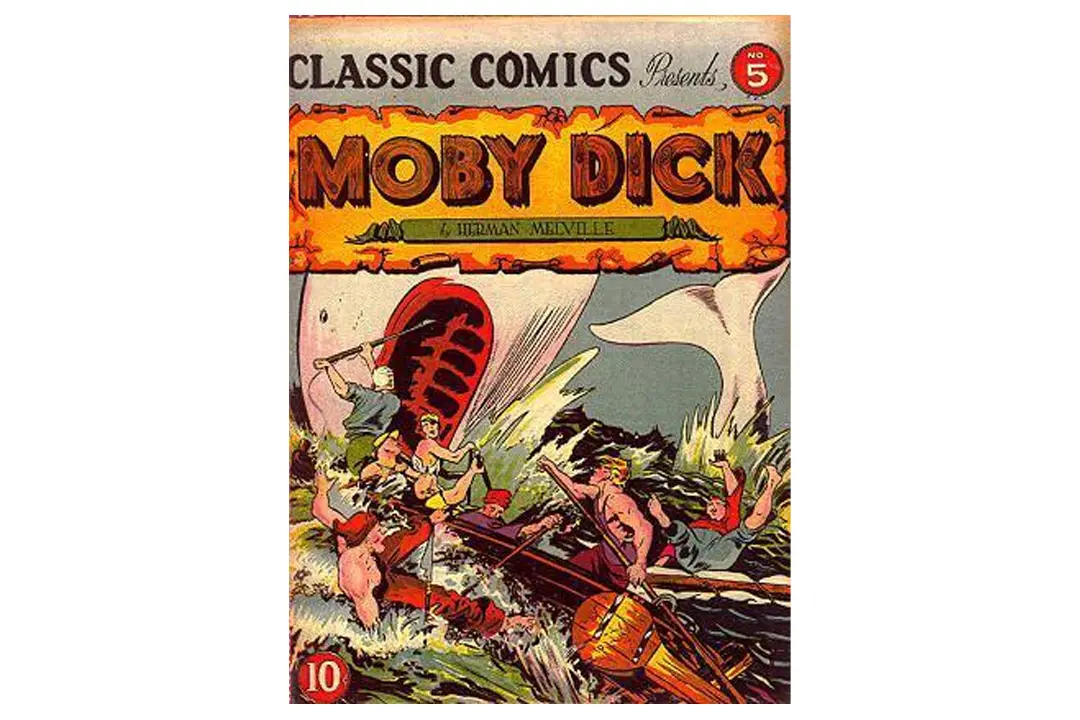
Moby Dick – Herman Melville: Book Summary
Beverly Ashford • 05 Mar 2026 • 92 views • 3 min read.Let me tell you about the book almost nobody finished when it was published. Herman Melville wrote Moby Dick in 1851. It sold 3,000 copies in his lifetime. Reviews were mixed at best, savage at worst. He died in obscurity in 1891, his obituary getting his name wrong. Then, decades later, scholars rediscovered the book and realized they were looking at one of the most ambitious novels ever written. The opening line is the most famous in American literature: "Call me Ishmael." What follows that line is not what most people expect. Yes, there's a whale. Yes, there's a mad captain. But there's also chapters on the whiteness of things, the classification of whales, the anatomy of whale heads, the economics of the whaling industry, and philosophical digressions that seem to have nothing to do with anything. It's wild, frustrating, boring in places, exhilarating in others, and ultimately unforgettable.
Moby Dick – Herman Melville: Book Summary
Quick Summary:
- Captain Ahab obsessively hunts the white whale that took his leg
- Ishmael narrates a voyage that becomes a meditation on everything
- The novel is about whaling, God, obsession, race, democracy, and the unknowable
- Failed upon publication in 1851, now considered perhaps the greatest American novel
The Voyage Begins
Ishmael is a young man with depression and no money. When he feels the "damp, drizzly November" in his soul, he goes to sea. This time, he's decided to try whaling.
In New Bedford, Massachusetts, he meets Queequeg—a Pacific Islander covered in tattoos, a former cannibal, and a harpooner. They share a bed at an inn (no other rooms available), and despite Ishmael's initial terror, they become close friends. Their bond crosses every boundary of race and culture that 1850s America enforced.
Together they sign onto the Pequod, a whaling ship out of Nantucket. The ship is decorated with whale bones and teeth. It looks like something from a nightmare.
Captain Ahab doesn't appear for many chapters. He's in his cabin. The crew whispers about him. When he finally emerges, we understand why.
Ahab is missing a leg—taken by a white whale called Moby Dick on a previous voyage. He's nailed together an ivory leg from a whale's jawbone. He paces the deck leaving divots in the wood. His face looks "like a bed where fire has run."
He's not sailing to hunt whales. He's sailing to kill one specific whale. The white whale that maimed him. He'll chase it around the world if necessary.
The Hunt
The Pequod sails through the Atlantic, around the Cape of Good Hope, across the Indian Ocean, into the Pacific. Along the way, the crew hunts whales—this is a commercial venture, after all, and the owners back in Nantucket expect barrels of oil.
But Ahab cares nothing for profit. Every ship they meet, he asks the same question: "Hast seen the White Whale?"
The crew is diverse beyond anything in American literature of the time. Queequeg from Polynesia. Tashtego, a Native American from Martha's Vineyard. Daggoo, an African. Flask, Stubb, and Starbuck—the white American officers. Men from everywhere, working together in brutal conditions for wages they'll probably drink away.
Starbuck, the first mate, is the voice of sanity. He tries to reason with Ahab. He points out that revenge against an animal is madness. Ahab knows. He doesn't care. The whale has become a symbol—of everything that limits human will, everything incomprehensible in the universe, everything that has ever hurt him.
"He piled upon the whale's white hump the sum of all the general rage and hate felt by his whole race from Adam down."
The Digressions
Here's where modern readers struggle.
Melville interrupts the plot constantly. Whole chapters describe whale biology, whale taxonomy, the history of whale representation in art, the operation of try-works (rendering whale fat), the comparative size of whale heads.
Some of this is fascinating. Some is tedious. All of it serves a purpose.
Melville is writing an encyclopedia of whaling because whaling was the oil industry of its time—the most economically important industry in America. He's documenting a world. He's also circling his themes: the unknowability of nature, the limits of human knowledge, the way we project meaning onto things that may have no meaning.
The whiteness of the whale gets its own chapter. White means purity, divinity, ghosts, terror, blankness. Moby Dick is white. What does that mean? Everything and nothing. That's Melville's point.
Key Characters
| Character | Role | Represents |
|---|---|---|
| Ishmael | Narrator, sailor | Everyman observer, philosophical voice |
| Captain Ahab | Pequod's captain | Obsession, defiance, human will against the unknowable |
| Moby Dick | The white whale | God? Nature? Evil? Meaninglessness? All of the above? |
| Queequeg | Harpooner, Ishmael's friend | Human connection across cultural boundaries |
| Starbuck | First mate | Reason, morality, failed resistance to madness |
| Stubb | Second mate | Cheerful fatalism |
| Pip | Cabin boy | Innocence destroyed, prophetic madness |
| Fedallah | Ahab's mysterious harpooner | Fate, doom, devilish bargains |
The Final Chase
They find Moby Dick.
The chase lasts three days. On day one, the whale destroys Ahab's boat. On day two, it destroys another boat and Ahab's ivory leg. On day three, Moby Dick rams the Pequod itself.
As the ship sinks, Ahab throws his harpoon one last time. The line catches around his neck. The whale drags him under. Ahab dies still trying to kill what he cannot kill.
The Pequod goes down in a vortex, taking almost everyone with it. The only survivor is Ishmael, who clings to Queequeg's coffin—a coffin his friend had carved for himself but didn't need when he recovered from an illness.
A passing ship rescues Ishmael. He lives to tell the tale. Everyone else is gone.
What the Whale Means
Melville refuses to tell you.
Moby Dick has been interpreted as: God, nature, the unconscious, death, capitalism, the blank indifference of the universe, America itself, evil, the absence of evil, and everything in between.
The point may be that the whale means nothing—and that's what terrifies Ahab. He cannot accept meaninglessness. He must project meaning onto the whale, must believe it hurt him deliberately, must have an enemy to fight.
Or the point may be that the whale means everything—that it contains all possible meanings, which is why it's white (all colors combined) and why no interpretation fully captures it.
The whale is the thing you can't understand no matter how hard you try. The novel is the attempt to understand it anyway.
Why It Failed, Why It Lasts
Why it failed: It was weird. Too philosophical. Too digressive. Readers expected a sea adventure; they got metaphysics. The American edition was also missing the epilogue explaining Ishmael's survival, making the whole narrative impossible.
Why it lasts: It contains everything. Democracy, race, capitalism, religion, madness, friendship, death. The prose shifts from technical manual to Shakespearean monologue to lyric poetry. It's excessive because life is excessive.
The book also captures something about American ambition—the desire to dominate nature, to impose meaning, to pursue ends regardless of cost. Ahab is America at its most dangerous: brilliant, charismatic, and willing to destroy everything in pursuit of his singular vision.
Frequently Asked Questions
Do I really have to read all the whaling chapters?
You can skim them. Many readers do. But the digressions are where Melville's mind becomes visible. The novel's power comes partly from its relentlessness—the way it circles and circles its unsayable subject.
Is Ahab the hero or the villain?
Neither. He's a tragic figure—magnificent and insane, sympathetic and monstrous. You understand him without endorsing him. That's Melville's achievement.
What happens to Queequeg?
He goes down with the ship. But his coffin—covered in mysterious symbols that replicate his tattoos—saves Ishmael. The "cannibal" saves the Christian through art and craftsmanship.
Is the novel racist?
Complicated. It's both progressive and a product of its time. The diverse crew is presented with respect rare for 1851. Queequeg is noble, dignified, heroic. But the language and some descriptions reflect 19th-century attitudes.
Why does everyone survive except Ishmael?
Because Ishmael is the witness. He exists to tell us what happened. His survival is narrative necessity, but also the point: stories survive when everything else doesn't.
Should I read the whole thing?
Try. It's hard. It's long. But if you can surrender to its rhythms, something extraordinary happens. There's nothing else like it.
The Bottom Line
Here's what Herman Melville achieved.
He wrote a novel about a whale that's really about everything humans fear and cannot control. He created a villain who's also a tragic hero. He documented an industry that no longer exists with the detail of an anthropologist.
The book failed because it was too much. It lasts because it's everything.
Moby Dick doesn't give you answers. It gives you the experience of chasing something that cannot be caught, understanding something that cannot be understood.
Like Ahab, you finish the book without having killed your whale.
Unlike Ahab, you survive.