
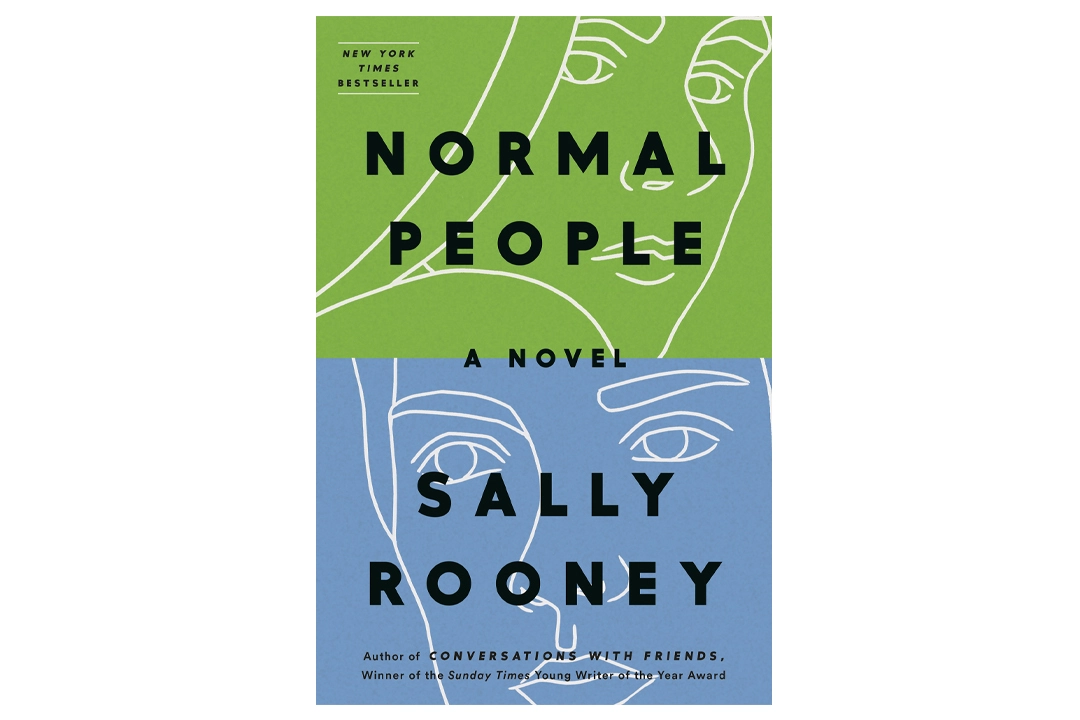
Normal People – Sally Rooney: Book Summary
Beverly Ashford • 11 Mar 2026 • 83 views • 2 min read.Let me tell you about the book that made people feel understood and exposed at the same time. Sally Rooney wrote a novel about two people who love each other and keep messing it up. That's it. No murders. No mysteries. No apocalypse. Just Connell and Marianne, orbiting each other for four years, failing to say what they mean. It became a massive bestseller. The BBC/Hulu adaptation was a cultural phenomenon during pandemic lockdowns. Rooney became the most discussed literary writer of her generation. Why? Because Normal People captures something true about how we love: badly, incompletely, with silences where words should be.
Normal People – Sally Rooney: Book Summary
Quick Summary:
- Two Irish teenagers circle each other through high school and university
- Their relationship defies categories—more than friends, often less than together
- The novel examines class, communication, and the people we become
- Published in 2018, it made Rooney the voice of millennial literary fiction
The Setup
Sligo, Ireland. 2011.
Connell Waldron is popular, athletic, quietly intelligent. He's well-liked at school and good at sports. He's also working-class—his mother, Lorraine, cleans houses to get by.
Marianne Sheridan is wealthy, strange, and friendless. She's brilliant but abrasive. Other students find her pretentious. Her family is dysfunctional in ways that only become clear gradually.
The connection: Lorraine cleans Marianne's house. Connell picks up his mother there. He and Marianne start talking. Then they start something else.
They begin a secret relationship. Connell is too concerned with his social standing to acknowledge Marianne publicly. She accepts this because she doesn't expect better.
When the school formal approaches, Connell asks someone else. Marianne is devastated. The relationship—whatever it was—ends.
The Years That Follow
The novel tracks Connell and Marianne through four years, alternating perspectives and jumping through time.
Dublin. Trinity College.
Both attend Trinity. The social order inverts. Connell, once popular, feels adrift among the wealthy, confident Dublin students. Marianne, once isolated, thrives. She's beautiful, sharp, and surrounded by friends and admirers.
They reconnect. This time, Marianne has the social capital. She introduces him to her world. They begin again.
But patterns repeat. Communication fails. Neither says what they need. Pride, fear, and misunderstanding drive them apart.
They date other people. They hurt each other. They keep coming back.
The Timeline
| Period | What Happens | Dynamic |
|---|---|---|
| School (2011) | Secret relationship, Connell hides her | He has power, she accepts less |
| First Year Trinity | Social inversion, reunion | She has social power, he feels lost |
| End of First Year | Connell's friend dies; Marianne in Sweden | Grief separates them |
| Second/Third Year | On-and-off, other relationships | Cycling toward and away |
| Final Year | Brief stability together | Still can't fully commit |
| Ending | Connell gets MFA offer in New York | Unresolved but hopeful |
What Keeps Them Apart
The obstacles aren't external. No one is forbidding their love. The obstacles are inside them.
Connell can't express himself. He feels things deeply but can't articulate them. He has depression he barely acknowledges. He's terrified of asking for what he needs.
Example: When his funding runs out at Trinity, he can't bring himself to ask if he can stay with Marianne. He assumes she'll say no, so he never asks. She assumes he doesn't want to live with her. They break up over a conversation that never happened.
Marianne doesn't believe she deserves love. Her family has taught her she's worthless. Her brother physically abuses her. Her mother does nothing. She gravitates toward men who treat her badly because it confirms what she believes about herself.
Example: In Sweden, she dates a man who hurts her during sex in ways she doesn't actually want. She goes along with it because she's learned to accept damage.
They love each other but can't fully inhabit that love. Something always gets in the way—usually themselves.
Key Characters
| Character | Role | Represents |
|---|---|---|
| Connell Waldron | Protagonist, working-class | Masculinity, hidden depth, depression |
| Marianne Sheridan | Protagonist, wealthy | Damage, intelligence, self-worth struggles |
| Lorraine | Connell's mother | Warmth, decency, class consciousness |
| Alan | Marianne's brother | Abuse, family dysfunction |
| Peggy | Marianne's friend | Dublin social scene, betrayal |
| Helen | Connell's girlfriend | Healthy relationship he can't fully embrace |
| Jamie/Lukas | Marianne's boyfriends | Men who reinforce her low self-worth |
The Style
Rooney writes in a distinctive, stripped-down style.
No quotation marks. Dialogue blends into narration, creating intimacy. You're inside their heads, not observing from outside.
Close third person. We alternate between Connell's and Marianne's perspectives. We see how differently they interpret the same events—and how often they're wrong about each other.
Precise emotional notation. Rooney captures micro-feelings—the exact embarrassment of a social misstep, the particular relief of being understood.
Example: "She had the sense that he was the only person who found her likable at all, and that if he ever stopped speaking to her, she would be completely alone."
The prose is simple but the emotional intelligence is complex.
The Themes
Class and belonging. Connell feels uncomfortable among Marianne's wealthy friends. She's oblivious to how her family's money shapes her options. The novel never forgets that material circumstances affect relationships.
Communication failures. Almost every problem between them could be solved with one honest conversation. They almost never have that conversation. This is realistic and painful.
Who we become. Both characters transform over four years. The novel asks: how much are we shaped by circumstance? Can we escape the patterns our families installed?
Intimacy and power. Their relationship constantly negotiates who has power. Sometimes Connell, sometimes Marianne. True equality is rare and precious.
Love without resolution. The novel ends without marriage or commitment. They're together, then apart again. Rooney suggests that some loves simply are—they don't arrive at a final state.
The Ending
Connell is accepted to an MFA program in New York. He'll be leaving Ireland.
They've finally found stability. They're living together. Things are working.
But he wants to go. And she tells him he should.
"I'll go with you," she says. "I think you should stay," he says.
He means it lovingly—her life is in Dublin, her recovery from family trauma, her sense of belonging. She understands.
They don't break up. They don't stay together. The novel ends with:
"You should go," she says. "I'll be here. You know I will."
It's hopeful and ambiguous. They've finally learned to say what they mean. Whether that's enough remains unknown.
Frequently Asked Questions
Why is this book so popular?
It captures how contemporary young people actually relate—the anxiety, the texting, the inability to say simple things aloud. Readers feel seen.
Is this autofiction?
Not exactly. Rooney writes about Ireland, Trinity College, and young people in ways that feel personal, but the characters aren't her.
Should I watch the series?
The Hulu/BBC adaptation is excellent—faithful, beautifully acted, emotionally devastating. Watch after reading; the book's interiority enriches the series.
Is Connell a good person?
Complicated. He's fundamentally decent but causes harm through cowardice and silence. Rooney doesn't excuse him but doesn't condemn him either.
Is Marianne's trauma realistic?
Yes. Rooney depicts family abuse and its psychological effects with painful accuracy. Marianne's patterns—accepting mistreatment, low self-worth—are recognizable.
What about Rooney's other books?
Conversations with Friends (2017) covers similar territory with different characters. Beautiful World, Where Are You (2021) is more ambitious and more divisive.
The Bottom Line
Here's what Sally Rooney achieved.
She wrote a love story where the obstacles are internal—fear, silence, self-doubt. She made "they can't communicate" into gripping drama. She depicted class anxiety without condescension.
Normal People argues that loving someone doesn't mean understanding them, and being understood doesn't mean being loved. The gap between what we feel and what we say is where most relationships live.
Connell and Marianne love each other. They keep failing each other. They keep trying again.
That's not a tragedy. That's just what it's like.