
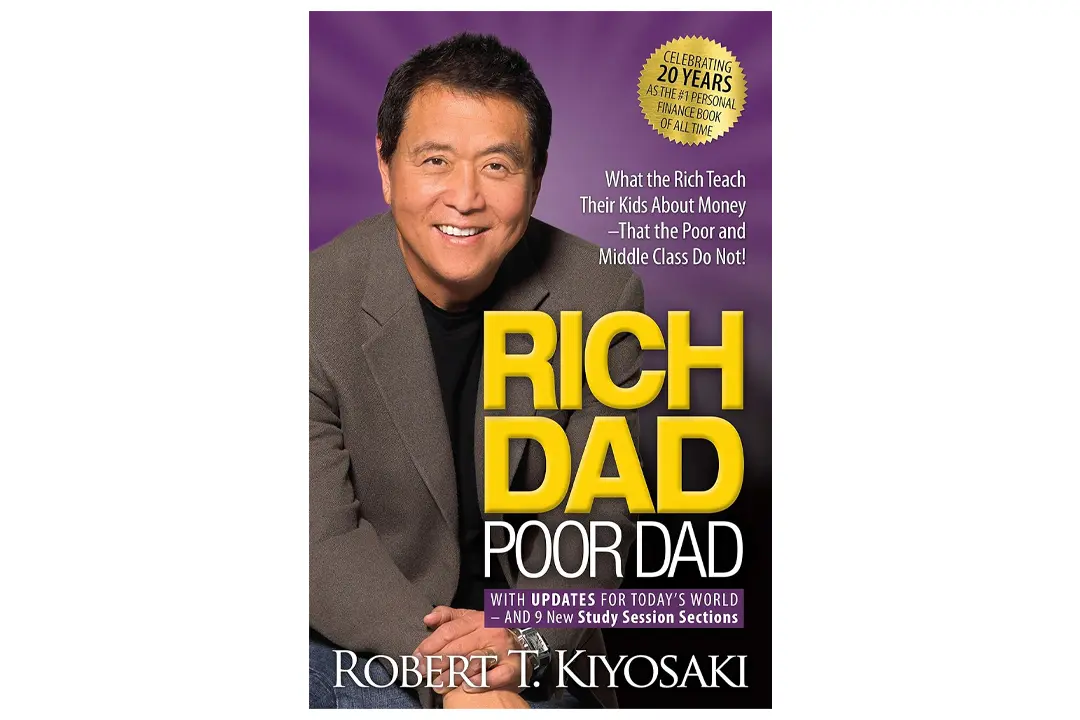
Rich Dad Poor Dad – Robert Kiyosaki: Book Summary
Beverly Ashford • 11 Mar 2026 • 85 views • 3 min read.Let me tell you about the most controversial personal finance book ever written. Robert Kiyosaki's Rich Dad Poor Dad has sold over 40 million copies. It's been translated into dozens of languages. It changed how millions of people think about money. It's also been criticized relentlessly. Financial experts have questioned its accuracy. Journalists have doubted whether "Rich Dad" even existed. Some of the specific advice has aged poorly. And yet—the core ideas remain powerful. The book works not because it's a detailed financial manual, but because it shifts how you think about money, work, and wealth. It's philosophy disguised as advice. Here's what the book actually says, and what's worth taking seriously.
Rich Dad Poor Dad – Robert Kiyosaki: Book Summary
Quick Summary:
- Two fathers offer contrasting philosophies about money and work
- The rich don't work for money—they make money work for them
- Assets put money in your pocket; liabilities take money out
- Published in 1997, it became one of the best-selling personal finance books ever
Two Dads, Two Mindsets
Kiyosaki frames the book around two father figures in his childhood.
Poor Dad was his biological father—highly educated, a PhD, a government employee. He believed in working hard, getting good grades, finding a secure job, and saving money. He valued education and stability. He struggled financially his entire life.
Rich Dad was the father of Kiyosaki's childhood friend—a businessman who never finished eighth grade but built a small empire of businesses and investments. He valued financial education over formal schooling. He became one of the wealthiest men in Hawaii.
The contrast drives the book. Same era, same economy, radically different outcomes. The difference wasn't intelligence or effort. It was mindset.
Poor Dad worked for money. Rich Dad made money work for him.
Lesson 1: The Rich Don't Work for Money
This is the core insight that reframes everything else.
Most people follow a pattern: get a job, earn a paycheck, pay bills, save a little, repeat until retirement. They work for money. Their income depends on their continued labor.
The wealthy operate differently. They build or acquire assets that generate income independently. The asset does the work. They don't trade time for dollars indefinitely.
The trap Kiyosaki identifies: Higher income leads to higher lifestyle, which leads to needing more income. People get raises and immediately upgrade their houses, cars, and habits. They run faster on the same wheel.
The alternative: Instead of spending raises, invest them in assets. Build income streams that don't require your time. Eventually, passive income exceeds expenses, and working becomes optional.
Lesson 2: Assets vs. Liabilities
Kiyosaki's definitions are simple—almost too simple—but clarifying.
An asset puts money in your pocket. A liability takes money out of your pocket.
By this definition, many things people call assets aren't:
- Your home (requires mortgage payments, taxes, maintenance)
- Your car (loses value, requires insurance, gas, repairs)
- Your education (if it just qualifies you for a job trading time for money)
True assets include:
- Businesses that don't require your presence
- Stocks and bonds that pay dividends
- Real estate that generates rental income
- Intellectual property that earns royalties
The key insight: The middle class buys liabilities they think are assets. They buy bigger houses and nicer cars, calling them investments. The wealthy acquire actual income-generating assets first, then buy luxuries with the cash flow.
The Core Concepts
| Poor Dad Mindset | Rich Dad Mindset |
|---|---|
| Work hard for money | Make money work hard for you |
| Save money | Invest money |
| Your house is an asset | Your house is a liability |
| Get a good job with benefits | Build or acquire businesses |
| The company or government will take care of you | Take care of yourself |
| Study hard, get good grades | Learn about money and investing |
| Risk is dangerous | Not understanding money is dangerous |
| Pay yourself last | Pay yourself first |
| Specialize in one field | Know a little about many things |
| Money is the root of evil | Lack of money is the root of evil |
Lesson 3: Mind Your Own Business
Kiyosaki distinguishes between your profession and your business.
Your profession is how you earn money today—your job, your career. Your business is your asset column—what you're building on the side.
The advice: Keep your day job, but spend after-hours energy building assets. Don't wait until you can quit to start investing. Build while you earn.
Rich Dad recommends focusing on:
- Real estate
- Small businesses
- Paper assets (stocks, bonds, mutual funds)
- Intellectual property
- Anything that appreciates and generates income
Your job is someone else's business. Your assets are your business. Mind your own business.
Lesson 4: Taxes and Corporations
This chapter ventures into more specific (and debatable) advice about legal structures.
Kiyosaki argues that the wealthy use corporations to reduce taxes legally. A corporation can pay expenses before taxes. Individuals pay taxes before expenses. The difference compounds significantly.
The rich: Earn → Spend → Pay taxes The middle class: Earn → Pay taxes → Spend
This isn't tax evasion—it's tax strategy. Business owners can deduct expenses that employees cannot. Understanding these structures provides advantages.
Caveat: Tax law is complex, varies by jurisdiction, and has changed since 1997. The principle that legal structures matter is valid. The specifics require professional advice.
Lesson 5: Work to Learn, Not to Earn
Poor Dad advised specialization—become expert in one field, climb that ladder.
Rich Dad advised diversification of skills—learn sales, marketing, communication, investing. Jack of trades beats master of one if you're building businesses.
Kiyosaki recommends taking jobs that teach valuable skills, even if they pay less initially. A job that teaches sales skills might be worth more long-term than a higher-paying job that teaches nothing transferable.
The skills he considers essential:
- Sales and marketing
- Accounting and financial literacy
- Investing
- Understanding markets
- Law basics
The Criticisms
Rich Dad Poor Dad has serious critics. Here's what they say:
"Rich Dad" may be fictional. Kiyosaki has been vague about Rich Dad's identity. Some researchers believe he's a composite or entirely invented. The lessons aren't necessarily less valid, but the framing may be misleading.
The advice is vague. The book tells you to buy assets but doesn't explain how to evaluate real estate deals or pick stocks. It's motivational rather than instructional.
The real estate emphasis is dated. Kiyosaki's specific wealth came largely from real estate in favorable markets. The advice worked better in the conditions of his era.
Some advice is risky. The book can make debt and leverage sound safer than they are. Many people have lost money following aggressive interpretations of these principles.
Network marketing connections. Kiyosaki has promoted MLM/network marketing companies, which are controversial at best and predatory at worst.
What's Actually Valuable
Despite criticisms, core concepts remain useful:
The asset/liability distinction clarifies spending decisions. Even if Kiyosaki's definitions are simplistic, asking "does this put money in my pocket or take it out?" is powerful.
The mindset shift from working for money to making money work for you is legitimate. Even critics acknowledge this reframe is valuable.
Financial literacy matters. The book's insistence that school doesn't teach money skills—and that you must learn them yourself—is simply true.
Questioning assumptions helps. The conventional path (job, house, retirement) isn't the only path. Examining alternatives is worthwhile even if you don't follow them.
Frequently Asked Questions
Is Rich Dad a real person?
Kiyosaki claims yes but has been vague about identity. Journalists have been unable to confirm. Whether real or composite, the lessons are the actual content.
Is this good advice for beginners?
It's good for mindset, not for specific tactics. Read this for philosophy, then read more detailed books for investment strategy.
Should I quit my job after reading this?
No. The book explicitly says to keep your job while building assets on the side. Quitting before having income-generating assets defeats the purpose.
Is real estate really the best investment?
It can be, depending on markets, timing, and your skills. The book's bias toward real estate reflects Kiyosaki's background. Other asset classes work too.
Is this just for Americans?
The tax advice is US-specific, but the mindset applies anywhere. Principles of assets vs. liabilities don't require a particular tax code.
What should I read after this?
For investing specifics: The Simple Path to Wealth (JL Collins), The Intelligent Investor (Benjamin Graham). For more mindset: Think and Grow Rich (Napoleon Hill).
The Bottom Line
Here's what Rich Dad Poor Dad actually offers.
It's not a detailed financial manual. It's not always accurate. It's not above criticism.
But it does something most personal finance books don't: it changes how you think about money, work, and wealth. The distinction between working for money and making money work for you—however obvious it seems once stated—is genuinely transformative for many readers.
The book argues that financial struggle is usually a knowledge problem, not an income problem. People who earn modest salaries but understand assets can build wealth. People who earn fortunes but don't understand liabilities stay broke.
That insight—that financial literacy determines outcomes more than income does—remains powerful.
Read it for the philosophy. Seek detailed advice elsewhere.