
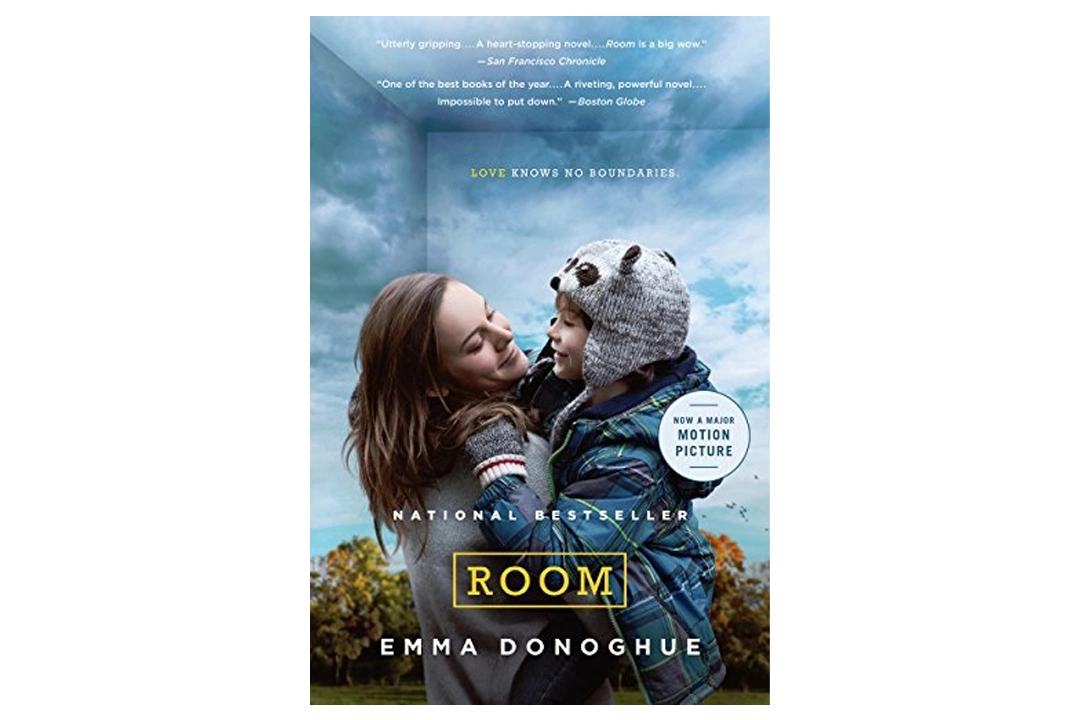
Room – Emma Donoghue: Book Summary
Beverly Ashford • 12 Mar 2026 • 65 views • 3 min read.Let me tell you about the book that made a prison cell feel like home—and then made you understand why leaving is just as terrifying. Emma Donoghue took one of the most horrific scenarios imaginable—a woman held captive and raising the child of her rapist—and told it from the child's perspective. The result is not what you'd expect. It's not dark in the way you fear. It's about love, imagination, and how children create meaning from whatever world they're given. Room sold millions of copies. The 2015 film won Brie Larson an Oscar. The story entered the cultural conversation about trauma, motherhood, and resilience. But it's the voice that makes it unforgettable. Jack's voice.
Room – Emma Donoghue: Book Summary
Quick Summary:
- A five-year-old boy narrates life in captivity with his mother
- Room is his entire world—he doesn't know anything else exists
- Their escape is only half the story; learning to live is the rest
- Published in 2010, it became a phenomenon and an Oscar-winning film
Jack's World
Jack is five years old. He lives in Room with Ma.
Room is an 11-by-11-foot space. There's Bed, where they sleep. There's Wardrobe, where Jack hides when Old Nick visits. There's Skylight, the one window to the outside world. There's TV, which shows pictures of things Jack knows aren't real—dogs and elephants and other places.
To Jack, Room is the entire world. He doesn't understand that it's a prison. He thinks the "TV world" is just pictures. He believes there's nothing beyond the walls. Ma has told him this because she couldn't bear to explain the truth.
Jack wakes up, eats breakfast, does physical exercises with Ma, watches TV, plays games, reads books, does "Phys Ed" (running track around the room), takes a bath, goes to sleep. This is life. This is all of life.
Old Nick comes at night. Ma sends Jack to Wardrobe. The bed creaks. The door closes. Jack doesn't fully understand what happens, but he knows Ma doesn't like it.
For his fifth birthday, Jack gets to ask questions. Ma tells him the truth: Room is not the world. Outside is real. Old Nick kidnapped her seven years ago. Jack was born in Room. They are prisoners.
Jack's world explodes.
The Narrator
The book's genius is its perspective.
Jack doesn't understand what's happening the way an adult would. He doesn't know he's a victim. He loves Room—it's all he's ever known. He loves Ma desperately. He loves Bed and Rug and Plant and even Wardrobe.
The horror is visible to readers but not to Jack. We understand that Ma has been raped repeatedly, that she gave birth alone, that she's survived through sheer will. Jack sees that Ma gets "Gone"—her word for depression—and that sometimes she stays in bed and doesn't speak.
The love is visible too. Ma has protected Jack's childhood under impossible circumstances. She's educated him with limited resources. She's created routines and games and meaning. She's kept him safe by building a world inside a prison.
Key Elements
| In Room | In Outside |
|---|---|
| Everything has a name (Bed, Rug, Plant) | Too many things to name |
| Two people (Ma and Jack) | Overwhelming crowds |
| Complete routine | Unpredictable time |
| Old Nick (threat) | New threats (media, memories) |
| Captivity | Freedom that feels like captivity |
The Escape
Ma devises a plan. Jack must play dead.
She wraps him in a rug and tells Old Nick that Jack has died of fever, that she needs him removed. Old Nick puts the "body" in his truck to dump somewhere.
Jack must unroll himself, jump from the moving truck, and find help.
He's never been outside. He doesn't know how the world works. He barely knows what a truck is.
The sequence is agonizing. Jack is terrified and disoriented. The truck stops at a light. He jumps. He runs to a stranger and says what Ma told him to say.
Police are called. Ma is rescued. Old Nick is arrested.
They're free.
After
The second half of the book is about what happens next—and it's just as harrowing as captivity.
Jack is overwhelmed. Everything is too big, too bright, too much. He doesn't understand how to walk on stairs. He's terrified of strangers. The sky is too open. He keeps asking to go back to Room.
Ma is struggling. She's reunited with her family, but seven years have passed. Her parents divorced. Her brother has grown up. Everyone wants to help but doesn't know how. The media is relentless.
Ma attempts suicide. She's hospitalized. Jack is cared for by his grandmother.
Jack adapts. Children are resilient in ways adults aren't. He begins to understand Outside, to make friends, to build a new normal. His adjustment is faster than Ma's—he has less to grieve, less to reconcile.
Key Characters
| Character | Role | Significance |
|---|---|---|
| Jack | Narrator, five years old | Innocence as lens, adaptation |
| Ma (Joy) | Mother, survivor | Protection, trauma, recovery |
| Old Nick | Captor | Rarely shown, always present |
| Grandma | Joy's mother | Family rebuilding, generational trauma |
| Steppa | Joy's stepfather | New family that doesn't understand |
| Dr. Clay | Therapist | Helping Jack process |
The Return
Near the end, Jack asks to visit Room one more time.
Police arrange a supervised visit. Jack enters the space where he spent his entire life. It's smaller than he remembered. Everything is the same but different.
He says goodbye to the objects he loved. He thanks Room. He's ready to leave.
This scene is heartbreaking and necessary. Jack needed closure. He needed to see that Room was real, that his memories were accurate, that he could choose to leave.
What the Book Is Really About
Perspective shapes reality. Jack didn't experience Room as a prison because he had no frame of reference. This doesn't make Ma's suffering less real—it shows how context determines experience.
Motherhood under impossible conditions. Ma kept her child healthy, educated, and loved in a situation designed to destroy. The book is a tribute to what mothers do when everything is against them.
Trauma doesn't end with rescue. The escape is the halfway point, not the climax. Recovery is its own long journey. The book refuses to pretend freedom is simple.
Children adapt. Jack's resilience is painful and hopeful. He grieves Room. He also learns to love Outside. Kids are not ruined by circumstances adults find unsurvivable.
Frequently Asked Questions
Is this based on a true story?
Donoghue was inspired by real cases like Josef Fritzl and Jaycee Dugard, but the novel is fiction. The specific details are invented.
Is this book traumatic to read?
Less than you'd expect, because of Jack's perspective. The worst elements are implied rather than described. It's intense but not gratuitous.
How does the movie compare?
The 2015 film is excellent—Brie Larson won an Oscar, and Jacob Tremblay is remarkable as Jack. The movie is faithful and emotionally powerful. Both are worth experiencing.
Should I read this if I'm a parent?
Many parents find it deeply moving. It may be difficult precisely because it's about a mother's love under extreme conditions.
Why does Jack talk that way?
His language reflects his limited experience and young age. He capitalizes objects because they're specific and individual to him. The voice takes adjustment but becomes natural quickly.
The Bottom Line
Here's what Emma Donoghue achieved.
She wrote about captivity and abuse through the eyes of a child who doesn't know he's a victim—and made it a story about love rather than horror. She showed that survival isn't just escaping; it's building a new life from broken pieces.
Room argues that home is wherever love exists. Jack's home was a prison. He had to leave to survive. But leaving meant grieving the only world he'd ever known.
The book ends with Jack looking forward. He's learning Outside. He's building new relationships. He's becoming someone Room could never have made him.
Ma is recovering too. Slowly. Painfully. But recovering.
That's the real escape—not through a door, but into a future.