
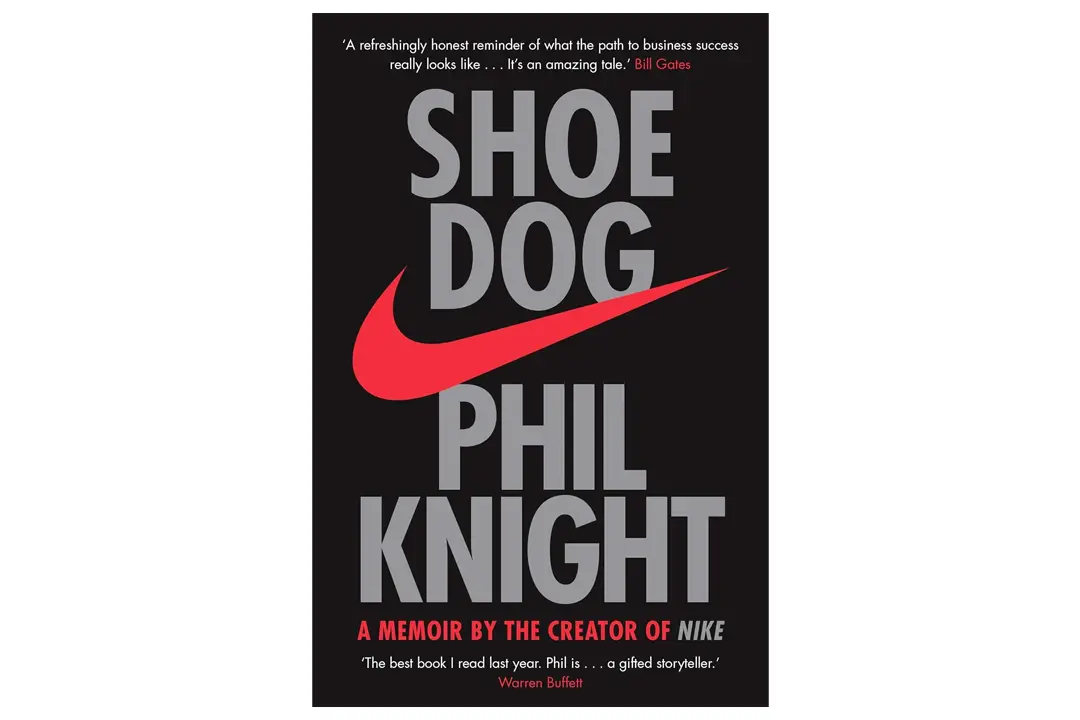
Shoe Dog by Phil Knight: Book Summary
Beverly Ashford • 13 Mar 2026 • 55 views • 3 min read.Let me tell you about the business memoir that makes every other business memoir look sanitized by comparison. Phil Knight published Shoe Dog in 2016, when he was seventy-eight years old and had nothing left to prove. Nike was a fifty-billion-dollar company. The swoosh was one of the most recognized symbols on earth. He could have written a triumphant narrative about vision and leadership and strategic genius. He did not write that book. Instead, Knight wrote about fear. About cash crises so severe the company nearly died every single year for its first decade. About betrayals, mistakes, and relationships he damaged in the pursuit of something he could not even fully articulate. About a son he barely knew because he was always working. It is the most honest book about building a company that has ever been written by someone who actually built one.
Shoe Dog by Phil Knight: Book Summary
Quick Summary:
- The founder of Nike tells the story of building one of the most valuable brands in history — and nearly losing it dozens of times
- Published in 2016, it reads more like a novel than a business memoir
- Knight is unusually honest about his failures, fears, and the people he let down along the way
- This is not an inspiration manual — it is a portrait of obsession, luck, and survival
The Crazy Idea
Knight graduated from Stanford Business School in 1962 with a paper arguing that Japanese running shoes could do to German athletic brands what Japanese cameras had done to German cameras — undercut them on price without sacrificing quality. His professor gave him an A. Knight actually believed it.
He flew to Japan on a round-the-world trip that his father reluctantly funded. He found Onitsuka Tiger, the manufacturer of Asahi running shoes in Kobe, walked into their factory without an appointment, and convinced them he represented an American distribution company. He did not. The company did not exist. He invented a name on the spot: Blue Ribbon Sports.
Tiger sent him samples. He sent them to his old track coach at the University of Oregon — Bill Bowerman, one of the most influential figures in American running — who immediately took apart the shoes to see how they were made, suggested modifications, and became Knight's first partner.
This is how Nike began. A lie in a Japanese factory and a coach who could not stop tinkering.
The First Decade: Survival as Strategy
The early chapters of Shoe Dog cover the 1960s, and they read like a thriller where the protagonist is always one phone call away from collapse.
Knight worked as an accountant during the day and sold shoes from the trunk of his car at track meets on weekends. Every dollar of profit went straight back into ordering more inventory. The company had no cash reserves — ever. Every growth cycle required more capital than the last, and the bank was always on the edge of pulling their credit line.
Bowerman kept designing. His most famous invention arrived when he poured rubber into his wife's waffle iron to see if the grid pattern would create better traction. It worked. The waffle sole became one of Nike's signature technologies.
Knight hired a team of misfits — veterans, obsessives, people who could not work conventional jobs and did not want to. He calls them his first team with genuine affection. They believed in what they were building even when there was almost nothing to believe in yet.
The relationship with Onitsuka Tiger collapsed spectacularly in the early 1970s when Knight discovered they were shopping his brand to other American distributors. He had already been secretly developing his own shoe line as a backup. The breakup was ugly and legally complicated. It was also the moment Nike was actually born — free from a supplier who had become a threat.
The Nike Years
The swoosh logo was designed by a graphic design student named Carolyn Davidson for thirty-five dollars. Knight did not love it. He said it would have to grow on him. It did.
The name Nike came from Jeff Johnson, Knight's first full-time employee, who dreamed it the night before they needed to file paperwork. Nike, the Greek goddess of victory. Knight shrugged and said fine.
The company went public in 1980. Knight describes the IPO with more ambivalence than triumph. He had built something extraordinary. He had also spent nearly two decades choosing the company over almost everything else — his marriage, his children, his own health and peace of mind.
His son Matthew died in a scuba diving accident in 2004. Knight mentions this late in the book, quietly and without extended analysis. The absence of processing feels intentional. Some losses do not resolve into lessons.
What the Book Is Really About
Shoe Dog is not really about shoes or business strategy. It is about what happens to a person who finds the thing they are willing to sacrifice everything for — and then sacrifices everything for it.
Knight's "Crazy Idea" is a phrase he returns to throughout the memoir. He never fully explains what drew him so completely to running shoes and the people who wore them. He just knew, from the moment he started selling Tigers from his car, that this was the work he was meant to do. That certainty carried him through years of near-bankruptcy, legal battles, banking crises, and personal failure.
The book asks implicitly whether it was worth it. Knight does not answer directly. He lets the story stand.
Key People Behind Nike's Early Growth
| Person | Role | Contribution | Complexity |
|---|---|---|---|
| Bill Bowerman | Co-founder, coach | Product innovation, waffle sole, credibility | Brilliant but difficult; often at odds with Knight |
| Jeff Johnson | First employee | Built operations from nothing, named Nike | Obsessive loyalist who Knight sometimes took for granted |
| Bob Woodell | Early executive | Ran operations after accident left him in a wheelchair | Steady and competent when everything else was chaos |
| Penny Knight | Wife | Kept the family together during years of absence | Largely absent from the narrative — itself a statement |
| Carolyn Davidson | Designer | Created the swoosh for thirty-five dollars | Later compensated with Nike stock by Knight |
| Nissho Iwai | Japanese trading company | Provided financing when banks refused | Saved Nike multiple times without recognition |
| Onitsuka Tiger | Original supplier | Launched Blue Ribbon Sports | Became a legal adversary after relationship collapsed |
Frequently Asked Questions
Is this book only for entrepreneurs?
No. It reads like a memoir and a coming-of-age story as much as a business book. Readers with no interest in starting companies find it compelling because Knight writes about obsession, identity, and sacrifice in ways that apply far beyond business.
How honest is Knight really?
Unusually so for someone of his stature. He acknowledges specific failures — as a husband, as a father, as a manager. He describes decisions he is not proud of. He does not reframe everything as a learning experience. Some things he simply regrets.
Does the book cover Nike's controversies?
Minimally. The memoir ends around 1980 with the IPO. Labor practices, sweatshop allegations, and the complicated ethics of Nike's supply chain — issues that dominated the 1990s — fall outside the book's scope. Knight does not address them here.
How does it compare to other founder memoirs?
Most founder memoirs are retrospective justifications — the story told so that every struggle becomes necessary and every decision looks wise in hindsight. Shoe Dog feels different because Knight includes failures that did not become lessons and relationships that did not get repaired.
Is the writing good?
Exceptionally, for a business memoir. Knight worked with a collaborator and the prose is clean, propulsive, and often funny. It does not read like a business book. It reads like someone who learned to tell a story late in life and had a very good one to tell.
What should I read next?
Bad Blood by John Carreyrou is the dark mirror — a founder story where the obsession curdled into fraud. The Hard Thing About Hard Things by Ben Horowitz covers the operational reality of building a company without the memoir structure. Both pair well with Shoe Dog.
The Bottom Line
Here is what Phil Knight actually wrote.
Not a success story. A survival story. A portrait of a man who found the one thing he was willing to ruin himself for and then spent twenty years nearly ruining himself for it — and somehow came out the other side with a company worth billions and a complicated set of feelings about what it cost.
Nike did not succeed because of a brilliant strategy. It succeeded because Knight and his team refused to stop when stopping would have been completely reasonable — through banking crises, supplier betrayals, legal battles, and years of zero margin for error.
The lesson, if there is one, is not that obsession leads to success. It is that the people who build enduring things are usually the ones who cannot imagine doing anything else.
Knight could not imagine anything else.
The swoosh is the proof.