
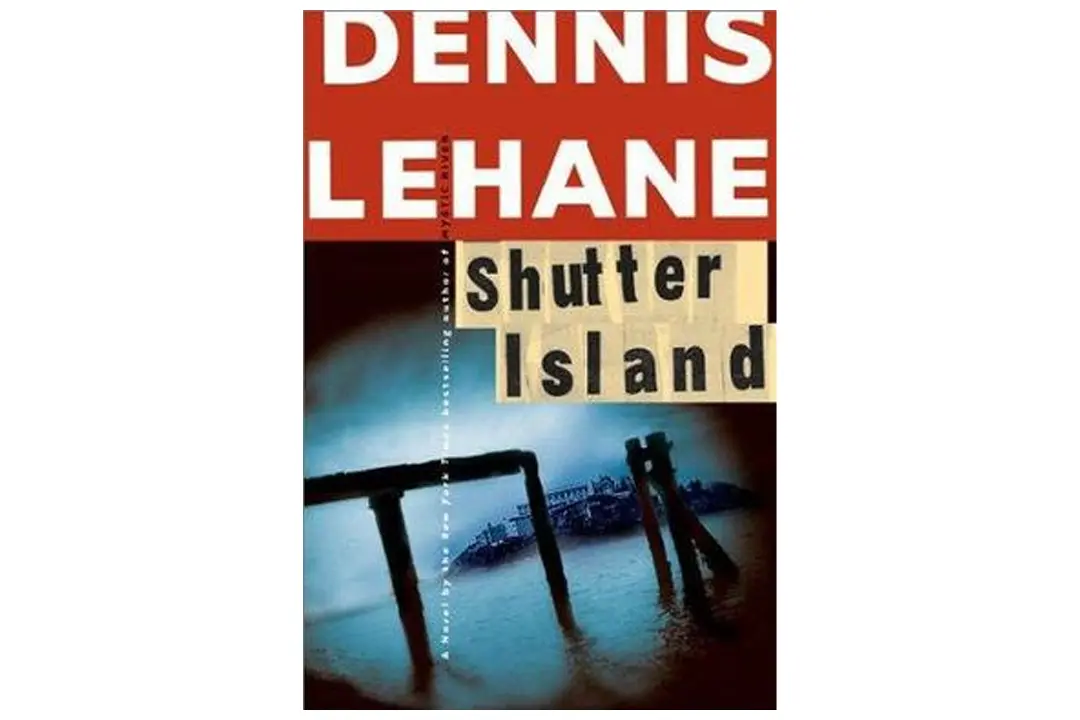
Shutter Island by Dennis Lehane: Book Summary
Beverly Ashford • 21 Feb 2026 • 94 views • 3 min read.Let me tell you about the thriller that works perfectly as a conspiracy novel on first read and works even better as a tragedy on second read — which is a structural achievement that most writers attempt and very few pull off. Dennis Lehane published Shutter Island in 2003. He had already established himself as one of the finest crime writers in America with the Kenzie-Gennaro series set in Boston's Dorchester neighborhood — Mystic River, published the same year, won the Edgar Award and confirmed his place at the top of the genre. Shutter Island is different from his other work: more gothic, more formally constructed, more interested in literary effect than in social realism. Lehane has said he wrote it as a conscious homage to the pulp novels and B-movies of the 1950s — the dark island, the stormy night, the institution hiding secrets, the hero whose certainty erodes as the mystery deepens. He also wrote it as something considerably more serious underneath the genre entertainment, which is what makes it last after the twist has been processed.
Shutter Island by Dennis Lehane: Book Summary
Quick Summary:
- Two U.S. marshals arrive at Ashecliffe Hospital for the Criminally Insane on a remote Boston Harbor island to investigate an escaped patient — and one of them begins to suspect that nothing about the hospital is what it appears to be
- Published in 2003, it became Lehane's most widely read novel and the source material for Martin Scorsese's 2010 film
- Lehane's central achievement: a psychological thriller that operates on two levels simultaneously, with a twist that reframes everything that came before it without invalidating any of it
- A novel about grief, guilt, trauma, and the mind's extraordinary capacity to construct an alternative reality when the actual reality becomes unbearable
The Setup
It is 1954. U.S. Marshal Teddy Daniels and his new partner Chuck Aule are traveling by ferry to Ashecliffe Hospital on Shutter Island — a fortified psychiatric facility for patients who have committed violent crimes while mentally ill. A patient named Rachel Solando has escaped from a locked room with no apparent exit. Teddy and Chuck are there to find her.
Teddy is a decorated World War II veteran who liberated Dachau. He is also a grieving widower — his wife Dolores died in an apartment fire two years earlier, set by their building's arsonist Andrew Laeddis. Teddy has been tracking Laeddis since and believes he has been transferred to Ashecliffe as a patient. Finding Rachel Solando and finding Laeddis have become, in Teddy's mind, connected purposes.
Ashecliffe is run by Dr. John Cawley — intelligent, composed, and consistently slightly too comfortable with Teddy's questions in ways that read as either professional confidence or practiced concealment. The hospital staff is uniformly unhelpful. The patient records Teddy requests are incomplete or unavailable. A hurricane arrives and cuts the island off from the mainland. The guards carry weapons that seem excessive for a hospital environment.
Everything is wrong. The question is what kind of wrong.
The Conspiracy Teddy Builds
Teddy's investigation produces evidence — or what appears to be evidence — of a government program using Ashecliffe patients as experimental subjects for psychosurgery and mind control research. The Cold War context is explicit: in 1954, government programs of this kind were not paranoid fantasy. MKULTRA was real, documented only later. Lehane plants the conspiracy in genuinely fertile historical soil.
Teddy finds a note from Rachel Solando suggesting she was a sane person who had been committed to be silenced. He dreams of his dead wife, who tells him to find Ward C — the facility's most secure section, where the most dangerous patients are kept, where Laeddis must be. He experiences migraines and vivid hallucinations that he attributes to his cigarettes being tampered with by hospital staff.
The conspiracy framework is coherent. Every piece of evidence Teddy finds fits it. Lehane constructs the alternative explanation with enough structural integrity that readers who want it to be true can hold onto it through the novel's final act — and some do, on first read, right up until the moment when something in the text makes denial impossible.
What Is Actually Happening
The reveal arrives in pieces rather than as a single moment — which is the right choice, because the truth is too large and too painful for a single disclosure to carry.
Teddy Daniels is Andrew Laeddis. He is a patient at Ashecliffe, not a marshal. His wife Dolores did not die in a fire — she drowned their three children in the lake behind their house during a psychotic episode, and he shot her afterward. The grief and the guilt of both events — his wife's illness, the children's deaths, his own hand in Dolores's death — were too much for his mind to absorb. He constructed an alternative identity and an alternative version of events in which he was the victim of an arsonist rather than the husband of a woman he could not save and the father of children he could not protect.
Cawley and the Ashecliffe staff have been running a roleplay — giving Laeddis the full experience of his delusion as U.S. Marshal Teddy Daniels in hopes that living through it completely will allow him to accept the truth and avoid a lobotomy. Chuck is actually his primary therapist. Rachel Solando does not exist outside his constructed narrative. The conspiracy is the symptom, not the discovery.
The Final Choice
The novel's final pages — and its most discussed element among readers — present a choice. Andrew/Teddy, in apparent clarity, tells Chuck/his doctor that he understands everything. He seems to be on the verge of genuine breakthrough.
Then he asks Chuck — using the fictitious name and role — about their plan to escape the island.
Is this relapse? Is it a performance — Andrew choosing to return to the Teddy persona because being Andrew, carrying Andrew's actual memories and guilt, is genuinely unlivable? Or is it something more deliberate — a conscious choice to accept the lobotomy rather than live with what he knows?
Lehane does not resolve this. The final line of the novel — which patients at Shutter Island are the most dangerous, the ones who know they are monsters or the ones who have made themselves forget it — is the question the novel has been building to. Whether Teddy/Andrew's final retreat into delusion is failure or mercy or choice is something the reader must decide.
Reality vs Delusion Compared
| Element | What Teddy Believes | What Is Actually True |
|---|---|---|
| His identity | U.S. Marshal Edward Daniels | Patient Andrew Laeddis |
| His partner Chuck | Fellow marshal, trusted ally | His primary therapist Dr. Sheehan |
| His wife's death | Killed in a fire set by Andrew Laeddis | Drowned their children; Andrew shot her |
| Rachel Solando | Escaped patient, possible government victim | Constructed name — his wife's anagram |
| Dr. Cawley | Hospital administrator hiding secrets | Treating psychiatrist trying to break the delusion |
| The conspiracy | Government mind control program using patients | His own mind protecting him from unbearable truth |
| Andrew Laeddis | Arsonist he has been hunting | His own name — himself |
| The lighthouse | Site of secret experiments | Where he will receive a lobotomy if the roleplay fails |
Frequently Asked Questions
Does knowing the twist ruin the reread?
The opposite. The second read is where the novel's craft becomes visible — every scene contains information that means something different once you know the truth. Cawley's responses, Chuck's behavior, the specific way patients and staff respond to Teddy's questions, the content of Teddy's dreams and hallucinations — all of it is constructed for dual meaning. Lehane rewards readers who return with full information.
How does the film compare to the novel?
The 2010 Scorsese film with Leonardo DiCaprio is exceptionally faithful and visually magnificent. DiCaprio's performance captures the specific quality Lehane writes in Teddy — a man whose certainty is indistinguishable from desperation until it is too late. The film adds visual texture that the novel implies, and the final scene's ambiguity is handled with identical restraint. This is one of the more successful novel-to-film adaptations in the genre.
Is the psychological content accurate?
Lehane did research on trauma-induced psychosis and the specific kind of elaborate delusion construction that severe grief and guilt can produce. The psychological framework is plausible rather than clinically precise — this is a thriller, not a psychiatry textbook. The core concept of the mind constructing an alternative reality to avoid confronting unbearable truth is grounded in actual psychological literature, even if the specific presentation is genre-heightened.
What does the Rachel Solando name mean?
Rachel Solando is an anagram of Dolores Chanal — Dolores's maiden name. Laeddis's unconscious constructed even the name of his false target from the woman he lost. This detail, visible on rereading, is the kind of embedded architecture that separates Shutter Island from competent thrillers.
Is the ending hopeful or tragic?
Genuinely both, which is why it lands. If Teddy/Andrew is choosing to return to the delusion deliberately — choosing the lobotomy over the conscious reality of what he did and lost — then it is a mercy and a tragedy simultaneously. If it is relapse rather than choice, it is simply tragedy. Lehane ensures the reader cannot be certain which interpretation is correct. The ambiguity is not a failure to commit. It is the point.
What should I read next?
Mystic River by Lehane is his masterwork — longer, more devastating, and more interested in the long aftermath of childhood trauma than in genre mechanics. Gone Girl by Gillian Flynn shares Shutter Island's interest in unreliable narration and the gap between perceived reality and actual events. The Woman in the Window by A.J. Finn explicitly positions itself as heir to this tradition — protagonist with compromised perception, nested layers of what is real.
The Bottom Line
Here is what Dennis Lehane actually built inside a gothic thriller set on a psychiatric island in 1954.
Not a conspiracy novel, though it reads as one. A portrait of grief so catastrophic that the mind dismantles itself rather than contain it — constructs an alternative identity, an alternative timeline, an alternative version of loss that makes the survivor the victim of external malevolence rather than the witness of something unbearable that happened inside his own family.
Teddy Daniels is a man who cannot be Andrew Laeddis. The children at the lake. Dolores's face. His own hands. The mind that built the marshal and the mission and the conspiracy built it with the same material that built everything else — memory, need, the human capacity to organize chaos into narrative.
The narrative it built was a lie. It was also the only thing keeping the man alive.
Cawley tried to tell him the truth. The question at the end of the novel is whether knowing the truth is the same as being able to live with it.
Some truths are too heavy to carry consciously.
Teddy walks back to the boat.
Andrew stays on the island.
Which one is which is the question Lehane will not answer for you.
Because that answer — and what it means — belongs to the reader.