
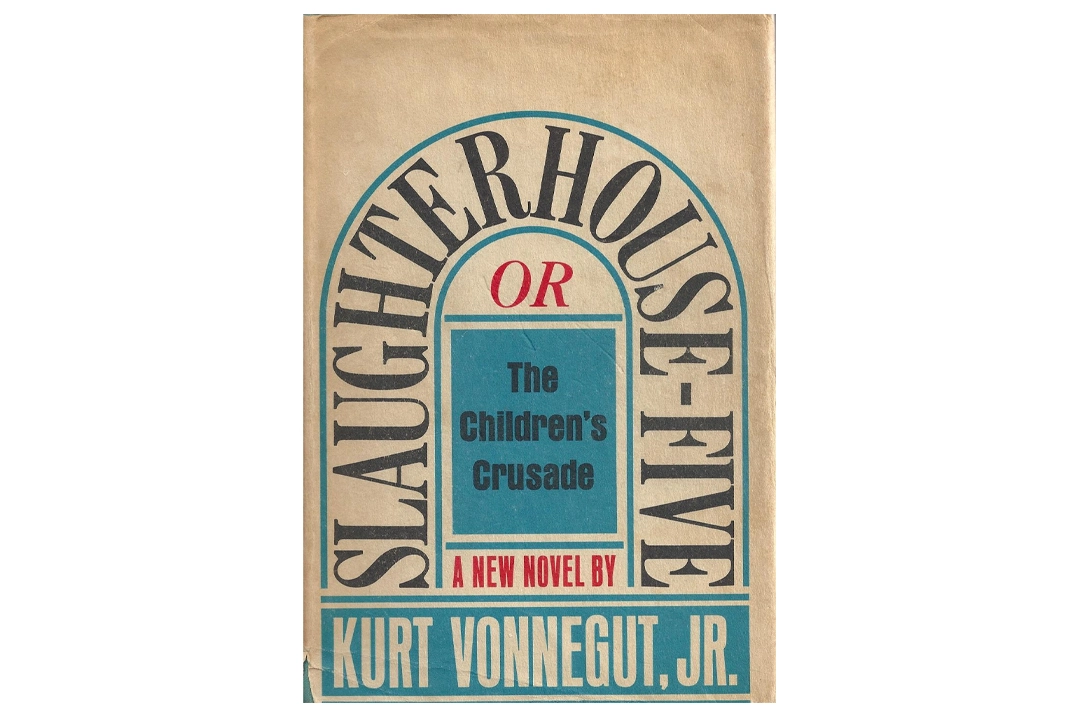
Slaughterhouse-Five – Kurt Vonnegut: Book Summary
Beverly Ashford • 12 Mar 2026 • 65 views • 2 min read.Let me tell you about the book Kurt Vonnegut spent twenty-three years trying to write. Vonnegut was a prisoner of war in Dresden, Germany, when Allied firebombs destroyed the city in February 1945. He survived in an underground slaughterhouse—Schlachthof-fünf, Slaughterhouse Five. He emerged to find a moonscape of corpses. He was ordered to help dig out the bodies. He tried to write about it for two decades and couldn't. Then he wrote a novel about a man who becomes "unstuck in time," experiencing his life in random order, unable to control when or where he lands. The result is funny, sad, surreal, and devastating. It's also one of the most influential American novels ever written.
Slaughterhouse-Five – Kurt Vonnegut: Book Summary
Quick Summary:
- An American soldier becomes "unstuck in time" after surviving the Dresden firebombing
- The narrative jumps between war, suburban life, and an alien zoo
- The phrase "So it goes" appears after every death—and there are many
- Published in 1969, it became the definitive anti-war novel of the Vietnam era
The Frame
Vonnegut appears as himself in the first and last chapters.
He tells us he's trying to write a book about Dresden. He visits an old war buddy to remember. The buddy's wife is hostile—she hates war stories that glamorize young men going off to adventure.
Vonnegut promises: "I tell you what—I'll call it The Children's Crusade."
The subtitle of the book is: A Duty-Dance with Death.
He tells us the climax will be the firebombing of Dresden. He tells us how the book begins ("Listen: Billy Pilgrim has come unstuck in time") and how it ends ("Poo-tee-weet?"). Then he hands the story to Billy Pilgrim.
Billy Pilgrim
Billy Pilgrim is the protagonist—though "protagonist" suggests more agency than Billy ever has.
In World War II: Billy is a young, weak, unprepared American soldier captured during the Battle of the Bulge. He's shipped to Dresden as a POW, housed in Slaughterhouse Five. He survives the firebombing by sheltering underground.
After the war: Billy becomes an optometrist in Ilium, New York. He marries a rich, unattractive woman. He has two children. He makes money. He seems fine.
In 1967: Billy claims he was abducted by aliens from the planet Tralfamadore. They put him in a zoo. They taught him their philosophy of time.
Throughout his life: Billy becomes "unstuck in time." He doesn't experience events in order. He jumps randomly from moment to moment—from the war to his daughter's wedding to his death to a hospital bed to the alien zoo.
He has no control. He just experiences.
The Tralfamadorians
The aliens are key to understanding the novel—though whether they're real or Billy's trauma response is deliberately ambiguous.
Tralfamadorians see all time at once. Past, present, and future exist simultaneously. When someone dies, they're still alive in all the moments before death. Death is just one moment among infinite moments.
Their response to death: "So it goes."
This phrase appears over 100 times in the novel—after every death, whether a character, a champagne bottle, or millions of people. It flattens all deaths to the same level. It's acceptance without emotion.
The Tralfamadorian philosophy: Don't focus on bad moments. Focus on good ones. Time is a landscape you can revisit. You can't change anything, so acceptance is the only response.
This is either profound wisdom or complete dissociation. The novel doesn't decide for you.
Key Moments
| Time Period | What Happens | Significance |
|---|---|---|
| 1944-45 | Captured, Dresden, firebombing | The trauma at the center |
| 1948 | Mental breakdown, hospitalized | PTSD before the term existed |
| 1950s-60s | Marriage, children, career | The American Dream as emptiness |
| 1967 | Plane crash, brain injury | Possible trigger for Tralfamadore |
| 1968 | Claims alien abduction, writes letters | Public unraveling |
| 1976 | Assassinated in Chicago | Death he's always known was coming |
| Random | Zoo on Tralfamadore | Real? Metaphor? Madness? |
The Structure
The narrative mimics Billy's condition—jumping randomly through time.
A paragraph about the war is followed by Billy on Tralfamadore. His wedding leads to a flashback of corpse mining in Dresden. He experiences his death, then returns to the present.
The effect is disorienting. But it's also how trauma works. PTSD doesn't follow chronological order. Triggers can pull you into the past at any moment. Time becomes a weapon.
The tone is flat. Vonnegut doesn't describe horrors dramatically. He states them simply, then writes "So it goes." This restraint makes the horrors more terrible, not less.
Dresden
The firebombing is the novel's gravitational center—everything orbits it.
In February 1945, Allied bombers dropped incendiary explosives on Dresden, creating a firestorm that killed approximately 25,000-135,000 people (estimates vary). The city had no significant military value. It was full of refugees, hospitals, and cultural treasures.
Billy experiences it in fragments. Before: the slaughterhouse, the fear. During: underground, the sounds above. After: emerging to devastation, digging out corpses, the bodies that had to be burned because there were too many to bury.
Vonnegut witnessed this. He wrote it as absurdist science fiction because that was the only way he could write it.
Key Characters
| Character | Role | Represents |
|---|---|---|
| Billy Pilgrim | Protagonist | The traumatized survivor |
| Kurt Vonnegut | Author, occasional character | The witness |
| Roland Weary | Cruel soldier | Meaningless machismo |
| Edgar Derby | Middle-aged soldier | Decency destroyed by absurdity |
| Valencia | Billy's wife | Suburban emptiness |
| Montana Wildhack | Actress in alien zoo | Fantasy escape? Real companion? |
"So It Goes"
The phrase is the novel's heartbeat.
Every death—whether of a major character, a stranger, or millions in a city—receives the same response: "So it goes."
Interpretation 1: This is Tralfamadorian wisdom. Death is just a moment. The dead are still alive in other moments. Acceptance is the only response.
Interpretation 2: This is traumatic dissociation. Billy (and Vonnegut) can only survive by not feeling. The flatness is a symptom, not a cure.
Interpretation 3: The repetition indicts the reader. We become numb to death. That numbness is what allows wars to continue.
What the Book Is Really About
Trauma and time. PTSD shatters linear experience. Billy's time travel is how trauma feels: being pulled into the past without control, experiencing moments in random order.
The impossibility of representing war. Vonnegut says in the opening that "there's nothing intelligent to say about a massacre." Then he writes 215 pages trying anyway. The aliens and time travel are his way of approaching what can't be approached directly.
Free will and fate. Billy has no choices. He experiences his life but doesn't direct it. The Tralfamadorians say free will is a delusion only humans believe. Whether this is liberating or horrifying depends on your reading.
Anti-war as form. The novel doesn't argue against war; it enacts what war does to minds. The structure is the argument.
Frequently Asked Questions
Are the Tralfamadorians real?
The novel doesn't answer this. They may be real aliens. They may be Billy's coping mechanism, invented after a brain injury. Both readings work.
Why science fiction?
Vonnegut couldn't write about Dresden as straight realism. The SF elements gave him distance—a way to represent the unrepresentable.
Is this anti-American?
Critics at the time said so. But Vonnegut isn't anti-American; he's anti-war. The firebombing was real. Acknowledging it isn't unpatriotic.
What does the ending mean?
Billy is in the ruins of Dresden. Spring arrives. A bird says: "Poo-tee-weet?" Life continues, meaningless but present.
Should I read Vonnegut's other books?
Cat's Cradle, Breakfast of Champions, and The Sirens of Titan share his style. Start here, then explore.
The Bottom Line
Here's what Kurt Vonnegut achieved.
He wrote about massacre without sensationalism. He invented a structure that enacts trauma rather than describes it. He made readers feel the disorientation of a mind broken by war.
Slaughterhouse-Five doesn't argue that war is bad. It shows what war does. The damage it does to everyone it touches. The impossibility of truly telling what it was like.
So it goes.