
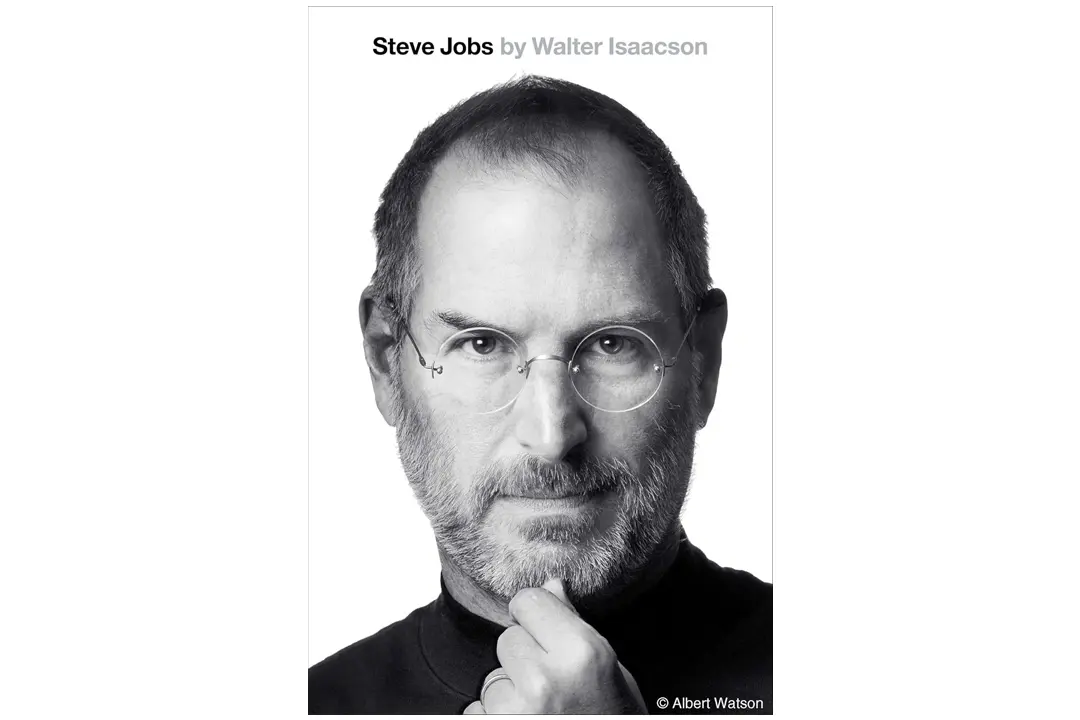
Steve Jobs by Walter Isaacson: Book Summary
Beverly Ashford • 13 Mar 2026 • 54 views • 3 min read.Let me tell you about the biography that made millions of people simultaneously admire and never want to meet its subject. Walter Isaacson published Steve Jobs in October 2011, two weeks after Jobs died of pancreatic cancer at fifty-six. Jobs himself approached Isaacson about writing it — not to control the narrative, but because he wanted his children to understand who he was. He gave Isaacson extraordinary access, submitted to over forty interviews, and told the people around him to speak freely. He did not read the manuscript before publication. He trusted the process, which was itself uncharacteristic. The result is one of the most complete portraits of a complex person ever published in the biography genre. It is not a hagiography. It is not a takedown. It is an attempt to hold two things simultaneously: Jobs was one of the most consequential figures of the twentieth century, and he was genuinely, consistently, and sometimes deliberately terrible to the people around him. Both things are true. The book does not resolve the tension. It just shows it.
Steve Jobs by Walter Isaacson: Book Summary
Quick Summary:
- The only authorized biography of Apple's co-founder, based on over forty interviews with Jobs himself
- Published in 2011, two weeks after Jobs died, it became an instant bestseller in over thirty countries
- Isaacson did not sanitize anything — the portrait is brilliant, visionary, and frequently cruel
- A book about what it actually costs to change the world — and who pays the bill besides the person doing it
The Early Years
Jobs was adopted at birth by Paul and Clara Jobs, a working-class couple in Mountain View, California. Paul Jobs was a machinist who restored cars in his garage, and he passed on to his son an obsessive attention to the parts no one sees — the inside of a cabinet, the back of a circuit board — because a craftsman knows even if no customer does.
Jobs grew up in the Santa Clara Valley as it was becoming Silicon Valley. He was difficult from the beginning — manipulative, prone to tantrums, capable of extraordinary charm when he needed something, contemptuous of rules he found arbitrary. His adoptive parents adored him and absorbed enormous amounts of his behavior without complaint.
He met Steve Wozniak as a teenager. Wozniak was the engineering genius — the person who could actually build what Jobs could imagine and sell. Their partnership was the founding paradox of Apple: one person who understood what technology could do for human beings, and one person who could make it work. Neither could have built Apple alone.
The Reality Distortion Field
People who worked with Jobs coined a term for his ability to make people believe the impossible was achievable: the reality distortion field. Jobs could look at a timeline that required six months and insist it be done in two — and engineers who knew it was impossible would somehow do it.
This was not pure manipulation. Jobs genuinely believed that conventional limits were often just failures of will and imagination. He was frequently right. He was also frequently wrong, and when he was wrong he did not easily admit it.
Isaacson documents the distortion field operating in both directions. It produced the Macintosh in 1984 — a machine that changed personal computing permanently. It also produced Jobs's insistence on delaying cancer surgery for nine months in favor of alternative treatments, a decision he later said he regretted. The same quality that made him irreplaceable at Apple made him dangerous to himself and to people around him.
The Wilderness Years and the Return
Apple's board fired Jobs in 1985. He was thirty years old. The humiliation was complete and public.
What he did next turned out to matter more than most people's entire careers. He founded NeXT, a computer company that struggled commercially but produced the operating system that would eventually become the foundation of modern macOS. He bought a small graphics division from George Lucas for five million dollars and turned it into Pixar — which produced Toy Story, transformed animation, and eventually sold to Disney for seven billion dollars.
When Apple acquired NeXT in 1997 and Jobs returned as CEO, the company had ninety days of cash reserves left. Twelve years later it was the most valuable company in the world. The iMac, iPod, iTunes, iPhone, iPad — each one a category-defining product, each one reflecting Jobs's obsession with the intersection of technology and liberal arts, hardware and software, function and beauty.
The Personal Cost
Isaacson does not spare Jobs or the people around him. The sections on Jobs's personal life are uncomfortable reading.
He denied paternity of his first daughter Lisa for years, leaving her mother impoverished while he became wealthy. His relationship with Lisa eventually repaired partially, but she published her own memoir years later describing a childhood defined by his cruelty and absence. Jobs acknowledged some of this in interviews with Isaacson. He did not fully account for it.
His management style was binary and brutal. Products and people were either genius or shit, with no middle ground and no warning about which category you had fallen into. He reduced engineers to tears in elevators. He took credit publicly for work done by teams. He was capable of extraordinary kindness and loyalty toward a small number of people and indifference or cruelty to everyone else.
Isaacson asks the question the book cannot fully answer: was the cruelty necessary? Did Apple require this person, with these specific qualities — including the ones that caused enormous harm — to become what it became? Jobs believed so. The people he damaged mostly disagree.
Key Figures in the Apple Story
| Person | Role | Relationship with Jobs | Legacy |
|---|---|---|---|
| Steve Wozniak | Co-founder, engineer | Genuine friendship, eventually distant | Built the hardware that made Apple possible |
| John Sculley | CEO brought in by Jobs | Mentor turned adversary, led Jobs's firing | Cautionary tale about founder-CEO dynamics |
| Jony Ive | Chief Design Officer | Closest professional partnership of Jobs's life | Designed the physical language of Apple's golden era |
| Tim Cook | COO, successor | Deep mutual respect, opposite temperaments | Scaled Apple beyond Jobs's vision |
| Bill Gates | Microsoft co-founder | Rivalry, grudging respect, late friendship | The parallel story Jobs measured himself against |
| Lisa Brennan-Jobs | Oldest daughter | Denial, partial reconciliation, lasting damage | Published her own account in Small Fry |
| Laurene Powell | Wife | Stabilizing presence he often failed to deserve | Managed what Jobs could not manage in himself |
Frequently Asked Questions
Is this biography fair to Jobs?
Isaacson worked from extraordinary access and attempted genuine balance. Some people who knew Jobs felt the book was too harsh. Others felt it was too generous. Jobs himself, in his final months, told Isaacson he was afraid he had been too honest about his flaws. That fear is probably the best evidence that the portrait is accurate.
Does the book explain how Jobs thought about design?
Extensively. The design philosophy chapters are among the most useful in the book — Jobs's insistence on simplicity, his belief that the back of the product matters as much as the front, his conviction that technology without humanism produces machines nobody loves. These sections read as a practical philosophy of creation.
How does this compare to other tech founder biographies?
Shoe Dog by Phil Knight is more emotionally honest and self-aware. The Everything Store by Brad Stone on Jeff Bezos is more journalistic and less intimate. Elon Musk by Isaacson himself covers a remarkably similar personality with remarkably similar contradictions. Steve Jobs remains the standard against which other tech biographies are measured.
Should I read Lisa Brennan-Jobs's memoir alongside this?
Small Fry by Lisa Brennan-Jobs is a valuable companion — it shows the personal cost of Jobs's behavior from the perspective of the person who paid it most directly. It is a different kind of book: quieter, more literary, and considerably more painful. Read both if the full picture matters to you.
Is the book outdated given everything that has happened at Apple since?
The biography ends with Jobs's death in 2011. Everything since — the Apple Watch, AirPods, the services pivot, the trillion-dollar valuation — falls outside its scope. For the Jobs era specifically, it remains definitive. For Apple as it exists today, other sources are needed.
What should I read next?
The Innovators by Isaacson traces the history of the digital revolution and contextualizes Jobs within a longer story. Creativity Inc. by Ed Catmull covers the Pixar years from the inside with more detail than Isaacson provides. Jony Ive by Leander Kahney goes deep on the design partnership that produced Apple's most iconic products.
The Bottom Line
Here is what Walter Isaacson actually documented.
A person who could see, with genuine clarity, what technology should feel like in human hands — and who built company after company, product after product, to close the gap between what existed and what he believed was possible.
And a person who left damage everywhere he went. In relationships, in families, in the careers of people who needed him to see them as human and found that he mostly could not.
The iPhone exists. So does Lisa Brennan-Jobs's memoir.
Both are consequences of the same person operating with the same qualities in different directions.
Isaacson does not tell you how to weigh them against each other. Neither does this summary.
That weighing is yours to do.
What the book gives you is everything you need to do it honestly.