
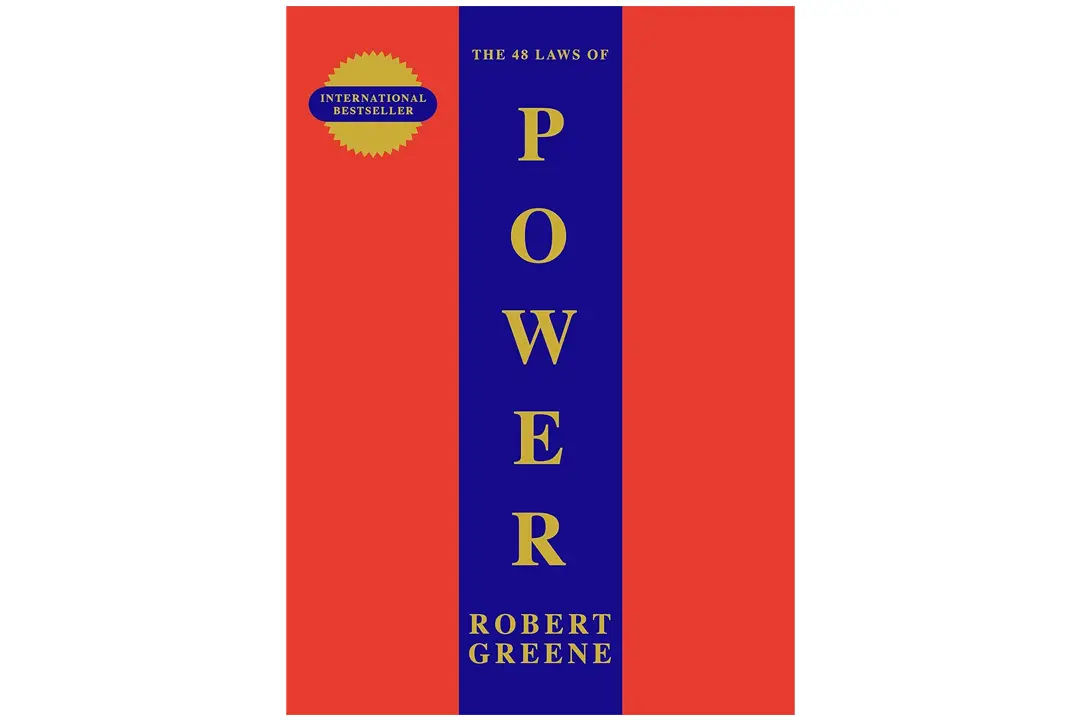
The 48 Laws of Power – Robert Greene: Book Summary
Beverly Ashford • 11 Mar 2026 • 86 views • 3 min read.Let me tell you about the book everyone reads and nobody admits to reading. Robert Greene's The 48 Laws of Power has sold millions of copies. It's banned in many prisons (inmates were using it as a manipulation manual). It's on the shelves of Fortune 500 executives, hip-hop artists, and Silicon Valley founders. It's been called brilliant and dangerous, insightful and sociopathic. Here's the truth: it's all of those things. Greene distilled 3,000 years of history into principles for gaining and maintaining power. The laws are amoral—they describe how power works, not whether you should seek it. You can read them as instruction or warning. Either way, you'll never see human interaction the same way.
The 48 Laws of Power – Robert Greene: Book Summary
Quick Summary:
- A ruthless guide to understanding and wielding power
- 48 laws drawn from 3,000 years of history
- Equal parts strategy manual and cautionary tale
- Published in 1998, it became a cult classic loved by CEOs and rappers alike
The Premise
Greene's core argument: power is a social game, and games have rules. Most people pretend the game doesn't exist. They lose to those who understand it.
Every law is illustrated with historical examples—Louis XIV, Machiavelli, Bismarck, con artists, courtiers, and kings. The patterns repeat across cultures and centuries. Human nature doesn't change. Power dynamics don't change.
The book isn't telling you to be good or bad. It's telling you how the game actually works.
You can use that knowledge to protect yourself, to advance ethically, or to manipulate others. Greene provides the map. You choose the destination.
The Laws (Selected)
There are 48 laws. Here are the ones that matter most:
Law 1: Never Outshine the Master
Make those above you feel superior. Let them take credit. Don't threaten their ego. When you appear too brilliant, you create enemies where you need allies.
The danger: Stars who threaten their bosses get fired. Subordinates who make leaders look good get promoted.
Law 3: Conceal Your Intentions
Keep people guessing. If they know what you want, they can block or exploit it. Misdirection prevents opposition.
The application: Don't announce plans. Don't reveal motivations. Let others think you're pursuing something else entirely.
Law 4: Always Say Less Than Necessary
Words are irreversible. The more you say, the more vulnerable you become. Powerful people are often sparse with words—they let others fill the silence and reveal themselves.
The trap: Nervousness makes us talk. Confidence makes us silent.
Law 6: Court Attention at All Costs
Visibility is power. Being ignored is worse than being criticized. Better to be controversial than invisible.
The paradox: This contradicts Law 1. But Greene acknowledges the tensions between laws—context determines which applies.
Law 15: Crush Your Enemy Totally
Half-measures create resentment without removing threats. If you defeat someone, defeat them completely. An enemy allowed to recover becomes dangerous.
The caution: This is the most ruthless law. It's also why power games are dangerous—they invite retaliation.
Law 17: Keep Others in Suspended Terror: Cultivate an Air of Unpredictability
Predictable people are controllable. Unpredictability creates fear and caution in opponents, which gives you leverage.
Key Laws Summarized
| Law | Core Principle | Application |
|---|---|---|
| 1. Never Outshine the Master | Make superiors feel superior | Don't threaten egos above you |
| 3. Conceal Your Intentions | Keep plans hidden | Misdirection prevents opposition |
| 4. Say Less Than Necessary | Silence is power | Let others reveal themselves |
| 6. Court Attention | Visibility equals power | Be seen, even if controversial |
| 15. Crush Your Enemy Totally | Half-measures create danger | If you fight, finish the fight |
| 16. Use Absence to Increase Respect | Scarcity creates value | Withdraw strategically |
| 25. Re-Create Yourself | Don't be defined by others | Control your own image |
| 33. Discover Each Person's Weakness | Everyone has a pressure point | Know what others want and fear |
| 38. Think as You Like, Behave as Others | Blend in publicly | Radical views provoke opposition |
| 48. Assume Formlessness | Stay adaptable | Fixed positions become targets |
The Philosophy Underneath
Greene isn't just listing tactics. He's describing a worldview.
Power is always present. You can pretend politics don't exist in your workplace, family, or social group. But power dynamics operate whether you acknowledge them or not. Ignorance just means you lose.
Appearances matter more than reality. What people perceive determines how they act. Managing perception is as important as achieving results.
Independence is the goal. True power isn't domination over others—it's freedom from dependence on them. The less you need, the more powerful you become.
Emotion is vulnerability. Anger, love, fear, enthusiasm—all can be exploited by those who remain calm. Detachment is protection.
Everyone is playing. Even those who claim to be above the game are playing a version of it. Martyrdom is a power move. Humility can be a strategy. Nothing escapes the dynamics.
The Criticism
The book has fierce critics. Here's what they say:
It's sociopathic. The laws treat people as objects to manipulate. Applied literally, they describe how to exploit everyone around you.
It's cherry-picked history. Greene selects examples that support his laws while ignoring counterexamples. History is more complex than his tidy narratives.
It creates cynics. Reading the book can make you see manipulation everywhere, even where it doesn't exist. Paranoia isn't power.
Nice people actually do win. Research suggests that generous, trustworthy people often outperform manipulators long-term. Reputation matters.
It ignores morality entirely. The book describes what works without asking what's right. That's dangerous in the wrong hands.
The Defense
Greene himself has addressed these criticisms:
It's descriptive, not prescriptive. Greene claims he's explaining how power works, not advocating ruthlessness. You can use the knowledge defensively.
Naivety isn't virtue. Understanding manipulation helps you recognize when others use it on you. Innocence without awareness is victimhood.
Not all laws are equal. Some laws (like "Re-Create Yourself") are simply good advice. Others (like "Crush Your Enemy Totally") are situational extremes.
Context matters. Greene explicitly says laws contradict each other—different situations require different approaches. It's not a rigid rulebook.
How to Read This Book
There are two productive ways to approach it:
As defense. Recognize these tactics when others use them. See the patterns in office politics, negotiations, and relationships. Protect yourself through awareness.
As strategic thinking. Some laws are simply effective practice. Being strategic about image, understanding what others want, staying adaptable—these aren't manipulative. They're smart.
The unproductive approach: taking every law literally and becoming a cartoonish schemer. That's both ethically wrong and practically ineffective. Genuine sociopaths don't need the book; amateurs who try to follow it mechanically just become transparently manipulative.
Frequently Asked Questions
Why is this book banned in prisons?
Prison administrators found inmates using it to manipulate guards and other prisoners. It's been restricted in multiple facilities for being "too instructional in manipulation."
Is Robert Greene a manipulator?
By his own account, he's an observer and synthesizer. He studied history, identified patterns, and wrote them down. Whether that makes him manipulative depends on your definition.
Should I actually follow these laws?
Some, yes. Others, situationally. A few, probably never unless circumstances are extreme. The book is a menu, not a mandate.
Is this like Machiavelli's The Prince?
Similar territory. The Prince is shorter and more focused on political leadership. The 48 Laws is broader—it applies to any power dynamic, not just governance.
Can I use this ethically?
Absolutely. Understanding power doesn't require abusing it. Many readers use the insights for self-protection, career navigation, and negotiation without crossing ethical lines.
What should I read after this?
Greene's other books: The Art of Seduction, The 33 Strategies of War, Mastery. For the historical source: The Prince by Machiavelli.
The Bottom Line
Here's what Robert Greene achieved.
He wrote the most honest book about power in modern times. Not honest in the sense of morally good—honest in the sense of acknowledging what people actually do rather than what we pretend they do.
The 48 Laws isn't for everyone. Some readers find it too cynical. Others find it confirms what they always suspected. The reaction says something about the reader as much as the book.
What's undeniable: power dynamics exist. Understanding them is better than ignoring them. Whether you use that understanding for good or ill is your choice.
The game is being played whether you're playing or not.
Greene just wrote down the rules.