
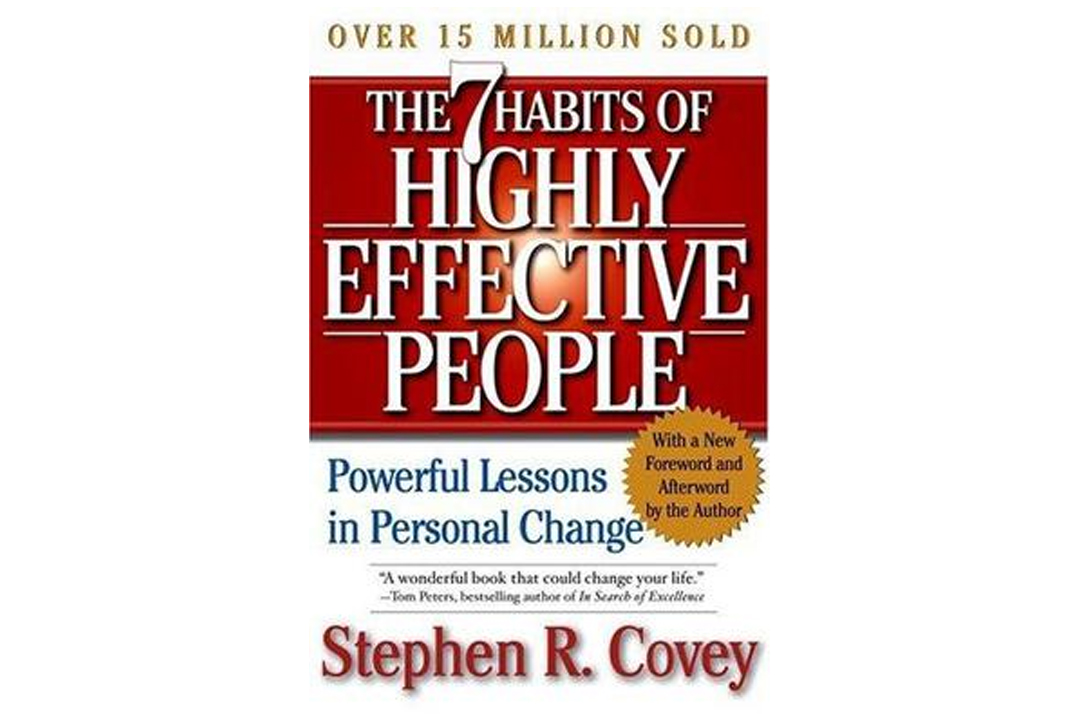
The 7 Habits of Highly Effective People by Stephen Covey: Book Summary
Beverly Ashford • 13 Mar 2026 • 45 views • 2 min read.Let me tell you about the self-help book that self-help people either swear by or roll their eyes at — and why both reactions miss the point. Stephen Covey published The 7 Habits of Highly Effective People in 1989. It became one of the bestselling nonfiction books of the twentieth century. Executives assign it. Business schools reference it. The phrase "win-win" entered everyday language directly because of this book. And yet a lot of people have a copy they never finished. The reason is usually that they expected productivity tips and got a philosophy seminar instead. Covey is not interested in your morning routine or your inbox. He is interested in whether your character is solid enough to sustain real effectiveness over a lifetime. That is a harder conversation.
The 7 Habits of Highly Effective People by Stephen Covey: Book Summary
Quick Summary:
- A framework for personal and professional effectiveness built on character, not technique
- Published in 1989, it has sold over 40 million copies and never really left the conversation
- Covey argues most self-help focuses on personality tricks — he wants to fix your character instead
- The habits move from personal responsibility to interpersonal effectiveness to continuous growth
The Core Argument
Covey opens with a distinction that frames everything else. He separates the Personality Ethic — the idea that success comes from technique, charm, and the right habits on the surface — from the Character Ethic, which holds that lasting effectiveness requires integrity, honesty, and alignment between your values and your actions.
Most self-help, he argues, is Personality Ethic dressed up as wisdom. It teaches you how to seem trustworthy rather than how to be trustworthy. It optimizes the exterior while leaving the foundation untouched. Covey wants the foundation.
The seven habits are organized around three movements: private victory first, then public victory, then renewal.
The Private Victory: Habits 1 Through 3
Habit 1 is Be Proactive. Covey's point here is not simply that you should take initiative. It is that between any stimulus and your response, there is a space — and in that space is your freedom and your responsibility. Reactive people let circumstances, moods, and other people determine their behavior. Proactive people choose their response. The language you use reveals which you are: "I have to" versus "I choose to." "There's nothing I can do" versus "Let me see what options exist."
Habit 2 is Begin With the End in Mind. Before you climb the ladder, make sure it is leaning against the right wall. Covey asks you to write a personal mission statement — not a list of goals, but a statement of what you want to be and the values you want to live by. Most people spend their lives achieving things that do not actually align with what they care about. This habit is the correction.
Habit 3 is Put First Things First. This is the execution of Habits 1 and 2. Covey introduces his famous time management matrix, dividing activities by urgency and importance. Most people live in Quadrant 1 — urgent and important, constant crises — or Quadrant 3 — urgent but not important, other people's priorities. Effectiveness lives in Quadrant 2: important but not urgent. Planning, relationship building, preparation, prevention. Nobody makes you do Quadrant 2 work. You have to choose it.
The Public Victory: Habits 4 Through 6
Habit 4 is Think Win-Win. Not compromise, which Covey considers lose-lose in slow motion. Genuine win-win requires abundance mentality — the belief that there is enough success, recognition, and reward for everyone. Scarcity mentality turns every interaction into competition. Abundance mentality turns them into collaboration.
Habit 5 is Seek First to Understand, Then to Be Understood. This is the communication habit, and it is the one most people skip on the way to the habits they think are more important. Covey's point is simple and brutal: most people listen not to understand but to reply. They are composing their response while the other person is still talking. Empathic listening — genuinely trying to understand the other person's frame of reference before presenting your own — changes every conversation it enters.
Habit 6 is Synergize. The whole is greater than the sum of its parts. Covey argues that when two people with genuinely different perspectives engage in good faith, the solution they reach together is better than what either would have produced alone. Most people tolerate difference. Synergy requires valuing it.
The Renewal: Habit 7
Habit 7 is Sharpen the Saw. A woodcutter who never stops to sharpen his saw works harder and harder while cutting less and less. Covey identifies four dimensions of renewal: physical, mental, social and emotional, and spiritual. Neglect any one of them and your effectiveness in the others eventually collapses. This is the habit that sustains all the others.
The 7 Habits at a Glance
| Habit | Category | Core Idea | Common Failure Mode |
|---|---|---|---|
| 1. Be Proactive | Private Victory | You choose your response to any situation | Blaming circumstances and other people |
| 2. Begin With the End in Mind | Private Victory | Define what matters before pursuing anything | Achieving goals that do not align with values |
| 3. Put First Things First | Private Victory | Prioritize important over urgent | Living in crisis mode, neglecting Quadrant 2 |
| 4. Think Win-Win | Public Victory | Seek mutual benefit in every interaction | Compromise that leaves both parties unsatisfied |
| 5. Seek First to Understand | Public Victory | Listen to understand before responding | Listening only to reply |
| 6. Synergize | Public Victory | Value difference as creative resource | Tolerating difference instead of leveraging it |
| 7. Sharpen the Saw | Renewal | Sustain yourself across four dimensions | Burning out by neglecting renewal |
Frequently Asked Questions
Is this book still relevant in 2025?
The core framework holds up better than most business books from the same era because Covey is working at the level of character rather than technique. The specific examples feel dated. The principles do not.
Is it religious?
Covey was Mormon and his values are visible in the book — particularly around family, integrity, and service. The framework itself is not denomination-specific. Readers across religious backgrounds and none find it applicable.
What is the difference between this and productivity books like Atomic Habits?
Atomic Habits is about behavior change mechanics — how to build and break habits at the system level. The 7 Habits is about whether you have the right foundation to make any habit worth building. They are complementary rather than competing. Many readers benefit from both.
Do I need to read all of it?
The introduction and Habits 1, 2, 3, and 5 are essential. Habit 4 and 6 can feel repetitive if you have absorbed the mindset. Habit 7 is short and worth reading. The appendices are skippable for most readers.
Is there a condensed version?
The 7 Habits of Highly Effective Teens by Sean Covey covers the same framework adapted for younger readers. It is more accessible and considerably shorter. Some adults find it a useful entry point before tackling the original.
What should I read next?
First Things First by Covey goes deeper on Habit 3 and the time management matrix. Principle-Centered Leadership applies the framework to organizational contexts. For a different take on similar themes, try The Effective Executive by Peter Drucker — leaner, more direct, equally foundational.
The Bottom Line
Here is what Stephen Covey actually wrote.
Not a list of morning routines. Not a productivity system. A sustained argument that effectiveness without character is a performance — impressive in the short term, hollow over time.
The habits are not complicated. Be responsible for your choices. Know what you are working toward. Prioritize accordingly. Seek mutual benefit. Listen before speaking. Value different perspectives. Take care of yourself.
Most people know this. Very few people actually do it consistently.
Covey's book does not tell you anything you have not heard before. It builds the case, slowly and carefully, for why these things are harder than they look — and more important than almost anything else.
The ladder is against the wall. The question is which wall.