
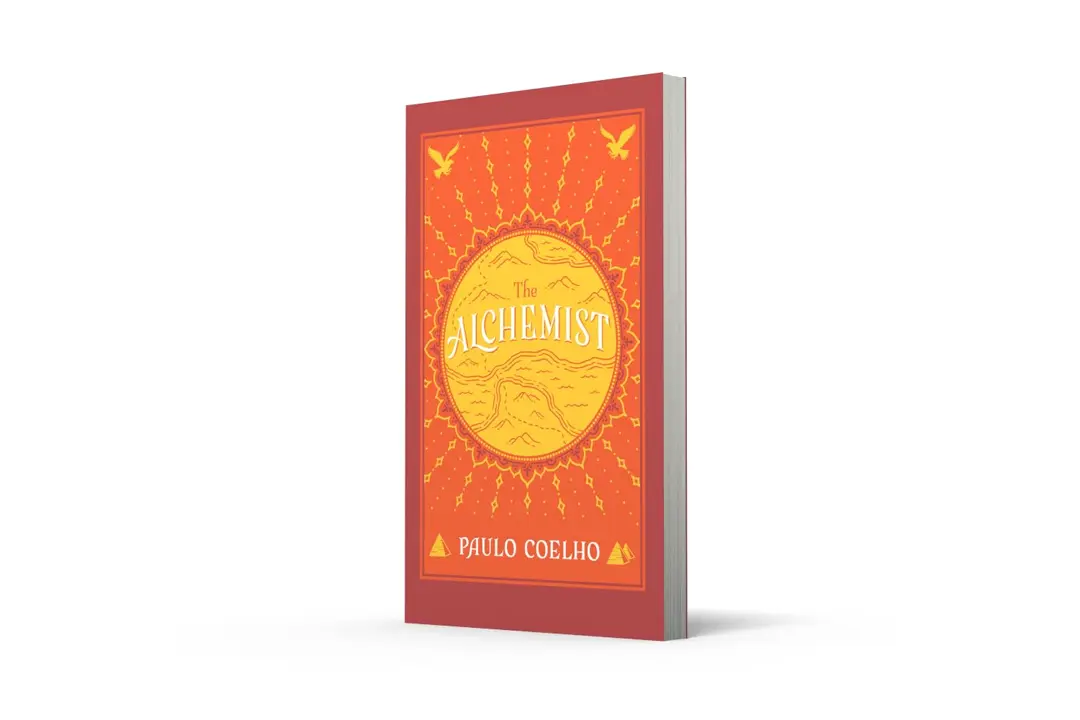
The Alchemist – Paulo Coelho: Book Summary
Beverly Ashford • 11 Mar 2026 • 62 views • 3 min read.Let me tell you about the most polarizing inspirational book ever written. People either love The Alchemist or can't stand it. Fans call it life-changing, a spiritual masterpiece that arrived at exactly the right moment. Critics call it simplistic, repetitive, and full of fortune-cookie philosophy. Here's the thing: both reactions might be valid. Paulo Coelho wrote a fable, not a novel. Fables aren't subtle. They're meant to deliver clear lessons through simple stories. The Alchemist has sold over 150 million copies in 80 languages. It's the most translated book by a living author. Something in this simple story resonates with millions of readers across every culture. Let's see what it says.
The Alchemist – Paulo Coelho: Book Summary
Quick Summary:
- A shepherd boy travels from Spain to Egypt seeking treasure
- The journey itself becomes the discovery
- "When you want something, all the universe conspires to help you"
- Published in 1988, it became one of the best-selling books in history
The Dream
Santiago is a young shepherd in Andalusia, Spain. He chose sheep over priesthood because he wanted to travel, and shepherds travel. He's content—he has his flock, his freedom, his books.
Then he has a recurring dream.
A child appears near the Egyptian pyramids and tells him that if he goes there, he'll find treasure. The dream repeats. Santiago can't shake it.
He visits a gypsy woman who interprets dreams. She confirms: he should go to Egypt. Her payment is ten percent of the treasure if he finds it.
Then he meets an old man who claims to be Melchizedek, King of Salem.
The old man teaches Santiago about Personal Legends. Everyone has one—the thing they're meant to do with their life. Most people abandon their Personal Legend because it seems impossible or because they get comfortable. The universe rewards those who pursue theirs.
"When you want something, all the universe conspires in helping you to achieve it."
Santiago sells his sheep and sails to Africa.
The Journey
Almost immediately, everything goes wrong.
In Tangier, a thief steals all his money. Santiago is stranded in a foreign country where he doesn't speak the language. He has no sheep, no money, no path forward.
He could go home. Instead, he gets a job.
The crystal merchant runs a shop on a quiet hill. Business has declined for years. Santiago brings energy and ideas—he suggests selling tea in crystal glasses, displaying merchandise outside, expanding to the top of the hill.
The merchant's business thrives. Santiago saves enough money to go home and buy twice as many sheep as before.
Or he could continue to Egypt.
He chooses Egypt.
The Desert
Santiago joins a caravan crossing the Sahara. He meets an Englishman obsessed with alchemy—the mystical practice of turning lead into gold and achieving immortality through the Philosopher's Stone.
The Englishman has studied books for years. He's seeking an alchemist who lives at an oasis ahead. He believes the answers are in texts.
Santiago learns differently. He listens to the desert. He begins to understand the "Language of the World"—a universal language that underlies all things. Omens are everywhere if you know how to read them.
At the oasis, Santiago meets Fatima, a desert woman. He falls in love instantly.
He could stay. He's found love. He's found peace. Why continue?
Because his Personal Legend calls. And Fatima understands: she'll wait for him. A love that required him to abandon his purpose wouldn't be true love.
Key Concepts
| Concept | What It Means | Application |
|---|---|---|
| Personal Legend | Your unique purpose or destiny | Everyone has one; few pursue it |
| The Soul of the World | Universal consciousness connecting everything | Trust the universe; listen for guidance |
| Language of the World | Communication through omens and intuition | Pay attention; signs are everywhere |
| Maktub | "It is written" | Trust fate while taking action |
| Beginner's Luck | The universe encourages new pursuits | Starting is rewarded |
| The Master Work | Completing your legend | Transformation through fulfillment |
The Alchemist
Santiago meets the Alchemist—the master the Englishman was seeking.
The Alchemist becomes Santiago's guide. He teaches through experience rather than books. He explains that alchemists seek the Philosopher's Stone not for gold but for the transformation it represents.
The true alchemy is internal. Turning lead into gold is a metaphor for turning an ordinary life into an extraordinary one. The treasure Santiago seeks isn't really gold—it's becoming who he's meant to be.
The Alchemist takes Santiago into dangerous territory. They're captured by warring tribesmen who threaten to kill them.
The Alchemist tells them Santiago can turn himself into the wind. He has three days to demonstrate this or die.
Santiago has no idea how to turn into the wind. He's terrified. But he's learned to trust the universe.
He speaks to the desert, the wind, the sun, and finally to the Hand That Wrote All. He doesn't transform literally—he understands his connection to everything. He creates a sandstorm that terrifies the tribesmen. They release him.
The Alchemist has one final lesson: Santiago must complete the journey alone. He gives him gold and sends him toward the pyramids.
The Treasure
Santiago reaches the pyramids. He begins digging where he dreamed the treasure would be.
Thieves attack him. They beat him. When he tells them about his dream, their leader laughs.
"I had a dream too—about treasure buried in Spain, under a ruined church where a shepherd and his sheep sleep. But I'm not stupid enough to cross the desert because of a dream."
Santiago knows that church. He slept there with his flock. The treasure was under his starting point all along.
He returns to Spain. He digs under the sycamore tree at the ruined church. He finds a chest of gold coins and jewels.
The treasure was always where he began. But he had to take the journey to find it. Without the journey, he would never have known to dig.
He plans to return to Fatima with the treasure.
What the Book Is Really About
The journey matters more than the destination. Santiago finds literal treasure, but the real treasure is who he became. The lessons, the love, the transformation—these came from traveling, not from gold.
Fear is the main obstacle. At every stage, Santiago could have turned back. Fear of failure, fear of the unknown, fear of losing what he has. Pursuing a Personal Legend means facing fear repeatedly.
The universe supports authentic purpose. This is the book's core claim—controversial but central. When you pursue what you're truly meant to do, obstacles become lessons and coincidences become guidance.
Everything is one. The book espouses a mystical unity. The Soul of the World connects all things. Learning to feel this connection enables both alchemy and purpose.
Start where you are. Santiago's treasure was at home. But "home" only meant treasure after the journey gave it meaning. Sometimes you have to leave to understand what you have.
Frequently Asked Questions
Is this religious or spiritual?
Spiritual but not specifically religious. Coelho draws on Christianity, Islam, alchemy, and New Age thought. The God-language is vague enough to accommodate many beliefs.
Why do critics dislike it?
The prose is simple to the point of repetition. The philosophy is presented without nuance or challenge. The book tells rather than shows. These are valid criticisms—and also features of fables.
Why did it become so popular?
It tells readers that their dreams matter and that pursuing them is possible. This message is universally appealing, especially to young readers or people at crossroads.
Should I take the philosophy literally?
That's your choice. "The universe conspires to help you" can be read as literal cosmic support or as a psychological truth—pursuing purpose attracts opportunities and allies.
What age is this for?
Teenagers through adults. It's often recommended to young people facing decisions about their futures. The simplicity can be a feature or bug depending on reading experience.
Is there a movie?
It's been in development for decades but never made. Rights have changed hands multiple times.
The Bottom Line
Here's what Paulo Coelho achieved.
He wrote a fable about following dreams that resonated across every culture and language. He gave readers permission to pursue their desires and framed that pursuit as spiritually meaningful.
The Alchemist isn't deep philosophy. It's encouragement. It's a story that says: your dreams matter, the universe will help, fear is the only real obstacle, and the journey transforms you.
You don't have to believe every claim to find the message valuable.
Maybe your treasure is where you started. But you might need a journey to realize it.