
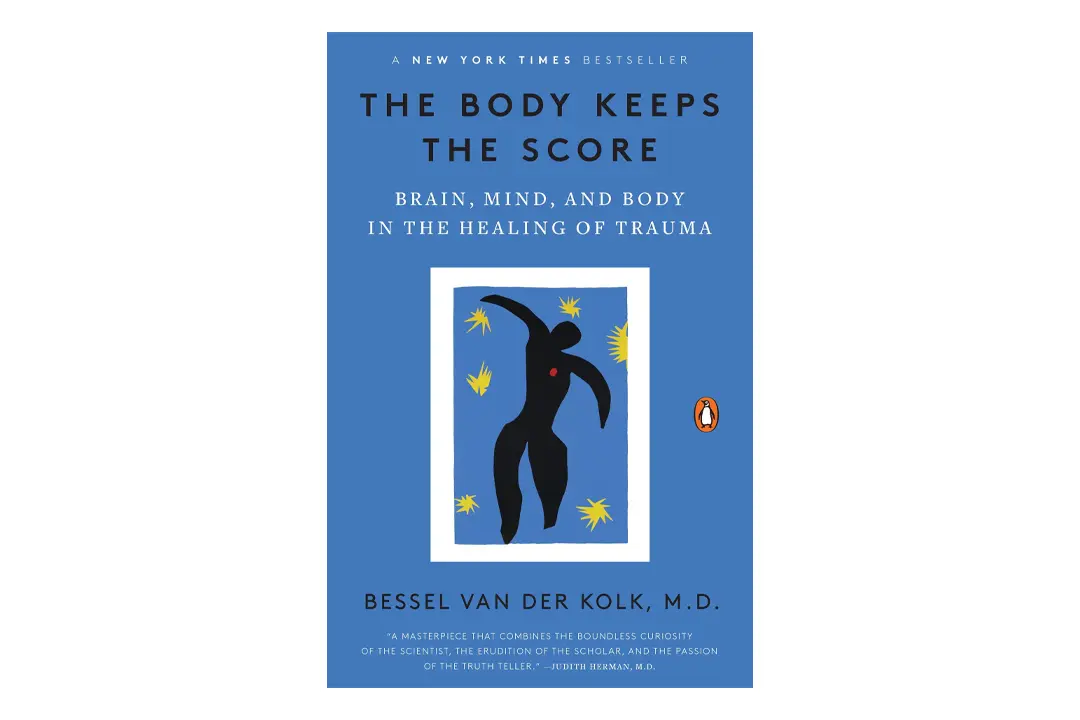
The Body Keeps the Score by Bessel van der Kolk: Book Summary
Beverly Ashford • 18 Mar 2026 • 69 views • 3 min read.Let me tell you about the book that made people realize that what they thought was a personality flaw or a character weakness was actually a nervous system responding exactly as it was designed to respond to overwhelming experience. Bessel van der Kolk published The Body Keeps the Score in 2014. He is a psychiatrist who has spent over forty years studying trauma — initially with Vietnam veterans at the Boston VA, later with survivors of childhood abuse, domestic violence, accidents, and natural disasters. He helped establish PTSD as a formal diagnosis and has been one of the most influential figures in trauma research for decades. The book he wrote is not a clinical textbook. It is an argument — personal, empirical, and occasionally furious — that Western psychiatry has fundamentally misunderstood trauma by treating it as a disorder of memory and thought rather than a disorder of the entire organism. Trauma does not just change what you think. It changes how your brain processes threat, how your body holds tension, how your nervous system responds to stimulation, and how you experience the present moment. Understanding this changes everything about treatment.
The Body Keeps the Score by Bessel van der Kolk: Book Summary
Quick Summary:
- A leading trauma researcher argues that trauma is not just a psychological event — it physically reshapes the brain and body
- Published in 2014, it spent years on bestseller lists and became the most widely read book on trauma ever written for a general audience
- Van der Kolk's central claim: talk therapy alone is often insufficient for trauma because trauma lives in the body, not just the mind
- A book that changed how millions of people understood their own unexplained symptoms, reactions, and suffering
What Trauma Actually Does
Van der Kolk opens with a fundamental reframe. Trauma is not the event itself. Trauma is what happens inside the person in response to the event — the way the nervous system gets stuck in survival mode long after the danger has passed.
The brain has a hierarchy of responses to threat. The prefrontal cortex — the rational, planning, language-using part — sits at the top. Below it is the limbic system, which manages emotion and memory. At the base is the brain stem, which controls survival functions. Under threat, the brain stem takes over. The thinking brain goes offline. The body acts before the mind can intervene.
This is adaptive and life-saving in genuine danger. The problem occurs when the threat response does not reset after the danger passes. Traumatized people get stuck in survival mode — hypervigilant, easily triggered, unable to fully inhabit the present because their nervous system is still responding to the past. The body does not know the war is over.
Van der Kolk shows this through brain imaging. Trauma survivors shown images related to their traumatic experiences show dramatic activation in the brain's alarm centers and simultaneous deactivation in the areas responsible for language and rational thought. This is not a choice. It is not weakness. It is a neurological pattern — and it explains why traumatized people often cannot talk their way through their symptoms. The part of the brain that would generate the words is the part that goes offline.
Why Talk Therapy Has Limits
This is the book's most controversial and practically important argument. Van der Kolk respects cognitive behavioral therapy and other talk-based approaches. He does not dismiss them. But he argues they are insufficient for many trauma survivors because they engage the thinking brain while trauma lives primarily in the body and the subcortical regions that talking cannot directly reach.
He draws on research by Peter Levine, Pat Ogden, and others showing that traumatic memory is stored differently from ordinary memory. Ordinary memory is narrative — it has a beginning, middle, and end, and can be revisited and updated. Traumatic memory is often sensory and fragmented — a smell, a sound, a physical sensation — without narrative context. It intrudes as experience rather than recollection. The person does not remember the trauma. They relive it.
This is why traditional exposure therapy — repeatedly revisiting the traumatic narrative to reduce its emotional charge — works for some people and retraumatizes others. Telling the story again, without addressing the body's held response, can reinforce the neurological pattern rather than resolving it.
What Actually Works
The book's second half surveys the treatment approaches van der Kolk has found most effective — and most are body-based rather than talk-based.
EMDR — Eye Movement Desensitization and Reprocessing — involves bilateral stimulation while holding traumatic memories in mind. The mechanism is still debated, but the evidence base is strong enough that it is now recommended by the WHO for trauma treatment. Van der Kolk describes watching patients process in minutes memories that years of talk therapy had not touched.
Yoga and somatic therapies work by helping trauma survivors inhabit their bodies safely — developing the capacity to notice physical sensation without being overwhelmed by it, and learning that the body can be a place of safety rather than threat. Van der Kolk's research on trauma-sensitive yoga showed significant reductions in PTSD symptoms in populations that had not responded to medication or talk therapy.
Neurofeedback involves real-time monitoring of brain activity and training the brain to shift out of survival-mode patterns. Van der Kolk presents early but promising research showing that people can learn to regulate their own neurological states through feedback, with lasting effects.
Theater, music, and movement therapies appear in the book as approaches that engage the body, rhythm, and social attunement — three things that trauma disrupts and that purely cognitive approaches rarely address directly.
Developmental Trauma
Some of the most important sections of the book address what van der Kolk calls developmental trauma — the effects of chronic early childhood trauma on the developing brain and body. This is distinct from single-incident trauma in adults and requires different understanding and different treatment.
Children who grow up in chaotic, abusive, or neglectful environments do not develop discrete traumatic memories. They develop nervous systems calibrated to chronic threat — hypervigilant, emotionally dysregulated, with impaired capacity for trust, attention, and learning. These children often get diagnosed with ADHD, oppositional defiant disorder, or conduct disorder. Van der Kolk argues that these diagnoses frequently mislabel the symptoms of developmental trauma and lead to treatment — usually medication — that addresses the symptom without touching the cause.
Treatment Approaches Compared
| Approach | How It Works | Best For | Limitations |
|---|---|---|---|
| Cognitive Behavioral Therapy | Identify and reframe trauma-related thoughts | Single-incident trauma, motivated adults | Limited access to subcortical trauma responses |
| EMDR | Bilateral stimulation while processing traumatic memories | Wide range of trauma types, strong evidence base | Requires trained practitioner, mechanism debated |
| Trauma-Sensitive Yoga | Body-based regulation, safe inhabitation of physical sensation | Developmental trauma, treatment-resistant PTSD | Requires sustained practice, specialized instruction |
| Neurofeedback | Real-time brain monitoring to train self-regulation | Developmental trauma, chronic dysregulation | Expensive, limited availability |
| Somatic Experiencing | Track body sensation through traumatic activation | Body-stored trauma, incomplete threat responses | Slow process, requires skilled practitioner |
| Medication | Reduce symptom intensity | Acute stabilization, sleep disruption | Does not resolve underlying trauma patterns |
| Theater and Arts Therapies | Embodied expression, social attunement, narrative | Developmental trauma, group settings | Limited research base, variable quality |
Frequently Asked Questions
Is this book only relevant for people with diagnosed PTSD?
No. Van der Kolk argues that trauma exists on a spectrum and that many people carry unrecognized trauma responses that affect their relationships, their bodies, and their sense of safety in the world without ever receiving a formal diagnosis. Readers without trauma histories find it useful for understanding the people in their lives who do.
Has the book faced criticism?
Yes. Some researchers have challenged specific claims — particularly around recovered memory and some of the alternative therapies van der Kolk advocates. The core argument about trauma's neurobiological basis is well-supported. The treatment recommendations are more contested. The book should be read as a clinician's synthesis of a field rather than as a definitive research review.
Is the book difficult to read emotionally?
It contains clinical case descriptions of severe trauma including childhood abuse, sexual violence, and combat. Van der Kolk handles these with care but does not sanitize them. Readers with their own trauma histories should approach at their own pace. Many find it validating rather than distressing — recognition of their own experience often feels like relief.
Does the book recommend specific therapists or programs?
It describes approaches rather than specific practitioners. The practical guidance is conceptual — understanding what kinds of treatment address body-based trauma — rather than a referral directory. Finding a practitioner trained in trauma-informed approaches requires separate research.
How does this relate to attachment theory?
Extensively. Van der Kolk draws heavily on attachment research — particularly the work of John Bowlby and Mary Ainsworth — to explain how early relational experiences shape the nervous system. Secure attachment is itself a trauma buffer. Disrupted attachment is a form of early trauma with cascading effects on development.
What should I read next?
In an Unspoken Voice by Peter Levine covers somatic experiencing in depth — the body-based trauma therapy that van der Kolk discusses. Waking the Tiger by the same author is more accessible. What Happened to You by Bruce Perry and Oprah Winfrey covers developmental trauma for a general audience with particular attention to childhood. Adult Children of Emotionally Immature Parents by Lindsay Gibson addresses the relational aftermath of growing up with caregivers who could not meet emotional needs.
The Bottom Line
Here is what Bessel van der Kolk actually spent forty years learning.
Trauma is not weakness. It is not a failure to cope. It is the nervous system doing exactly what it evolved to do — prioritizing survival — and then getting stuck in survival mode after the danger has passed.
The body keeps the score because the body was present for the overwhelming experience. It encoded it. It held it. And it will keep responding to echoes of it until the nervous system learns — through experience, not just understanding — that the danger is over.
This takes more than talking. It takes working with the body, not just the mind. It takes approaches that reach the parts of the brain that language cannot access. It takes time, skilled support, and the recognition that healing is not about forgetting what happened.
It is about being able to live in the present without the past constantly flooding back in.
That is possible for most people.
This book explains why, and points toward how.